Visiting local greenhouses teaches you key sustainable practices like using energy-efficient systems, solar power, and natural ventilation. You’ll see how they conserve water through rainwater collection and recycling runoff, and minimize waste by reusing pots and composting. Greenhouses also showcase innovative methods like vertical gardening and aquaponics that maximize space. By observing these eco-friendly techniques, you’ll discover practical tips to make your own gardening more sustainable and responsible. Keep exploring to learn more!
Key Takeaways
- Observe sustainable practices like rainwater collection, energy-efficient systems, and waste reduction techniques implemented in local greenhouses.
- Learn how different propagation methods, such as cuttings and seeds, maximize space and resource efficiency.
- Notice the integration of eco-friendly technologies like solar panels and natural ventilation for environmentally conscious operations.
- Identify space-saving solutions like vertical gardening and aquaponics that enhance productivity and sustainability.
- Gain practical insights on balancing plant propagation, resource conservation, and eco-friendly practices for successful greenhouse management.
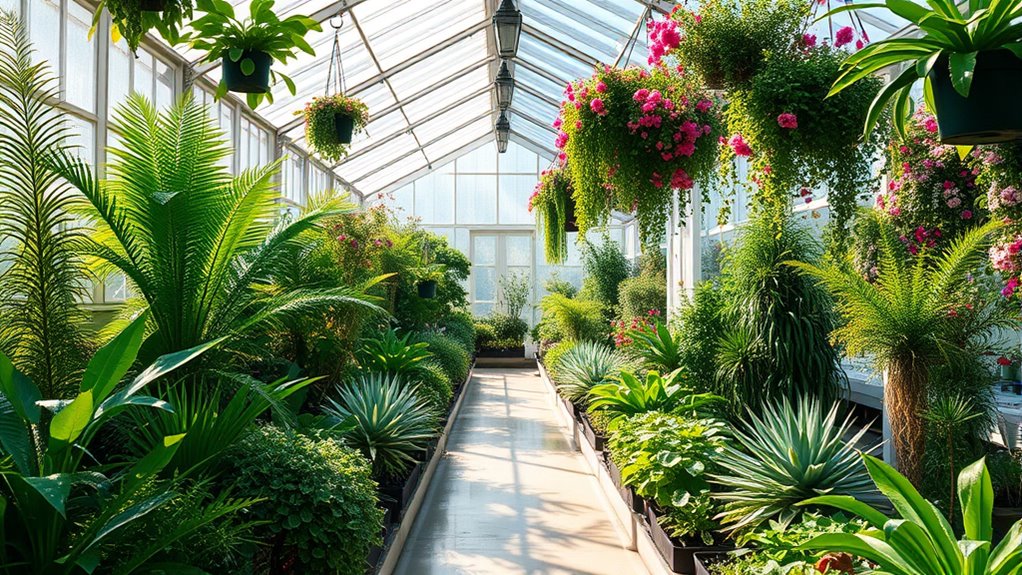
Have you ever wondered what goes on inside a greenhouse? When you step through those glass doors, you’re entering a world where plants thrive in carefully controlled environments. Visiting local greenhouses offers a firsthand look at innovative gardening methods and sustainable practices that you can apply at home. One of the most eye-opening aspects is how these greenhouses prioritize sustainability. They often use energy-efficient systems like solar panels or natural ventilation to reduce their carbon footprint. Water conservation is also a key focus; many greenhouses collect rainwater or recycle runoff to minimize waste. These practices not only help the environment but also demonstrate how agriculture can be more eco-friendly and economically sustainable.
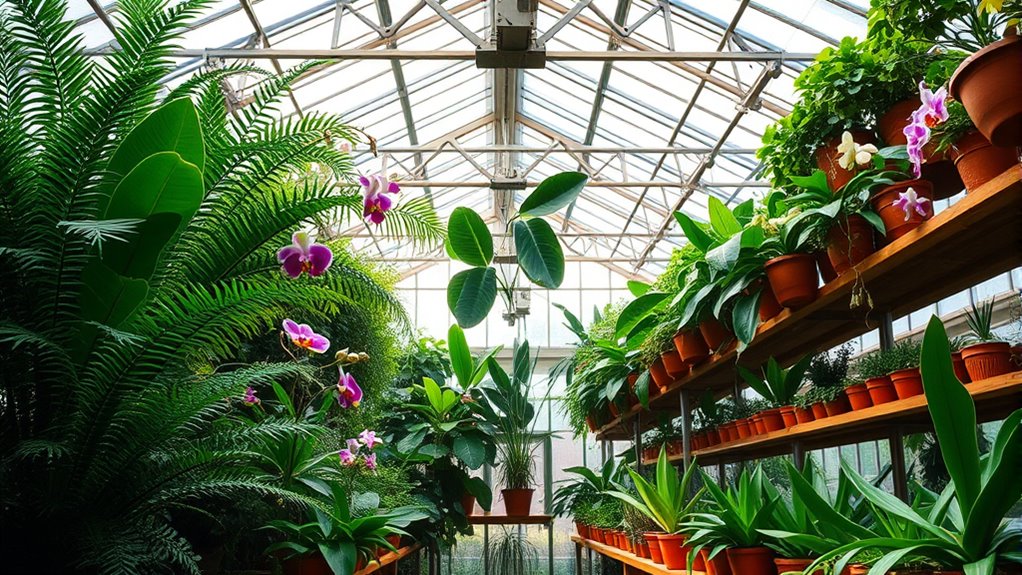
Discover how greenhouses use sustainable tech like solar power and rainwater recycling to grow eco-friendly plants.
As you walk through, you’ll notice how plant propagation plays a central role in the greenhouse’s operations. Greenhouses are experts at starting new plants from cuttings, seeds, or runners, allowing them to produce a wide variety of plants efficiently. This method of plant propagation is essential because it enables the greenhouse to multiply its stock without relying heavily on purchasing new plants. You’ll see small, carefully maintained seedlings or rooted cuttings in trays, highlighting how propagation techniques speed up growth cycles and ensure healthy, vigorous plants. This process also supports biodiversity and resilience, as they can select and propagate the strongest specimens to ensure disease resistance and adaptability. Observing this can inspire you to incorporate similar propagation techniques in your own gardening to maximize space and resources.
The use of sustainable practices in plant propagation is evident in how greenhouses minimize waste and resource use. They often reuse pots, compost organic matter, and optimize lighting and watering schedules to reduce energy and water consumption. These practices showcase a commitment to reducing environmental impact while maintaining productive, healthy plant growth. You might notice how some greenhouses employ innovative methods like vertical gardening or aquaponics, which combine sustainability with space efficiency. Such approaches allow for increased plant production without demanding excessive land or resources.
Seeing these strategies firsthand emphasizes that sustainable practices and efficient plant propagation are not just theoretical ideas but practical, achievable methods. They demonstrate that growing plants responsibly doesn’t require sacrificing productivity or quality. Instead, it involves adopting smarter techniques that benefit the environment and your gardening efforts. Additionally, understanding the principles of zodiac compatibility can inspire more harmonious relationships with fellow gardeners and nature. As you leave the greenhouse, you’ll carry with you new insights into how sustainable practices and plant propagation can transform your approach to gardening, making it more eco-conscious and rewarding. Visiting these greenhouses proves that with a little knowledge and effort, you can cultivate a greener, more sustainable garden—right in your backyard.

erifyng Solar Powered Fan, Solar Fan for Shed, Chicken Coop, Greenhouse, Outside with Two IPX7 Waterproof 5In Fans 13Ft On/Off Switch Cable Exhaust Intake Mounting Way and Installation Kits
- Efficient Solar-Powered Ventilation: Provides cooling for small outdoor spaces
- High Airflow with Monocrystalline Panels: Delivers increased airflow in sunlight
- Weatherproof and Durable Design: IPX7 waterproof with shock-resistant housing
As an affiliate, we earn on qualifying purchases.
As an affiliate, we earn on qualifying purchases.
Frequently Asked Questions
What Are the Best Times of Year to Visit Local Greenhouses?
You should visit local greenhouses during spring and early summer when seasonal blooms are at their peak. These times offer vibrant displays and lush greenery, perfect for enjoying the beauty. To make the most of your visit, arrive early and wear comfortable shoes. Follow visitor tips like respecting the plants and staying on designated paths. These seasons provide the best opportunity to appreciate the full spectrum of greenhouse flora.
How Do Greenhouses Impact Local Biodiversity and Ecosystems?
Greenhouses can impact local biodiversity and ecosystems by introducing non-native species, which may outcompete native species and disrupt ecosystem balance. When you visit, be mindful of this risk and support greenhouses that prioritize native plants and sustainable practices. By doing so, you help preserve native species and maintain healthy ecosystems, ensuring local biodiversity remains resilient and balanced, rather than compromised by invasive plants or unsustainable cultivation methods.
Can Visitors Participate in Greenhouse Planting or Maintenance Activities?
Did you know that over 60% of greenhouses offer volunteer opportunities? You can actively participate in planting or maintenance activities, gaining hands-on experience. Many greenhouses also host educational workshops, where you learn about sustainable practices and plant care. By volunteering, you not only help the greenhouse thrive but also deepen your understanding of plant ecosystems. So, yes, visitors like you can definitely get involved and make a difference!
What Are the Common Challenges Faced by Greenhouse Operators?
You’ll face common challenges like pest management, which requires constant vigilance to prevent infestations without harming plants. Labor shortages can also be tough, making it hard to maintain ideal conditions and handle planting or harvesting tasks efficiently. To overcome these issues, you might need to invest in integrated pest management strategies and explore automation or better labor management practices, ensuring your greenhouse runs smoothly and sustainably.
How Do Greenhouses Adapt to Climate Change and Extreme Weather?
You can enhance your greenhouse’s climate resilience by adopting adaptive technology like automated shading, ventilation systems, and heating controls. These tools help regulate temperature and humidity during extreme weather, protecting plants from damage. Additionally, implementing energy-efficient systems and water management strategies guarantees your greenhouse remains sustainable and resilient against climate change impacts, allowing you to continue growing healthy crops even amid unpredictable weather patterns.
Conclusion
Visiting local greenhouses offers a glimpse into nature’s hidden world, much like uncovering a secret garden. You’ll learn about plant care, see stunning displays, and get inspired to nurture your own green space. These tours are a chance to connect with the environment and discover new gardening ideas. Think of it as stepping into a lush, living classroom that sparks your curiosity and passion for plants. So, don’t miss out—your green thumb will thank you!