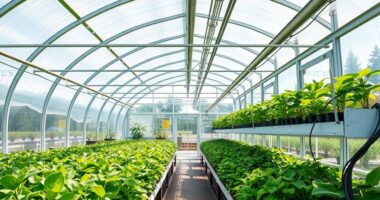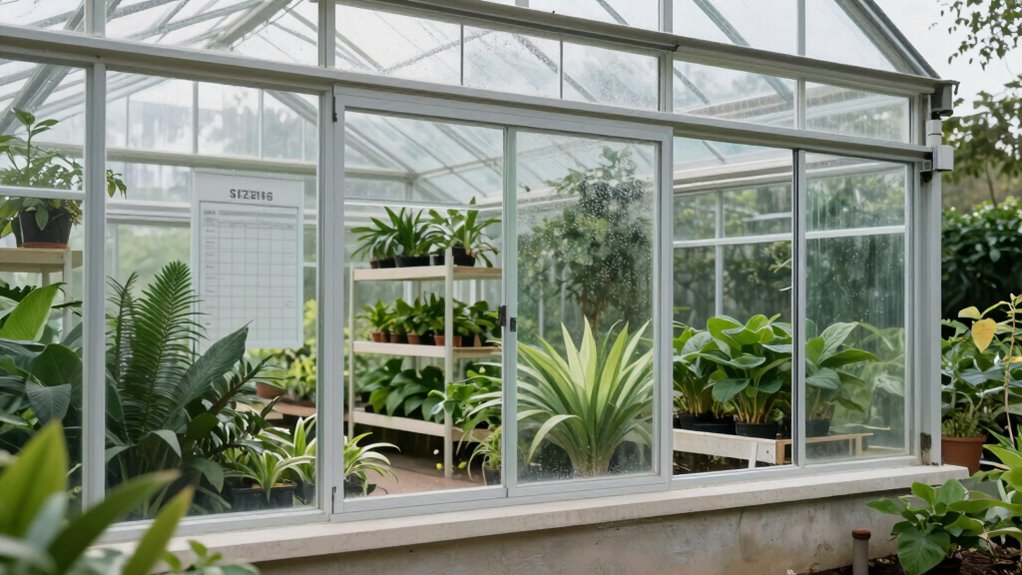

Before buying a greenhouse, focus on choosing the right size for your space and goals. An appropriately sized greenhouse guarantees healthy plant growth, proper airflow, and efficient use of light and nutrients. Too small, and you’ll struggle with overcrowding and poor conditions; too large, and maintenance becomes harder. Balancing size with your long-term plans prevents costly upgrades later. If you want to learn how to make the best size choice, keep going—you’ll discover key tips for success.
Open a free Amazon Business account
Business pricing, bulk buying and tax-exempt orders.
As an affiliate, we earn on qualifying purchases.
Key Takeaways
- Assess your available space and future expansion plans to choose a size that supports long-term growth.
- Consider the types and mature sizes of plants to determine optimal spacing and airflow needs.
- Ensure adequate ventilation options to prevent overheating, humidity buildup, and disease.
- Match greenhouse size with your gardening goals for productivity, flexibility, and sustainability.
- Properly sizing your greenhouse avoids costly upgrades and maximizes plant health and yields.
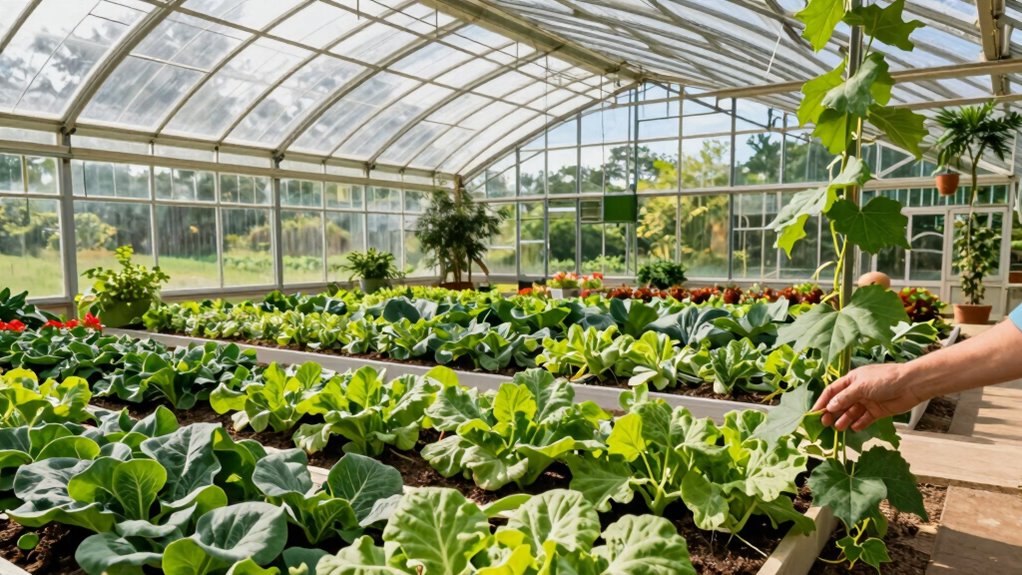
Are you unsure about what size greenhouse you should choose? It’s a common concern, and making the right decision can greatly impact your gardening success. The key factors to consider are plant spacing and ventilation needs. These elements influence not just how many plants you can grow but also how healthy and productive they’ll be. Getting the size right from the start helps you avoid costly upgrades or the frustration of cramped, poorly ventilated conditions later on.
Choosing the right greenhouse size ensures healthy plants, proper airflow, and long-term gardening success.
First, think about plant spacing. Every plant needs a certain amount of room to grow properly, which affects how many you can fit into your greenhouse. Overcrowding can lead to poor air circulation, increased disease risk, and stunted growth. When planning your greenhouse size, consider the mature size of your plants and how much space each will require. If you’re growing larger crops or a variety of plants, you’ll need more room than for small seedlings or herbs. Proper spacing ensures each plant gets enough light, air, and nutrients, which ultimately boosts your yield and plant health. Effective plant spacing is essential for maximizing productivity and maintaining plant health. Additionally, considering the size of your plants at maturity can help you better plan your layout and airflow needs. It’s also helpful to think about how different plant types may require different spacing and ventilation strategies to thrive together.
Ventilation needs are equally vital. As your plants grow, they produce heat and moisture that need to escape to prevent overheating and humidity buildup. A greenhouse that’s too small may become stuffy and humid, encouraging mold and pests. On the other hand, a larger space with good ventilation options allows air to circulate freely, maintaining a stable environment. When choosing your greenhouse size, consider how many vents, fans, or windows you’ll need to keep airflow steady. Larger structures often require more sophisticated ventilation systems to maintain ideal conditions, but they also offer more flexibility for managing temperature and humidity. Additionally, understanding the importance of proper ventilation can help you create a healthier environment for your plants. Proper ventilation not only helps control temperature and humidity but also reduces the risk of plant disease related to poor air quality. In some cases, incorporating automated ventilation systems can make managing airflow easier and more consistent.
Balancing plant spacing and ventilation needs involves a bit of planning. If you’re just starting out or working with limited space, a smaller greenhouse might suffice, provided you optimize plant placement and airflow. However, if you plan to expand your garden or grow a variety of plants, investing in a larger structure with proper ventilation features will pay off in healthier plants and higher yields. Remember, the size you choose should align with your gardening goals, available space, and the types of plants you want to grow. Making this thoughtful choice now will save you time, effort, and money in the long run, ensuring your greenhouse becomes a productive, comfortable space for years to come.

iLIVING 12" Wall Mounted Shutter Exhaust Fan, Automatic Shutter, with Thermostat and Variable Speed controller, 0.6A, 960 CFM, 1400 SQF Coverage Area Silver (ILG8SF12V-ST)
- High CFM Ventilation: 960 CFM airflow for large areas
- Automatic Shutter System: Built-in shutters for automatic operation
- Variable Speed Control: Adjust airflow with variable speed feature
As an affiliate, we earn on qualifying purchases.
As an affiliate, we earn on qualifying purchases.
Frequently Asked Questions
What Materials Are Best for Small Greenhouses?
You’ll find that polycarbonate panels are your best bet—they’re nearly indestructible and let in excellent light. For small greenhouses, opt for lightweight materials like aluminum framing, which makes setup easier. Consider ample lighting options, such as grow lights, and proper ventilation methods like exhaust fans or vents to keep temperatures balanced. These choices create a thriving environment, making your greenhouse feel like a lush paradise in a compact space.
How Do I Estimate Maintenance Costs?
To estimate maintenance costs, start with a clear cost estimation plan. Consider expenses like repairs, cleaning, ventilation, and heating, and factor in seasonal changes. Regular inspections help you identify issues early, saving money long-term. Keep a maintenance log to track expenses and plan for future costs. By actively managing and budgeting for these tasks, you guarantee your greenhouse stays efficient and productive, avoiding unexpected, costly repairs.
Can a Greenhouse Be Expanded Later?
Yes, you can expand your greenhouse later. To guarantee a cost-effective design, plan for modular sections or removable walls that make expansion easier. Incorporate flexible ventilation options like adjustable vents or exhaust fans, which help maintain proper airflow during and after expansion. This way, you can grow your greenhouse gradually, saving money upfront and allowing for seamless growth as your needs evolve.
What Are the Zoning Restrictions?
Zoning laws govern where you can place a greenhouse, so you need to check local regulations first. They often specify setbacks from property boundaries, height restrictions, and usage limits. Property boundaries are vital because building too close may violate these laws. You should contact your local planning department or review zoning maps to confirm your greenhouse complies. Ignoring restrictions could lead to fines or needing to dismantle your structure later.
How Does Climate Affect Greenhouse Size Choice?
Climate markedly influences your greenhouse size choice because different climate zones demand various temperature regulation needs. In colder zones, you’ll want a larger greenhouse to include insulation and heating systems, ensuring plants stay warm. Conversely, in milder zones, a smaller structure may suffice since temperature regulation is easier. By considering your climate zone, you can select a size that balances energy efficiency with your gardening goals, optimizing plant growth year-round.
Conclusion
Choosing the right greenhouse size is like planting a seed; it shapes your future harvest. When you pick a size that fits your dreams and space, you’re nurturing more than plants—you’re cultivating your passion and patience. Think of your greenhouse as a window to endless growth, each size symbolizing a different horizon. Make your choice wisely, and watch your garden—and your dreams— blossom beyond what you ever imagined.
Pool season Picks
robotic pool cleaners
As an affiliate, we earn on qualifying purchases.