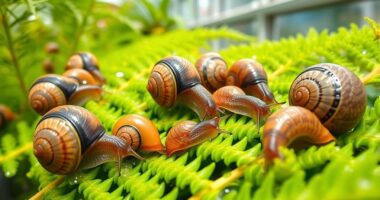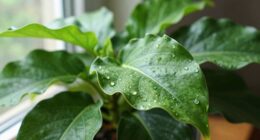
Keeping your workspace clean helps plants stay healthy by removing dust, debris, and dead leaves that can block sunlight and encourage mold or pests. Regular cleaning also prevents pests from hiding or breeding and reduces the risk of fungal growth. When your space is tidy, you’ll find it easier to spot problems early and care for your plants effectively. If you want to learn how staying organized boosts plant health even more, keep exploring.
Key Takeaways
- Clean workspaces improve airflow, reducing humidity that promotes mold and fungal growth on plants.
- Removing dust and debris prevents blockage of sunlight, supporting healthy photosynthesis.
- Organized spaces minimize pest hiding spots, lowering infestation risks.
- Regular cleaning allows for quick detection of plant health issues and pest presence.
- Maintaining cleanliness reduces airborne pollutants, promoting better plant growth conditions.
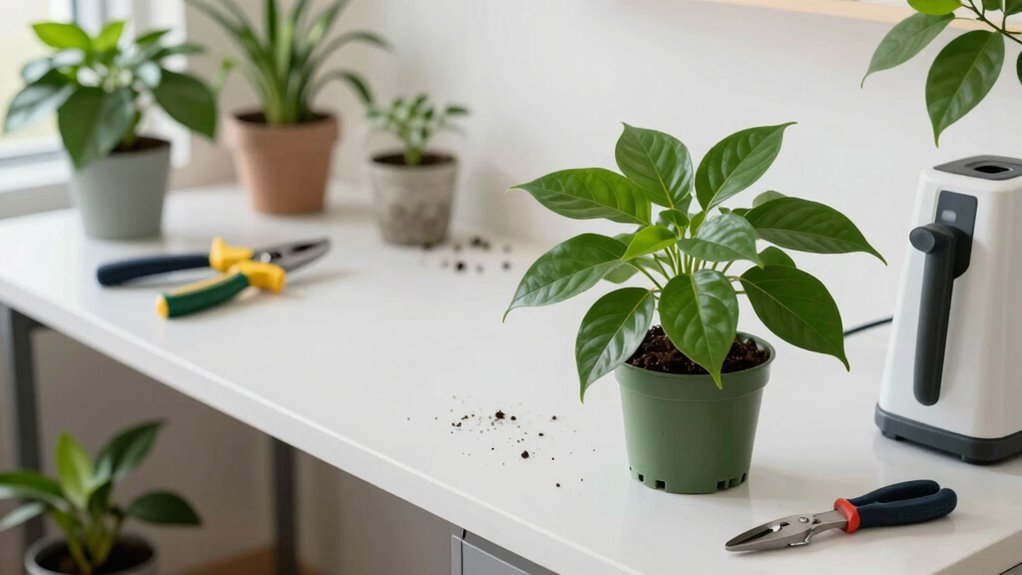
Keeping your workspace clean isn’t just about tidiness—it directly impacts your plants’ health. When your environment is cluttered or dusty, it can lead to poor air quality, which affects your plants’ ability to thrive. Dust and debris settle on leaves, blocking sunlight and hindering photosynthesis. Over time, this buildup can weaken your plants and make them more vulnerable to diseases. By maintaining a tidy workspace, you guarantee better airflow and reduce airborne pollutants, creating an environment where your plants can breathe easily and grow strong.
A tidy workspace improves airflow, reduces dust, and promotes healthier, stronger plants.
A clean workspace also plays an essential role in pest prevention. Pests are more likely to invade cluttered areas where they find hiding spots and easy access to food sources. Dead leaves, fallen debris, and unorganized supplies become breeding grounds for insects and other unwanted visitors. Regularly cleaning and organizing your workspace removes these hiding spots, making it less attractive for pests to settle in. This proactive approach helps you catch any signs of pest activity early, preventing infestations from becoming severe and damaging your plants. Additionally, maintaining overall cleanliness reduces the presence of organic waste that could attract pests or harbor disease-causing organisms.
Moreover, a well-maintained environment reduces the risk of mold and fungal growth, which often thrive in damp, dirty spaces. Mold spores can settle on plant surfaces, causing infections that stunt growth or kill your plants. Keeping the area dry and free of accumulated organic waste minimizes these risks. When you wipe down surfaces and remove dead plant material promptly, you create an inhospitable environment for mold and fungi, safeguarding your plants’ health. Ensuring good air circulation is also vital for preventing moisture buildup and maintaining a healthy environment for your plants. Proper airflow helps regulate humidity levels and prevents the formation of moisture buildup, which promotes mold growth.
Cleaning your workspace also helps you monitor your plants more effectively. When everything is tidy, you can easily spot issues like yellowing leaves, pests, or signs of disease before they escalate. This vigilance allows you to take swift action, applying treatments or adjusting care routines as needed. Additionally, a clean environment encourages better watering habits because you’re less likely to overwater or forget to remove excess water, which can lead to root rot.
Creating a clean workspace also enhances your awareness of air quality, helping you identify and address potential pollutants that could harm your plants. In essence, a clean workspace isn’t just about aesthetics; it’s a practical step towards healthier plants. It improves air quality, making sure your plants get the oxygen they need to flourish, and it greatly cuts down on pest-related problems. By dedicating time to organize and clean regularly, you’re creating a safer, more nourishing space for your plants to grow. Ultimately, the effort pays off with fewer plant problems and a more vibrant, thriving indoor or outdoor garden.

BLESS YOUR SOIL Microfiber Plant Dusting & Leaf Cleaning Gloves, 1 Pair
- Effortless Leaf Cleaning: Make plant leaf cleaning easy and precise
- Premium Microfiber Material: Luxury gloves crafted for plant lovers
- Washable and Durable: Reusable gloves for long-lasting use
As an affiliate, we earn on qualifying purchases.
As an affiliate, we earn on qualifying purchases.
Frequently Asked Questions
How Often Should I Clean My Plant’s Workspace?
You should clean your plant’s workspace at least once a week to maintain good workspace organization and minimize dust and debris. Regular cleaning frequency helps prevent pests and diseases from taking hold. Keep tools and pots tidy, and wipe down surfaces to reduce dirt buildup. By sticking to a weekly cleaning routine, you guarantee your plants stay healthy and thrive in a clean, well-organized environment.
What Cleaning Products Are Safe for Plant Areas?
Think of your workspace as a delicate garden; only gentle tools should be used. Plant-friendly disinfectants and eco-safe cleaning solutions are your best allies—they clean without harming your greens. Look for natural ingredients like plant extracts, vinegar, or diluted mild soap. These products safeguard your plants’ health while maintaining a spotless environment. Using eco-safe solutions keeps your workspace vibrant and thriving, much like a well-tended garden.
Can Clutter Contribute to Plant Health Issues?
Yes, clutter can contribute to plant health issues. When plant debris and dust accumulate in your workspace, they create a breeding ground for pests and disease. This buildup can block airflow and trap moisture, leading to mold or fungal growth. By keeping your workspace tidy, you’re reducing these risks, helping your plants stay healthy and thriving. Regular cleaning prevents clutter from becoming a hidden threat to your plants’ well-being.
Are There Specific Tools Recommended for Workspace Cleaning?
You’ll want tools that make cleaning feel like a breeze, such as microfiber cloths, gentle brushes, and disinfectant sprays. Stick to a consistent cleaning schedule and keep your workspace well-organized, so dust and debris don’t build up like mountains. These tools and routines help maintain a tidy environment, reducing plant problems caused by pests or disease. Stay proactive, and your plants will thank you with vibrant health.
How Does Workspace Cleanliness Affect Plant Pest Infestations?
A clean workspace reduces pest habitat, making it harder for pests to thrive and reproduce. When you keep your area tidy, you prevent contamination that attracts pests like insects and rodents. Regular cleaning eliminates debris and food sources, which are key to pest infestations. By maintaining cleanliness, you effectively prevent pest problems, ensuring your plants stay healthy. Clean workspaces are essential for contamination prevention and keeping pests at bay.
Conclusion
A tidy workspace acts like a well-tuned orchestra, where every element plays in harmony, reducing the chaos that breeds plant problems. When you keep things clean, you’re not just organizing; you’re creating a sanctuary where your plants can thrive without the shadow of pests or disease. Think of your workspace as a garden’s backbone—strengthening roots and encouraging growth. A cleaner space isn’t just neat; it’s the silent symphony fostering your plants’ health and importance.