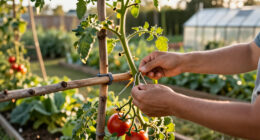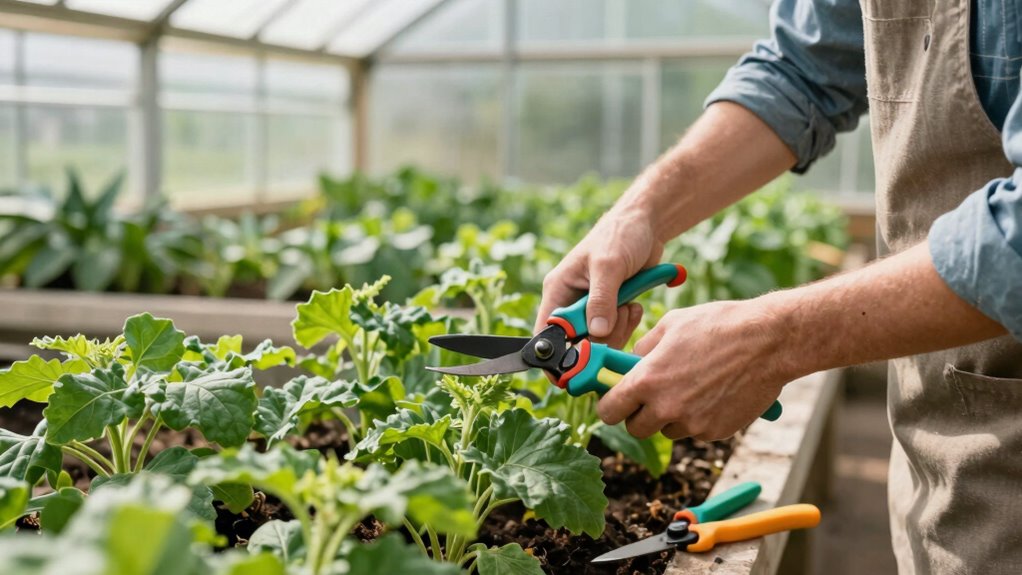

To make pruning feel less intimidating in your greenhouse, start with light, routine trims to build confidence and familiarize yourself with proper techniques. Use sharp, clean tools and handle them safely to prevent mistakes. Take small, regular pruning sessions rather than long, stressful ones, and remember that most plants recover well from gentle over-pruning. As you see positive results, your confidence will grow—keep going and discover more tips to make pruning easier and more rewarding.

Get garden gear delivered free with Prime
- Fast, free delivery on millions of items
- Prime Video, Amazon Music and more included
- Member-only deals all year
Key Takeaways
- Start with simple, light pruning to build confidence gradually.
- Use sharp, clean tools and practice proper technique for easy, stress-free cuts.
- Educate yourself on specific plant needs and growth cycles to reduce uncertainty.
- Schedule regular, small pruning sessions to make the process more manageable.
- Remember that mistakes are part of learning, and most plants recover easily.
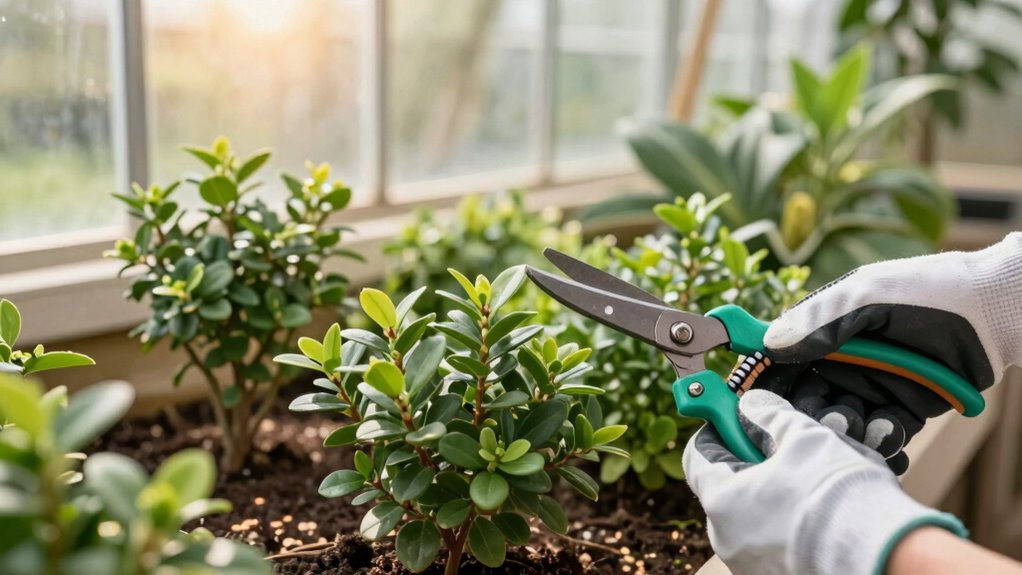
Pruning can seem intimidating at first, especially if you’re new to greenhouse gardening, but with a few simple tips, it becomes much easier and even rewarding. One of the most important aspects is understanding how proper pruning benefits plant health. When you prune, you remove dead, diseased, or overcrowded growth, which helps your plants breathe and grow stronger. It encourages better airflow, reducing the risk of mold and pests, and directs energy toward healthy new growth. Recognizing which parts to cut and when to do it keeps your plants vigorous and productive. Remember, each cut should serve a purpose—trimming just for the sake of trimming can do more harm than good.
Proper pruning promotes healthy growth, improves airflow, and keeps your plants vigorous and productive.
The next step is to focus on tool safety. Using the right tools and handling them properly prevents injuries and ensures clean cuts that promote healthy healing. Sharp pruning shears, scissors, or loppers are essential, and dull tools can crush or tear plant tissues, increasing the risk of disease. Always keep your tools sharp, clean, and well-maintained, and disinfect them regularly, especially after working with diseased plants. This minimizes the risk of spreading infections. When pruning, hold your tools securely and cut at the correct angle—generally about 45 degrees—to promote swift healing. Be mindful of your fingers and hands, keeping them clear of the blades, and avoid rushing the process. Proper tool maintenance is key to successful pruning.
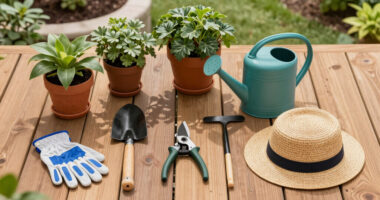
Getting comfortable with pruning also involves planning your approach. Start with a light, routine trim to build confidence. As you gain experience, you’ll learn how much to cut without stressing the plant. It helps to have a pair of clean, sharp tools ready at hand, so you’re not searching for the right instrument when the moment comes. Don’t forget to wear gloves if you’re handling thorny or irritating plants—that’s an added layer of safety. Take your time, and don’t feel pressured to prune everything in one go. Regular, smaller trims are less overwhelming and reinforce good habits. Understanding plant growth cycles can help you determine the best time to prune, which can make the process feel less daunting and more strategic. Additionally, knowing how different plants respond to pruning can guide your decisions and increase your confidence. Moreover, familiarizing yourself with proper pruning techniques can further improve your results and reduce stress for both you and your plants.
Lastly, keep in mind that making mistakes is part of learning. If you accidentally cut too much or in the wrong spot, most plants recover, especially with proper care. Over time, your confidence will grow as you see the positive effects of your pruning efforts. With attention to plant health and tool safety, pruning becomes less intimidating and more like a valuable part of caring for your greenhouse garden. The more you practice, the more natural it feels, and you’ll soon see it as a rewarding way to keep your plants thriving.
As an affiliate, we earn on qualifying purchases.
Frequently Asked Questions
What Tools Are Best for Beginner Pruning?
For beginner pruning, start with simple pruning tools like sharp pruning shears or scissors, which give you control and clean cuts. Focus on basic pruning techniques, such as removing dead or overgrown branches. As you gain confidence, you can try larger tools like loppers for thicker stems. Using the right tools and techniques makes pruning easier, safer, and less intimidating, helping your plants stay healthy and thriving.
How Often Should I Prune in a Greenhouse?
You should prune regularly, about once every few weeks, to keep your greenhouse plants healthy and thriving. Imagine catching a sneaky problem early—pruning techniques help you remove dead or diseased growth before it spreads. Consistent pruning boosts plant health, encourages new growth, and maintains your greenhouse’s lush appearance. Keep an eye on your plants, and don’t wait too long—timing is key to mastering confident, effective pruning.
Can Pruning Harm My Plants?
Pruning, when done correctly, doesn’t harm your plants. Using proper pruning safety and techniques guarantees healthy growth and minimizes risks. Always use clean, sharp tools and make clean cuts to avoid damaging the plant tissues. Avoid over-pruning, which can stress your plants, and learn the right timing for each species. With careful attention to pruning safety and techniques, you help your plants thrive rather than harm them.
Is Pruning Necessary for All Greenhouse Plants?
Pruning isn’t necessary for all greenhouse plants, but it’s often beneficial for plant health and growth. You should prune when plants become overcrowded, show signs of disease, or need shaping. Regular pruning encourages new growth, improves air circulation, and boosts flowering or fruit production. By understanding each plant’s specific needs, you can make pruning a simple, effective practice that enhances your greenhouse’s overall importance and beauty.
What Are Signs of Over-Pruning?
Signs of over-pruning include stunted growth, sparse foliage, and a weakened plant structure. You might notice leaves turning yellow or dropping prematurely, which indicates compromised plant health. To avoid this, use proper pruning techniques that preserve necessary branches and leaves. Regularly monitor your plants, and if they seem to struggle or lose energy, reduce pruning frequency. Maintaining a balance ensures healthy, vigorous growth without overwhelming your plants.
Conclusion
Think of pruning as tending a garden of your own making, where each careful cut is like trimming away the overgrown branches of a sprawling tree. Just as a gardener nurtures growth by removing the old to make way for new, your confidence will blossom as you gently shape your plants. With patience and practice, pruning becomes a dance rather than a formidable task—your greenhouse transforms into a lush, thriving oasis, all because you dared to prune with purpose.
Fall yard work Picks
leaf blowers
As an affiliate, we earn on qualifying purchases.