The best tree pruning tools depend on branch height, thickness, and how much cutting effort you want to handle. My best overall pick is the Fiskars Extendable Tree Pruner and Pole Saw, which pairs adjustable reach with two ways to cut. For thick branches close to hand, the Fiskars 32-Inch PowerGear2 Garden Bypass Lopper offers leverage, while the Fanttik Y10 Pro Cordless Electric Pruning Shears suit buyers who want powered hand pruning. The main tradeoffs are reach versus control, manual effort versus battery dependence, and a single versatile tool versus a specialized one. Read on for the full comparison and advice on matching a tool to your trees.

Get garden gear delivered free with Prime
- Fast, free delivery on millions of items
- Prime Video, Amazon Music and more included
- Member-only deals all year
Complete the kit


Key Takeaways
- The Fiskars Extendable Tree Pruner and Pole Saw is the most versatile elevated-cut option in this lineup, combining a pole-mounted pruner with a saw; its reach is less useful if most work happens at ground level.
- Manual pole saws and pruners offer the broadest reach without batteries, but long poles can be harder to control, so maximum extension is not automatically the best choice.
- Powered tools solve specific effort problems: the Fanttik Y10 Pro suits repeated hand-level cuts, while the VANKERY cordless pole saw is aimed at elevated cutting without a manual saw stroke.
- Bypass pruners and loppers are the better fit for clean cuts on living branches; anvil loppers such as the TABOR TOOLS GG12A are a different choice for dry or dead material.
- Several products fill overlapping roles. The two BlumeTrec 14.5-foot pole tools call for checking whether the adjustable saw-and-pruner setup or the saw-focused configuration better matches the work before choosing.
| Suchtale 10 ft Manual Pole Saw and Tree Pruner |  | Best Compact-Reach Combination Tool | Power source: Manual | Maximum reach: 10 ft | Pruning capacity: Up to approximately 1.2 in | VIEW LATEST PRICE | See Our Full Breakdown |
| TABOR TOOLS GG12A 30-Inch Compound Action Anvil Lopper |  | Best for Dry, Woody Branches | Tool type: Anvil lopper | Length: 30 in | Cutting capacity: Up to 2 in | VIEW LATEST PRICE | See Our Full Breakdown |
| BIDMLI 4-Piece Stainless Steel Garden Pruning Shears Set |  | Best for Multiple Small-Pruning Tasks | Set size: 4 pieces | Blade material: Stainless steel | Blade type: Parrot beak | VIEW LATEST PRICE | See Our Full Breakdown |
| BlumeTrec 14.5 ft Manual Pole Saw and Tree Pruner |  | Best for Higher Canopies | Power source: Manual | Maximum length: 14.5 ft | Pole sections: 11 | VIEW LATEST PRICE | See Our Full Breakdown |
| Haus & Garten ClassicPRO Bypass Pruning Shears |  | Best for Precise Close-Range Cuts | Type: Bypass pruning shears | Cutting capacity: Up to 1 in | Blade material: High-carbon steel with titanium coating | VIEW LATEST PRICE | See Our Full Breakdown |
| Fanttik Y10 Pro Cordless Electric Pruning Shears |  | Best Cordless Pick for Repeated Cuts | Cutting capacity: 25 mm (1 inch) | Motor: Brushless, 23,000 RPM | Battery: 4000 mAh | VIEW LATEST PRICE | See Our Full Breakdown |
| Telescoping Tree Pruner with Pole Saw, 4.6–10 ft |  | Best Compact-Reach Pole Pruner | Pole length: 4.6–10 ft | Pole material: Aluminum | Bypass cutting width: 0.6 in | VIEW LATEST PRICE | See Our Full Breakdown |
| Fiskars Extendable Tree Pruner and Pole Saw, 8–12 ft |  | Best for Higher Branches | Power source: Manual | Reach: 7.9–12 ft | Weight: 4.8 lb | VIEW LATEST PRICE | See Our Full Breakdown |
| YRTSH Heavy-Duty Extendable Compound-Action Loppers |  | Best for Thick Branches Within Reach | Cutting capacity: 2 in | Blade type: Anvil | Blade material: Alloy steel with low-friction coating | VIEW LATEST PRICE | See Our Full Breakdown |
| DECERK 8.5-Inch Professional Bypass Pruning Shears |  | Best Simple Hand Pruner | Overall length: 8.5 in | Blade type: Bypass | Blade material: SK5 steel with titanium coating | VIEW LATEST PRICE | See Our Full Breakdown |
| Fiskars 28-Inch Power-Lever Bypass Garden Lopper |  | Best Value Lopper | Length: 28 inches | Cut capacity: 1.75 inches | Blade material: Steel | VIEW LATEST PRICE | See Our Full Breakdown |
| gonicc 8-Inch Professional Titanium-Coated Bypass Pruning Shears |  | Best for Hand Pruning | Size: 8 inches | Cutting capacity: 0.75 inches | Blade material: SK-5 alloy steel | VIEW LATEST PRICE | See Our Full Breakdown |
| VANKERY 8-Inch Cordless Electric Pole Saw with 15-Foot Reach |  | Best Cordless Reach | Maximum reach: 15 ft | Guide bar sizes: 6 in and 8 in | Battery: Two 21V 4000mAh batteries | VIEW LATEST PRICE | See Our Full Breakdown |
| BlumeTrec 14.5 ft Adjustable Manual Pole Saw |  | Best Manual Pole Saw | Power source: Manual | Adjustable lengths: 8.5 ft, 11 ft, or 14.5 ft | Pole sections: 6, 8, or 11 sections | VIEW LATEST PRICE | See Our Full Breakdown |
| Fiskars 32-Inch PowerGear2 Garden Bypass Lopper |  | Best for Thicker Branches | Length: 32 inches | Cut capacity: Up to 2 inches | Weight: 3.9 pounds | VIEW LATEST PRICE | See Our Full Breakdown |
| tree pruning tool | Blade material | Weight | Handle material |
|---|---|---|---|
| Suchtale 10 ft Manual Pole Saw | — | — | Stainless steel |
| TABOR TOOLS GG12A 30-Inch Comp | Hardened carbon steel | 1.56 kg | — |
| BIDMLI 4-Piece Stainless Steel | Stainless steel | — | ABS with non-slip grips |
| BlumeTrec 14.5 ft Manual Pole | — | — | — |
| Haus & Garten ClassicPRO Bypas | High-carbon steel with titanium coating | 9 oz | Forged aluminum |
| Fanttik Y10 Pro Cordless Elect | — | 1.96 lb | — |
| Telescoping Tree Pruner with P | High-carbon steel | 3.1 lb | — |
| Fiskars Extendable Tree Pruner | — | 4.8 lb | — |
| YRTSH Heavy-Duty Extendable Co | Alloy steel with low-friction coating | — | Aluminum |
| DECERK 8.5-Inch Professional B | SK5 steel with titanium coating | 0.25 kg | Aluminum and rubber |
| Fiskars 28-Inch Power-Lever By | Steel | — | — |
| gonicc 8-Inch Professional Tit | SK-5 alloy steel | 150 g | Alloy steel with PVC wrap |
| VANKERY 8-Inch Cordless Electr | — | 6.5 lbs | — |
| BlumeTrec 14.5 ft Adjustable M | Alloy steel | — | Plastic |
| Fiskars 32-Inch PowerGear2 Gar | Alloy steel | 3.9 pounds | Aluminum |
More Details on Our Top Picks
Suchtale 10 ft Manual Pole Saw and Tree Pruner
The Suchtale earns its place for homeowners who want to trim reachable canopy branches without keeping separate pole tools. Its 10-foot sectional pole pairs rope-operated shears for branches up to about 1.2 inches with an integrated saw for thicker limbs, so it covers more than a basic pole pruner. The four-pulley system is intended to ease the pull, though cutting still takes repeated manual effort and some coordination from the ground. Compared with the BlumeTrec 14.5 ft Manual Pole Saw and Tree Pruner, this model gives up reach in exchange for a shorter, lighter tool that should be easier to store and assemble. Its main limitation is the shears’ modest capacity: thicker branches depend on the saw, not the bypass-style rope cut. I’d choose it for routine trimming, not major canopy work.
Pros:- Combines rope-operated pruning shears and a saw
- Sectional pole reaches up to 10 feet
- Four-pulley arrangement is designed to reduce pulling effort
- Disassembles for storage and transport
Cons:- Manual rope operation takes repeated effort and coordination
- Shears handle branches only up to approximately 1.2 inches
- Shorter reach than the BlumeTrec 14.5 ft pole pruner
Best for: Homeowners pruning modest-height trees who want one compact manual tool for small and somewhat thicker limbs.
Not ideal for: People with high canopies or frequent branches thicker than 1.2 inches who need greater reach or faster cutting.
- Power source:Manual
- Maximum reach:10 ft
- Pruning capacity:Up to approximately 1.2 in
- Pulley system:Four-pulley
- Blade materials:Alloy steel saw blade; 65Mn steel pruning blade
- Handle material:Stainless steel
- Item weight:2.24 kg
Our verdict“Choose the Suchtale for moderate-height pruning when a storable saw-and-shear combination matters more than maximum reach.”
TABOR TOOLS GG12A 30-Inch Compound Action Anvil Lopper
For deadwood and dry limbs that are still within arm’s reach, the TABOR TOOLS GG12A brings more leverage than compact hand pruners. Its 30-inch handles and compound action help multiply force, while the anvil design suits woody material up to 2 inches thick. That makes it a more fitting choice for dry branches than the Haus & Garten ClassicPRO, whose bypass blades are designed for cleaner cuts on live growth and top out at 1 inch. The tradeoff is reach and maneuverability: this lopper cannot replace a pole saw for overhead branches, and its long handles can be awkward among dense limbs or in tight spaces. I’d pick it for ground-level deadwood, but skip it if most of the work involves green stems or branches above shoulder height.
Pros:- Compound action adds leverage for tougher cuts
- Designed for dry and woody branches up to 2 inches
- Hardened carbon steel blade has a low-friction coating
- Rubberized grips provide a secure hold
Cons:- Anvil design is less suited to live green wood
- Thirty-inch handles can be cumbersome in tight canopies
- Ground-level tool cannot reach overhead branches
Best for: Tree owners clearing accessible dead, dry, or woody branches up to 2 inches thick.
Not ideal for: Gardeners pruning live green growth or working in dense, confined spaces where long handles and an anvil cut are less suitable.
- Tool type:Anvil lopper
- Length:30 in
- Cutting capacity:Up to 2 in
- Action:Compound action
- Blade material:Hardened carbon steel
- Blade coating:Low-friction non-stick
- Weight:1.56 kg
Our verdict“Choose this lopper for accessible deadwood and thicker woody limbs, not for high branches or delicate live pruning.”
BIDMLI 4-Piece Stainless Steel Garden Pruning Shears Set
The BIDMLI set is aimed at buyers who want several small pruning tools on hand, rather than one dedicated tree-cutting implement. Its four shears and spring-assisted opening can suit repeated trimming of thin shoots, flowers, and fruit stems; adjustable tension and a safety lock add control for routine handling. Against the Haus & Garten ClassicPRO, however, the BIDMLI’s 0.5-inch cutting width makes it a much narrower choice for tree pruning: the ClassicPRO is specified for branches up to 1 inch and is a single purpose-built bypass shear. The set’s broad use case is useful around a garden, but it does not solve reach or thicker-branch cutting. I’d choose it for light, varied maintenance, and skip it if the main job is shaping trees with woody branches.
Pros:- Four shears support several light garden-trimming tasks
- Spring assist helps reopen the blades between cuts
- Adjustable tension allows some control over blade action
- Safety lock secures blades when stored
Cons:- Cutting width is limited to 0.5 inches
- Does not provide the reach or leverage needed for larger tree limbs
- No specific warranty details are provided
Best for: Gardeners who regularly trim thin shoots, flowers, and fruit stems and want several small shears for light-duty tasks.
Not ideal for: Tree owners focused on woody branches thicker than 0.5 inches or high limbs that require a lopper or pole tool.
- Set size:4 pieces
- Blade material:Stainless steel
- Blade type:Parrot beak
- Blade length:2.5 in
- Cutting width:0.5 in
- Handle material:ABS with non-slip grips
- Features:Spring assist, adjustable tension, and safety lock
Our verdict“Pick the BIDMLI set for thin, close-range garden cuts, not as a primary tool for substantial tree pruning.”
BlumeTrec 14.5 ft Manual Pole Saw and Tree Pruner
When the branches are beyond the reach of shorter manual poles, the BlumeTrec’s 14.5-foot maximum length gives it a clear role in this lineup. It combines rope-operated shears rated for branches up to 1.37 inches with a 13-inch saw blade for thicker limbs, making it more versatile aloft than a standalone lopper such as the TABOR TOOLS GG12A. The four-pulley system is designed to make pulling easier, but it does not remove the effort or alignment demands of manual cutting from the ground. The extended setup uses 11 sections, so assembly and handling are a bigger commitment than with the Suchtale 10 ft Manual Pole Saw and Tree Pruner. I’d favor this model for taller trees where reach matters; its extra length is less appealing for quick, low pruning or buyers seeking a simple tool to deploy.
Pros:- Reaches up to 14.5 feet for higher limbs
- Combines shears for smaller branches with a saw for thicker ones
- Four-pulley system is designed to reduce rope-pulling effort
- Detachable sections support storage and transport
Cons:- Manual rope cutting still requires repeated effort and careful positioning
- The 14.5-foot configuration requires assembling 11 pole sections
- Heavier than the Suchtale 10 ft model at 2.83 kg
Best for: Homeowners who need ground-based access to higher branches and want both shears and a saw on one pole.
Not ideal for: People doing mostly low-level pruning who want quick setup, minimal assembly, or a less demanding manual tool.
- Power source:Manual
- Maximum length:14.5 ft
- Pole sections:11
- Alternate length option:10.5 ft with 8 sections
- Shear cutting capacity:Up to 1.37 in
- Saw blade:13 in carbon steel
- Rope and pulley:16.5 ft rope; four-pulley system
- Item weight:2.83 kg
Our verdict“Choose the BlumeTrec when extra pole reach is worth the added assembly and manual handling.”
Haus & Garten ClassicPRO Bypass Pruning Shears
The ClassicPRO is the focused choice for clean, close-range cuts on smaller live branches. Its bypass blade design is better matched to precise pruning than the anvil action of the TABOR TOOLS GG12A, which is intended for dry, woody material. With a stated capacity of up to 1 inch, these shears also handle thicker growth than the BIDMLI set’s 0.5-inch cutting width, while remaining much easier to carry than a lopper or pole tool. The high-carbon steel blade has a titanium coating, and shock-absorbing pads and non-slip grips are intended to make repeated hand cuts more comfortable. The limitation is reach: this is strictly a hand tool, and the product description notes that its fit may suit smaller hands better. I’d choose it for accessible detail work, not canopy trimming.
Pros:- Bypass blades suit precise cuts on live growth
- Rated for branches up to 1 inch thick
- Shock-absorbing pads and non-slip grips support repeated use
- Titanium-coated high-carbon steel blade is designed to resist corrosion
Cons:- Limited to close-range cuts on branches up to 1 inch
- Description suggests the fit may suit smaller hands better
- Cannot provide the reach or leverage of a lopper or pole pruner
Best for: Gardeners who need a compact hand tool for precise pruning of accessible live branches up to 1 inch thick, especially those with smaller hands.
Not ideal for: People pruning overhead limbs, branches thicker than 1 inch, or seeking a long-handled tool for greater leverage.
- Type:Bypass pruning shears
- Cutting capacity:Up to 1 in
- Blade material:High-carbon steel with titanium coating
- Handle material:Forged aluminum
- Blade length:2.11 in
- Weight:9 oz
- Hand orientation:Ambidextrous
Our verdict“Choose the ClassicPRO for precise hand pruning of accessible live branches, particularly if a smaller-hand fit works for you.”
Fanttik Y10 Pro Cordless Electric Pruning Shears
For repeated pruning of branches up to 25 mm thick, the Fanttik Y10 Pro reduces the hand effort required by manual shears. Its brushless motor and 4000 mAh battery suit longer sessions, while the display shows battery level and cutting mode so you can track the tool’s status. At 1.96 pounds, it is lighter than many powered tools, though still heavier than the DECERK hand pruner. A work light, spare blade, and USB-C charging add practical convenience, but the electronic safety system has a specific drawback: its hand-protection feature may interrupt cutting in high humidity, and damp-branch work can require a double-tap to disable it. Choose this for volume and reduced effort, not for the simplest, maintenance-light pruning setup.
Pros:- Powered cutting capacity reaches 25 mm (1 inch)
- 4000 mAh battery and brushless motor support extended use
- Display, work light, and USB-C charging add useful operating information and convenience
- Lightweight 1.96-pound design includes a spare blade
Cons:- Hand-protection feature may stop operation in high humidity
- Disabling protection for damp-branch work requires a double-tap
- Heavier and more involved to operate than manual hand pruners
Best for: Gardeners with many branches up to 25 mm thick who want powered cutting and less hand strain during longer pruning sessions.
Not ideal for: People pruning damp plants in humid conditions or making only occasional light cuts who would prefer the simpler DECERK manual shears.
- Cutting capacity:25 mm (1 inch)
- Motor:Brushless, 23,000 RPM
- Battery:4000 mAh
- Weight:1.96 lb
- Blade:Anvil; moving blade is SK5 high-carbon steel
- Charging:USB-C fast charging
- Display:Battery level, cutting mode, and hand alerts
- Included components:Charging cable, blade cap, spare blade, and storage bag
Our verdict“Choose the Y10 Pro for frequent, effort-saving cuts on branches up to 25 mm, but pick manual shears for occasional or damp-weather pruning.”
Telescoping Tree Pruner with Pole Saw, 4.6–10 ft
This pole pruner combines a 10-foot maximum reach with a saw and a small bypass cutter, making it a versatile ground-based choice for thinner growth and occasional higher branches. The 12-inch saw handles jobs beyond the bypass blade’s 0.6-inch cutting width; that distinction matters because the pruner alone is not built for larger limbs. Its branch-and-fruit clamp can help retain what has been cut, a feature the Fiskars Extendable Tree Pruner and Pole Saw does not list. At 3.1 pounds, it is also lighter than that Fiskars model. The tradeoff is more limited reach, and the clamp-and-pruner arrangement does not replace a dedicated long-reach saw for substantial overhead limbs. I’d choose it for mixed, modest trimming rather than demanding canopy work.
Pros:- Telescoping aluminum pole extends from 4.6 to 10 feet
- Combines a bypass pruner with a 12-inch saw blade
- Clamp is designed to hold cut branches or fruit
- 3.1-pound weight is lighter than the listed Fiskars pole pruner
Cons:- Bypass blade is limited to 0.6-inch cuts
- Maximum reach is shorter than the Fiskars model’s 12 feet
- Not a substitute for a longer-reach tool on high or substantial limbs
Best for: Home gardeners who need a lightweight pole for fruit picking and trimming thin branches from the ground, with a saw available for somewhat larger cuts.
Not ideal for: People who regularly prune thick overhead limbs or need the longer reach of the Fiskars Extendable Tree Pruner and Pole Saw.
- Pole length:4.6–10 ft
- Pole material:Aluminum
- Bypass cutting width:0.6 in
- Saw blade:12 in
- Weight:3.1 lb
- Blade material:High-carbon steel
- Handle features:Anti-slip grip and safety locking system
Our verdict“Pick this for lighter fruit and branch trimming where a compact pole, clamp, and saw are more useful than maximum height or cutting capacity.”
Fiskars Extendable Tree Pruner and Pole Saw, 8–12 ft
With reach extending to 12 feet, this Fiskars is the better fit than the SYFRLLC telescoping pruner when branches sit higher in the canopy. Its 15-inch saw and rotating cutting head give more flexibility for angled cuts, while the double-locking pole helps keep the extended tool secure. The manual cutting mechanism keeps the setup straightforward, but the work still depends on your strength and control; this is not as low-effort as the powered Fanttik Y10 Pro for reachable branches. Its saw is also not intended for very thick limbs, and a 4.8-pound tool can feel tiring when held overhead for long stretches. I’d favor it for occasional high pruning where extra reach and saw length matter more than powered cutting or a branch-catching clamp.
Pros:- Extends from about 7.9 to 12 feet for higher branches
- 15-inch saw blade provides more length than the SYFRLLC’s 12-inch saw
- Cutting head rotates up to 230 degrees for angled cuts
- Double-locking pole helps secure the extension
Cons:- Manual operation requires physical effort
- The 4.8-pound weight may tire users during extended overhead work
- Saw may be less suited to very thick branches
Best for: Homeowners who need to trim higher branches from the ground and value a longer saw and adjustable cutting angle.
Not ideal for: People with limited upper-body strength, frequent heavy pruning, or very thick limbs that exceed the practical reach of a manual pole saw.
- Power source:Manual
- Reach:7.9–12 ft
- Weight:4.8 lb
- Saw blade length:15 in
- Cutting head rotation:Up to 230 degrees
- Pole material:Aluminum
- Warranty:Lifetime
Our verdict“Choose this Fiskars for occasional ground-level access to higher branches, but not for long, demanding sessions or thick-limb removal.”
YRTSH Heavy-Duty Extendable Compound-Action Loppers
For limbs too substantial for hand pruners, these loppers offer a 2-inch cutting capacity and compound action to add cutting leverage. Their handles extend from 28 to 41 inches, giving more reach than compact shears without the overhead control demands of a pole tool. That makes them a distinct choice beside the Fanttik Y10 Pro: the YRTSH targets thicker branches with manual leverage, while the Fanttik is better suited to repeated cuts up to 25 mm with less hand effort. The anvil blade may crush or damage delicate green stems more readily than a bypass blade, so I’d reserve it for tougher, woody growth. The listing gives no weight, leaving buyers without a useful way to judge fatigue over a long session.
Pros:- Cuts branches up to 2 inches thick
- Compound-action mechanism adds leverage for demanding cuts
- Handles extend from 28 to 41 inches
- Soft, non-slip grips and ambidextrous design support varied users
Cons:- Anvil blade is less suited to delicate green-stem pruning
- No product weight is specified
- Manual cutting requires more effort than the powered Fanttik Y10 Pro
Best for: Gardeners who need manual leverage for woody branches up to 2 inches thick and want adjustable handles for reach.
Not ideal for: People pruning delicate green stems or anyone who needs known tool weight before committing to extended overhead or arm-level work.
- Cutting capacity:2 in
- Blade type:Anvil
- Blade material:Alloy steel with low-friction coating
- Handle length:Adjustable from 28 to 41 in
- Handle material:Aluminum
- Cutting mechanism:Compound action
- Grip:Soft, non-slip rubber
- Hand orientation:Ambidextrous
Our verdict“Choose these loppers for thicker woody branches within arm’s reach, but select a bypass pruner for cleaner cuts on delicate green growth.”
DECERK 8.5-Inch Professional Bypass Pruning Shears
The DECERK is the straightforward choice for routine cuts on stems and branches up to 20 mm (3/4 inch). Its bypass blade is better suited to clean cuts on green growth than the anvil blade on the Fanttik Y10 Pro, while the lever design aims to reduce the effort needed for manual pruning. At 0.25 kg, it is also far lighter and simpler than an electric shear, though it cannot match the Fanttik’s capacity or powered pace. Rubber grips and a one-hand safety lock make handling and storage more practical, and the included replacement spring is a useful spare part. This tool still needs basic care: the blade should be wiped and occasionally oiled to help prevent rust. Choose it for modest, controlled pruning, not high-volume or thick-branch work.
Pros:- Bypass blade suits clean cuts on green growth
- Cuts branches up to 20 mm (3/4 inch)
- Lever design and ergonomic rubber grips support easier handling
- One-hand lock and included replacement spring add practical utility
Cons:- Requires wiping and occasional oiling to help prevent rust
- Manual operation is less suited to high-volume cutting than the Fanttik Y10 Pro
- Cutting capacity is limited compared with heavy-duty loppers
Best for: Gardeners who want a lightweight manual bypass pruner for routine green stems and branches up to 20 mm.
Not ideal for: People making many thick cuts or seeking powered assistance; the Fanttik Y10 Pro has greater listed capacity and reduces manual cutting effort.
- Overall length:8.5 in
- Blade type:Bypass
- Blade material:SK5 steel with titanium coating
- Maximum cutting width:20 mm (3/4 in)
- Blade length:2.95 in
- Maximum opening:1.42 in
- Handle material:Aluminum and rubber
- Weight:0.25 kg
- Included components:Hand pruner and replacement spring
Our verdict“Choose the DECERK for simple, lightweight pruning of ordinary green growth, and move to powered shears or loppers for repeated or thicker cuts.”
Fiskars 28-Inch Power-Lever Bypass Garden Lopper
I’d choose this 28-inch bypass lopper for routine tree pruning when hand pruners are too small but a longer, heavier tool feels unnecessary. Its Power-Lever mechanism increases cutting force, helping with branches up to 1.75 inches thick, while the coated steel blades are designed for smooth cuts and to resist gumming and rust. At 3.2 pounds, it is lighter than the 32-inch Fiskars PowerGear2 lopper, though that model reaches a larger 2-inch capacity and offers geared leverage. The tradeoff is a lower cutting limit and less reach, so this is not the pick for thicker limbs or pruning high into a tree. Cushioned, non-slip grips add control during repeated cuts, but the 28-inch handles still need room to swing.
Pros:- Power-Lever design increases cutting force
- Cuts branches up to 1.75 inches thick
- Coated steel blades are designed to resist gumming and rust
- Cushioned, non-slip grips support controlled cutting
Cons:- Capacity is limited to branches no thicker than 1.75 inches
- Shorter than the 32-inch Fiskars PowerGear2, so it offers less reach
Best for: Homeowners pruning reachable branches up to 1.75 inches thick who want a relatively light lopper for regular yard maintenance.
Not ideal for: People who regularly cut branches near or above 2 inches thick, or need longer handles to reach deeper into a tree canopy.
- Length:28 inches
- Cut capacity:1.75 inches
- Blade material:Steel
- Item weight:3.2 pounds
- Blade type:Bypass
- Product dimensions:28 × 9 × 1.5 inches
- Model number:391381-1014
Our verdict“Choose this lighter Fiskars lopper for routine, reachable cuts up to 1.75 inches; step up to the PowerGear2 for thicker branches.”
gonicc 8-Inch Professional Titanium-Coated Bypass Pruning Shears
For fine, reachable cuts, I’d pick these 8-inch bypass shears over either Fiskars lopper: their compact form is easier to position around smaller stems, and their stated ¾-inch capacity covers many everyday pruning jobs. The drop-forged construction and titanium-coated SK-5 steel blade are designed for sharp, smooth, rust-resistant cuts; a sap groove helps limit sticking during repetitive work. Ergonomic, non-slip handles aim to reduce hand fatigue, and the ambidextrous design suits left- and right-handed gardeners. They cannot replace the Fiskars 28-inch Power-Lever when branches exceed hand-shear capacity, and thicker limbs call for a lopper or saw instead. One small receiving detail: the blade may arrive with a thin layer of anti-rust oil, so I’d wipe it before pruning.
Pros:- Titanium-coated SK-5 steel blade is designed for sharp, rust-resistant cuts
- Sap groove helps keep the blade from sticking
- Non-slip ergonomic handles are designed to reduce hand fatigue
- Ambidextrous handle design accommodates either hand
Cons:- ¾-inch cutting capacity is far below either Fiskars lopper
- May arrive with anti-rust oil on the blade that needs wiping before use
Best for: Gardeners who mainly prune small, reachable stems and want compact, ambidextrous shears with a stated capacity of up to ¾ inch.
Not ideal for: Anyone tackling thick limbs, overhead branches, or extended pruning sessions where a longer-handled tool can provide more leverage.
- Size:8 inches
- Cutting capacity:0.75 inches
- Blade material:SK-5 alloy steel
- Blade coating:Titanium
- Weight:150 g
- Handle material:Alloy steel with PVC wrap
- Hand orientation:Ambidextrous
- Blade type:Bypass
Our verdict“Choose these shears for precise pruning of smaller stems, but use a lopper or saw once branches exceed their ¾-inch capacity.”
VANKERY 8-Inch Cordless Electric Pole Saw with 15-Foot Reach
This is the lineup’s choice for reaching overhead branches with powered cutting rather than repeated hand strokes. The extendable pole reaches up to 15 feet, and the saw also converts to a handheld mini chainsaw with 6- and 8-inch guide bars, making it more adaptable than the manual BlumeTrec pole saw. A 1000W brushless motor, automatic lubrication, and tool-free chain tensioning are intended to keep cutting and basic chain adjustment straightforward; two 21V 4.0Ah batteries are included. That convenience comes with more moving parts, battery dependence, and the need for careful control when cutting overhead. The listed power adapter is not described as a separate battery charger, so I’d verify charging arrangements before relying on the kit. At 6.5 pounds, it is also a different handling proposition from a manual pole saw.
Pros:- Pole extends to a stated maximum reach of 15 feet
- Converts between pole saw and handheld mini chainsaw
- Automatic lubrication and tool-free chain tensioning simplify chain care
- Includes two 21V 4.0Ah batteries and replacement chains
Cons:- Overhead use at maximum reach calls for careful handling
- Included power adapter is listed without a separate battery charger
- Battery-powered cutting adds charging and equipment-management needs absent from the manual BlumeTrec saw
Best for: Homeowners who need powered cuts on elevated branches and want one tool that can also work as a handheld mini chainsaw.
Not ideal for: Buyers seeking a simple, low-maintenance manual saw, or anyone uncomfortable controlling a powered saw on an extended pole overhead.
- Maximum reach:15 ft
- Guide bar sizes:6 in and 8 in
- Battery:Two 21V 4000mAh batteries
- Motor power:1000W brushless motor
- Chain speed:33 ft/s
- Cutting head adjustment:0–180 degrees
- Weight:6.5 lbs
- Included components:Extension pole, chainsaw, two batteries, power adapter, replacement chains, guide bar, auxiliary handle, gloves, goggles, screwdriver, oil bottle, and instruction manual
Our verdict“Choose the VANKERY for powered overhead pruning and handheld versatility, provided you can manage its extended-pole handling and confirm the charging setup.”
BlumeTrec 14.5 ft Adjustable Manual Pole Saw
I’d favor this saw for high branches when the priority is ground-based, battery-free pruning rather than powered speed. Its manual operation avoids charging and motor maintenance, while detachable pole sections provide three stated lengths—8.5, 11, or 14.5 feet—so the setup can match the branch instead of always requiring the full extension. The 16.7-inch alloy steel blade has a three-sided edge and double-sided barbs for cutting action on the pull and push. Compared with the VANKERY cordless pole saw, this design is simpler and does not depend on batteries, but every cut takes physical effort and the long pole may be harder to control. Its 2.37 kg weight is worth factoring in for overhead work, even though keeping feet on the ground can avoid some ladder use.
Pros:- Three adjustable lengths accommodate different branch heights
- Manual design requires no batteries or electricity
- Detachable sections support assembly and more compact storage
- Long blade has a three-sided edge and double-sided barbs
Cons:- Manual sawing requires sustained physical effort
- The long pole can be difficult to manage, especially at full extension
- At 2.37 kg, the assembled tool still requires overhead support and control
Best for: Gardeners who want to prune elevated branches from the ground without batteries or electricity and can handle manual sawing effort.
Not ideal for: People who need fast powered cutting, have limited upper-body strength, or struggle to control a long pole overhead.
- Power source:Manual
- Adjustable lengths:8.5 ft, 11 ft, or 14.5 ft
- Pole sections:6, 8, or 11 sections
- Blade length:16.7 inches
- Blade material:Alloy steel
- Item weight:2.37 kg
- Handle material:Plastic
- Surface finish:Powder coating
Our verdict“Choose this manual pole saw for battery-free pruning from the ground, but opt for the VANKERY if powered cutting matters more than simplicity.”
Fiskars 32-Inch PowerGear2 Garden Bypass Lopper
Among the hand-operated options here, this is my pick when branch thickness is the deciding factor. Its 2-inch cut capacity exceeds the 28-inch Fiskars Power-Lever lopper’s 1.75-inch limit, while the PowerGear2 mechanism is designed to increase leverage at the blade. That combination suits heavier reachable limbs without switching to a saw. The hardened alloy steel blade has a low-friction coating intended to support smoother cuts, and aluminum handles with SoftGrip provide a secure hold. The tradeoff is its 32-inch length and 3.9-pound weight: it is less nimble for small, close-in work than the shorter Power-Lever, and it can feel cumbersome in tight spaces. I’d choose it for demanding lopper jobs, not as a compact all-purpose pruning tool.
Pros:- Cuts branches up to 2 inches thick
- PowerGear2 mechanism is designed to increase cutting leverage
- Low-friction coated alloy steel blade supports smoother cuts
- Aluminum handles with SoftGrip provide a comfortable, controlled hold
Cons:- Long handles can be cumbersome for smaller pruning jobs
- Weighs more than the 28-inch Fiskars Power-Lever lopper
Best for: Homeowners who regularly cut reachable branches up to 2 inches thick and want added leverage from a long-handled bypass lopper.
Not ideal for: Gardeners doing mostly small, close-in pruning or working in tight spaces where a 32-inch, 3.9-pound lopper is awkward.
- Length:32 inches
- Cut capacity:Up to 2 inches
- Weight:3.9 pounds
- Blade type:Bypass
- Blade material:Alloy steel
- Blade coating:Low-friction
- Handle material:Aluminum
- Warranty:Lifetime
Our verdict“Choose the PowerGear2 for thicker reachable limbs and added leverage; pick the shorter Power-Lever for lighter, more compact lopper work.”
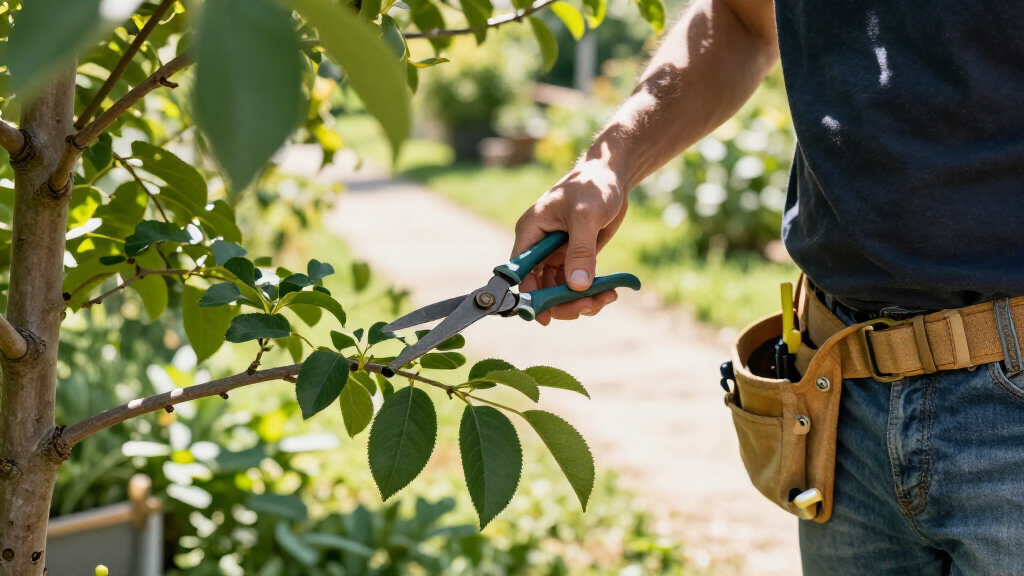
How We Picked
I ranked these tools by how well their design matches common pruning jobs: hand-level trimming, thicker reachable branches, and overhead cuts. I weighed cutting style, reach, leverage or powered assistance, expected control, and versatility. A longer pole can reduce ladder use, but it can also make precise placement harder; a powered cutter can reduce hand fatigue, but adds battery and charging needs. For hand tools, I favored the usefulness of bypass blades for living wood while accounting for anvil designs that may better suit dead branches.
The order reflects practical fit across a range of home tree-care tasks, not a claim that one tool can handle every branch. Versatile options rank ahead of narrow specialists when their added capability serves more jobs without an obvious usability penalty. Compact pruners, long-reach tools, and electric models are ranked for their distinct strengths, with their limitations stated so readers can choose by task rather than by feature count. Where models have similar roles, the deciding factors are the cutting method, reach, and whether the added complexity solves a real need.
Factors to Consider When Choosing Best Tree Pruning Tools
Before choosing a tool, start with the cuts you make most often and the branch positions that cause trouble. A tool that reaches high branches may be awkward for routine shaping, while a powerful lopper cannot replace a saw on limbs beyond its cutting capacity. These broader factors can help you avoid buying an impressive-sounding tool that does not fit your yard.
Match the Tool to Branch Height and Working Position
Sort your pruning into ground-level, shoulder-height, and overhead work before focusing on advertised reach. Pole tools can help you keep both feet on the ground, but a fully extended pole is harder to aim and may flex or sway during a cut. A shorter working length often gives better control, even when a longer model offers more reach on paper. Do not treat a pole tool as a reason to cut from an unstable ladder; combining a long tool with a ladder can make balance and tool control worse. If most cuts are low, hand pruners or loppers are usually more direct. Choose maximum reach only when your trees actually require it.
Choose a Cutting Style for the Wood
Bypass blades pass one blade by another, a shape commonly suited to pruning living stems cleanly. Anvil tools press the blade against a flat surface, which can make them a practical option for dead or dry branches but may crush softer living material. A saw is more appropriate when a limb is too thick for a lopper or hand pruner, rather than forcing a cutter past its intended capacity. Many yards contain both live and dead wood, so think about which kind you handle most before choosing a single-purpose tool. Clean cuts depend on sharp blades and suitable technique as well as blade design. For mixed jobs, separate tools can be safer and more effective than asking one cutter to handle every branch.
Prioritize Control Over Maximum Cutting Force
Leverage systems and long handles can reduce the effort needed for a cut, but they do not make every thick branch suitable for lopping. If the handles spread too far for your stance or the branch is difficult to hold steady, the tool may slip or bind. Consider your grip strength, reach, and ability to position both handles around the branch. Powered shears can help with repeated hand-level cuts, though their weight, charging routine, and trigger control matter during longer sessions. A smaller, well-controlled cut is preferable to forcing a tool through a limb that calls for a saw. Let your comfort and the branch’s position guide the choice, not leverage claims alone.
Decide Whether Powered Tools Earn Their Extra Complexity
Cordless pruners and pole saws can reduce repetitive manual effort, especially when a job involves many cuts. That convenience comes with batteries to charge, components to maintain, and a need to manage power safely around moving blades or chains. For occasional seasonal pruning, a manual tool may be simpler to store and ready to use without planning. For frequent work, the time and effort saved may justify the added equipment. Check what is included and what the tool requires for charging or upkeep before purchase. If you rarely prune, avoid paying for power that will spend most of the year unused.
Plan for Maintenance, Storage, and Replacement Parts
Sharp, clean blades make pruning easier and help avoid ragged cuts, so maintenance should be part of the buying decision. Look for a design you can clean, inspect, and sharpen or service without excessive difficulty. Pole tools need enough storage space for their assembled or extended length, while cordless models also need a dry place for batteries and charging equipment. Sap and debris can interfere with cutting, so expect to wipe tools down after use rather than leaving them dirty between seasons. Check whether wear parts or replacement components are available for the type of tool you choose. A tool that fits your storage and upkeep habits is more likely to stay useful.
Buy for Your Most Frequent Job, Not the Rare Exception
A broad kit or multi-function pole tool can be appealing, but extra pieces do not help if they make setup cumbersome or remain unused. Identify the task that causes the most trouble, such as repeated hand pruning or reaching a few high limbs, and select around that need. A set of hand shears may suit varied garden trimming, while a dedicated pole saw makes more sense when height is the recurring obstacle. Buyers with only a few small trees may need fewer tools than the product list suggests. If your trees include heavy limbs or work near power lines, stop short of treating consumer pruning tools as a substitute for appropriate professional help. Spend on capability you will use regularly.
Frequently Asked Questions
Should I buy a pole saw or a pole pruner for high branches?
Choose a pole pruner when the branches are within its cutting capacity and you want a controlled snip from the ground. A pole saw is better for limbs too thick for a pruning mechanism or for cuts that need a sawing action. Some tools combine both, which can reduce the number of separate tools but may add weight and setup steps. Think about the thickness and type of your usual overhead cuts, not just the maximum reach. If you cannot position the tool steadily, stop rather than forcing a cut.
Are cordless pruning shears worth choosing over manual pruners?
They can be worthwhile when you make many repeated hand-level cuts and manual squeezing causes fatigue. For occasional pruning, a manual bypass pruner is simpler to carry, store, and use without charging. Powered shears also require careful trigger control because the blade moves with less effort than a hand tool. Compare the work volume you expect with the added battery and maintenance routine. If you have only a few branches to trim each season, manual pruners may be the more practical choice.
Can loppers replace a pruning saw?
No, loppers are meant for branches that fit comfortably within their jaws and cutting capacity. A branch that is too large can jam the blades, strain the tool, or encourage an unsafe amount of force. A saw is the better choice for thicker limbs that need a longer cutting action. Reach also matters: long lopper handles do not make overhead cuts easy to control. Match the tool to both branch thickness and position, and avoid forcing a cut.
Should I choose bypass or anvil pruners for tree branches?
Bypass pruners are generally the more suitable choice for living branches when a clean cut matters. Anvil pruners press material against a flat surface and can be useful on dry or dead wood, though they may crush softer stems. The condition and thickness of the branch matter as much as the label on the tool. Keep blades sharp and avoid cutting wood beyond the tool’s intended capacity. If your yard has both living and dead growth, separate tools or a saw may serve you better than relying on one pruner style.
Is a longer-reach pole tool always the better choice?
No. More reach can let you work from the ground, but a fully extended pole is harder to aim and control. For branches within reach at a shorter setting, reduced extension can make accurate placement easier. Long poles also take more space to store and can feel cumbersome during repeated cuts. Buy for the highest branches you genuinely need to prune, not for the largest number on the package. If a cut is out of control from a stable position, leave it to a qualified tree-care professional.
Conclusion
For most homeowners who need both elevated cutting and a saw option, I recommend the Fiskars Extendable Tree Pruner and Pole Saw as the best overall fit. For a lower-complexity route into routine pruning, consider the BIDMLI 4-Piece Stainless Steel Garden Pruning Shears Set as a value-oriented hand-tool option, while beginners with a small number of clean, hand-level cuts may prefer the straightforward DECERK 8.5-Inch Professional Bypass Pruning Shears. Buyers willing to add battery care for powered hand pruning should look at the Fanttik Y10 Pro as the premium-style choice for repeated cuts. For high, thicker limbs, compare the VANKERY cordless pole saw with manual pole options; for thick reachable branches, the Fiskars PowerGear2 lopper is the more targeted pick. Choose by your most common branch height and cutting task, then add a specialist tool only when your yard calls for it.