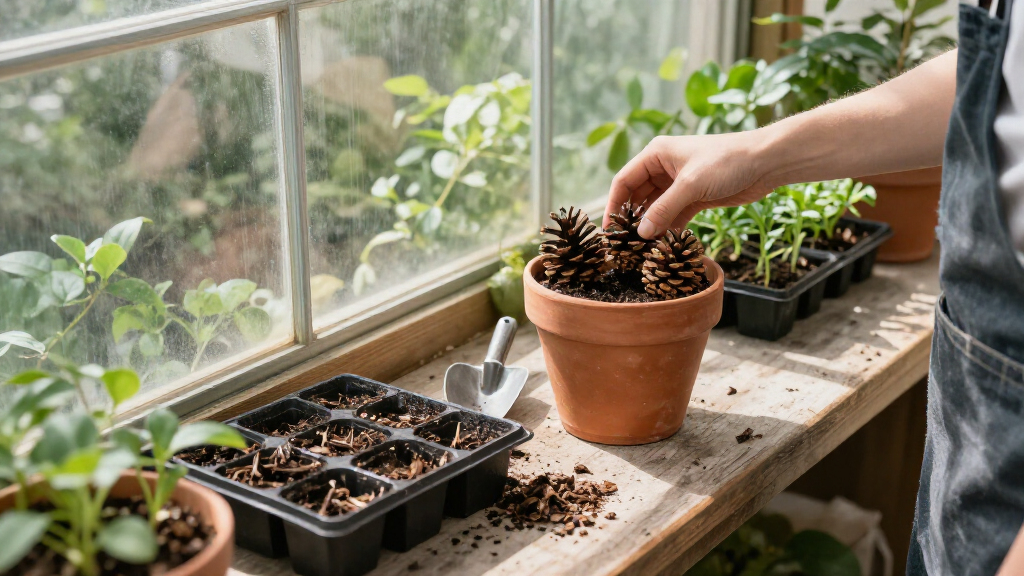
Looking for pine cone potting supplies for containers, bonsai, orchids, or houseplants? The products here are pine bark materials rather than whole pine cones, so they’re better suited to soil mixes and surface topping than to decorative cone arrangements. I rank Soil Sunrise Natural Pine Bark Mulch Nuggets first for its larger 12-quart supply, Rio Hamza Trading Natural Pine Bark Mulch Nuggets as the more measured all-purpose option, and Pine Bark Fines for small-particle mixes and detail work.

Get garden gear delivered free with Prime
- Fast, free delivery on millions of items
- Prime Video, Amazon Music and more included
- Member-only deals all year
The main choice is particle size and quantity. Finer bark can fit compact pots and plants such as orchids or bonsai, while larger nuggets make a more visible top layer and provide more room between particles. The 2-quart fines pouch is easiest to store and handle, but it contains far less material than either mulch product. My picks are based on those practical differences, not on a claim that one bark size suits every plant.
Complete the kit



Key Takeaways
- Soil Sunrise is the volume pick: its 12 quarts suit several containers or repeat potting projects, but the small chips may be too fine for uses that need larger bark.
- Rio Hamza Trading is the balanced general-purpose choice: its 1/2-inch average pieces and 8-quart quantity work for containers and decorative topping without buying the largest bag.
- Pine Bark Fines suit detail work: the 3–6 mm particles fit finer mixes, bonsai, and orchid pots, though the 2-quart pouch is the smallest supply here.
- Choose by plant and pot, not by the word “pine”: finer bark fills tighter spaces; chunkier pieces leave more open structure and create a more visible surface.
- These are bark products, not whole pine cones: none of the three is a substitute for decorative cones or a complete potting mix.
| Soil Sunrise Natural Pine Bark Mulch Nuggets, 12 Quarts |  | Best Overall for Multi-Pot Projects | Material: Pine bark; described as 100% natural | Piece size: Small chips; exact measurement not provided | Volume: 12 quarts | VIEW LATEST PRICE | See Our Full Breakdown |
| Natural Pine Bark Mulch Nuggets, 8 Quarts |  | Best Balanced Choice for Containers | Material: 100% pine bark | Piece size: Average 1/2 inch | Volume: 8 quarts | VIEW LATEST PRICE | See Our Full Breakdown |
| Pine Bark Fines, 2 qt, 1/4-Inch Particle Size |  | Best for Bonsai, Orchids, and Fine Mixes | Material: Pine bark | Particle size: 1/4 inch; 3–6 mm | Volume: 2 quarts | VIEW LATEST PRICE | See Our Full Breakdown |
| pine cone potting supplie | Material | Volume | Piece size | Weight |
|---|---|---|---|---|
| Soil Sunrise Natural Pine Bark | Pine bark; described as 100% natural | 12 quarts | Small chips; exact measurement not provided | 2.32 kg |
| Natural Pine Bark Mulch Nugget | 100% pine bark | 8 quarts | Average 1/2 inch | 3.3 pounds |
| Pine Bark Fines | Pine bark | 2 quarts | — | — |
More Details on Our Top Picks
Soil Sunrise Natural Pine Bark Mulch Nuggets, 12 Quarts
I rank Soil Sunrise first for buyers who need a useful amount of natural pine bark for several containers, houseplant toppers, or terrarium projects. Its 12-quart volume is the largest in this lineup, giving it a practical advantage over the 8-quart Rio Hamza Trading bag if you expect to work across multiple pots. The product is described as small chips, so it offers a more noticeable surface layer than the 3–6 mm Pine Bark Fines, while remaining aimed at container gardening rather than large landscape coverage.
That combination makes this a flexible pick, but the larger volume only helps if its particle size suits the job. The listing does not specify an exact chip measurement, unlike Rio Hamza Trading’s average 1/2-inch nuggets and the fines’ 3–6 mm range. If you need a precisely sized medium for a particular mix, the more clearly specified alternatives are easier to judge. And though the bark is described as 100% natural, the supplied details do not say that it includes no added fertilizers or pesticides, a detail that Rio Hamza Trading states directly.
For a buyer refreshing several houseplant pots, the extra quantity reduces the need to split a project across small packages. For someone with one small orchid or bonsai pot, however, the 2-quart fines may be a better match, especially if a fine particle size is part of the plan. Choose Soil Sunrise for volume and broad container use; skip it if you need a measured particle size or only a small amount.
Pros:- 12-quart volume provides the largest supply in this comparison.
- Made from 100% natural pine bark, according to the product details.
- Intended for indoor and outdoor containers, houseplant toppers, and terrariums.
- Can be used as a soil supplement or decorative surface layer.
Cons:- The listing calls the pieces small chips but gives no exact particle measurement.
- Small chips may not suit projects that call for larger bark pieces.
- The supplied details do not specify whether fertilizers or pesticides are absent.
Best for: Houseplant owners and container gardeners who want a larger supply of natural pine bark for multiple pots, terrariums, or repeated topping projects.
Not ideal for: Buyers who need a specifically measured particle size, a small amount for one compact pot, or larger, clearly defined mulch pieces.
- Material:Pine bark; described as 100% natural
- Piece size:Small chips; exact measurement not provided
- Volume:12 quarts
- Weight:2.32 kg
- Intended use:Indoor and outdoor container gardening
- Other uses:Houseplant topping and terrariums
Our verdict“I’d choose Soil Sunrise for several container projects when quantity matters more than a precisely stated chip size.”
Natural Pine Bark Mulch Nuggets, 8 Quarts
Rio Hamza Trading earns the balanced-choice spot because it pairs a stated average 1/2-inch piece size with an 8-quart supply. That is a useful middle ground between Soil Sunrise’s larger 12-quart package and the fine 2-quart pouch. For a buyer who wants bark for a container or a decorative soil cover but does not want the largest quantity, the combination is easier to plan around than an unspecified “small chips” description.
The product is made from 100% pine bark, with no added fertilizers or pesticides listed. It is presented for container gardening, terrariums, landscaping, and bonsai care, and the bark can support drainage and water retention when used appropriately. The 1/2-inch average also makes it visibly chunkier than the 3–6 mm Pine Bark Fines, so it is less suited to a fine-textured mix or a small pot where larger pieces may crowd the available space.
The package size is a real limit: the supplied information estimates that 8 quarts covers about one large 12-inch pot. That may be a good amount for one substantial container, but it is less appealing for a multi-pot refresh than Soil Sunrise’s 12 quarts. Compared with the fines, it gives a more substantial bark layer and broader project quantity, but sacrifices the pouch’s compact storage and fine particle scale. This is my pick for a defined, medium-size container job, not a one-size-fits-all bark ingredient.
Pros:- Made from 100% pine bark with no added fertilizers or pesticides listed.
- Average 1/2-inch piece size gives buyers a more specific sizing reference.
- 8-quart quantity suits a substantial container project.
- Listed for containers, terrariums, landscaping, and bonsai care.
Cons:- The supplied amount is estimated to cover about one large 12-inch pot.
- Pieces may be too small for some landscaping applications.
- Chunkier pieces may not fit fine-textured mixes or very compact pots as well as the fines.
Best for: Container gardeners who want a known, average 1/2-inch bark size, a moderate quantity, and material specifically listed without added fertilizers or pesticides.
Not ideal for: Growers who need very fine bark for compact pots, buyers covering many containers, or anyone seeking large landscape-grade pieces.
- Material:100% pine bark
- Piece size:Average 1/2 inch
- Volume:8 quarts
- Weight:3.3 pounds
- Fertilizers or pesticides:None added
- Brand:Rio Hamza Trading
- Listed uses:Containers, landscaping, terrariums, and bonsai care
Our verdict“I’d pick Rio Hamza Trading when a measured 1/2-inch bark size and a mid-range quantity matter more than maximum volume.”
Pine Bark Fines, 2 qt, 1/4-Inch Particle Size
This is the specialist pick for buyers who need small, consistent bark particles rather than a larger bag for topping several pots. The 3–6 mm size is the finest option in the lineup, making it a more natural fit for bonsai, orchids, succulents, and cacti than either mulch product. Rio Hamza Trading’s average 1/2-inch nuggets are substantially larger, while Soil Sunrise offers more material but does not give an exact particle measurement.
The product description says the fines can absorb nutrients during fertilization and release them back to plants, and that they can help keep orchids upright in their pots. Those are useful roles for a bark component, but the 2-quart quantity makes this a focused purchase rather than a general supply for a large number of containers. If you are topping several houseplants or want a more visible layer, Soil Sunrise is the better quantity choice. If you need a medium-size surface mulch, Rio Hamza Trading is more aligned with that purpose.
The resealable stand-up pouch, made from recycled materials, adds a storage advantage that the other listings do not specify. U.S.-sourced bark is another clear point of distinction. The tradeoff is that fine particles are not a universal substitute for chunkier bark: a plant or mix that needs larger pieces may not benefit from this size. I would choose it for targeted repotting or small batches, not as the default bark purchase for every pot in the home.
Pros:- 3–6 mm particles suit fine-textured potting and smaller containers.
- Listed for bonsai, orchids, succulents, cacti, and other potted plants.
- Description says the bark can absorb and release nutrients during fertilization.
- Resealable stand-up pouch is made from recycled materials.
Cons:- At 2 quarts, it is the smallest quantity in this comparison.
- Fine particles may not suit plants or projects that call for larger bark pieces.
- Its specialist size is less useful as a general decorative mulch than the nugget products.
Best for: Bonsai and orchid growers, or anyone mixing small quantities of fine bark into a compact potting setup.
Not ideal for: Buyers who need larger bark pieces, a decorative chunky top layer, or enough material for many containers.
- Material:Pine bark
- Particle size:1/4 inch; 3–6 mm
- Volume:2 quarts
- Item weight:16 ounces
- Origin:United States
- Packaging:Resealable stand-up pouch made from recycled materials
- Listed uses:Bonsai, orchids, succulents, cacti, and other potted plants
Our verdict“I’d choose these fines for small-scale bonsai or orchid work when particle size matters more than package volume.”
How We Picked
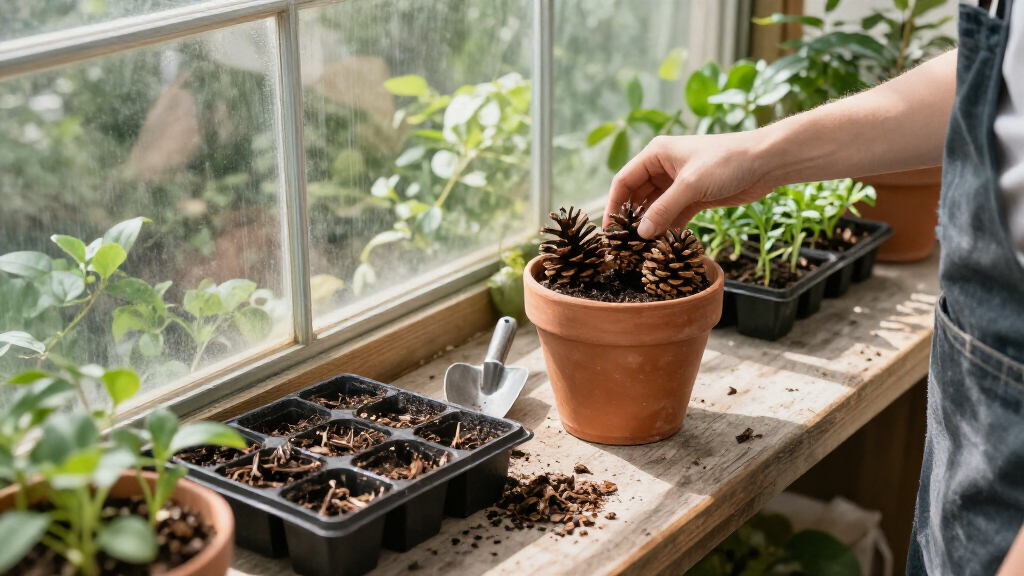
I compared these three products as pine bark potting supplies, focusing on what a buyer needs to choose for a real container or potting project. I looked first at particle size, because the difference between 3–6 mm fines and average 1/2-inch nuggets changes how the material fits among roots, how prominent it looks on top of soil, and which projects it makes sense for.
Next, I weighed quantity against likely use. The 2-quart pouch is a compact option for small pots or mix adjustments; the 8-quart product is a middle ground; and the 12-quart bag makes more sense when several containers need topping or filling. A larger package is not automatically better if the bark is too coarse or the user only needs a handful.
I also considered the stated material and intended applications. Rio Hamza Trading specifies 100% pine bark with no added fertilizers or pesticides, while the Soil Sunrise listing describes its material as 100% natural pine bark. The fines listing identifies U.S.-sourced bark and a resealable pouch made from recycled materials. Those details help distinguish the options, but they do not establish that any bark product can replace a plant-specific potting medium. Bark can be used as a component or topper; buyers still need to match the overall mix and watering routine to the plant.
My ranking gives the first spot to the product with the most useful supply for a broad range of container projects, then separates the smaller, more controllable 8-quart nuggets from the specialist fine-particle pouch. Fit matters more than a universal winner: growers needing coarse structure should not assume that fine chips will do the same job, and a small-pot owner may have no reason to store 12 quarts.
| pine cone potting supplie | Piece size | Listed uses |
|---|---|---|
| Soil Sunrise Natural Pine Bark | Small chips; exact measurement not provided | — |
| Natural Pine Bark Mulch Nugget | Average 1/2 inch | Containers, landscaping, terrariums, and bonsai care |
| Pine Bark Fines | — | Bonsai, orchids, succulents, cacti, and other potted plants |
Factors to Consider When Choosing Best Pine Cone Potting Supplies
The right bark depends on the job you expect it to do. I’d start with the plant, pot size, and role of the bark—mix ingredient, support around roots, or decorative surface layer—then compare particle size and package quantity.Match particle size to the pot and plant
Particle size changes both fit and appearance. The Pine Bark Fines have the smallest specified pieces at 3–6 mm, making them the clearest option for small pots and fine-textured mixes. Rio Hamza Trading specifies an average 1/2-inch piece, so its nuggets create a more visible, chunkier layer. Soil Sunrise is described as small chips, but without an exact measurement; that makes it less predictable for a recipe that calls for a specific size.
Do not treat these products as interchangeable just because they are all pine bark. A large piece can take up too much room in a compact pot, while a fine particle may not create the look or structure a buyer wants from a chunkier mulch. If you are following a plant-specific mix, use the particle size and ingredients that mix calls for rather than choosing by the product name alone.
Decide whether bark is a mix ingredient or a topper
As a potting-mix component, bark is selected for how it combines with the other materials in the container. As a topper, it sits over the soil and affects the finished appearance. Rio Hamza Trading and Soil Sunrise are both listed for use as supplements or decorative covers, while the fine bark listing emphasizes potted plants and uses such as helping orchids remain upright.
A topper is not the same thing as a complete potting medium. These products do not provide a full recipe for every plant, and the descriptions do not replace guidance on watering, drainage holes, or other mix components. I’d choose the bark for its stated role, then check that the complete setup still suits the plant’s needs.
Buy enough, but do not let volume decide by itself
The package sizes make the choices easy to separate: 2 quarts for targeted work, 8 quarts for a defined container project, and 12 quarts for multiple pots. The 2-quart fines pouch is the least cumbersome if you are adjusting a small batch. The 8-quart Rio Hamza Trading bag is estimated to cover about one large 12-inch pot. Soil Sunrise provides the most material for buyers refreshing several containers or planning repeat use.
More bark is not a bargain if the particle size is wrong for your purpose or the remainder will sit unused. For one small orchid, the fines may be a closer fit despite the smaller package. For several houseplant toppers, the Soil Sunrise quantity may reduce the need to buy multiple small packs. Estimate the volume of your pots and the depth of any top layer before choosing.
Check material details and storage needs
Product descriptions differ in how much they say about composition. Rio Hamza Trading explicitly lists 100% pine bark with no added fertilizers or pesticides. Soil Sunrise describes its bark as 100% natural. The fines are identified as U.S.-sourced pine bark and come in a resealable stand-up pouch made from recycled materials. These are useful distinctions when comparing listings, but they do not tell you everything about how a product will perform in a particular plant mix.
Storage may matter if you purchase more than you can use at once. The fines listing specifically describes a resealable pouch; the other product details supplied here do not provide the same packaging information. If you opt for a larger quantity, plan to keep the unused bark dry and contained according to the package directions.
Do not confuse pine bark with pine cones
The phrase “pine cone potting supplies” can bring to mind whole cones, but these three products are pine bark, not whole pine cones. Bark is the relevant material here for potting mixes, container use, or a soil surface layer. If your goal is a decorative display made from cones, none of these products serves that purpose.
Likewise, bark is not automatically suitable for every plant just because it is natural. Think about whether you need fine particles, medium-size nuggets, or a larger visible mulch, and match that choice to the plant and container. This simple distinction prevents a common mismatch between a decorative material and a product intended for use around potting soil.
Frequently Asked Questions
Are these products made from pine cones?
No. The three products in this comparison are made from pine bark, not whole pine cones. They are listed for potting, container use, or soil topping. If you want intact cones for a decorative arrangement, these are not the right products.
Which option has the finest particles?
Pine Bark Fines has the smallest stated particle size at 3–6 mm. That makes it the most clearly defined choice for fine-textured work among these options. Rio Hamza Trading specifies an average 1/2-inch size, while Soil Sunrise describes small chips without giving an exact measurement.
Which product is best for several container projects?
I’d start with Soil Sunrise’s 12-quart bag if you plan to use bark across multiple containers or repeat projects. Its larger volume is the main advantage over the 8-quart Rio Hamza Trading product and the 2-quart fines pouch. Check that its small-chip size fits your intended use before choosing it for a mix that requires a specific particle range.
Can I use pine bark as a complete potting mix?
These listings describe pine bark as a supplement, topper, or material for particular potted-plant uses; they do not establish any of the three as a complete potting mix for every plant. I’d treat bark as one component unless your plant-care plan specifically calls for a bark-based medium, and follow the needs of the plant when choosing the other ingredients.
Which product should I choose for orchids or bonsai?
The 3–6 mm Pine Bark Fines is the most specialized choice in this lineup for bonsai and orchids, and its description says it can help keep orchids upright in pots. Rio Hamza Trading also lists bonsai care, but its average 1/2-inch pieces are larger. Match the particle size to your pot and growing setup rather than assuming one bark size suits every orchid or bonsai.
Conclusion
For several houseplant or container projects, I’d choose Soil Sunrise for its 12-quart supply, provided its small-chip size suits the job. For a single larger container or a buyer who wants a stated average 1/2-inch piece size and no added fertilizers or pesticides, Rio Hamza Trading is the more measured choice. For bonsai, orchids, and small batches where finer particles matter, Pine Bark Fines is the specialist pick.
There is no universal winner among these materials: choose by particle size first, then by quantity. And if you meant whole pine cones rather than pine bark potting material, none of these three is a match.