
TL;DR
Rachel Bull, Homes & Gardens’ Head of Gardens, says she is using healthy winter rose prunings to grow new plants from varieties already thriving in her garden. Her Petals & Roots episode demonstrates preparing and potting hardwood cuttings, which she plans to leave through winter before considering planting them out in early March; success can vary by variety.
Rachel Bull, Head of Gardens at Homes & Gardens, is using healthy stems removed during winter rose pruning to grow new plants, demonstrating her hardwood-cutting method in a Petals & Roots episode. She says she plans to leave the potted cuttings in place through winter and hopes to use the resulting plants in a new rose garden around her raised beds, though the success of propagation varies by rose variety.

Get garden gear delivered free with Prime
- Fast, free delivery on millions of items
- Prime Video, Amazon Music and more included
- Member-only deals all year
Bull’s method begins with selecting a rose worth repeating: a plant that is healthy, vigorous and has performed well in the garden over several years. Its established growth can indicate that it suits the local soil and weather. She also advises gardeners to consider the rose’s form and preferred growing conditions before choosing where any new plants might go.
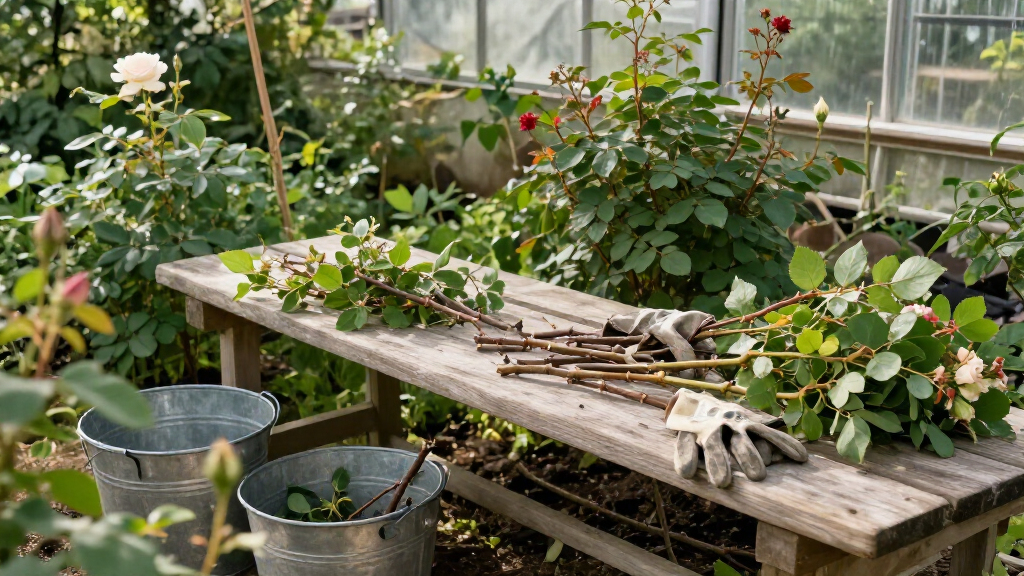
For the cuttings, Bull recommends choosing strong, mature hardwood stems and avoiding growth that is damaged, diseased or weak. Fresh, floppy stems should be removed rather than used. She describes hardwood cuttings as a relatively straightforward way to propagate many roses, while cautioning that results vary between varieties and require patience.
Bull says she potted her cuttings a few weeks before the episode and intends to leave them in place over winter. She will wait until early March before considering planting them into the garden. The episode does not report how many cuttings have rooted or provide a final survival rate.
Turn winter prunings into new roses
Rachel Bull is using healthy rose stems to grow plants for a new garden around her raised beds. The cuttings will stay potted through winter while she waits to see what takes root.
Choose stems worth growing
Start with roses that thrive in your garden and sturdy, mature hardwood growth.
Repeat a proven rose
Choose healthy, vigorous plants that have performed well over several years.
Weak or damaged stems
Do not use diseased, damaged, weak or fresh, floppy growth.
Give cuttings time
Bull potted her cuttings before the episode and plans to leave them in place through winter.
Plan for each rose
Match a new plant’s growth habit and preferred conditions to its location.
- Fill space around raised beds
- Soften fencing or a path
- Grow roses over a trellis
- Consider mature size and spread
- Allow for different growth habits
- Think about the rose’s growing conditions
A Low-Cost Route to More Roses
Using suitable prunings offers gardeners a way to try growing more roses from plants they already know and value, rather than buying every additional plant. For Bull, the plan is tied to a specific garden project: she wants to fill areas around raised beds and address bare fencing and open spaces in a large garden.
Repeating a variety can also carry the same colour, height, spread or fragrance into another part of a garden. That does not mean every cutting will take, or that a new plant will thrive in any location. Gardeners still need to match the rose’s mature size and growth habit to the available space and consider the conditions it needs.
The account is a practical example rather than a measured trial. It gives a seasonal approach and selection guidance, but it does not establish a success rate or promise that propagation will cost nothing once pots, compost and other supplies are considered. The main takeaway is that some healthy prunings can be put to use, with the outcome dependent on the rose and the care given to the cuttings.
Products Worth Considering

Husqvarna 435i 16-Inch Battery Chainsaw with 7.5 Ah Battery and Charger

Greenworks 60V 21-Inch Cordless Push Lawn Mower Kit

Husqvarna Automower 550 Commercial Robotic Lawn Mower
As an affiliate, we earn on qualifying purchases.
Why Winter Stems Can Be Used
The episode focuses on dormant hardwood stems, which Bull identifies as useful material for winter propagation. The guidance is aimed at people who already grow roses and can select sturdy, established growth during pruning. It is not a recommendation to use every stem removed from a plant: the advice specifically rules out damaged, diseased and weak material.
Bull is also thinking about where new roses could go before planting them. She mentions filling a fence line, softening a path, growing roses over a trellis or adding a fuller display near a patio. These ideas depend on the particular rose: a rambling rose and a hybrid tea, for example, can have different growth habits and space needs.
She says many roses in her garden are inherited varieties with unknown names, apart from David Austin Scarborough Fair, whose label remained. She is taking cuttings from a neighbour’s roses as well, citing their shared heavy clay soil as a reason she expects the plants to be suited to similar conditions. That expectation is hers; the outcome has not yet been reported.
““The important thing is to be patient.””
— Rachel Bull, Head of Gardens at Homes & Gardens
Rooting Results Are Still Pending
The episode describes a method and Bull’s plans, but does not report whether the cuttings have rooted, how many plants may survive, or which varieties will propagate successfully. Bull acknowledges that outcomes can differ by variety. Her expectation that her neighbour’s roses will take is based on the shared soil, not on a stated result.
The varieties of many roses already growing in Bull’s garden are also unknown. She names some roses she admires and hopes to grow, including Gertrude Jekyll, Lady of Shalott and Margaret Merril, but the account does not say that these varieties are among the cuttings she has already prepared.
Cuttings Stay Potted Through Winter
Bull plans to leave the potted cuttings in place over winter and wait until early March before considering planting them in the garden. A later update would be needed to confirm which cuttings rooted, whether they survived, and whether they were moved to the planned rose garden.
For gardeners following the approach, the next steps described are to select suitable sturdy stems, pot them, allow time for them to establish, and plan planting locations around each rose’s growth habit. Bull also mentions mulch and rose fertilizer as supplies to have available when planting young roses, but provides no specific product-use directions or guarantee of results.
Key Questions
Can winter rose prunings be used to grow new plants?
Some healthy, mature hardwood stems can be used as cuttings. Bull advises against using weak, damaged or diseased growth, and says success varies by variety.
When does Bull plan to plant her cuttings?
She plans to leave them potted through winter and says she will consider planting them in the garden in early March. The report does not say whether they have rooted yet.
Which roses does Bull hope to grow?
She says she admires Gertrude Jekyll, David Austin Lady of Shalott and Margaret Merril. The account does not confirm that these are among the cuttings she has already prepared.
Will every rose cutting grow successfully?
No success rate is given. Bull says hardwood propagation works for many roses, but results can vary by variety and gardeners need patience.
Source: homesandgardens.com