TL;DR
A container huddle groups potted plants closely together in a sheltered location to reduce exposure to wind and cold. Gardeners can add mulch, straw or a cover, but the method is not a substitute for moving plants indoors when they are not hardy in the local climate.
A gardening guide recommends grouping potted plants closely together in a sheltered spot as a winter-protection measure, saying the arrangement can reduce wind exposure and help moderate temperatures around roots. The method, known as a container huddle, may help hardy or borderline-hardy plants in pots, but it cannot make plants suited to warmer climates survive outdoors in conditions they cannot tolerate.

Get garden gear delivered free with Prime
- Fast, free delivery on millions of items
- Prime Video, Amazon Music and more included
- Member-only deals all year
According to the gardening guide, plants in containers face a different winter risk from plants growing in the ground: their soil and roots are exposed on all sides, rather than buffered by surrounding earth. The guide says small pots and containers made from thinner materials are especially vulnerable. It explains that grouping containers reduces the surface area exposed to cold and wind, while the pots and soil may provide some insulation for one another.
To make a huddle, the guide recommends choosing a spot sheltered from prevailing winter winds; a sunny location may also let pots absorb warmth during the day. It advises placing containers on soil when possible, rather than exposed decks, patios or hard surfaces, while keeping them able to drain. Pots should not sit in water that could freeze.
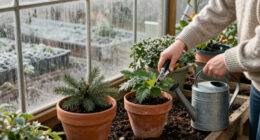
The guide advises arranging the largest pots around the outside of the group, where they can act as barriers, and placing smaller pots and less cold-hardy plants toward the center. Keep the containers close together. For added insulation, it suggests placing soil-filled pots around the group, adding mulch between containers, using straw, or covering the huddle with frost cloth or another insulating material. It says added covers are particularly useful when a sharp overnight temperature drop is expected.
Protect potted plants from winter with a container huddle
Group pots closely in a sheltered spot to reduce exposure to cold and wind. The method may help hardy or borderline-hardy plants, but it cannot replace bringing tender plants indoors.
Why pots need extra protection
Unlike in-ground roots, container roots are exposed to cold air around the sides and bottom of the pot.
Small pots face more risk
Small containers and thin-walled pots are especially vulnerable to temperature changes.
Group pots close together
Pots and soil may insulate one another while the group blocks some wind.
Build the huddle
Choose a sheltered location; a sunny spot may help pots absorb warmth during the day.
Place the largest pots around the outside of the group.
Keep containers close together, with smaller pots and less cold-hardy plants toward the middle.
Use mulch between pots, straw, soil-filled pots, or frost cloth when extra protection is needed.
Keep pots protected and draining
Place containers on soil when possible, while ensuring they can drain freely.
- Keep pots out of standing water that could freeze.
- Check for dry soil and water only when conditions are not cold enough for water to freeze.
- After rainy weather, check for excess moisture and clear drainage.
- Check that wind or animals have not displaced mulch, straw, or covers.
- Look for mold, moisture damage, or animal chewing.
How Grouping Pots Can Reduce Cold Exposure
The gardening guide presents the method as a way to protect container plants without moving every pot indoors. Its focus is the root zone: grouping containers can reduce direct exposure to cold and wind, and the combined pots and soil may help moderate temperature changes around the roots. The guide says this can be useful for plants that are hardy outdoors but more vulnerable when grown above ground in containers.
The guide also cautions that the advice is a practical measure, not a guarantee of survival. A huddle cannot change a plant’s hardiness or the severity of local winter weather. Gardeners still need to decide whether a plant can remain outdoors, needs additional protection, or should be moved inside.
Products Worth Considering

Weber Original Kettle Charcoal Grill, 22-Inch, Black

Husqvarna Power Axe 350i 18-Inch Cordless Chainsaw Kit

Orbit B-hyve XR 8-Zone Indoor/Outdoor Smart Sprinkler Controller
As an affiliate, we earn on qualifying purchases.
Why Container Roots Face Extra Winter Stress
The gardening guide explains that in-ground plants benefit from the surrounding soil’s insulating effect. Container plants do not have that same buffer, because cold air can reach the sides and bottom of their pots. The guide identifies pot size and material as factors, noting that smaller containers and thinner-walled pots are more exposed to temperature changes.
The guide presents the huddle as one option among several ways to overwinter plants, rather than a universal solution. Its suitability depends on plant hardiness, growing zone and seasonal weather. The guide recommends the approach chiefly for hardy plants that are more vulnerable because they are in containers, as well as some borderline-hardy plants.
Limits Depend on Plant and Local Weather
The gardening guide does not provide measured temperature changes, survival rates or trial data for container huddles. It describes likely insulating and wind-blocking effects, but does not quantify how much protection a particular arrangement provides. Results will depend on local temperatures, exposure, container materials and plant hardiness.
The guide also does not identify which individual plants can safely remain outdoors. Gardeners need to check the needs of each species and consider local winter conditions. The huddle is not presented as sufficient protection for plants that are not hardy in the area.
Monitor Pots Through the Winter
After arranging the huddle, gardeners should check the containers periodically, as the guide advises. It recommends looking for dry soil and watering when conditions are not cold enough for the water to freeze; it singles out evergreens as vulnerable to drying out. The guide also recommends checking for excess moisture after warmer, rainy weather and confirming that pots continue to drain.
Gardeners using mulch, straw or covers should check that wind or animals have not displaced the insulation. The guide also recommends looking for signs of mold, moisture damage or animal chewing. If a plant is unlikely to withstand outdoor conditions even with added protection, it advises treating it as an annual or moving it indoors for winter.
Key Questions
What is a container huddle?
It is a group of potted plants arranged close together, preferably in a sheltered location, to reduce wind exposure and help insulate the containers and roots, according to the gardening guide.
Which pots should go in the middle?
The guide recommends placing smaller pots and less cold-hardy plants toward the center, with the largest pots around the outside as barriers.
Can a container huddle protect any plant outdoors?
No. The guide says the method may help hardy or borderline-hardy plants that are more exposed in pots, but it cannot make a plant hardy in a climate where it cannot survive. Tender plants may need to be moved indoors or treated as annuals.
What should gardeners check during winter?
The guide recommends checking for dry soil, excess moisture, blocked drainage, displaced insulation and damage. Water only when conditions are not cold enough for the water to freeze, and make sure containers are not sitting in puddles.
Source: gardeningknowhow.com