Smart greenhouses use automation and IoT systems to optimize plant growth efficiently. Sensors gather real-time data on temperature, humidity, light, and soil moisture, allowing you to monitor conditions remotely. Automated climate control and irrigation adjust environment variables to reduce resource waste and energy use. These smart systems make maintaining ideal conditions easier and more precise, ensuring healthier crops. Keep exploring to discover how these technologies can transform your greenhouse operations remarkably.
Key Takeaways
- IoT sensors provide real-time data on environmental conditions, enabling precise adjustments for optimal plant growth.
- Automated systems regulate climate, irrigation, and shading to maintain ideal growing environments efficiently.
- Remote monitoring capabilities allow farmers to oversee and control greenhouse conditions from any location.
- Data-driven decision-making reduces resource waste and enhances sustainability in greenhouse operations.
- Continuous environmental management supports healthier crops, higher yields, and reduced labor requirements.
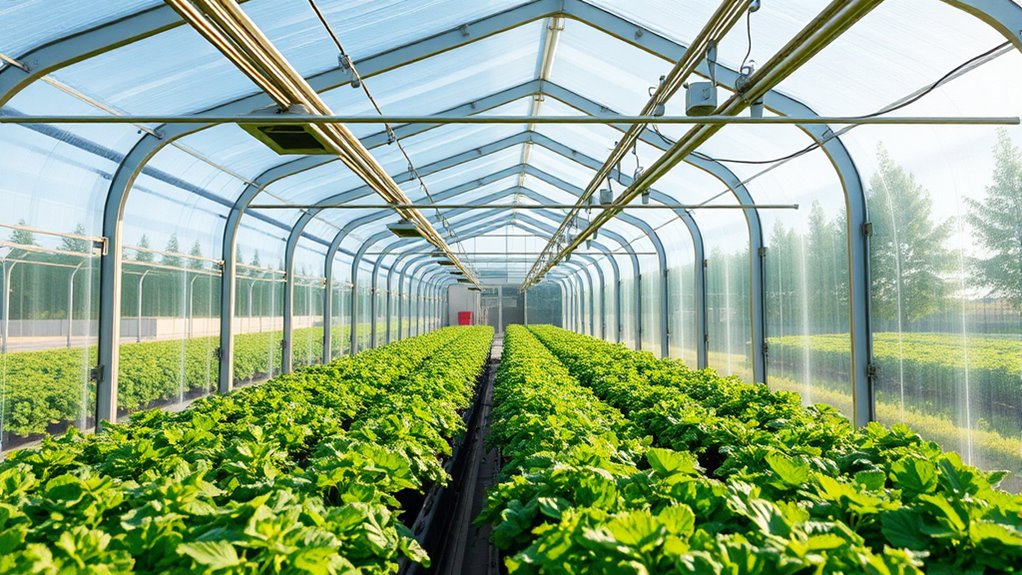
Smart greenhouses are revolutionizing agriculture by using advanced technology to enhance plant growth. These high-tech structures enable you to implement sustainable practices that reduce resource waste and boost efficiency. By integrating automation and IoT systems, you can closely monitor and control environmental conditions, guaranteeing plants thrive under ideal settings. One of the key advantages is improved crop monitoring, which allows you to gather real-time data on temperature, humidity, light levels, and soil moisture. This continuous flow of information helps you make informed decisions, minimizing guesswork and preventing issues like overwatering or temperature stress.
Smart greenhouses utilize automation and IoT to optimize plant growth and resource efficiency.
With smart greenhouses, you’re empowered to optimize resource use, making your operations more eco-friendly. Automated irrigation systems, for example, adjust watering schedules based on current soil moisture levels, reducing water consumption without sacrificing crop health. Similarly, climate control systems automatically regulate fans, heaters, or shading devices to maintain ideal growing conditions. These technologies not only save energy but also promote sustainable practices by decreasing dependency on chemical inputs and lowering overall environmental impact. Through precise crop monitoring, you can detect early signs of pests or disease, enabling targeted interventions that minimize pesticide use and protect beneficial insects and pollinators.
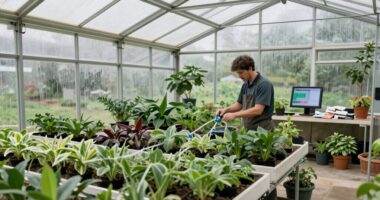
You’ll find that automation simplifies routine tasks, freeing up your time to focus on strategic planning and crop management. Sensors placed throughout the greenhouse constantly transmit data to centralized systems, which analyze the information and make adjustments as needed. This real-time responsiveness ensures your plants are always in their best state, regardless of external weather fluctuations. Furthermore, IoT connectivity allows you to remotely monitor your greenhouse from anywhere, giving you peace of mind and greater control over your operations. Understanding legalities and zoning regulations is essential for compliant greenhouse setup, especially in urban areas or land-restricted zones. Whether you’re managing a small urban farm or a large commercial setup, these technologies streamline workflows and enhance productivity.
Additionally, sustainable practices are integrated into the design and operation of smart greenhouses. By precisely controlling environmental factors, you reduce waste and energy consumption, aligning your efforts with eco-conscious goals. Crop monitoring systems provide valuable insights into plant health, enabling early detection of stress or deficiencies. This proactive approach results in healthier plants, higher yields, and better quality produce. Incorporating automated systems further enhances efficiency by reducing manual labor and human error. As you adopt these innovations, you’ll see that smart greenhouses not only improve crop performance but also support environmentally responsible agriculture, making your farming efforts more resilient and sustainable over the long term. Furthermore, understanding the role of environmental control helps optimize the balance between energy use and plant health, ensuring sustainable growth.
Implementing these technologies also allows for better resource management, which can significantly decrease operational costs while promoting sustainability.

TrolMaster GCS-1 Green-X Controller with 4-in-1 Sensor (Temp / Humid / CO2 / Light ) and Cable Set, Free Phone App.
- Slim, space-saving design: Ultra-slim profile for easy installation
- Expandable system: Supports various modules and sensors
- Garden DLI management: Control Daily Light Integral efficiently
As an affiliate, we earn on qualifying purchases.
As an affiliate, we earn on qualifying purchases.
Frequently Asked Questions
How Secure Is Data in Iot-Enabled Greenhouses?
You’re right to wonder about data security. In IoT-enabled greenhouses, cybersecurity risks can threaten your data privacy if proper safeguards aren’t in place. While these systems offer great benefits, they can be vulnerable to hacking or breaches. To keep your data secure, make certain you use strong passwords, regular updates, and encryption. Staying aware of potential risks helps protect your system and maintain the integrity of your greenhouse operations.
What Are the Initial Costs of Establishing a Smart Greenhouse?
When you consider establishing a smart greenhouse, the initial costs include equipment expenses like sensors, automation systems, and climate control devices. The cost estimation varies depending on greenhouse size and technology complexity. You should budget for setup, installation, and calibration, which can be significant. While upfront costs might seem high, investing in quality equipment guarantees better automation and IoT integration, leading to improved crop yields and long-term savings.
Can Automation Adapt to Different Crop Types?
Sure, automation can adapt to different crop types—because who wouldn’t want crop-specific automation that’s as flexible as a yoga instructor? With adaptive irrigation and tailored climate controls, you can optimize conditions for every crop. It’s almost like giving each plant a personal trainer. So yes, automation isn’t one-size-fits-all; it adjusts to your crop’s unique needs, making your greenhouse smarter and more efficient, one plant at a time.
How Is Energy Consumption Optimized in Smart Greenhouses?
You optimize energy consumption in smart greenhouses by integrating solar panels to harness renewable energy and reduce reliance on grid power. You also use energy storage systems to store excess energy generated during sunny periods, ensuring a steady power supply during cloudy days or nighttime. Automation controls adjust lighting, heating, and ventilation based on real-time data, minimizing waste and maximizing efficiency for healthy crop growth.
What Maintenance Is Required for Iot Devices in Greenhouses?
Caring for your IoT devices in greenhouses keeps your system humming smoothly. You’ll want to regularly perform gentle sensor calibration to guarantee accurate readings and apply firmware updates to keep devices running securely and efficiently. This upkeep may seem like a small detail, but it’s essential for peak performance, helping your greenhouse thrive. With consistent maintenance, your smart system stays reliable, letting you focus on nurturing healthy, vibrant plants.
Conclusion
Smart greenhouses show you how automation and IoT transform farming, making it more efficient and sustainable. Yes, some worry about costs or complexity, but imagine the joy of healthier plants and higher yields with less effort. Embracing this technology isn’t just about progress—it’s about nurturing your passion and ensuring a better future. Don’t let doubts hold you back; your green thumb can lead to smarter, greener growth today.