TL;DR

Get garden gear delivered free with Prime
- Fast, free delivery on millions of items
- Prime Video, Amazon Music and more included
- Member-only deals all year
A Homes & Gardens report advises giving newly planted evergreens extra attention during their first winter, when shallow, unestablished roots may not replace moisture lost from foliage. Deep watering during dry autumn weather, mulch around—but not against—the plant, and breathable wind screens where needed are the main recommended steps.
A Homes & Gardens report says newly planted arborvitae, boxwood, rhododendron, Japanese holly and yew may need extra care through their first winter, even when the varieties are generally hardy. Their roots may not yet reach enough soil to replace moisture lost from leaves to cold, sun and drying winds, so the report recommends watering during dry autumn spells, mulching and using breathable wind screens at exposed sites.
The report identifies moisture stress as a central risk for young evergreens. Winter foliage can continue losing water while frozen soil limits what roots can take up. A newly planted shrub or tree has a smaller established root system than a mature one, leaving it less able to cope with dry soil and wind. The report says a cold snap alone is not necessarily the whole problem; frozen ground, low soil moisture and wind can act together.
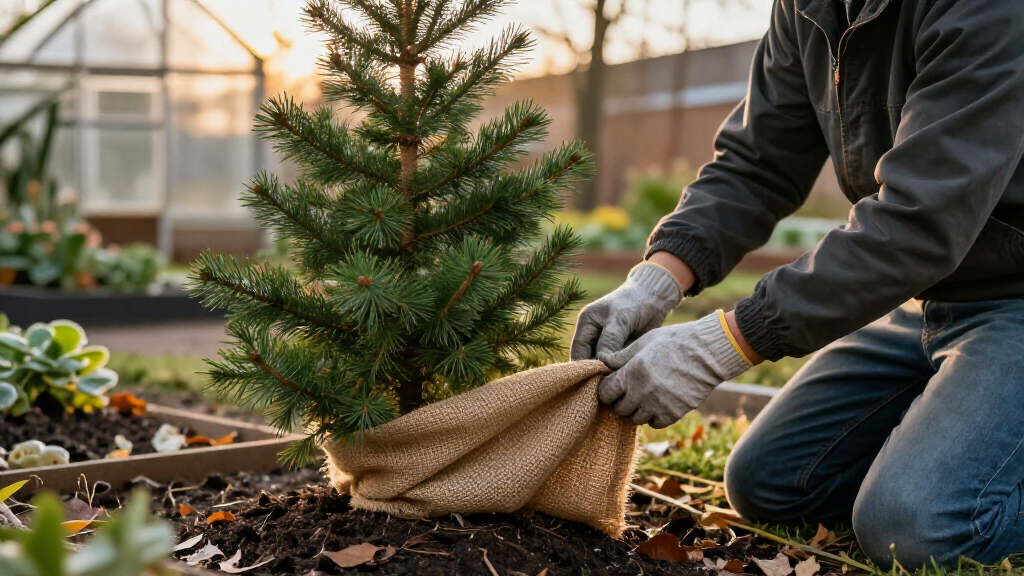
For all five plants, its general advice is to water deeply during dry autumn weather, with October given as a useful time to check conditions, and to add mulch over the root zone. Mulch should not be piled against trunks or stems, and rhododendron crowns should remain clear. The report recommends a breathable burlap wind screen for sites exposed to prevailing winds rather than tightly enclosing foliage. Plant-specific needs differ: rhododendrons require well-drained soil, while container-grown boxwood may need a sheltered position and insulation around its pot.
For arborvitae, the report flags taller, narrow forms as potentially vulnerable to winter burn and suggests gently tying loose branches before heavy, wet snow. For newly planted boxwood, it advises watering each plant in a hedge individually. With Japanese holly, gardeners are told to check cultivar hardiness and watch especially exposed plants at the ends of rows. Yew is included because its adaptability once established does not mean a recent planting already has a mature root system.
Protecting Roots Before They Settle
The guidance matters because evergreen leaves stay on the plant through winter, while newly planted roots may still be confined to the original root ball. If the soil dries or freezes, foliage can lose moisture faster than those roots can replace it. Preparing before the ground freezes gives gardeners a chance to address dry conditions and reduce exposure before winter weather makes watering and protection harder.
The advice also distinguishes between general care and site-specific protection. Not every new evergreen needs a screen or cover: the report ties those measures to wind exposure, plant type and local conditions. A screen can reduce wind without trapping the whole plant, while overwatering a rhododendron in poorly drained soil may create a different problem. Matching the measure to the planting site can help avoid both inadequate protection and unnecessary covering.
Products Worth Considering

Orbit B-hyve XR Smart Indoor/Outdoor Sprinkler Controller, 16 Zones

Orbit B-hyve Smart Indoor/Outdoor 12-Zone Sprinkler Controller

EGO POWER+ LB5302 Cordless Electric Leaf Blower with 2.5Ah Battery
As an affiliate, we earn on qualifying purchases.
Why First Winters Are Different
The report’s central distinction is between an established evergreen and one planted recently. Mature roots have had more time to spread into surrounding soil; a new plant’s roots have not. That difference can leave young plants more exposed to drying winter conditions, even when the species is considered hardy in the area.
The five plants are common choices for hedges, borders and screening, but they do not have identical needs. The report says rhododendron hardiness varies across the group and advises choosing a variety suited to the local USDA hardiness zone. It also says Japanese holly hardiness depends on cultivar and local conditions. The source gives seasonal garden-care guidance, not a guarantee that any particular plant will survive a given winter.
Local Conditions Shape Protection
The report does not specify a single watering volume, exact mulch depth for every species, or a temperature threshold for adding a screen or frost cover. Those choices depend on soil, drainage, plant size, exposure and local weather. Its October timing is presented as seasonal guidance, not a universal deadline; gardeners should respond to dry spells and the timing of ground freezes in their area.
The supplied report text ends partway through its discussion of yew, so it does not provide the full plant-specific instructions for that section. It also does not report a study or quantified survival rate comparing protected and unprotected plants. The recommendations should be understood as attributed gardening advice, not as measured results or a guarantee against winter damage.
Autumn Checks Before Freeze
Gardeners following the report can begin by checking whether recently planted evergreens have received rain and whether the root zone is dry. Before the ground freezes, water when needed, let excess water drain, then spread mulch while keeping it away from stems and crowns. At wind-exposed sites, a staked, breathable screen can be installed on the windward side; ties and fabric should be checked after storms so they do not rub or tighten around branches.
For container plants, move boxwood to a more sheltered location and insulate the pot, while taking off temporary frost covers during mild weather rather than leaving plants sealed in. Gardeners should check plant labels and local conditions for hardiness, particularly for rhododendron and Japanese holly. The next practical milestone is the arrival of frozen ground or severe winter weather, when watering may no longer be possible and a plant’s exposure becomes harder to change.
Key Questions
Which newly planted evergreens does the report say may need winter protection?
It covers arborvitae, boxwood, rhododendron, Japanese holly and yew. The level of protection depends on the plant and its site.
When should I water a new evergreen before winter?
The report recommends checking soil moisture and watering deeply during dry autumn spells, including in October where conditions call for it. Water before the ground freezes, and account for drainage needs; rhododendrons should not sit in waterlogged soil.
Should I wrap a new evergreen in burlap?
The report favors a breathable wind screen on the exposed, windward side when the site needs it, rather than binding the whole plant tightly. For loose arborvitae branches, soft ties can limit splaying without constricting them.
How should I protect a newly planted evergreen in a pot?
For container-grown boxwood, the report recommends moving the plant to a sheltered position and insulating the pot, because container roots face faster and colder temperature swings than roots in the ground. It also points readers to separate container-protection guidance for Japanese holly.
Source: homesandgardens.com