To stop mold in your greenhouse, control humidity by maintaining levels around 50-60% using a hygrometer and dehumidifiers. Improve air circulation with fans and proper plant spacing to prevent stagnant air. Regularly inspect for early signs of mold and remove infected material immediately. Keep environment dry and well-ventilated, and prune plants to enhance airflow. Consistent environmental management is key—stay a step ahead for effective mold prevention and treatment.
Prime for Young Adults — start your free trial
Fast free delivery, streaming and member deals for eligible 18–24 year olds.
As an affiliate, we earn on qualifying purchases.
Key Takeaways
- Maintain humidity levels around 50-60% and ensure proper ventilation to inhibit mold growth.
- Increase air circulation with fans and proper plant spacing to prevent stagnant, humid microclimates.
- Regularly inspect plants for early signs of mold and promptly remove infected material.
- Use dehumidifiers and environmental controls proactively to reduce excess moisture.
- Practice routine sanitation and pruning to improve airflow and minimize mold-friendly conditions.
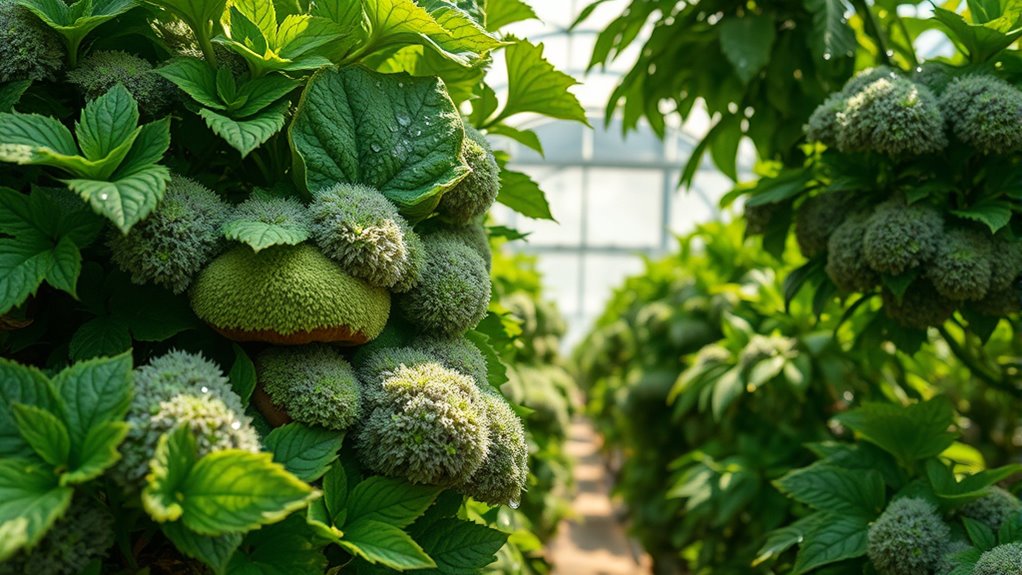
Greenhouse mold can quickly become a serious problem if left unchecked, affecting plant health and crop yields. Mold thrives in damp, stagnant environments, so managing humidity and ensuring proper air circulation are your first lines of defense. When humidity levels are too high, moisture lingers on plant surfaces and growing media, creating an ideal environment for fungal spores to settle and multiply. By regulating humidity, you reduce the likelihood of mold forming, making it less inviting for fungi to take hold. Using a hygrometer helps you monitor humidity levels, aiming for a range that supports healthy plant growth without promoting mold growth—typically around 50-60%. If you notice persistent dampness, consider using dehumidifiers or ventilation systems to keep the air dry and prevent excess moisture buildup.
Air circulation plays a critical role in preventing mold development. Stagnant air allows humidity to settle and creates microclimates where mold spores can thrive. You should ensure good airflow by strategically placing fans throughout your greenhouse, especially near dense plant clusters or shady corners where air tends to become stagnant. Proper spacing between plants also allows air to circulate freely around each specimen, reducing localized humidity pockets. Regularly pruning overgrown plants and removing debris further enhances airflow, ensuring that moisture doesn’t accumulate on leaves or soil surfaces. When you promote consistent air movement, you limit the conditions that foster mold growth, helping your plants stay healthy and vigorous.
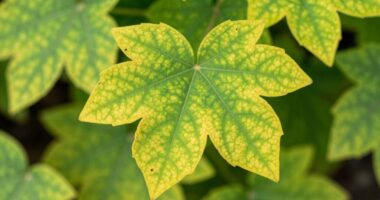
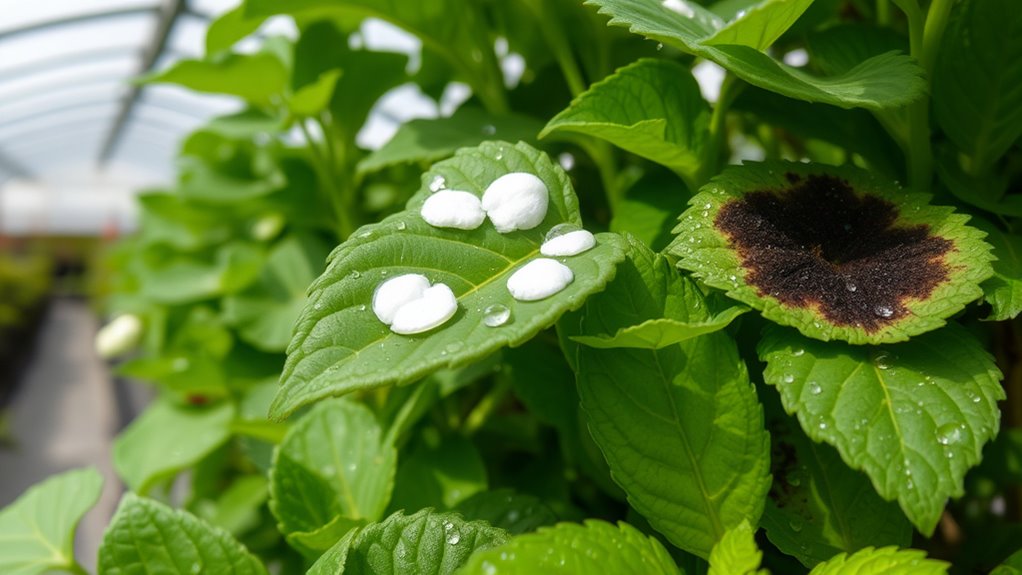
Monitoring is essential. Keep an eye out for early signs of mold—such as fuzzy patches or discoloration on leaves and stems. Acting swiftly at the first sign of trouble can prevent a minor issue from escalating into a full-blown outbreak. If mold appears, remove infected plant material immediately and dispose of it away from healthy plants to prevent spores from spreading. Applying fungicides can also be effective, but only when combined with good environmental controls like humidity regulation and air circulation. Remember, prevention is always better than cure, so maintaining ideal humidity and airflow should be part of your routine greenhouse management.
As an affiliate, we earn on qualifying purchases.
Frequently Asked Questions
What Environmental Factors Promote Greenhouse Mold Growth?
You should know that high humidity levels and poor air circulation promote greenhouse mold growth. When humidity stays elevated, mold spores thrive and spread easily. Additionally, stagnant air creates a damp environment, making it easier for mold to take hold. To prevent this, you need to maintain proper ventilation and keep humidity levels in check, ensuring air moves freely throughout your greenhouse. This minimizes mold risks and keeps your plants healthy.
Are There Organic Methods to Control Fungal Diseases?
Like a gardener tending a delicate bloom, you can use organic methods to control fungal diseases. Compost teas boost plant immunity, acting as a natural shield. Biological controls, such as beneficial fungi or bacteria, act as allies, outcompeting or inhibiting harmful fungi. These eco-friendly strategies help keep your greenhouse healthy, reducing reliance on chemicals. Embrace these methods to nurture your plants and maintain a thriving, disease-free environment.
How Often Should I Inspect My Greenhouse for Mold?
You should inspect your greenhouse regularly for mold, ideally at least once a week, to catch issues early. Consistent inspection frequency helps with mold monitoring and prevents outbreaks. Pay close attention to damp or shaded areas, and look for any signs of fungal growth. By maintaining this routine, you can address mold issues promptly, protecting your plants and maintaining a healthy greenhouse environment.
Can Mold Spores Affect Plant Nutrition?
Mold spores can negatively impact plant nutrition by interfering with nutrient absorption. When mold is present, fungal impact may compromise the roots’ ability to take in essential nutrients, leading to deficiencies. You should be aware that mold spores can spread quickly and affect overall plant health. Regularly inspecting your greenhouse helps catch mold early, minimizing its effect on plant nutrition and ensuring your plants stay healthy and vigorous.
What Are the Signs of Mold-Resistant Plant Varieties?
Think of mold-resistant plant varieties as your greenhouse’s immune system. Resistance indicators include thick, waxy leaves, sturdy stems, and vigorous growth, signaling strong plant health. When selecting plant varieties, look for those labeled as resistant, and observe their early development. For example, a gardener I know chose resistant tomato varieties with glossy leaves, noticing fewer mold issues. These signs help you identify plants better equipped to fight off mold naturally.
Conclusion
To keep mold at bay, stay vigilant like a watchful guardian, and act swiftly when signs appear. Think of your greenhouse as a delicate symphony—each plant, each breath, playing in harmony. By preventing mold and treating it early, you’re the conductor steering this melody clear of dissonance. With consistent care and awareness, you’ll nurture a healthy, vibrant haven where fungi fear to tread, and your plants flourish in the warm glow of your dedication.
NFL season / tailgating Picks
team gear
As an affiliate, we earn on qualifying purchases.