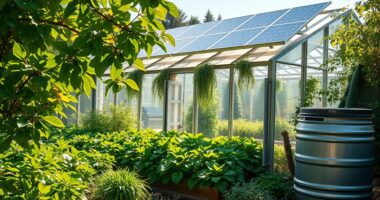
To design an eco-friendly greenhouse that works with nature, focus on sustainable materials like reclaimed wood or bamboo, and incorporate natural ventilation through strategic placement of vents and windows. Use thermal mass and shading to regulate temperature naturally, minimizing energy use. Optimize light transmission with suitable coverings, supporting healthier plant growth. By embracing these natural strategies, you’ll create a environmentally responsible space that maximizes efficiency. Continue exploring to discover how to balance design and sustainability seamlessly.

Get garden gear delivered free with Prime
- Fast, free delivery on millions of items
- Prime Video, Amazon Music and more included
- Member-only deals all year
Key Takeaways
- Use recycled, locally sourced, or eco-friendly materials to minimize environmental impact and support sustainability.
- Design for natural ventilation with strategic placement of vents and openings to reduce energy consumption.
- Optimize light transmission with appropriate greenhouse coverings that balance heat retention and natural light.
- Incorporate shading, thermal mass, and cross-breezes to regulate temperature naturally.
- Focus on eco-conscious strategies that enhance plant health, extend growing seasons, and reduce reliance on artificial systems.
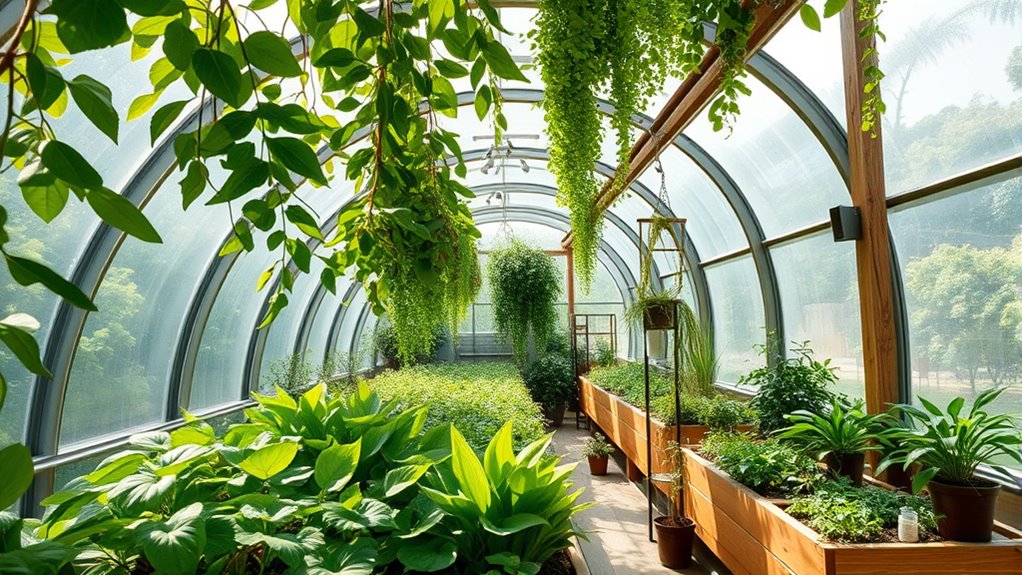
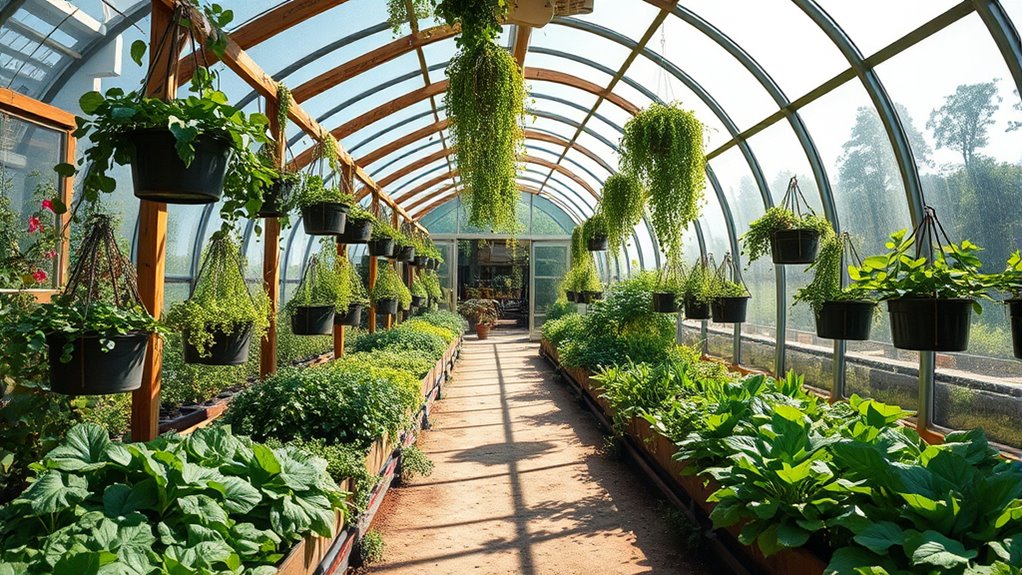
Have you ever wondered how the right greenhouse design can boost plant growth and extend growing seasons? One of the most effective ways to achieve this is by working with nature rather than against it. Sustainable materials play a pivotal role in creating an eco-friendly greenhouse. Instead of relying on traditional, resource-intensive options, you can choose recycled or locally sourced materials like reclaimed wood, bamboo, or recycled metal. These options not only reduce environmental impact but also often add a natural aesthetic to your greenhouse. Using sustainable materials helps minimize your carbon footprint and supports a circular economy, making your greenhouse more environmentally responsible.
Natural ventilation is another essential element that enhances the efficiency and sustainability of your greenhouse. Instead of depending heavily on energy-consuming fans or air conditioning, you can design your structure to maximize airflow naturally. Proper placement of vents, windows, and side openings allows fresh air to circulate freely, maintaining ideal humidity and temperature levels. This not only reduces energy costs but also creates a healthier environment for your plants. When you incorporate natural ventilation, you also help prevent issues like mold and fungal growth, which thrive in stagnant, humid conditions. Additionally, understanding the contrast ratio of your greenhouse materials can help you select coverings that optimize light transmission while minimizing heat loss, further supporting plant health.
Designing with natural ventilation in mind involves thoughtful planning. You might consider positioning vents on opposite sides of the greenhouse to encourage cross-breezes or installing roof vents that open automatically when internal temperatures rise. Combining these features with shading elements, like pergolas or shade cloths, can further regulate internal temperatures without the need for artificial cooling. Additionally, incorporating thermal mass materials—such as stone or concrete—can help moderate temperature fluctuations, absorbing heat during the day and releasing it at night. These strategies work together to create a self-regulating environment that aligns with natural processes.
eco-friendly greenhouse materials
As an affiliate, we earn on qualifying purchases.
As an affiliate, we earn on qualifying purchases.
Frequently Asked Questions
How Can I Incorporate Renewable Energy Sources Into My Greenhouse?
You can incorporate renewable energy sources into your greenhouse by installing solar panels for efficient solar integration, harnessing sunlight to power your systems. Additionally, consider adding small wind turbines to generate wind energy, especially if your location has consistent breezes. Combining these renewable sources reduces reliance on grid power and supports eco-friendly practices, helping your greenhouse operate sustainably while maintaining ideal conditions for your plants.
What Native Plants Are Best Suited for Eco-Friendly Greenhouse Environments?
You should focus on native plant selection that aligns with your region’s climate and soil conditions. Opt for plants well-adapted through regional plant adaptation, ensuring they thrive with minimal intervention. Native grasses, wildflowers, and drought-resistant shrubs often work best, providing ecological benefits and reducing resource use. By choosing regionally adapted native plants, you create a sustainable, eco-friendly greenhouse environment that supports local biodiversity and requires less maintenance.
How Does Composting Improve Greenhouse Sustainability?
Think of composting benefits as your secret weapon for a thriving greenhouse. When you compost, you turn waste into valuable nutrients, enriching your soil sustainably. This process improves soil health, boosts plant growth, and reduces reliance on chemical fertilizers. By embracing composting, you create a more eco-friendly environment, making your greenhouse a harmonious space where nature and gardening flourish together, ensuring long-term sustainability for your green haven.
What Are Low-Impact Materials for Greenhouse Construction?
You should choose sustainable building and eco-conscious materials like recycled steel, bamboo, or reclaimed wood for greenhouse construction. These materials reduce environmental impact, promote durability, and support eco-friendly practices. Using low-impact materials helps conserve resources and minimizes waste, aligning your project with green principles. By selecting eco-conscious options, you guarantee your greenhouse is both sustainable and resilient, working harmoniously with nature while reducing your carbon footprint.
How Can I Minimize Water Usage in My Greenhouse Design?
You can minimize water usage in your greenhouse by implementing rainwater harvesting systems and using drip irrigation. Rainwater harvesting collects and stores natural rain for plant use, reducing dependence on municipal water. Drip irrigation delivers water directly to plant roots, minimizing waste and evaporation. By combining these methods, you optimize water efficiency, conserve resources, and create a more sustainable greenhouse environment that works with nature rather than against it.
Conclusion
By embracing eco-friendly greenhouse design, you work with nature instead of against it. You harness sunlight and rain, blending technology with tradition. While modern materials and methods conserve resources, they also honor the environment. This balance between innovation and sustainability creates a space that nurtures plants and respects the earth. In choosing harmony over exploitation, you transform your greenhouse into a thriving, sustainable sanctuary—where progress and nature coexist beautifully, side by side.
Fall yard work Picks
leaf blowers
As an affiliate, we earn on qualifying purchases.