
Earth-sheltered and geothermal greenhouses naturally regulate temperature by using the surrounding soil as an insulator and a consistent underground heat source. The earth’s thermal mass absorbs heat during the day and releases it at night, while soil around the greenhouse minimizes heat loss or overheating. This combination keeps your plants stable year-round, reducing energy needs. Keep exploring to discover how these eco-friendly designs can transform your gardening experiences effortlessly.
Key Takeaways
- Earth-sheltered design uses surrounding soil as natural insulation, stabilizing internal temperatures year-round.
- Geothermal heat taps into the Earth’s constant underground temperature to provide reliable, renewable warmth.
- Thermal mass from soil absorbs and releases heat, reducing reliance on mechanical heating and cooling systems.
- Combining earth-sheltering and geothermal methods minimizes energy use, lowers costs, and enhances environmental sustainability.
- These natural temperature regulation techniques create a stable environment, supporting healthy plant growth and reducing temperature stresses.
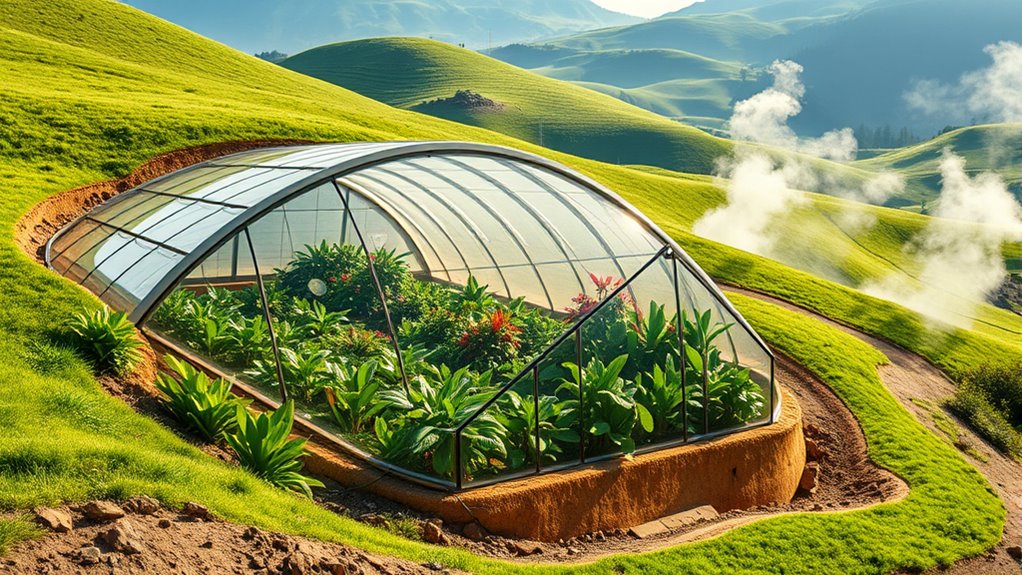
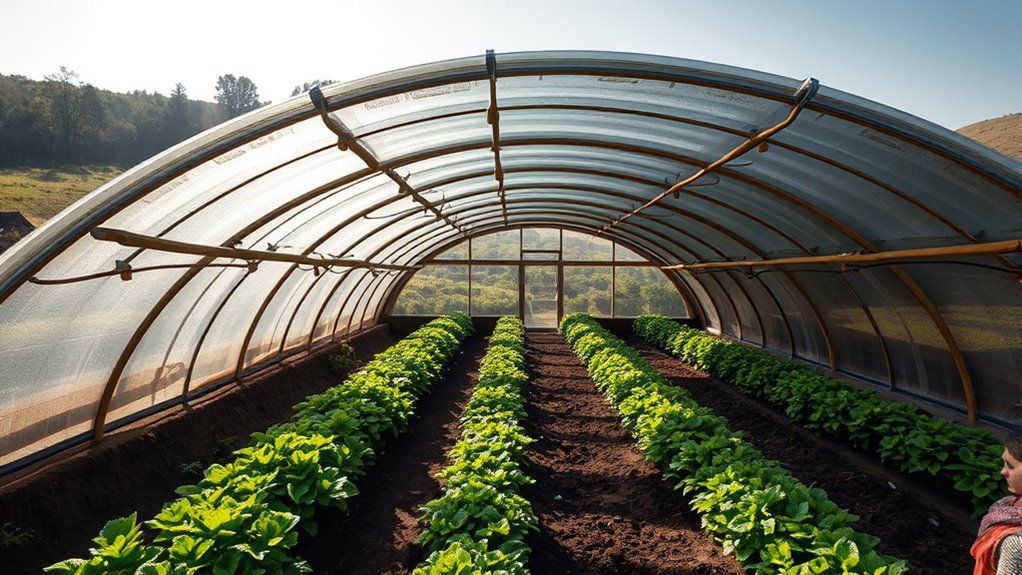
Greenhouses with earth-sheltered and geothermal heating offer an innovative way to grow plants year-round while reducing energy costs. By integrating natural temperature regulation methods, these greenhouses maximize thermal insulation, which is vital for maintaining stable internal temperatures. When you build a greenhouse with earth-sheltered design, the surrounding soil acts as a natural insulator, minimizing heat loss during cold months and reducing the need for supplementary heating. This thermal insulation not only keeps your plants warm but also prevents overheating in the summer, allowing you to create a stable environment regardless of external weather conditions.
Geothermal heating further enhances the energy efficiency of your greenhouse. This system taps into the earth’s constant underground temperature—typically around 50-60°F (10-15°C)—to provide consistent warmth. Instead of relying solely on traditional heating methods, you use this renewable energy source to heat or cool your greenhouse as needed. Because geothermal energy is highly efficient, it reduces your reliance on electricity or fossil fuels, cutting down your energy bills considerably. The combined effect of earth-sheltering and geothermal systems means your greenhouse maintains a balanced climate with minimal external energy input, making it more sustainable and cost-effective in the long run.
In addition to thermal insulation, these greenhouses benefit from the natural thermal mass of the earth, which buffers temperature fluctuations. During the day, the soil absorbs heat, preventing the interior from overheating. At night, stored heat slowly releases, keeping the environment warm enough for your plants. This natural thermal regulation reduces the workload on mechanical heating and cooling systems, further boosting overall energy efficiency. With less energy needed for climate control, you save money while also decreasing your carbon footprint.
Implementing earth-sheltered and geothermal heating systems requires some initial investment and planning, but the long-term benefits are substantial. You’ll experience more consistent plant growth, fewer temperature-related stresses, and lower energy expenses. These systems work silently and reliably, providing a stable environment that promotes healthy plant development throughout the year. Additionally, the eco-friendly nature of geothermal energy aligns with sustainable gardening practices, allowing you to cultivate crops responsibly.
Ultimately, by focusing on thermal insulation and leveraging earth’s natural heat, you create a greenhouse environment that’s both efficient and resilient. It’s an innovative approach that not only improves plant health and productivity but also helps you reduce your energy consumption and environmental impact, making it an excellent choice for sustainable gardening. Utilizing natural insulation helps maximize energy savings and environmental benefits.
Top picks for "earth shelter geothermal"
Open Amazon search results for this keyword.
As an affiliate, we earn on qualifying purchases.
Frequently Asked Questions
How Does Earth-Sheltered Construction Impact Long-Term Maintenance Costs?
Earth-sheltered construction helps you reduce long-term maintenance costs by enhancing structural durability, which means fewer repairs over time. The natural insulation minimizes temperature fluctuations, reducing HVAC needs and related expenses. You’ll benefit from less exposure to weather-related damage, lowering upkeep efforts. Overall, this approach offers significant cost reduction, as the sturdy design and natural protection extend the lifespan of your greenhouse, saving you money in the long run.
Can Geothermal Greenhouses Operate Effectively in Extremely Cold Climates?
You can absolutely operate geothermal greenhouses effectively in extremely cold climates, turning winter’s icy grip into your advantage. While they’re less solar-dependent, you’ll need to focus on crop diversity to maximize yields year-round. Think of it as harnessing the Earth’s warm heart beneath the frost. With proper insulation and geothermal heat, you create a cozy haven for plants, ensuring productivity despite the harshest weather outside.
What Are the Initial Investment Requirements for Earth-Sheltered Greenhouses?
You should expect a substantial initial investment for earth-sheltered greenhouses, with cost estimation depending on size, materials, and location. You might need to contemplate financing options like loans or grants to manage expenses effectively. While the upfront costs can be high, the energy savings and durability of earth-sheltered structures often offset these expenses over time, making it a worthwhile investment for sustainable, natural temperature control.
How Does Soil Type Affect Geothermal Heat Exchange Efficiency?
You should know that soil thermal properties considerably impact geothermal heat exchange efficiency; soils with high thermal conductivity, like sand or gravel, transfer heat more effectively. Drainage considerations also matter—well-drained soils prevent excess moisture that can hinder heat transfer. When selecting soil, prioritize those with favorable thermal properties and good drainage to optimize your greenhouse’s natural temperature regulation. Proper soil choice boosts energy efficiency and plant health in your geothermal greenhouse.
Are There Environmental Regulations Specific to Constructing Underground Greenhouses?
You can’t judge a book by its cover, and when building underground greenhouses, you need to take into account specific environmental regulations. You must ensure regulatory compliance to minimize the environmental impact, especially regarding soil disturbance, groundwater safety, and habitat preservation. Local, state, or federal agencies may have rules on excavation, waste disposal, and construction practices. Always check these regulations beforehand to avoid fines and protect the environment while creating a sustainable, efficient greenhouse.
Conclusion
By choosing earth-sheltered and geothermal greenhouses, you harness natural temperature regulation, reducing energy costs and environmental impact. Did you know that geothermal systems can cut heating energy use by up to 70%? This sustainable approach not only keeps your plants thriving year-round but also helps protect the planet. Embrace these innovative techniques to create efficient, eco-friendly greenhouses that work with nature—making your gardening efforts smarter and more sustainable.