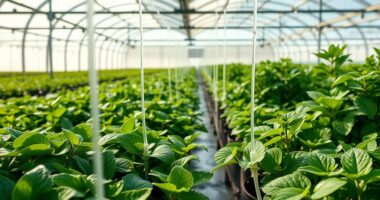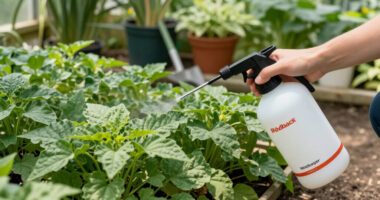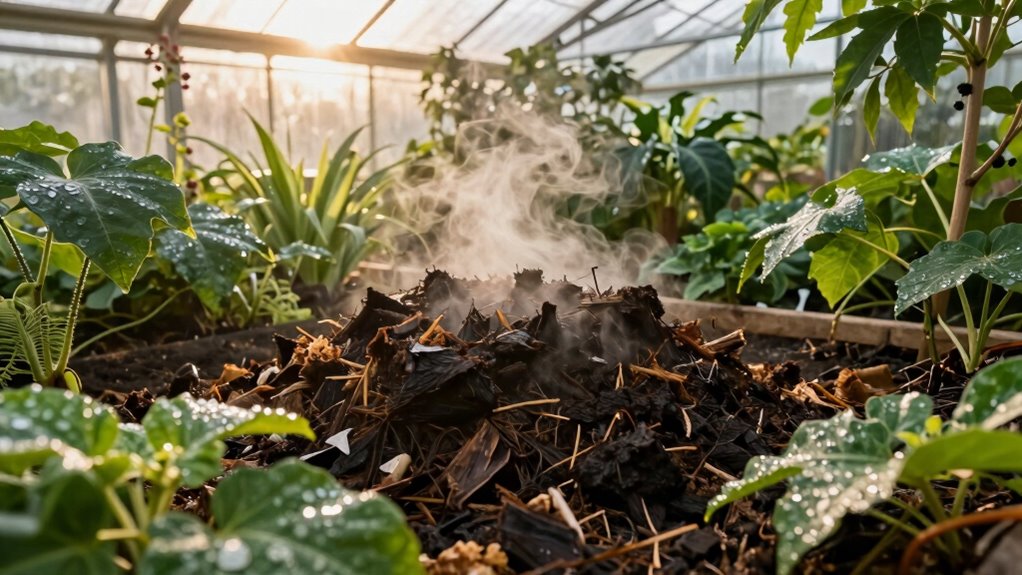

Yes, decomposing organic matter in compost generates heat through microbial activity, which can be harnessed to warm a greenhouse. When conditions like moisture, oxygen, and the right material mix are optimized, compost can produce significant warmth, especially in larger or well-managed piles. While it may not provide all the heat a greenhouse needs year-round, it can contribute beneficially, especially during cooler months. Keep exploring to discover how to maximize compost warmth for your greenhouse.

Get garden gear delivered free — and shop member deals
- Fast, free delivery on millions of items
- Access to Prime Big Deal Days deals on October 6–7
- Prime Video, Amazon Music and more included
Key Takeaways
- Microbial activity in compost releases heat, which can raise the temperature inside a greenhouse.
- Properly managed compost piles can generate sustained warmth suitable for small-scale greenhouse heating.
- Maintaining optimal moisture, aeration, and carbon-to-nitrogen ratio enhances microbial heat production.
- Insulating compost piles helps retain heat, increasing their effectiveness for greenhouse temperature regulation.
- Using compost as a heat source offers an eco-friendly, cost-effective alternative to traditional heating methods.
compost thermometer for greenhouse
As an affiliate, we earn on qualifying purchases.
As an affiliate, we earn on qualifying purchases.
How Compost Decomposition Generates Heat
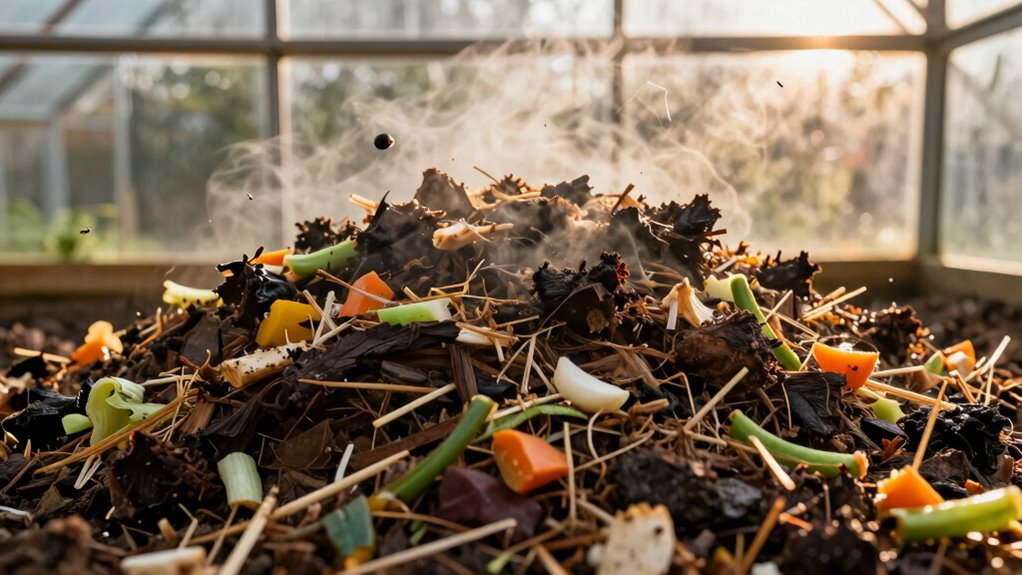
Have you ever wondered why compost piles feel warm to the touch? It’s mainly due to microbial activity breaking down organic matter. As microbes consume materials like food scraps and yard waste, they release energy in the form of heat. This heat retention builds up inside the pile, raising its temperature. Microbial activity accelerates when conditions are ideal—moisture, oxygen, and the right carbon-to-nitrogen ratio—enhancing heat production. The decomposition process creates a self-sustaining cycle: microbes generate heat, which speeds up their activity. This warmth isn’t just a byproduct; it’s a sign that decomposition is active and efficient. Understanding this process helps you appreciate how microbes turn waste into heat, making compost piles naturally warm during active decomposition. Additionally, thermal regulation impacts how effectively heat is retained and can influence the overall temperature within the composting environment. Modern composting techniques often incorporate controlled environment strategies to optimize microbial activity and heat generation, similar to how smart home systems manage internal climate conditions. Proper insulation of compost piles can also help maintain elevated temperatures, facilitating faster decomposition and pathogen reduction. In fact, maintaining optimal conditions can even allow compost to generate enough heat to warm nearby spaces, which can be useful for small-scale greenhouse heating.
Setting Up a Compost Heating Experiment for Your Greenhouse
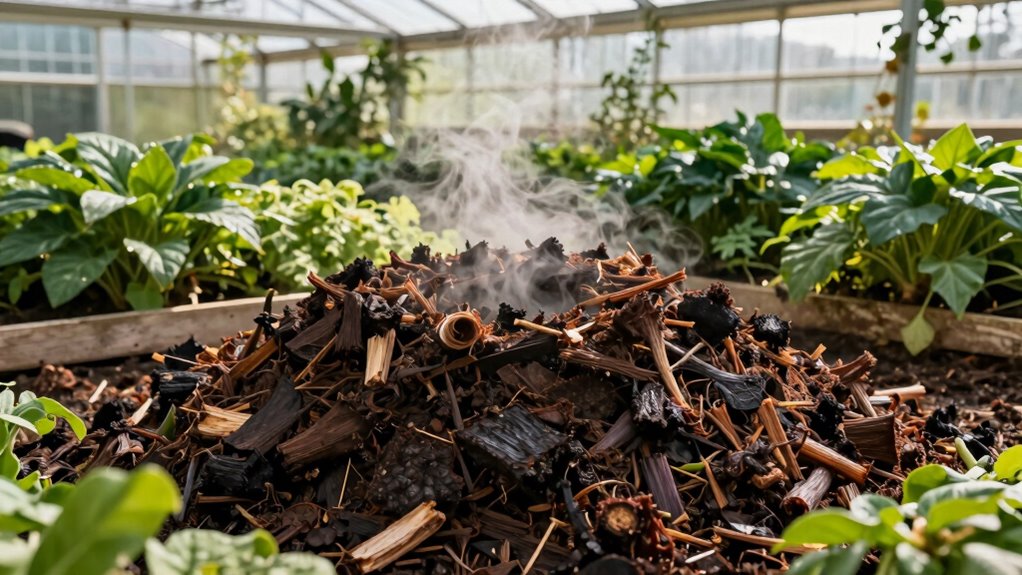
To harness the heat generated by compost decomposition for your greenhouse, you can set up a simple experiment to observe and optimize this natural process. Start by creating a compost pile with a balanced mix of green and brown materials to promote aerobic respiration, which relies on microbial activity. Make certain good airflow by turning the compost regularly, encouraging oxygen flow and maintaining microbial health. Use a thermometer to monitor compost temperature at different depths, and position it near the pile’s center. Keep the compost moist but not waterlogged. This setup allows you to see how microbial activity produces heat and helps you learn how to maximize warmth naturally, creating a sustainable way to warm your greenhouse using compost decomposition. Monitoring compost microbial activity and heat production can further enhance your understanding of heat generation and process efficiency, making your composting efforts more effective and environmentally friendly. Additionally, referencing technological integration such as digital tools and monitoring apps can help optimize conditions and track progress more precisely. Understanding the carbon-to-nitrogen ratio in your compost can also significantly influence microbial activity and heat output, leading to more consistent results.
Monitoring Temperature Changes During Compost Decomposition
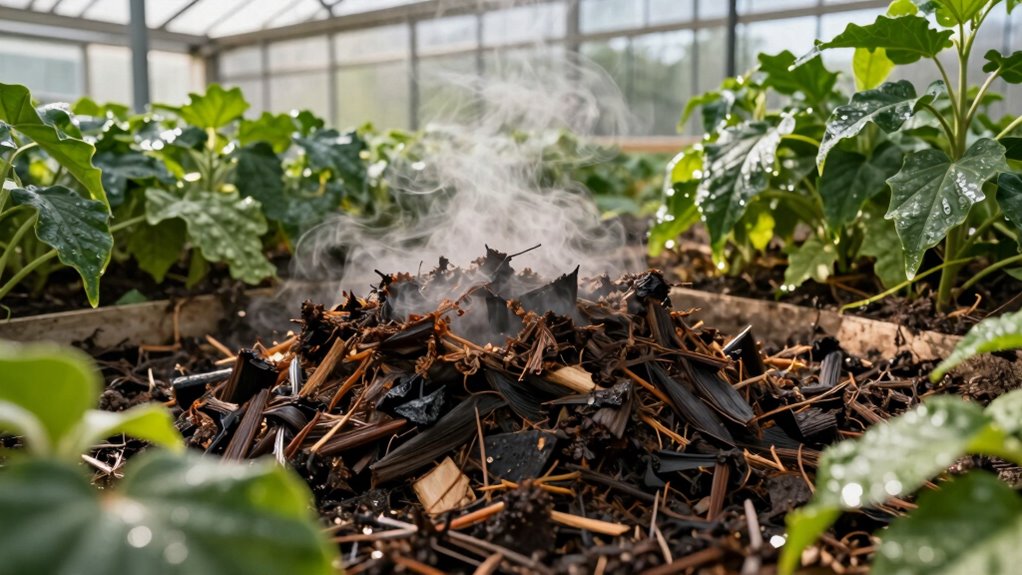
As your compost decomposes, you’ll notice the temperature rises and fluctuates over time. Factors like moisture levels, aeration, and the type of materials you use influence how much heat is generated. Tracking these changes helps you understand the compost’s activity and optimize the process. Understanding the art care involved can also enhance the preservation of art pieces in your environment. Additionally, monitoring temperature variations can provide insights into the microbial activity occurring within the compost, which is essential for effective decomposition temperature regulation. Recognizing how different composting methods impact heat production can further improve your composting efficiency. Being aware of the microbial processes involved can help you manage the compost for better heat retention and faster decomposition.
Temperature Rise Dynamics
Monitoring temperature changes during compost decomposition reveals the rapid and significant rise in heat that signals microbial activity. As microbes break down organic material, heat transfer occurs, causing temperatures to spike. You’ll notice that initially, temperatures stay steady, then suddenly increase. This temperature spike indicates active microbial activity. Understanding microbial processes helps explain how heat is generated and transferred during decomposition. Additionally, the presence of decomposing matter provides the substrate necessary for microbial growth and heat production. Microbial metabolism is a key factor influencing heat generation, which directly impacts the temperature dynamics observed in compost piles. The rate of microbial activity can be affected by factors such as moisture, oxygen levels, and the composition of organic material, all of which influence heat production during decomposition. Here are key points to understand temperature rise dynamics: 1. Microbial activity accelerates as microbes digest organic matter, generating heat. 2. Heat transfer from microbes warms the surrounding compost. 3. Temperature peaks when microbial activity is at its highest. 4. Afterward, temperatures decline as nutrients deplete and microbial activity slows down.
Factors Influencing Heat
Several factors influence the amount of heat generated during compost decomposition, affecting temperature changes you observe. Soil nutrients play a crucial role because they support microbial activity, which drives the decomposition process. When nutrients like nitrogen and phosphorus are abundant, microbial activity increases, leading to more heat production. Conversely, nutrient deficiencies slow microbial growth and reduce heat output. The moisture content of your compost also impacts microbial activity; too dry or too wet environments hinder heat generation. Additionally, the type of organic matter affects how quickly microbes break down material, influencing temperature peaks. Managing these factors helps optimize heat production, ensuring your compost generates enough warmth to potentially influence greenhouse temperature. Monitoring these variables allows you to better understand and control the heat dynamics during composting, especially considering home‑science principles that explain microbial heat output. Understanding thermogenesis in compost can help you design more effective composting systems for passive heat generation. Proper temperature regulation is essential to maintain optimal microbial activity and maximize heat output throughout the composting process. In this context, understanding microbial efficiency can further enhance your ability to control heat generation effectively. Additionally, integrating sustainable practices into compost management can improve both environmental impact and heat production efficiency.
Can Compost Provide Enough Heat to Warm Your Greenhouse?
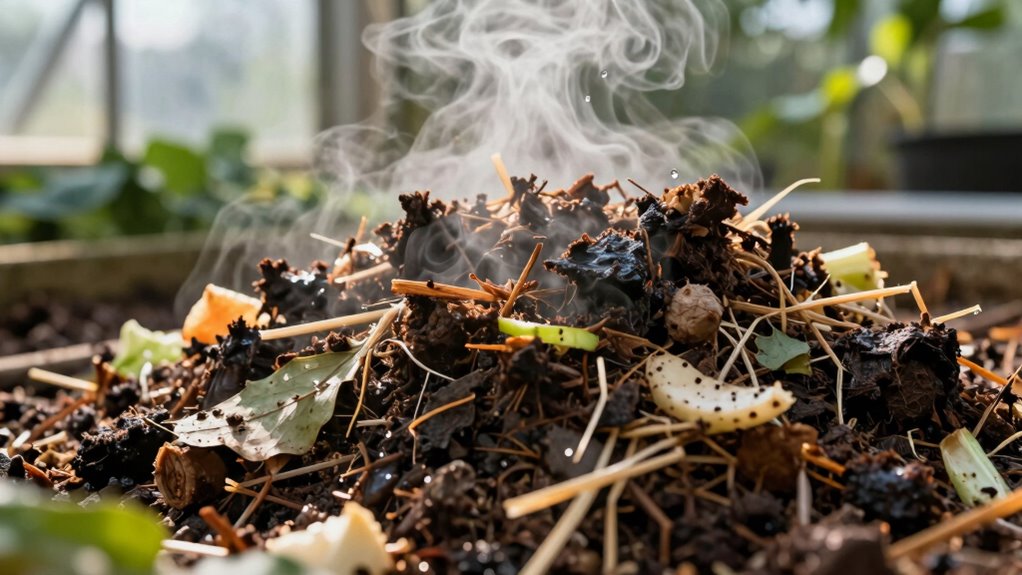
Compost can generate significant heat through microbial activity, but whether it produces enough warmth to reliably heat your greenhouse depends on several factors. The key lies in understanding compost chemistry and how microbial activity transforms organic matter into heat. To maximize heat production, consider these points:
- The size of your compost pile; larger piles retain more heat.
- The balance of green and brown materials; ideal compost chemistry boosts microbial activity.
- Proper aeration; oxygen supports active microbes and sustained heat.
- Moisture levels; maintaining adequate moisture enhances microbial processes.
- The microbial activity within the compost is crucial, as it directly influences heat generation and overall efficiency.
While compost can generate warmth, it typically won’t match traditional heating systems. However, with the right conditions, it can supplement your greenhouse’s temperature, especially during cooler months.
What Factors Affect How Much Heat Your Compost Can Produce
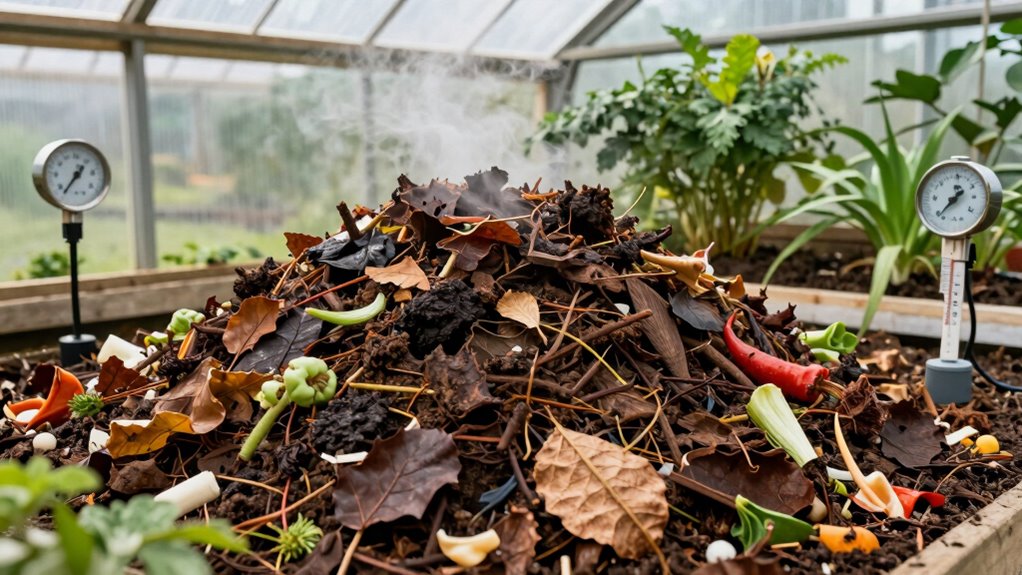
The amount of heat your compost generates depends on the materials you include and how quickly they break down. Factors like moisture levels, aeration, and temperature control methods also play a role in maintaining ideal conditions. Understanding these elements helps you optimize your compost’s heat production for better results.
Compost Material Composition
The types and proportions of materials you add to your compost substantially influence how much heat it generates. The right mix enhances decomposition, boosts soil nutrients, and optimizes composting methods. To maximize heat, focus on these factors:
- Balance green materials (fruit scraps, grass clippings) with browns (leaves, paper) for proper aeration.
- Incorporate nitrogen-rich materials to support microbial activity.
- Avoid heavy or unbroken materials that slow decomposition.
- Maintain moisture levels and proper aeration to keep microbes active.
Decomposition Rate Factors
The rate at which compost decomposes directly influences how much heat it generates. High microbial activity speeds up decomposition, producing more heat quickly. To maintain this activity, moisture content must be ideal—too dry, and microbes become inactive; too wet, and oxygen levels drop, slowing the process. Proper moisture levels create a balanced environment that supports active microbes, boosting heat production. Additionally, the type of materials in your compost affects microbial activity, but moisture and decomposition speed are key factors. Ensuring consistent moisture and managing the composition will maximize microbial action, increasing heat output. Remember, faster decomposition means more heat, so controlling these factors is essential for harnessing compost warmth effectively.
Temperature Regulation Methods
Since many factors influence heat production in compost, actively managing these elements is essential for effective temperature regulation. First, optimizing worm composting can boost heat output, as worms generate warmth through activity. Second, insulate your compost bin to retain heat; using materials like straw or foam keeps warmth in during cold weather. Third, maintain proper moisture levels—too dry or too wet reduces microbial activity and heat. Fourth, balance green and brown materials to promote efficient decomposition. By focusing on these methods, you control how much heat your compost produces, helping to sustain a warm environment. Proper insulation and worm composting techniques assure your compost generates consistent warmth, which can positively impact your greenhouse’s temperature.
How Does Compost Heating Compare to Traditional Greenhouse Heating Methods?
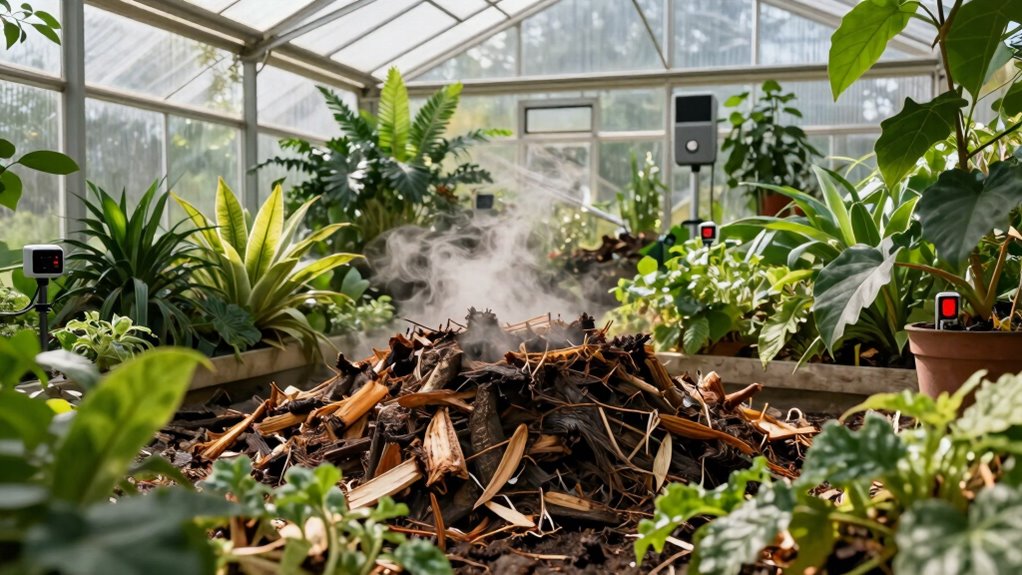
While traditional greenhouse heating methods rely on burning fuels or using electric systems, compost heating offers a natural alternative that harnesses biological processes. Unlike fossil fuel systems, compost heating recycles nutrients and reduces emissions, making it eco-friendly. The effectiveness depends heavily on compost bin design; well-ventilated, insulated bins maximize heat production. You can adjust compost pile size and composition to optimize warmth, avoiding energy costs altogether. This method provides a steady, low-cost heat source, especially beneficial for small-scale or sustainable operations. However, it may not match the rapid temperature increases of traditional systems and can require more management. Still, compost heating stands out as a sustainable, nutrient-recycling option that integrates seamlessly with eco-conscious greenhouse practices.
Tips for Maximizing Heat From Compost in Your Greenhouse
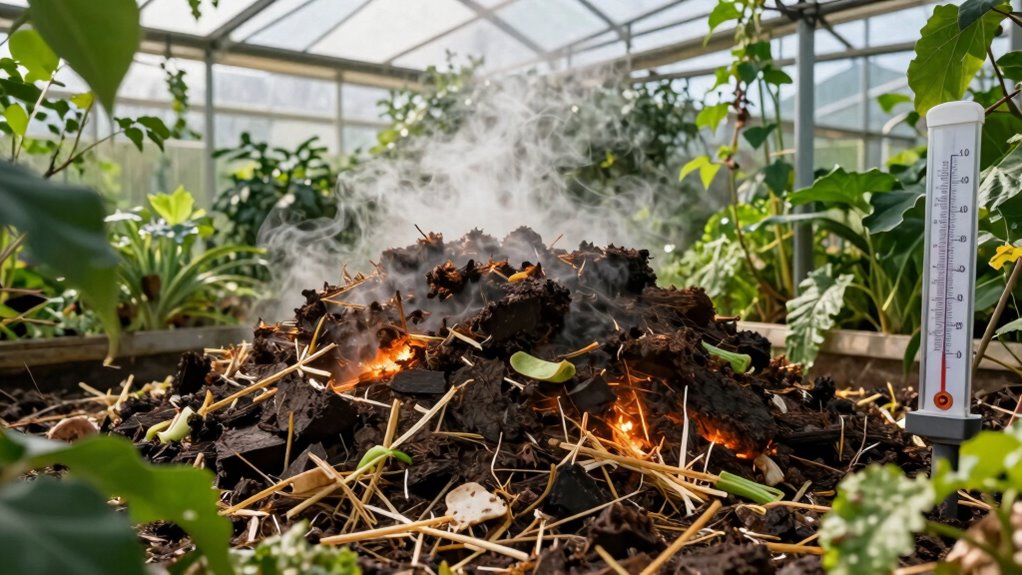
Maximizing heat from your compost in the greenhouse starts with proper pile management. To boost microbial activity, ensure consistent compost layering with green and brown materials, which maintains airflow and moisture. Keep the pile moist but not waterlogged, as microbes thrive in balanced conditions. Regularly turn the compost to introduce oxygen and stimulate microbial activity, generating more heat. Use insulated bins or cover the pile with a tarp to retain heat during colder days. Monitor temperature levels to avoid overheating or cooling off. Proper layering and moisture control encourage sustained microbial activity, producing consistent warmth. These steps help you optimize compost heat, creating a more effective natural greenhouse heating system.
Challenges and Limitations of Using Compost as a Greenhouse Heat Source
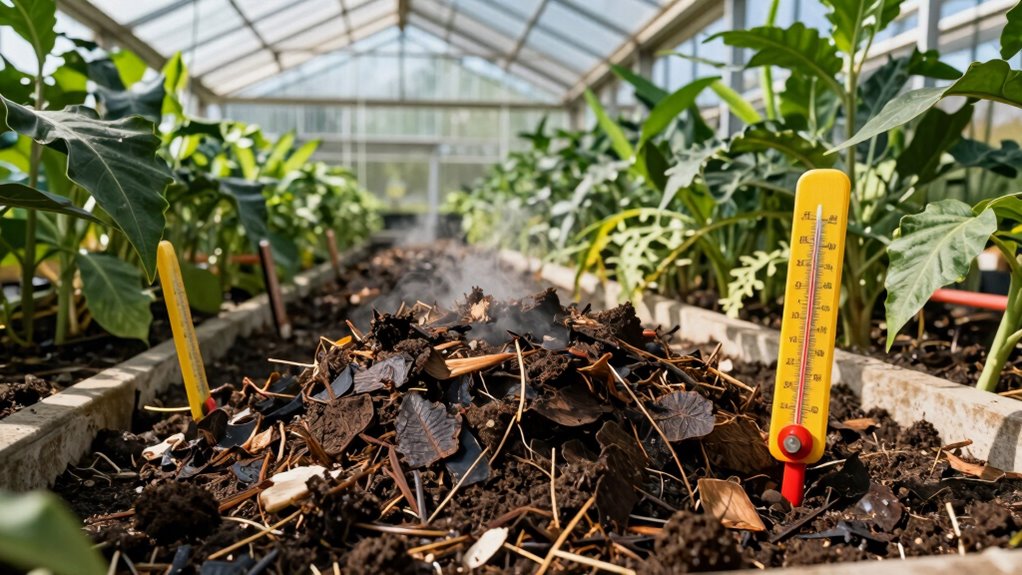
Using compost as a heat source in your greenhouse presents several challenges that can limit its effectiveness. One major issue is pest control; compost piles can attract unwanted insects or rodents, which may harm your plants or spread disease. Managing these pests requires careful monitoring and maintenance. Additionally, maintaining a proper nutrient balance is essential. If the compost becomes too rich or lacks key elements, its decomposition rate—and therefore heat production—can decrease. Temperature fluctuations are another concern, as compost heats unevenly and may not sustain consistent warmth needed for plant growth. These limitations mean compost heating might not be reliable as the sole heat source, especially in colder climates. You’ll need to weigh these factors before depending on compost warmth for your greenhouse’s climate control.
Future Potential: Making Compost Heating a Sustainable Greenhouse Solution
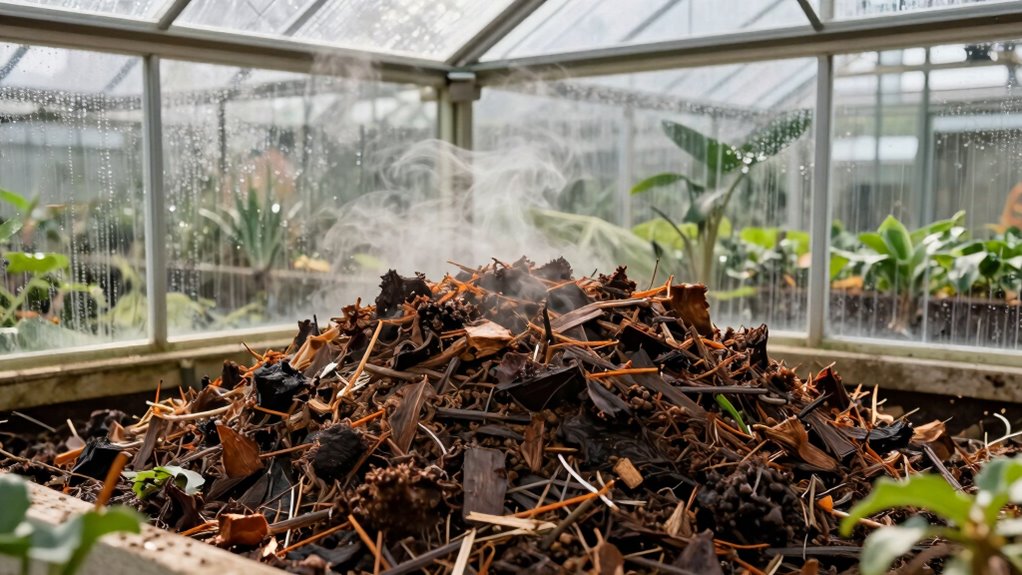
Advances in compost management and technology are opening new pathways to transform compost heating into a sustainable and reliable greenhouse solution. Improving compost quality guarantees consistent heat production, making it a viable energy source. Enhancing greenhouse insulation helps retain heat, reducing energy loss and maximizing compost efficiency. To realize this potential, consider these key steps:
- Optimize compost quality through proper feedstock and aeration.
- Improve greenhouse insulation with better materials and design.
- Integrate temperature monitoring for precise control.
- Develop scalable systems that adapt to different greenhouse sizes.
Frequently Asked Questions
What Types of Organic Materials Produce the Most Heat During Decomposition?
You’ll find that organic materials high in nitrogen, like fresh grass clippings and food scraps, produce the most heat during decomposition. These materials boost microbial activity, which accelerates microbial growth and enhances nutrient release. As microbes break down these rich substances, they generate heat, warming the compost and potentially a greenhouse. Using nitrogen-rich materials makes your compost hotter and more effective at heating your space naturally.
How Long Does It Take for Compost to Generate Significant Warmth?
You’ll notice compost generates significant warmth within a few days to a couple of weeks, depending on factors like thermal insulation and microbial activity. If you pack it tightly and maintain moisture, microbial activity speeds up, producing more heat faster. Regular turning helps distribute heat evenly, ensuring your compost heats up quickly. Generally, you can expect meaningful warmth within one to two weeks, making it ideal for greenhouse heating or early plant starts.
Can Compost Heating Be Used in Extreme Cold Climates?
In extreme cold climates, compost heating can be a sturdy shield if you use effective insulation techniques. Think of your compost as a tiny, warm engine powered by microbial activity. By wrapping your compost pile with insulating materials, you trap heat inside, making it more resilient against freezing temperatures. This approach helps maintain microbial activity and heat production, giving your greenhouse a fighting chance to stay warm even in the harshest weather.
What Are the Safety Considerations for Using Compost Heat in a Greenhouse?
You should prioritize compost safety and be aware of greenhouse hazards when using compost heat. Guarantee proper aeration to prevent harmful gas buildup, and avoid overloading the compost to reduce the risk of overheating or fires. Regularly monitor moisture levels and temperature to prevent mold or pathogen growth. Keep compost away from plants prone to disease, and wear protective gear when handling compost to stay safe.
How Does Compost Temperature Fluctuation Affect Plant Growth?
When compost temperature fluctuates, it can throw a wrench in your plant growth. Microbial activity thrives within specific temperature ranges, so irregular changes hinder decomposition and nutrient release. If temperatures swing too high or too low, plants may suffer from inconsistent nutrient uptake or stress. To keep your plants happy, maintain steady temperature regulation, ensuring microbes stay active and your greenhouse stays productive, even when the weather throws a curveball.
Conclusion
While compost can generate noticeable warmth, it rarely replaces traditional heating entirely. Imagine the contrast: the gentle hum of a furnace versus the natural, fluctuating heat from decomposing matter. You get the charm of sustainability, but also the unpredictability. Embracing compost as a supplementary heat source lets you harness nature’s process without sacrificing control. It’s a balancing act—warmth from decay, comfort from innovation, and the promise of greener greenhouses.
Fall yard work Picks
leaf blowers
As an affiliate, we earn on qualifying purchases.