
TL;DR

Get garden gear delivered free with Prime
- Fast, free delivery on millions of items
- Prime Video, Amazon Music and more included
- Member-only deals all year
Gardening Know How advises gardeners in USDA hardiness zones 7 and colder to lift seven tender summer-flowering bulbs, corms, tubers or rhizomes before the ground freezes. The report says freezing soil and winter moisture can damage or rot these plants; exact timing and whether some can stay under mulch depend on local conditions and variety.
Gardening Know How has advised gardeners in USDA hardiness zones 7 and colder to lift seven tender summer bloomers before winter freezes, saying their underground bulbs, corms, tubers or rhizomes can be damaged by cold, wet soil. The seasonal guidance matters to gardeners hoping to preserve plants for next year, but the right timing and need to lift can vary by local climate and plant variety.
The report names dahlias, gladiolus, canna lilies, calla lilies, elephant ears, caladiums and tuberous begonias as plants to protect from winter ground conditions. They are not all botanically true bulbs: dahlias grow from tubers, gladiolus from corms, and cannas and callas from rhizomes. The article groups them together as tender summer rootstocks because of their shared sensitivity to cold and wet soil.
For most varieties, the suggested lifting window begins after the first light frost blackens the foliage, but before the ground freezes. The article gives rough seasonal windows of mid-to-late October for zones 3–5 and late October to early November for zones 6–7. These are regional guides, not fixed dates; local frost and soil conditions should determine the workday.
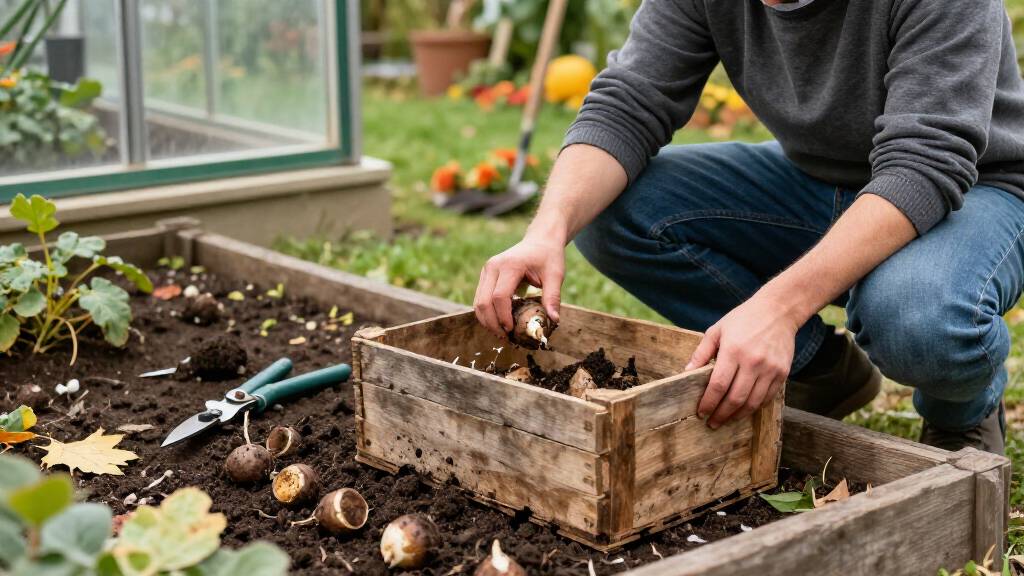
After lifting, the report recommends removing loose soil and letting plant material dry in a ventilated, frost-free place. It describes storing cured rootstocks in breathable containers with dry packing material, in a cool, dark location generally kept around 40–50°F (4–10°C). It also advises monthly checks for rot or shriveling. Storage needs differ by plant: gladiolus corms, for example, are described as needing a warmer curing period before cool storage.
Protecting Summer Plants From Frost
Lifting tender plants before a hard freeze can prevent gardeners from losing established planting stock and having to replace it in spring. The Gardening Know How report says freezing can injure underground tissues, while cold, sodden soil can promote rot. A successful lift-and-store routine can preserve plants for another season, though it requires suitable storage space and periodic checks.
The advice is not a blanket rule for every garden. The report says growers in warmer southern locations may be able to leave some plants in the ground under a thick mulch. That possibility depends on local winter conditions and the specific plant; gardeners should not assume that mulch will protect every tender variety from prolonged freezes or saturated soil.
ventilated bulb storage trays for dahlias and gladiolus
As an affiliate, we earn on qualifying purchases.
As an affiliate, we earn on qualifying purchases.
Which Plants Need Winter Lifting
Many familiar spring-flowering bulbs, including tulips, daffodils and crocuses, are hardy and rely on winter chill as part of their seasonal cycle. The plants covered in this report are different: they are summer bloomers described as originating in tropical or subtropical climates and as less able to withstand freezing ground.
The article frames lifting as a fall task, with the first light frost serving as a cue for many varieties. Waiting until the soil freezes can make digging harder and expose the plant crowns to colder conditions. The listed dates are broad zone-based estimates, while the actual frost date varies from place to place.
Local Frost Dates Still Matter
The source is a gardening advice article, not a report of a newly measured event or a universal horticultural rule. It does not establish that every plant in the seven groups must be lifted in every climate. Exact hardiness varies by species, cultivar and site, and the article itself allows that gardeners in warmer regions may protect some plants with mulch.
The supplied source text ends partway through its section on canna lilies, so it does not provide complete plant-by-plant instructions for all seven entries. It also gives no year-specific frost forecast or local soil conditions. Gardeners should check guidance for their particular variety and area before choosing a lifting date or storage method.
Watch Frost and Prepare Storage
Gardeners should monitor local forecasts and inspect foliage for frost damage, then lift appropriate plants before the soil freezes. Before digging, prepare a dry, ventilated, frost-free curing area and a cool, dark storage location; the temperatures and curing time needed can differ by plant type.
After storage begins, the report recommends checking the plants monthly for signs of rot or shriveling. The next useful milestone is the first light frost in each garden, followed by local decisions about lifting, curing and storage based on the plant variety and conditions.
Key Questions
Which seven plants does the report advise lifting?
It lists dahlias, gladiolus, canna lilies, calla lilies, elephant ears, caladiums and tuberous begonias. Their underground structures include tubers, corms and rhizomes as well as true bulbs.
When should tender bulbs and tubers be lifted?
The report suggests lifting most varieties after the first light frost blackens the foliage, but before the ground freezes. Use local frost and soil conditions rather than treating its zone-based dates as exact deadlines.
Can these plants stay in the ground over winter?
Some gardeners in warmer southern areas may be able to leave some varieties under thick mulch, according to the report. Whether that is suitable depends on the plant and local winter conditions; the guidance particularly recommends lifting in zones 7 and colder.
How should lifted plants be stored?
The report recommends curing them in a dry, ventilated, frost-free place, then using breathable containers and dry packing material in a cool, dark location. It gives a general storage range of 40–50°F (4–10°C), but specific plants can require different curing and storage conditions.
Source: rss
Fall yard work Picks
leaf blowers
As an affiliate, we earn on qualifying purchases.