
TL;DR

Get garden gear delivered free with Prime
- Fast, free delivery on millions of items
- Prime Video, Amazon Music and more included
- Member-only deals all year
A Gardening Know How report recommends black chokeberry (Aronia melanocarpa) as a native alternative to burning bush. The shrub has red-to-burgundy autumn foliage, white flowers and dark berries that can attract birds, including cardinals. Its size, hardiness and suitability vary by cultivar and local conditions.
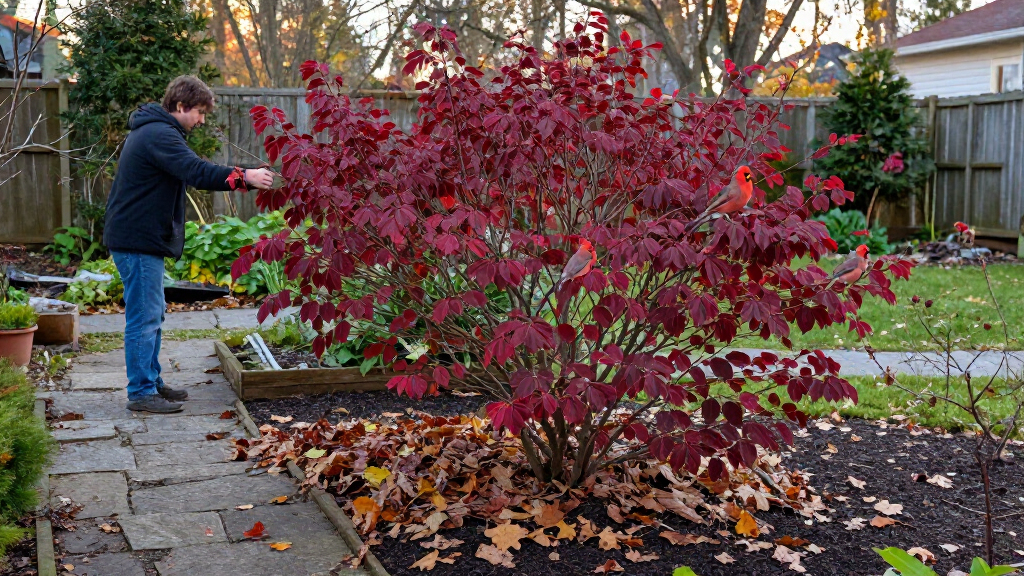
Gardening Know How is recommending black chokeberry (Aronia melanocarpa), an eastern North American native, as an alternative to burning bush for gardeners seeking autumn color alongside flowers and fruit. The report says the shrub’s red-to-burgundy fall foliage is paired with berries that can provide food for birds, including cardinals, while avoiding the invasive-plant concerns associated with burning bush in many states.
The report gives black chokeberry a typical mature size of about 3 to 6 feet tall and wide, making it an option for home landscapes where a larger shrub or small tree would not fit. It can be used in a mixed border, a native shrub planting or a wildlife-friendly garden. Its foliage color varies from crimson red to burgundy in autumn, like that of some native trees with fall color.
Unlike a shrub grown mainly for its foliage and form, black chokeberry also produces white flowers and dark berries. Gardening Know How says the flowers can draw pollinators and the fruit can attract birds, including cardinals, waxwings, finches and robins. The report presents these as potential garden benefits; it does not quantify how many birds visit or how much food the berries provide.
The shrub is described as growing in full sun to partial shade and tolerating a range of soil conditions. The report gives a general hardiness range of USDA zones 3 to 8, while advising gardeners to check the requirements of a specific cultivar and its fit for local conditions. Once established in a suitable spot, it is said to need little intervention beyond occasional pruning to remove dead, damaged or diseased growth and manage its shape.
A Native Option With More Than Fall Color
The comparison matters to gardeners weighing a familiar ornamental against a plant that may offer both seasonal display and wildlife value. Burning bush is considered invasive in many states, according to the report, because it can spread beyond cultivation and compete with plants in natural areas. The article does not list the states or provide a formal assessment of the shrub’s status in each location, so gardeners should check local guidance before planting either species.
Black chokeberry could be a useful alternative where gardeners want a relatively compact shrub that changes color in fall and also produces flowers and fruit. Its native range and potential food for birds make it relevant to wildlife-oriented planting, but benefits can depend on site conditions, cultivar and local wildlife. The report’s recommendation is a gardening feature, not a comparative trial showing that chokeberry matches burning bush in every landscape or performs identically across regions.
black chokeberry Aronia melanocarpa live shrub plant
As an affiliate, we earn on qualifying purchases.
As an affiliate, we earn on qualifying purchases.
How Chokeberry Compares With Burning Bush
Burning bush is widely planted for its autumn foliage and compact shape. The Gardening Know How report acknowledges its strong fall display but argues that its spread into natural areas makes native alternatives worth considering. It does not provide data on the extent of that spread or identify the relevant state regulations.
Black chokeberry, also called Aronia melanocarpa, is native to eastern North America. The report describes it as a multi-season plant: white flowers appear before the dark fruit, while the foliage turns red or burgundy in autumn. It also names named commercial cultivars as examples, but does not compare their sizes, fruiting or color performance. The general zone range in the article should not be treated as a guarantee for every variety.
““black chokeberry (Aronia melanocarpa)””
— Gardening Know How report
Local Fit and Bird Benefits Vary
The supplied report does not state when it was published, cite horticultural studies or provide a state-by-state account of burning bush restrictions or invasive status. The term “native” applies to black chokeberry’s eastern North American range; it does not mean the shrub is native to every region where it can be grown.
It is also unclear how reliably a particular chokeberry cultivar will produce berries or attract cardinals at a specific site. The report gives no cultivar-by-cultivar performance data, and local climate, growing conditions and wildlife availability can affect results. Gardeners should confirm a cultivar’s mature size and hardiness, and consult local extension or conservation guidance about planting choices.
Check Cultivars Before Planting
The report does not announce a new product, policy change or scheduled follow-up; it makes a planting recommendation. Readers considering black chokeberry can check the cultivar’s expected size and local hardiness, then choose a site with suitable light and soil. Before planting, they can also consult local native-plant and invasive-species resources to confirm what is appropriate for their area.
For gardeners comparing options, the practical next step is to weigh more than autumn color: consider whether the shrub fits the available space and whether its flowers and fruit suit the goals of the garden. The report presents black chokeberry as one candidate, not as a universal replacement for burning bush.
Key Questions
What shrub does Gardening Know How recommend instead of burning bush?
The report recommends black chokeberry (Aronia melanocarpa), a shrub native to eastern North America.
Does black chokeberry have fall color?
Yes. Gardening Know How describes its autumn foliage as crimson red to burgundy.
Will black chokeberry attract cardinals?
The report says its dark berries can attract birds, including cardinals. It does not promise that cardinals will visit every garden or quantify the benefit.
How large does black chokeberry grow?
The report gives a typical size of about 3 to 6 feet tall and wide. Mature dimensions can depend on the cultivar and growing conditions.
Where can black chokeberry grow?
The report says it can grow in full sun to partial shade and gives a general hardiness range of USDA zones 3 to 8. Check the specific cultivar and local conditions before planting.
Source: rss
Fall Picks
fall essentials
As an affiliate, we earn on qualifying purchases.