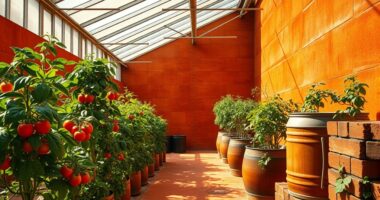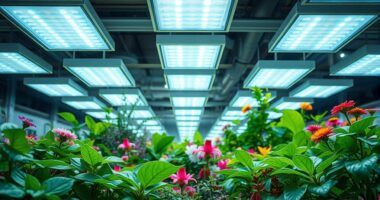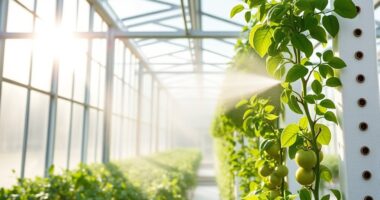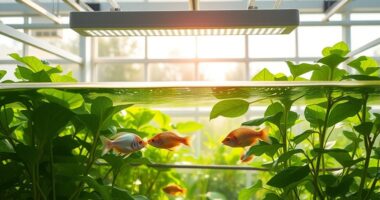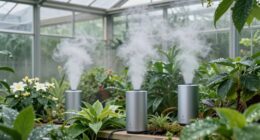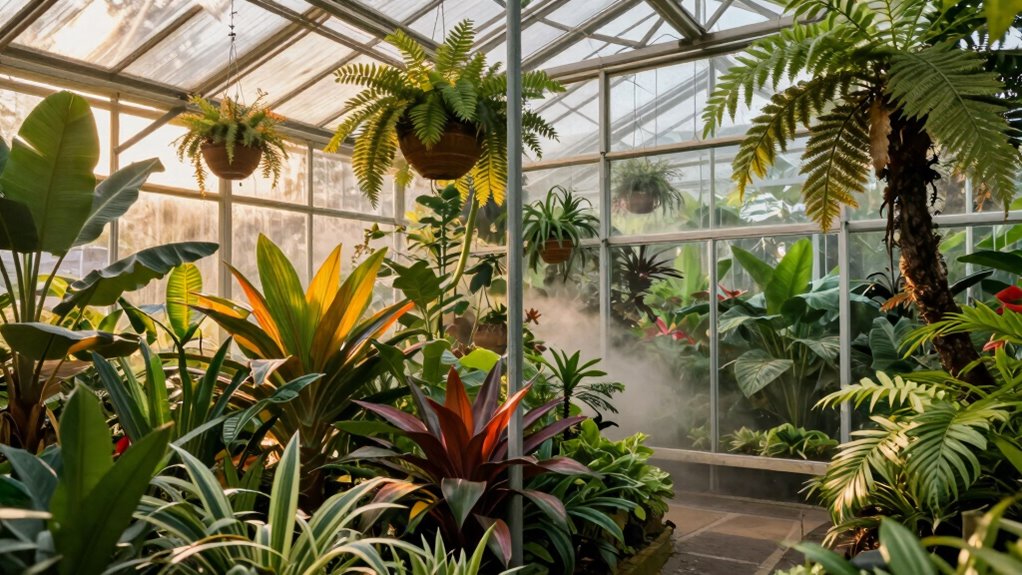
To run a warm side and cool side in one greenhouse, use zoning techniques like physical barriers, curtains, or partitions to separate the areas. Install and automate heating for the warm zone and ventilation or evaporative cooling for the cool zone. Use sensors and climate control systems to monitor and adjust conditions in real time. Proper insulation, shading, and airflow management help maintain distinct environments. Keep exploring to discover more strategies for effective climate zoning.
Key Takeaways
- Use physical barriers like curtains or partitions to create separate warm and cool zones within the greenhouse.
- Implement zoned ventilation, shading, and insulation tailored to each zone’s temperature requirements.
- Install automated sensors and climate control systems for real-time monitoring and dynamic adjustments between zones.
- Employ targeted heating in the warm zone and evaporative cooling or shade fabrics in the cool zone for precise climate management.
- Gradually transition environmental conditions using ventilation and shading techniques to prevent plant stress during zone shifts.
Why Climate Zoning Is Essential for Your Greenhouse
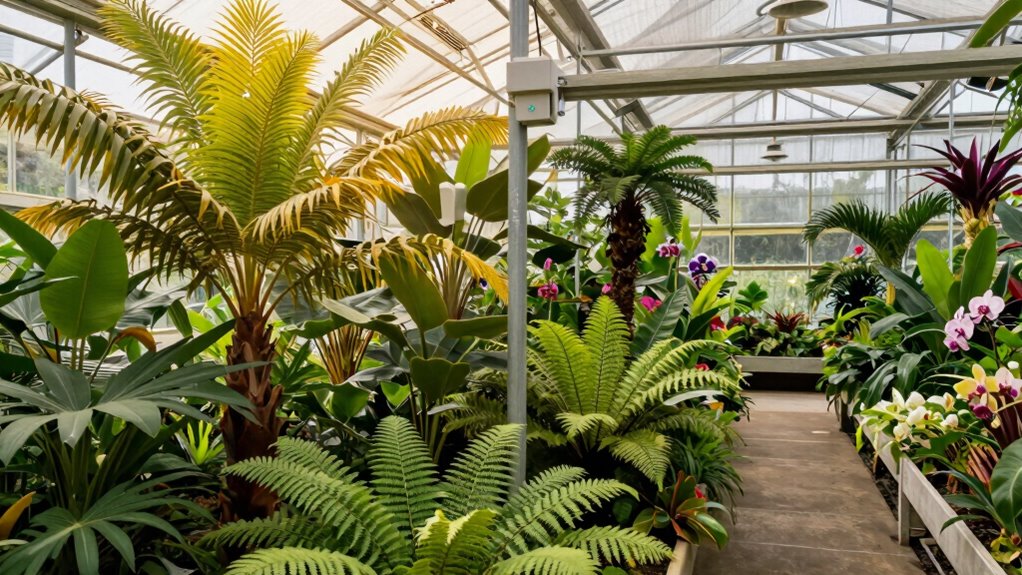
Climate zoning is essential for optimizing your greenhouse’s environment and ensuring healthy plant growth. By creating distinct zones, you can tailor conditions to meet the specific needs of different plants, improving overall plant health. Proper zoning helps you control temperature, humidity, and airflow more effectively, reducing stress on your plants. This targeted approach also boosts energy efficiency, as you don’t waste resources heating or cooling areas that don’t need it. When zones are well-defined, you can manage resources better, lowering utility costs and minimizing environmental impact. Ultimately, climate zoning allows you to maintain a stable, ideal environment for your plants, leading to stronger growth, increased yields, and healthier crops across your entire greenhouse. Effective climate management is a key aspect of successful greenhouse operation.
What Is Climate Zoning and How Does It Work?
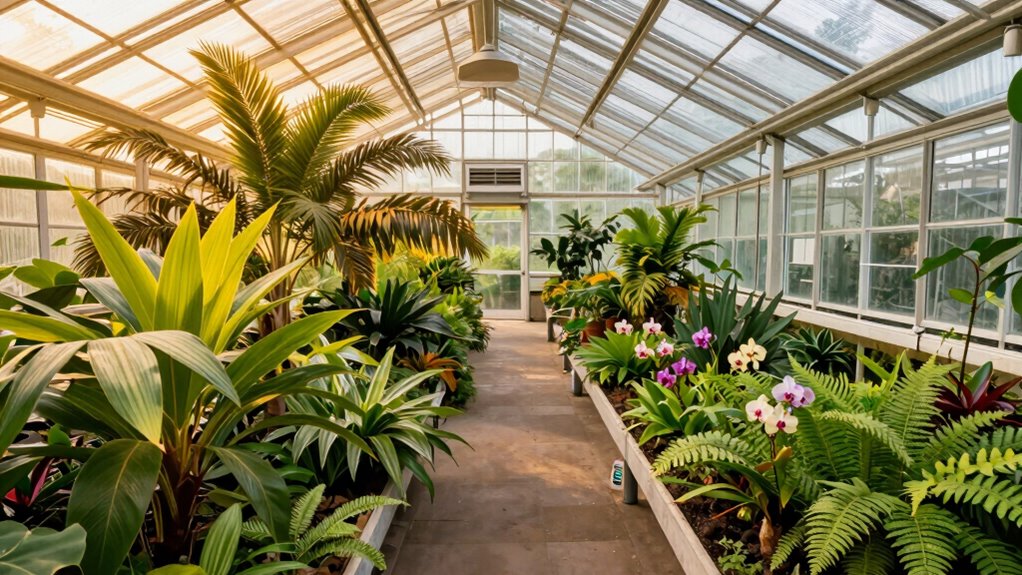
Ever wondered how to create the perfect environment for different plants in your greenhouse? That’s where climate zoning comes in. It involves dividing your greenhouse into distinct microclimates to enhance growth. You can achieve this through zoning technologies that control temperature, humidity, and airflow. Here’s how it works:
Creating microclimates in your greenhouse boosts plant growth through targeted climate control.
- Microclimate management: Tailors conditions to suit specific plant needs within each zone.
- Zoning technologies: Use barriers, fans, and vents to isolate areas effectively.
- Dynamic adjustments: Continuously monitor and adapt conditions for ideal results. Incorporating European cloud innovation can also optimize data-driven climate control systems for improved efficiency.
Key Factors for Designing Your Warm Climate Zone
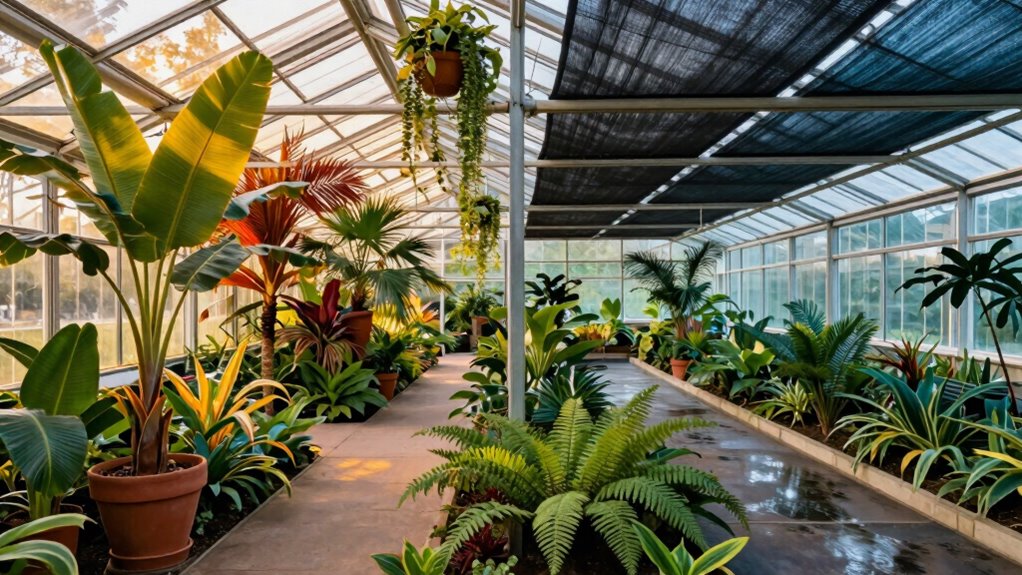
Creating a successful warm climate zone in your greenhouse requires careful consideration of several key factors. First, guarantee proper temperature regulation to promote ideal plant growth. Focus on maintaining consistent conditions to prevent stress and maximize plant nutrient uptake. Adequate ventilation is essential for controlling humidity and reducing pest buildup, which is critical for pest control. Choose the right soil or growing medium to support healthy roots and nutrient absorption. Lighting also plays a crucial role; ensure your plants receive enough light for photosynthesis without overheating. Regularly monitor and adjust these factors to create a stable environment. Proper ventilation systems are vital for maintaining optimal humidity and air quality, preventing issues like mold and pests. By managing temperature, humidity, lighting, pest control, and ventilation, you’ll establish a thriving warm zone that supports your plant’s health and productivity.
How to Create a Cool Zone in Your Greenhouse

To create a cool zone in your greenhouse, you need effective ventilation strategies that promote airflow and reduce heat buildup. Choosing the right shade materials can also considerably lower temperatures and protect plants from excess sunlight. Implementing these methods helps you maintain a comfortable, controlled environment for temperature-sensitive crops. Additionally, incorporating proper insulation can help regulate temperature fluctuations and maintain consistent conditions within the greenhouse.
Ventilation Strategies for Cooling
Effective ventilation is essential for cooling a greenhouse and establishing a comfortable, temperature-controlled zone. To achieve this, consider these strategies:
- Use evaporative cooling systems, like misters or pads, to lower air temperature efficiently.
- Implement cross ventilation by placing vents or fans on opposite sides to promote airflow across the space.
- Incorporate exhaust fans or roof vents to remove hot, stale air quickly and draw in cooler outside air.
- Ensuring proper ventilation practices helps optimize cooling efficiency and maintain healthy plant growth conditions.
These methods help regulate temperature, reduce heat buildup, and maintain a cooler environment. Proper ventilation not only prevents overheating but also improves air quality, reducing humidity and the risk of diseases. Combining evaporative cooling with cross ventilation creates an effective cooling system for your greenhouse’s cool zone.
Selecting Shade Materials
Selecting the right shade materials is essential for keeping your greenhouse cool and preventing overheating. Shade fabrics are a popular choice because they provide effective light reduction while allowing airflow. Look for fabrics with high shading coefficients to block intense sunlight and reduce heat gain. Reflective coatings are another excellent option; they bounce sunlight away from the greenhouse, minimizing heat absorption. When choosing shade materials, consider durability and ease of installation to ensure long-lasting performance. Installing adjustable shade systems gives you control over the amount of light and heat entering your cool zone. Proper shading not only helps maintain a stable temperature but also protects your plants from sunburn and stress. Incorporating climate zoning strategies into your greenhouse design allows for more precise temperature control and energy efficiency. Combining shade fabrics with reflective coatings creates a versatile, efficient way to create a comfortable, cool environment inside your greenhouse.
Choosing the Right Equipment for Multiple Climate Zones
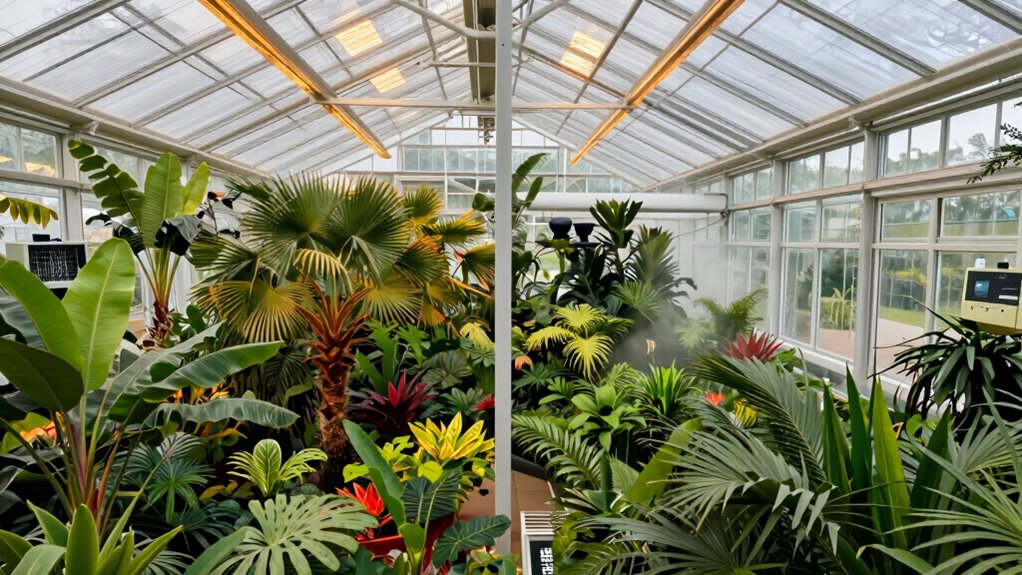
When managing greenhouses across multiple climate zones, choosing the right equipment becomes crucial to guarantee ideal plant growth and energy efficiency. Start with reliable automated sensors to monitor temperature, humidity, and light levels, ensuring precise adjustments. Next, select adaptable heating systems that can be tailored to each zone’s needs, preventing overheating or cold stress. Finally, consider zoned ventilation and shading equipment to fine-tune airflow and light control. These three components work together to maintain consistent conditions in each climate zone, reducing energy waste and promoting healthy plant development. Properly chosen equipment simplifies climate management, helping you create distinct “warm” and “cool” zones within a single greenhouse. This targeted approach ensures optimal growth environments without unnecessary energy consumption. Incorporating climate control systems that integrate these components can further enhance efficiency and ease of operation.
How to Manage Temperature and Climate Transitions
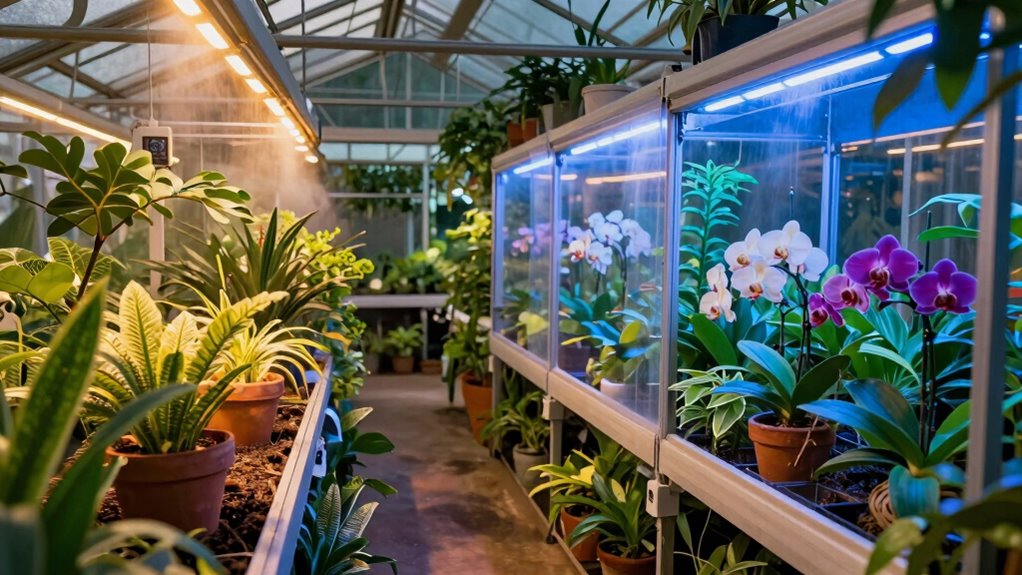
Managing temperature and climate shifts is key to maintaining ideal conditions in your greenhouse. You can use temperature zoning strategies to create separate areas with tailored environments and prevent stress on your plants. Techniques like gradual heating or cooling help smoothly move between climate zones, ensuring stability and plant health. Incorporating Free Floating elements can also help balance temperature variations naturally within your greenhouse.
Temperature Zoning Strategies
Have you ever wondered how to guarantee your greenhouse maintains a stable temperature despite external fluctuations? Effective temperature zoning strategies can help you achieve this. First, you should:
- Use targeted insulation to control plant heat, preventing heat loss or gain in specific zones.
- Implement dedicated air circulation systems to evenly distribute temperature and avoid hotspots.
- Incorporate adjustable vents and shading to fine-tune the climate on both the warm and cool sides.
- Consider climate control technology that integrates sensors and automated systems to optimize environmental conditions in real-time.
These steps ensure that each zone stays within its ideal temperature range. Proper air circulation minimizes temperature gradients, while insulation and shading help manage plant heat. By applying these strategies, you create a balanced environment that supports healthy plant growth on both sides of your greenhouse.
Climate Transition Techniques
Effective climate shift techniques guarantee your greenhouse adjusts smoothly to external weather changes without causing stress to your plants. To manage progressions effectively, use controlled methods like solar heating and humidity control. Gradually modulate temperature and humidity levels to prevent shock. Incorporate passive and active systems that respond to external conditions, ensuring a steady environment.
| Technique | Benefit | Application |
|---|---|---|
| Solar Heating | Reduces energy costs, warms air | Use during mornings or sunny days |
| Humidity Control | Prevents mold, stress | Use dehumidifiers or misting |
| Ventilation | Balances temperature, humidity | Open vents gradually |
| Shade Cloths | Protects from sudden heat gain | Deploy during hot afternoons |
| Thermal Screens | Insulates during cold snaps | Use overnight or during cold weather |
Monitoring and Adjusting Climate Zones for Healthy Plants

To keep your greenhouse plants healthy, it’s essential to continuously monitor and adjust the climate zones. Proper oversight guarantees ideal growth and prevents issues like pests and diseases. Focus on these key steps:
- Regularly check humidity control to maintain the right moisture levels, preventing mold and pest infestations.
- Use sensors to track temperature and humidity, making real-time adjustments as needed.
- Inspect plants frequently for signs of pests or stress, then modify climate conditions accordingly.
- Implement climate zone management strategies to optimize growing conditions tailored to different plant needs.
Troubleshooting Common Climate Zoning Challenges

Even with diligent monitoring and adjustments, you may encounter challenges when maintaining proper climate zones in your greenhouse. Watering issues can cause uneven humidity levels, leading to stress for plants on both the warm and cool sides. Overwatering can increase humidity excessively, inviting pests and promoting disease, while underwatering can cause plants to wilt and weaken. Pest management becomes more complex if climate zones aren’t stable, as pests thrive in specific conditions. To troubleshoot, regularly check humidity and temperature controls, ensuring each zone stays within target ranges. Adjust watering schedules and ensure proper drainage to prevent excess moisture. Keep a close eye on pest activity, and implement integrated pest management strategies. Consistently monitoring and fine-tuning your climate zones helps prevent these common challenges.
Frequently Asked Questions
Can Climate Zoning Be Automated With Smart Technology?
Yes, climate zoning can be automated with smart technology. You have the automation potential to use smart climate control systems that monitor temperature, humidity, and other conditions in real-time. These systems adjust vents, heaters, and fans automatically, ensuring each zone maintains ideal conditions. With smart climate control, you reduce manual effort and improve efficiency, making it easier to manage warm and cool sides within one greenhouse seamlessly.
How Often Should Climate Zones Be Reevaluated?
Did you know that poorly maintained climate zones can reduce greenhouse productivity by up to 20%? You should reevaluate your climate zones at least quarterly, especially after significant weather changes or crop rotations. Regular zoning adjustments ensure ideal conditions, so stick to consistent maintenance schedules. This proactive approach helps prevent issues before they arise, keeping your greenhouse running efficiently and your plants healthy.
What Plants Thrive in Mixed Climate Zones?
Plants with high plant compatibility often thrive in mixed climate zones, especially around zone shifts. You should look for species that tolerate a range of temperatures, like herbs, leafy greens, or certain hardy flowers. These plants adapt well to the fluctuating conditions near zone borders. By understanding their specific needs, you can successfully grow diverse plants in a single greenhouse that benefits from both warm and cool zones.
Are There Specific Materials Best for Insulating Different Zones?
When insulating different zones, choose zone-specific options that suit each area’s needs. Use high R-value insulation materials like foam boards or spray foam for the warm side to retain heat efficiently. For the cool side, consider breathable insulation materials like mineral wool or reflective barriers to prevent overheating and moisture buildup. Prioritize insulation materials that match your climate, ensuring ideal temperature control and energy savings across your greenhouse.
How Does Climate Zoning Affect Greenhouse Energy Costs?
Climate zoning benefits you by reducing energy costs through targeted heating and cooling, making your greenhouse more efficient. However, zoning implementation challenges can increase upfront expenses and complexity, especially when designing separate systems and insulation for each zone. By carefully planning and managing these challenges, you can optimize energy use, lower costs, and create a more sustainable environment for your plants.
Conclusion
By mastering climate zoning, you’re like a skilled conductor guiding a symphony of temperatures within your greenhouse. You create harmonious zones—warm and cool—each playing its part in nurturing healthy plants. With careful planning and smart adjustments, you turn your greenhouse into a vibrant garden orchestra, where every section thrives in perfect harmony. Embrace the dance of climate zones, and watch your plants flourish in their ideal environment, thriving under your expert touch.