To efficiently use thermal mass in your greenhouse, position materials like concrete, brick, or water containers where they can absorb maximum sunlight during peak hours. This stored heat slowly releases at night, helping to stabilize temperatures naturally. Insulating around your thermal mass guarantees minimal heat loss, boosting energy efficiency. Combining passive solar design with thermal mass creates a resilient environment. Keep exploring to discover tips that can help you optimize your heat storage system even further.

Get garden gear delivered free — and shop member deals
- Fast, free delivery on millions of items
- Access to Prime Big Deal Days deals on October 6–7
- Prime Video, Amazon Music and more included
Key Takeaways
- Use thermal mass materials like concrete, brick, or water containers to absorb and store heat during the day.
- Position thermal mass strategically to maximize sunlight exposure for optimal heat absorption.
- Insulate thermal mass around to minimize heat loss and maintain stable internal temperatures.
- Incorporate thermal mass inside or around the greenhouse to buffer against temperature fluctuations.
- Combine thermal mass with passive solar design and insulation for enhanced heat retention and energy efficiency.
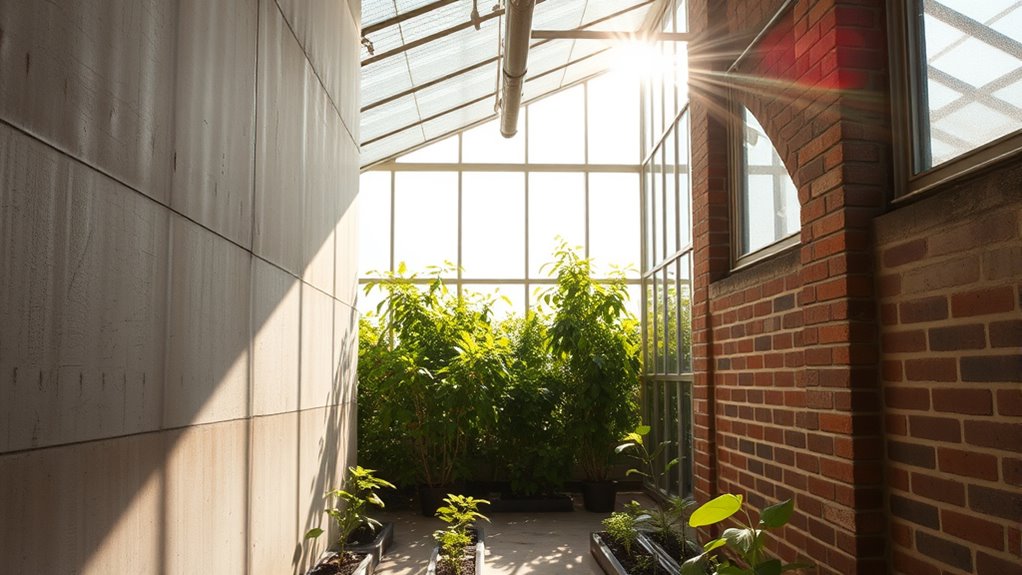
Heat storage solutions are becoming vital as we seek more sustainable and efficient energy systems. If you’re looking to optimize your greenhouse’s temperature management, understanding how passive solar design and thermal insulation work together can make a significant difference. Passive solar techniques harness the sun’s energy naturally, reducing your reliance on artificial heating and cooling. By positioning your greenhouse to maximize sunlight exposure during the day, you allow the structure to absorb heat that can be stored temporarily for cooler periods. This approach minimizes energy waste and creates a more stable environment for your plants.
Optimizing greenhouse temperature with passive solar design and thermal insulation enhances energy efficiency and plant stability.
Thermal mass plays a fundamental role in this process. It involves incorporating materials that absorb and store heat during the day and release it slowly at night. Common thermal mass materials include concrete, brick, or water containers, which can be strategically positioned inside or around your greenhouse. When these materials soak up warmth from the sun, they act as a buffer, preventing rapid temperature fluctuations. As night falls and temperatures dip, the stored heat radiates back into your greenhouse, keeping conditions more consistent. This natural method reduces the need for supplemental heating and contributes to a more sustainable setup.
To maximize the effectiveness of thermal mass, you need to pay attention to thermal insulation. Proper insulation minimizes heat loss through walls, floors, and windows, ensuring that the warmth stored during the day isn’t quickly lost after sunset. Using high-quality insulation materials around your greenhouse helps seal gaps and reduce drafts, maintaining a stable internal temperature. Combining passive solar design with thermal insulation not only conserves energy but also enhances the overall efficiency of your heat storage system. Additionally, understanding thermal storage techniques can help you select the most suitable methods for your specific greenhouse design and climate conditions.
You should also consider the placement of thermal mass in relation to sunlight exposure. Positioning these materials where they can directly absorb maximum sunlight during peak hours ensures they reach higher temperatures and store more heat. Additionally, incorporating thermal insulation around the thermal mass can prevent heat from escaping through conduction or convection. This integrated approach allows you to create a more resilient and energy-efficient greenhouse environment.
thermal mass materials for greenhouse
As an affiliate, we earn on qualifying purchases.
As an affiliate, we earn on qualifying purchases.
Frequently Asked Questions
How Does Thermal Mass Impact Humidity Levels in a Greenhouse?
Thermal mass helps stabilize humidity levels in your greenhouse, which benefits your plant health. As it absorbs heat during the day, it releases moisture slowly, preventing sudden drops in humidity and reducing stress for your plants. This natural humidity control creates a more consistent environment, promoting healthy growth. By maintaining stable humidity, you support ideal plant health and reduce the need for additional humidification or dehumidification systems.
What Are the Best Materials for Thermal Mass in Different Climates?
You should choose materials based on your climate—concrete and brick work well in cold, while water barrels excel in milder areas. In hot climates, lightweight materials like gravel help with cooling. Incorporate insulation materials and moisture barriers to enhance thermal efficiency and prevent condensation. By selecting the right thermal mass, you create a stable environment that maximizes heat retention in winter and cools effectively in summer.
Can Thermal Mass Help Reduce Energy Costs Year-Round?
Thermal mass can definitely help reduce your energy costs year-round by increasing thermal mass efficiency, which stabilizes your greenhouse temperature. During the day, it absorbs heat, then releases it at night, lowering heating needs. Conduct a cost-benefit analysis to weigh installation costs against energy savings. Over time, you’ll likely find that thermal mass reduces your energy bills, making it a smart, eco-friendly investment.
How Do You Prevent Thermal Mass From Causing Temperature Fluctuations?
To prevent thermal mass from causing temperature fluctuations, you should incorporate thermal mass insulation to control heat transfer. Use materials like insulated concrete or water barrels to buffer temperature changes, ensuring consistent warmth during cold nights and preventing overheating during the day. By adding insulation and designing for temperature buffering, you maintain a stable environment, reducing stress on plants and optimizing energy efficiency throughout the year.
What Maintenance Is Required for Thermal Mass Systems in a Greenhouse?
Your thermal mass system needs regular attention to keep your greenhouse thriving. You should check insulation needs to prevent heat loss and guarantee efficient heat storage. Clean the thermal mass surfaces routinely to remove dust and debris, which can insulate and reduce their heat absorption. Inspect for cracks or damage, repairing promptly to avoid temperature fluctuations. With consistent maintenance, your thermal mass will continue to act like a giant, steady heartbeat for your greenhouse.
Conclusion
By using thermal mass in your greenhouse, you can effectively store heat and maintain a stable environment. It’s true that materials like water, stones, or concrete absorb and release heat, balancing temperature fluctuations. This theory holds up—thermal mass acts like a natural battery, warming your space during the day and releasing heat at night. Embrace this solution, and you’ll see your greenhouse stay cozy and productive, no matter the weather outside.
Fall yard work Picks
leaf blowers
As an affiliate, we earn on qualifying purchases.