
To boost plant growth with CO2 enrichment, you can use controlled environment systems that precisely monitor and adjust CO2 levels via automated controllers and sensors. These systems guarantee plants receive ideal CO2 for photosynthesis without excess, promoting faster growth and higher yields. Proper airflow management helps distribute CO2 evenly, preventing stagnation. Combining automation with nutrient support like vegetable juices maximizes results. Keep exploring to uncover how integrating these techniques can enhance your cultivation success.
Key Takeaways
- Use controlled CO2 injection systems with sensors to maintain optimal concentration levels for enhanced photosynthesis.
- Automate CO2 delivery based on real-time environmental data to ensure uniform distribution and prevent wastage.
- Increase CO2 levels during peak growth periods to maximize plant biomass and accelerate development.
- Combine CO2 enrichment with airflow management to achieve even distribution across dense or tall plant canopies.
- Integrate supplementary nutrients, like vegetable juices, with automated systems to support overall plant health and growth efficiency.
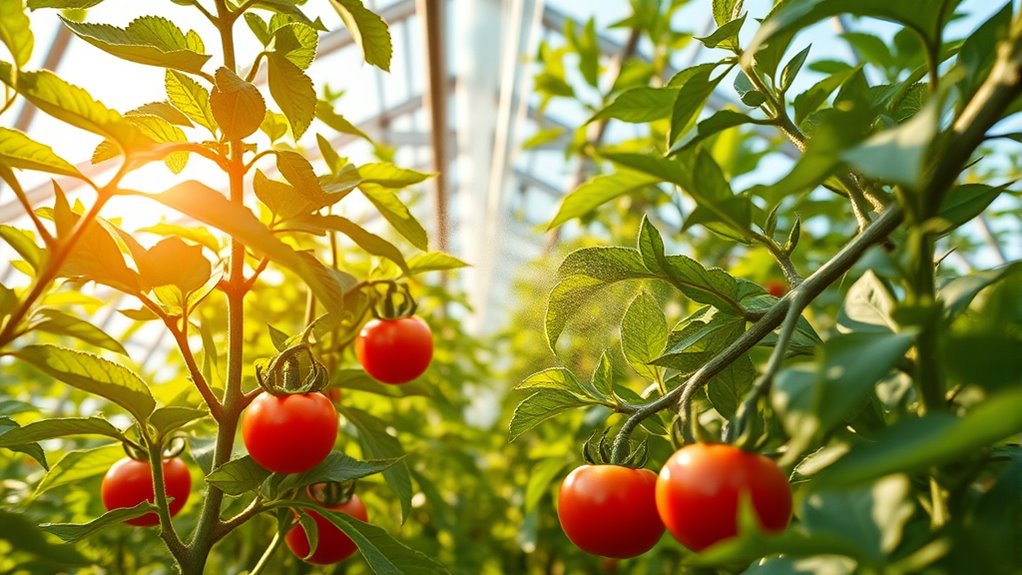
CO2 enrichment techniques are essential tools for boosting plant growth and increasing crop yields in controlled environments. By enhancing the levels of carbon dioxide around your plants, you can substantially improve photosynthesis efficiency, which directly influences how effectively your plants convert light into energy. When photosynthesis works more efficiently, plants grow faster, produce more biomass, and often develop better resistance to diseases. Implementing these techniques requires understanding how to maximize CO2 levels without disrupting the delicate balance of your growing environment.
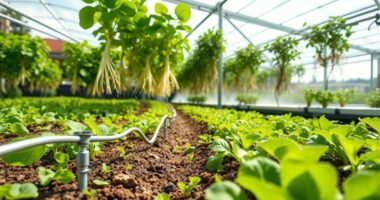
One of the most effective ways to achieve this is through greenhouse automation. Automated systems allow you to precisely control CO2 injection, ensuring that plants receive the right amount at the most suitable times. These systems often incorporate sensors that monitor CO2 concentration, temperature, humidity, and light levels, feeding data into a central controller. Based on this data, the system adjusts CO2 delivery automatically, maintaining ideal conditions for photosynthesis without waste or excess. This not only improves plant growth but also maximizes resource efficiency, reducing costs and environmental impact.
When employing CO2 enrichment, you need to take into account the integration of greenhouse automation to prevent over- or under-supplying CO2. Too much CO2 can lead to waste or even harm plants, while too little won’t produce the desired boost in photosynthesis efficiency. Automated systems help you find that sweet spot, ensuring consistent and reliable delivery. Additionally, automation reduces manual labor, allowing you to focus on other aspects of crop management. It also enables you to fine-tune conditions over time, adapting to different growth stages or changing environmental factors seamlessly.
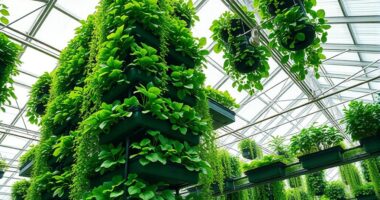
Another advantage of combining CO2 enrichment with greenhouse automation is the ability to refine photosynthesis efficiency across the entire crop canopy. As plants grow taller and denser, uniform CO2 distribution becomes more challenging. Automated systems can adjust airflow and CO2 dispersal to ensure all plants benefit equally, avoiding areas of stagnation or deficiency. This uniformity translates into more consistent plant development, better quality produce, and higher yields.
Furthermore, understanding how vegetable juices can support overall plant health can help optimize growth conditions and nutrient uptake. Ultimately, integrating CO2 enrichment techniques with advanced greenhouse automation empowers you to create a highly controlled environment. You gain the ability to fine-tune conditions for maximum photosynthesis efficiency while conserving resources and reducing operational costs. Keeping a close eye on sensor data and automating responses helps you maintain ideal growth conditions consistently, leading to healthier plants, faster growth cycles, and more bountiful harvests. With these tools at your disposal, you can elevate your cultivation practices to new levels of precision and productivity.
Frequently Asked Questions
What Are the Safety Precautions for CO2 Enrichment?
You should always monitor CO2 levels closely to prevent dangerous buildup, as high concentrations can lead to suffocation. Guarantee proper ventilation and avoid leaks that could cause carbon monoxide accumulation, which is highly toxic. Be aware of fire hazards, since CO2 is used to suppress fires but improper handling can pose risks. Use safety equipment like gas detectors and follow protocols to keep yourself safe during CO2 enrichment.
How Does CO2 Enrichment Affect Plant Disease Resistance?
You’ll find that CO2 enrichment can enhance plant immune responses, making them more resilient against pathogens. Elevated CO2 levels promote healthier growth, which helps in pathogen suppression by strengthening the plant’s natural defenses. As a result, your plants become less susceptible to diseases, reducing the need for chemical treatments. This improved disease resistance not only boosts overall plant health but also increases crop yields and quality.
Can CO2 Enrichment Be Used Outdoors Effectively?
Yes, CO2 enrichment can be used outdoors effectively, but it’s more challenging than in controlled environments. For outdoor applications, you need to take into account environmental impact, like potential effects on local ecosystems and greenhouse gas emissions. You’ll want to target specific areas, such as greenhouses or enclosed spaces, where you can control CO2 levels without harming the environment. Proper planning ensures you boost plant growth while minimizing negative environmental impacts.
What Is the Cost Comparison of Different CO2 Delivery Systems?
You’ll find that the cost analysis of different CO2 delivery methods varies widely. High-pressure tanks and compressed gas systems tend to be more expensive upfront but are reliable for large-scale use. On the other hand, CO2 generators have lower initial costs but can incur higher operational expenses over time. Consider your budget, scale, and desired control level to choose the most cost-effective delivery method for your needs.
How Does CO2 Enrichment Impact Long-Term Plant Health?
You might worry about long-term plant health, but CO2 enrichment actually boosts plant resilience and nutrient uptake over time. By increasing CO2 levels, you help plants develop stronger structures and improve their ability to absorb essential nutrients. This leads to healthier, more vigorous growth, making your plants more resistant to stress and disease. Consistent CO2 enrichment supports sustainable development, ensuring your plants thrive well into the future.
Conclusion
By applying CO2 enrichment techniques, you can substantially boost plant growth—studies show it can increase yields by up to 50%. Imagine the potential if you optimize CO2 levels in your garden or greenhouse; you’re not just growing plants, you’re maximizing their potential. So, consider implementing these methods to enhance your results. With the right approach, you’ll see faster growth, healthier plants, and bigger harvests—making every effort worth it.