To use grow lights in your greenhouse effectively, you should schedule light exposure based on your plants’ needs, supplementing natural sunlight when it’s limited. Adjust the spectrum and intensity to support different growth stages, with blue light promoting vegetative growth and red encouraging flowering. Proper timing and control enhance growth, yield, and energy efficiency. If you want to master extending photoperiods and fine-tuning light conditions, there’s more to explore below.

Get garden gear delivered free — and shop member deals
- Fast, free delivery on millions of items
- Access to Prime Big Deal Days deals on October 6–7
- Prime Video, Amazon Music and more included
Key Takeaways
- Use LED grow lights to supplement natural sunlight during cloudy days or winter to ensure consistent plant growth.
- Adjust spectrum and intensity based on crop growth stages to promote vegetative growth or flowering.
- Schedule lighting to extend photoperiods, accelerating development and improving yields.
- Monitor light levels and distribute light evenly to prevent stress and promote healthy plant development.
- Optimize energy efficiency by fine-tuning spectrum and brightness, reducing electricity costs while supporting healthy growth.
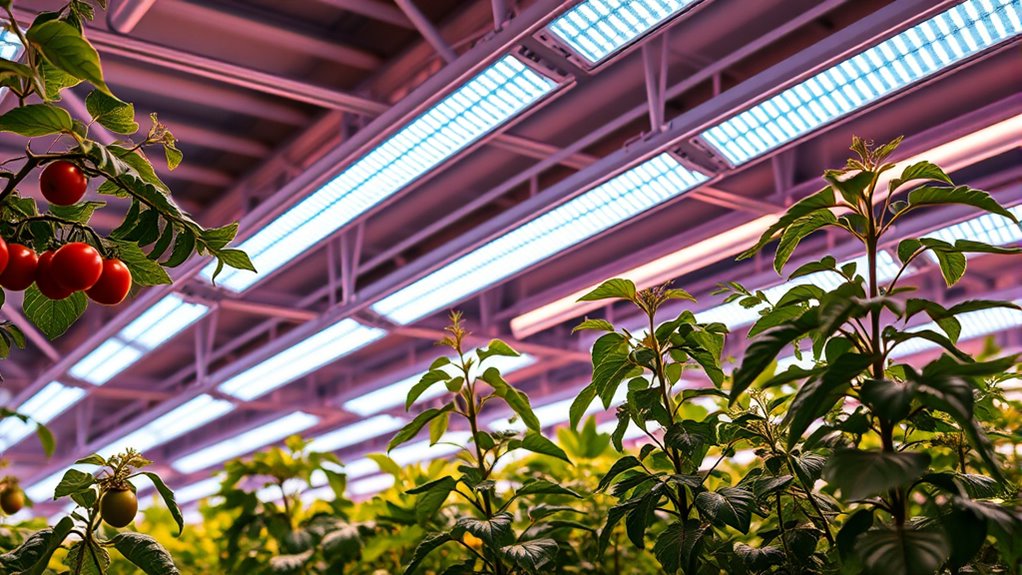
Have you ever wondered how greenhouses can support plant growth even when sunlight is limited? The secret lies in how you use grow lights, especially LEDs. These lights are designed to mimic natural sunlight, providing the right spectrum to promote healthy development. The LED spectrum is vital because it determines which wavelengths of light your plants receive. By choosing LEDs that emit specific spectra, you can target the needs of different plants at various growth stages. For example, blue light encourages vegetative growth, while red light boosts flowering and fruiting. Adjusting the spectrum guarantees your plants get the ideal light they need, regardless of outdoor conditions.
LED grow lights mimic natural sunlight, providing targeted spectra for healthy plant development at every growth stage.
Light intensity also plays a significant role in plant growth inside a greenhouse. If the light is too weak, your plants won’t photosynthesize efficiently, leading to slow growth or poor health. Conversely, too much light can cause stress or damage, especially if the plants aren’t adapted to high-intensity illumination. That’s why it’s essential to monitor and control light intensity carefully. Modern grow lights, particularly LEDs, offer adjustable settings, allowing you to increase or decrease brightness based on your plants’ requirements and time of day. This flexibility helps maintain consistent light levels, supporting healthy, vigorous growth.
Timing is another critical factor. You might need to supplement natural sunlight during cloudy days, winter months, or in shaded areas of your greenhouse. Installing LED grow lights with adjustable spectrum and intensity enables you to extend the photoperiod, giving your plants more hours of ideal light. This extended light exposure can accelerate growth, improve yields, and even help your plants develop stronger roots. The key is to understand the specific light needs of your crops and to set your LED grow lights accordingly, guaranteeing they receive enough energy without overstimulating or causing stress.
Furthermore, using the right LED spectrum and controlling light intensity helps in energy efficiency. LEDs are more energy-efficient than traditional grow lights, delivering targeted wavelengths with less power consumption. By fine-tuning the spectrum and intensity, you can reduce electricity costs while still providing your plants with everything they need to thrive. Additionally, understanding the importance of contrast ratio in lighting can help optimize visual clarity and ensure uniform light distribution across your greenhouse, leading to healthier plant development. This combination of thoughtful lighting choices and precise control creates a more sustainable and productive greenhouse environment.
LED grow lights for greenhouse plants
As an affiliate, we earn on qualifying purchases.
As an affiliate, we earn on qualifying purchases.
Frequently Asked Questions
Can Grow Lights Replace Natural Sunlight Entirely?
You can’t rely solely on artificial sunlight to replace natural sunlight entirely because it may not provide the full spectrum plants need for ideal growth. While grow lights can supplement sunlight and support plant health during low-light periods, natural sunlight offers essential UV and infrared rays that boost plant development. For the best results, combine both, ensuring your plants get a balanced light source to thrive.
What Are the Energy Costs of Using Grow Lights?
You’ll find that grow lights can boost your electricity expenses and operational costs substantially, especially if used frequently. They consume a lot of power, which means higher electricity bills. To keep costs manageable, consider investing in energy-efficient LED grow lights and using timers to optimize usage. Balancing the benefits of extended growing hours with the added energy costs is key to maintaining a profitable greenhouse operation.
How Do I Choose the Right Type of Grow Light?
To choose the right grow light, consider the light spectrum your plants need—blue for vegetative growth and red for flowering. You should also focus on wattage selection, ensuring it matches your greenhouse size and plant requirements. Opt for energy-efficient LED lights, which provide the right spectrum and save on electricity costs. By balancing spectrum and wattage, you’ll promote healthy growth while managing your energy expenses effectively.
Are There Any Safety Concerns With Grow Light Usage?
Think of grow lights as tiny suns; they can brighten your plants but also pose risks if not handled carefully. You should be aware of electrical hazards, such as short circuits or shocks, and UV exposure, which can harm your skin and eyes. Always follow safety guidelines, make certain of proper wiring, and wear protective gear when necessary. Proper use keeps your greenhouse safe and your plants thriving under the right light.
How Do Grow Lights Affect Plant Flowering and Fruiting?
Grow lights influence your plants’ flowering and fruiting by affecting plant hormone regulation and photoperiod effects. When you extend or mimic natural daylight hours, you can trigger flowering or fruiting phases, especially in short-day or long-day plants. Properly timed artificial lighting adjusts hormone levels like auxins and gibberellins, promoting healthy development. This control helps you optimize yields, ensuring your plants bloom and fruit at the right times for maximum productivity.
Conclusion
As you discover the right times and methods to use grow lights, you’ll notice your greenhouse thriving even when nature isn’t cooperating. It’s almost like the lights and your plants are working together in quiet harmony, turning challenges into opportunities. When you master this balance, you’ll find that your garden’s success feels almost inevitable—like a fortunate coincidence. Embrace this synergy, and your greenhouse will flourish, no matter what the season throws at you.
Fall Picks
fall essentials
As an affiliate, we earn on qualifying purchases.