
TL;DR

Get garden gear delivered free with Prime
- Fast, free delivery on millions of items
- Prime Video, Amazon Music and more included
- Member-only deals all year
A Homes & Gardens gardening report recommends five purple or blue-purple flowers that may provide nectar for hummingbirds during fall migration: Mexican bush sage, catmint, great blue lobelia, agastache and obedient plant. Their flowering periods and growing needs vary, and the report does not provide evidence that planting them will guarantee more hummingbird visits.
A Homes & Gardens gardening report recommends five purple or blue-purple flowers that can offer nectar for hummingbirds in fall, when many spring and summer blooms have faded. The suggestions—Mexican bush sage, catmint, great blue lobelia, agastache and obedient plant—have different bloom periods and growing requirements, so the report presents them as planting options rather than a guarantee of increased backyard visits.
The report describes late-season flowers as a way to help fill what it calls a nectar gap during migration. It says Mexican bush sage (USDA hardiness zones 8–10) blooms from late summer into fall, with tubular flowers on long spikes. The plant prefers full sun and well-drained soil, and the report advises spacing multiple plants 3 to 5 feet apart. It also notes that the plant dies back with the first hard frost.
Catmint (zones 3–9) may continue flowering into fall, sometimes through October depending on the variety. The report says removing spent flowers and leggy growth after its first flowering may encourage another flush. It recommends a sunny site with well-drained soil and cautions against excess fertilizer, which can make the flower spikes flop. Great blue lobelia (zones 4–9) has blue-purple tubular flowers that typically bloom from July through October, according to the report, and does best in moisture-retentive soil.
The remaining choices are agastache, also called hyssop or hummingbird mint (zones 5–10), and obedient plant (zones 3–9). The report says agastache can flower from early summer until the first frost and needs full sun; it names ‘Black Adder’ and ‘Blue Fortune’ as purple varieties. Obedient plant produces pink and lavender tubular blooms and can grow in full sun or partial shade and in several soil types, though the report says it prefers rich, evenly watered soil.
Late Flowers Can Fill Nectar Gaps
For people hoping to support migrating hummingbirds, the practical point is flowering time: a garden with blooms continuing into fall may offer nectar after other plants have faded. The listed plants do not all flower at the same time, and frost, local climate and growing conditions affect when their blooms end. Choosing species suited to a yard’s hardiness zone and soil is more useful than relying on color alone.
The report also points to benefits for other pollinators. It describes catmint, great blue lobelia and agastache as plants that attract bees and butterflies as well as hummingbirds. That makes the recommendations relevant to gardeners looking for a broader range of late-season flowers, while the article supplies no quantified evidence about how many additional birds or pollinators a planting might draw.
As an affiliate, we earn on qualifying purchases.
Five Flowers and Their Growing Needs
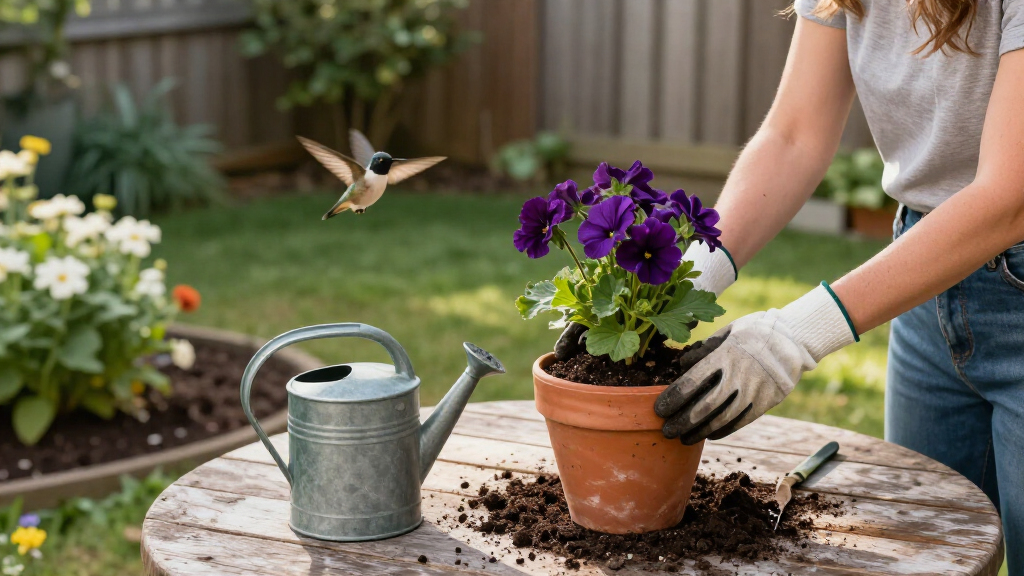
The report says hummingbirds are attracted to red flowers but also to purple and blue-purple blooms. It attributes their ability to see ultraviolet light to tetrachromatic vision, suggesting that these flowers stand out against green foliage. The article’s practical recommendations, however, focus on flower shape, nectar availability and bloom timing as well as color.
Its five suggestions are not all strictly fall-blooming plants. Catmint may extend a summer display, while agastache can flower over a longer season; Mexican bush sage, great blue lobelia and obedient plant are described as providing blooms later in the growing season. The USDA zones cited in the report offer a basic guide to climate suitability, but local conditions and specific cultivars can affect results.
“fall is a trickier time where many perennials have faded”
— Homes & Gardens report
Bloom Timing Depends on Conditions
The report offers gardening recommendations, not a controlled comparison of hummingbird visits. It does not quantify how much nectar each plant produces, how many birds a garden might attract, or whether purple flowers draw more visits than other colors. Its claim about color perception is presented as an explanation, but the article provides no study citation or detailed evidence for that point.
Results will also depend on local climate, cultivar, soil and frost timing. The report does not give a specific planting date for every region, and planting now may not produce flowers before the current migration period ends. It is also unclear from the supplied material when the report was published, beyond its reference to migration being underway.
Match Planting to Local Seasons
Gardeners considering these plants should check their local frost outlook and compare each plant’s USDA zone and soil preferences with conditions in their yard. For fall color and possible late-season nectar, they can prioritize varieties with reported bloom periods extending toward frost, while recognizing that established plants and local weather influence the outcome.
The report also suggests planning beyond fall by caring for hummingbirds in winter, including maintaining feeders, watching for nests and considering winter-flowering shrubs. It provides no specific follow-up data on hummingbird visits, so whether these plantings bring more birds to a particular backyard remains something gardeners would need to observe locally.
Key Questions
Which purple flowers does the report recommend for fall hummingbirds?
It lists Mexican bush sage, catmint, great blue lobelia, agastache and obedient plant. Some have blue-purple or lavender flowers rather than purple blooms in a narrow sense.
Will planting these flowers guarantee more hummingbird visits?
No. The report presents them as potential nectar sources, but it does not provide data showing that planting them guarantees more visits. Results can vary with location, bloom timing and other conditions.
Which of the five flowers can bloom latest in the season?
According to the report, agastache and obedient plant can bloom until the first frost. Mexican bush sage blooms into fall, while catmint and great blue lobelia may also flower into fall, depending on conditions and variety.
Do these plants need the same growing conditions?
No. Mexican bush sage, catmint and agastache are described as preferring full sun and well-drained soil. Great blue lobelia needs moisture-retentive soil, while obedient plant can grow in full sun or partial shade and tolerates several soil types.
Source: rss
Halloween Picks
halloween
As an affiliate, we earn on qualifying purchases.