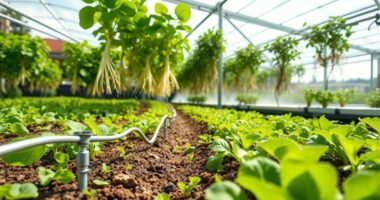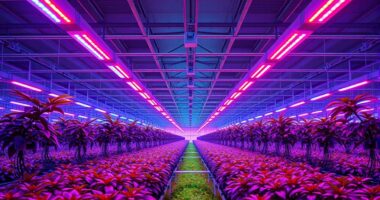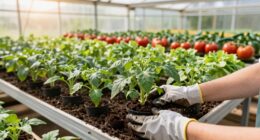
In greenhouses, mastering hydroponic and soil methods requires understanding their unique strengths. Hydroponics offers precise nutrient control, faster growth, and easier pest management, especially in enclosed setups. Soil farming provides natural resilience and long-term health benefits, though pests can be more challenging. Balancing environment control and resource investment is key for each. If you continue exploring, you’ll discover advanced techniques to optimize both systems for maximum plant health and yields.
Key Takeaways
- Hydroponics allows precise nutrient and pH control, leading to faster growth and higher yields in greenhouse environments.
- Soil-based gardening benefits from natural resilience and long-term health development, requiring less technological intervention.
- Greenhouses reduce pest risks for hydroponic systems and facilitate easier pest management through enclosure and sanitation.
- Advanced greenhouse setups optimize environmental conditions for both hydroponic and soil methods, enhancing resource efficiency.
- Choice depends on resource availability, desired speed, and long-term goals, with each method offering distinct advantages.

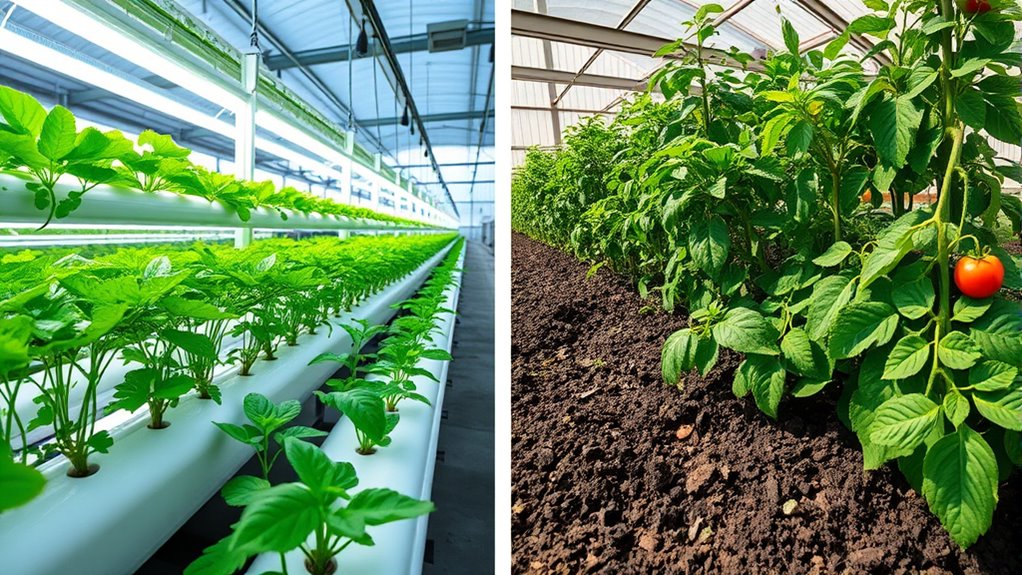
Have you ever wondered whether hydroponic systems or traditional soil gardening is better? The choice largely depends on your specific goals and conditions, but understanding the nuances of each method can help you make an informed decision. When it comes to nutrient delivery, hydroponic systems excel because they provide plants with a precisely controlled environment. Since plants grow in a nutrient-rich water solution, you can adjust the pH and nutrient concentrations with ease, ensuring ideal growth. This direct method often results in faster development and higher yields compared to soil gardening, where nutrients must be be broken down and absorbed through the soil. In soil, nutrient availability can fluctuate due to factors like pH, microbial activity, and soil composition, making it more challenging to maintain consistent nutrient delivery. Hydroponics allows for immediate adjustments, minimizing deficiencies and promoting healthier plants.
Pest management is another critical factor where these methods differ markedly. In a soil-based garden, pests such as nematodes, insects, and fungi can pose persistent threats, often requiring chemical or organic interventions. Soil tends to harbor pests and pathogens, making it more challenging to keep your plants pest-free over time. Hydroponic systems, on the other hand, are generally less susceptible to soil-borne pests because there’s no soil involved. This reduces the need for pesticides and helps you maintain a cleaner, more controlled environment. However, hydroponic setups are not completely immune; waterborne pests and diseases can still occur, so vigilant monitoring and proper sanitation are essential. Additionally, because hydroponics are often housed in enclosed or controlled environments like greenhouses, pest management becomes easier and more effective. You can implement integrated pest management strategies with less risk of pests hiding in the soil, leading to less chemical use and healthier plants overall. Moreover, understanding the contrast in technology between hydroponic and soil systems can help optimize your greenhouse setup for better plant health and yield.
In advanced greenhouse setups, mastering nutrient delivery and pest management can markedly impact your success with either method. Hydroponics offers precision and speed, making it ideal if you want quick results and manageable pest control. Soil gardening, while more variable, benefits from natural resilience and the ability to build soil health over time, which can enhance nutrient availability naturally. Ultimately, your choice should align with your resources, goals, and environmental conditions. Both methods can thrive in a well-managed greenhouse, but understanding these key differences can help you optimize your setup for maximum productivity and plant health.
Frequently Asked Questions
What Are the Environmental Impacts of Hydroponic Versus Soil Farming?
You might find hydroponic farming more environmentally friendly because it uses less water and land, making it more resource-efficient. It also reduces runoff and pesticide use, supporting sustainability practices. However, it relies on energy-intensive systems, which can have a higher carbon footprint if not powered sustainably. Soil farming can improve soil health and biodiversity but may require more water and chemicals. Consider these impacts when choosing your method.
How Do Pests and Diseases Differ Between Hydroponic and Soil Systems?
You’ll find pests and diseases differ markedly between hydroponic and soil systems. In hydroponics, pest management is easier since you control the environment and have fewer soil-borne pests, reducing disease risk. Conversely, soil systems can harbor more pests and pathogens, making disease prevention more challenging. Regular monitoring and integrated pest management strategies are essential for both, but hydroponics generally offers a cleaner, more controlled environment for disease prevention.
What Are the Cost Differences for Setting up Each Method?
Setting up hydroponic systems is like building a spaceship—costly upfront, but potentially more efficient long-term. You’ll face higher initial investments in equipment, nutrient solutions, and climate control. Soil setups typically cost less initially, mainly for soil and basic infrastructure. However, ongoing expenses can favor hydroponics due to reduced water use and less pest control. Your choice depends on your budget, scale, and long-term goals.
Can Both Methods Be Combined in a Single Greenhouse?
Yes, you can combine hydroponic and soil methods in a greenhouse through integrated systems, creating a hybrid cultivation setup. This approach allows you to optimize growing conditions for different crops, increase resource efficiency, and diversify your yields. By carefully designing your greenhouse to accommodate both systems, you can enjoy the benefits of each method while managing costs and environmental controls effectively. Hybrid cultivation offers flexibility and maximizes productivity.
How Does Crop Yield Compare Between Hydroponic and Soil Cultivation?
You’ll find that hydroponic systems generally offer higher crop density and yield efficiency compared to soil cultivation. With precise nutrient control and optimized growth conditions, hydroponics often produce quicker, more consistent yields. Soil methods may yield less per square foot but can provide better flavor and natural growth patterns. Your choice depends on your goals; hydroponics maximizes yield efficiency, while soil supports diverse crop qualities.
Conclusion
Ultimately, whether you choose hydroponics or soil, remember that mastering each method is like tending to a garden of the mind—patience and knowledge cultivate success. As the great gardener once said, “To plant a garden is to believe in tomorrow.” Embrace the unique advantages of each system, and with dedication, you’ll nurture thriving plants that stand as a proof to your skill and vision. Your green thumb is the key to revealing nature’s endless possibilities.