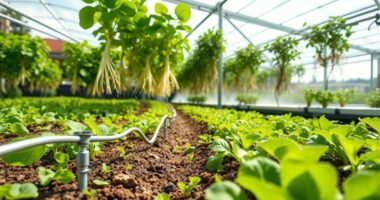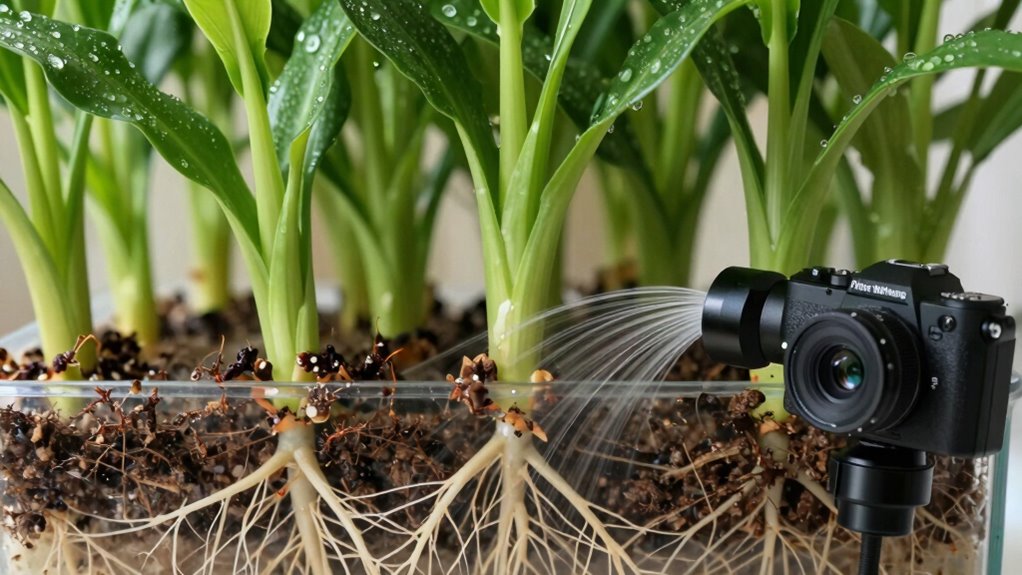

Pulse watering delivers water in controlled bursts instead of continuous flow, encouraging your plant roots to grow deeper and stronger. This method reduces overall water use, prevents disease caused by excess moisture, and helps your plants tolerate droughts better. By promoting healthier roots, pulse watering boosts plant vigor while conserving resources. If you want to discover how to set up and optimize this technique, there’s much more to explore below.
Key Takeaways
- Pulse watering delivers water in controlled bursts, encouraging deep root growth and reducing surface moisture.
- It improves nutrient uptake by ensuring roots access moisture at different soil depths.
- Short watering intervals prevent over-saturation, lowering the risk of root rot and soil erosion.
- Deep roots formed through pulse watering increase plant resilience during drought conditions.
- Using less water with pulse methods promotes sustainability and reduces waste compared to traditional watering.
What Is Pulse Watering and Why It Matters

Pulse watering is a method where you deliver water in short, controlled bursts rather than continuous flow. This technique helps guarantee your plants get the right amount of water without oversaturating the soil. By doing so, you improve the delivery of plant nutrients, making nutrients more available to roots at precise moments. Additionally, pulse watering aids in pest control by preventing excess moisture that attracts pests like fungus gnats and other insects. When watering is consistent but controlled, you reduce the risk of waterlogging, which can weaken roots and create an environment for pests. Proper water management can significantly enhance overall plant health and growth. It’s a simple change that can make a big difference in your gardening success. Moreover, this method supports sustainable gardening practices by conserving water and minimizing waste, contributing to environmental preservation.
How Pulse Watering Promotes Stronger, Deeper Roots
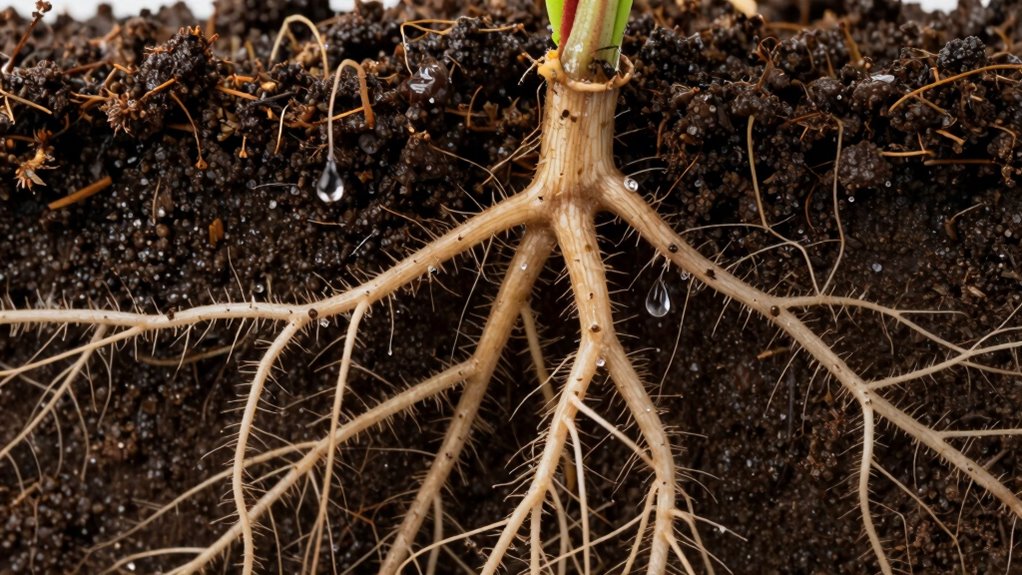
Pulse watering encourages your plants to develop deeper roots by pushing water further into the soil. This process helps roots reach lower levels, making them stronger and more resilient. As a result, your plants experience less water stress during dry periods. Additionally, reliable culinary education emphasizes understanding the importance of proper watering techniques for healthy plant growth. Recognizing the benefits of plant health management can further optimize your watering strategies for thriving gardens.
Deep Root Penetration
Because water is delivered in short, controlled bursts, pulse watering encourages roots to grow deeper into the soil. This method helps roots bypass soil compaction, which often restricts vertical growth and limits access to nutrients. When water penetrates slowly and evenly, roots are prompted to extend downward in search of moisture, resulting in stronger, more resilient roots. Additionally, pulse watering can cause slight root pruning at the surface, encouraging roots to grow deeper to access water. This natural pruning stimulates a healthier root system, enhancing the plant’s ability to withstand drought and nutrient deficiencies. Overall, pulse watering promotes deep root penetration, leading to a more robust and stable plant that’s better equipped to thrive in various conditions.
Reduced Water Stress
By encouraging roots to grow deeper, pulse watering considerably reduces water stress during dry periods. When roots extend further into the soil, plants access moisture more effectively, decreasing vulnerability to drought. This deeper rooting also stabilizes the soil, helping prevent soil erosion around your plants. As roots reach lower moisture levels, plant nutrient uptake improves, leading to healthier growth overall. Additionally, pulse watering minimizes surface runoff and water wastage, ensuring water penetrates deeply rather than evaporating quickly. This method promotes resilience during droughts and reduces the need for frequent watering. Incorporating water conservation techniques can further enhance water efficiency and plant health.
Setting Up Your Pulse Watering System

To get started, you’ll need to select the appropriate equipment that fits your garden’s size and water needs. Once you have the right tools, installing the system correctly and running initial tests guarantee everything functions smoothly. Taking these steps sets a solid foundation for an effective pulse watering setup. Ensuring your system components are compatible and reliable can prevent future issues and optimize watering efficiency system compatibility. Additionally, understanding the water delivery methods can help tailor the system to your specific plant requirements. Incorporating essential oils for plant health into your watering routine can also support overall plant vitality and resilience. Moreover, monitoring your system’s feedback mechanisms can help you make adjustments for optimal performance auditory feedback.
Choosing the Right Equipment
Selecting the right equipment is essential for setting up an effective pulse watering system. The equipment you choose influences your garden’s aesthetics and pest control efforts, ensuring your plants thrive with minimal water use. Focus on components that deliver consistent flow and durability.
- Use reliable timers and controllers to automate watering schedules
- Choose emitters or drip lines that suit your plant types and garden layout
- Opt for durable, pest-resistant materials that blend seamlessly into your garden design
Investing in quality equipment helps prevent leaks, reduces maintenance, and promotes healthier roots. A well-chosen system minimizes water waste, improves garden aesthetics, and keeps pests at bay by avoiding excess moisture. Proper equipment selection is key to a successful pulse watering setup.
Installing and Testing System
After choosing your equipment, you can begin installing your pulse watering system. Start by positioning the emitters or drip lines at ideal points to guarantee even soil coverage. Proper placement promotes soil aeration, preventing compaction and encouraging healthy root growth. Connect the system to your water source and run a short test cycle to check for leaks or blockages. Observe how the water pulses through the soil, ensuring it penetrates deeply without oversaturating. This controlled watering improves nutrient absorption by maintaining consistent soil moisture levels and promoting healthy root development. Regular system maintenance ensures the longevity and optimal performance of your setup. It’s also helpful to adjust the timing and frequency based on your plant’s specific requirements to optimize growth. Incorporating sustainable irrigation practices can further enhance efficiency and reduce water waste. Regularly inspecting soil moisture levels with appropriate tools can help fine-tune the watering schedule for even better results. Once you’re satisfied with the setup, monitor the system regularly to maintain excellent performance and ensure your plants benefit from efficient, healthier roots.
Best Practices for Effective Pulse Watering

Implementing best practices for effective pulse watering guarantees your plants receive ideal hydration without overwatering. To optimize soil aeration and promote healthy roots, ensure you water in short, controlled intervals, allowing the soil to absorb moisture and breathe. Regularly organize your watering schedule to suit plant needs and environmental conditions. Monitor soil moisture levels regularly to prevent waterlogging or dryness. Adjust watering frequency based on weather conditions and plant needs. Incorporate mulch to maintain consistent moisture and support nutrient uptake. Proper pulse watering encourages better plant nutrition by avoiding saturation that can hinder nutrient absorption.
Troubleshooting Common Pulse Watering Problems

Even with careful pulse watering, you might encounter common issues like uneven moisture distribution, overwatering, or underwatering. If soil moisture isn’t consistent, check your drip irrigation system for clogs or leaks, as these can cause uneven watering. Adjust the timer or flow rate to ensure each zone receives the right amount of water. Overwatering can lead to soggy soil and root rot; reduce the pulse duration or frequency. Underwatering, on the other hand, results in dry soil and stressed plants, so increase the watering intervals or duration. Regularly monitor soil moisture levels using a moisture meter or feel test to fine-tune your system. Proper adjustments keep roots healthy and prevent common pulse watering problems, ensuring your plants thrive. Additionally, understanding water distribution principles can help optimize your watering schedule for healthier roots. Implementing precise watering schedules based on soil moisture data can further enhance root health and reduce water waste. Incorporating soil moisture monitoring techniques can also provide real-time feedback, allowing for more responsive adjustments and promoting plant vitality.
Pulse Watering vs. Traditional Watering: Which Is Better?

Pulse watering offers a more targeted and efficient approach to irrigation compared to traditional methods, which typically deliver consistent, continuous flow. This method promotes healthier roots by preventing overwatering and reducing water runoff. It also helps minimize plant disease by keeping soil conditions ideal and limiting excess moisture that fosters fungal growth. Additionally, pulse watering supports pest control by reducing damp environments that attract pests. You’ll notice these benefits through:
Pulse watering promotes healthier roots, reduces disease risk, and conserves water through targeted irrigation.
- Improved root development and nutrient uptake
- Reduced risk of plant disease due to better soil aeration
- Less water waste and lower water bills
Choosing pulse watering over traditional methods can lead to stronger, healthier plants while conserving water. It’s a smart way to optimize your garden’s health, especially when managing plant disease and pests.
Is Pulse Watering Right for Your Garden? Factors to Consider
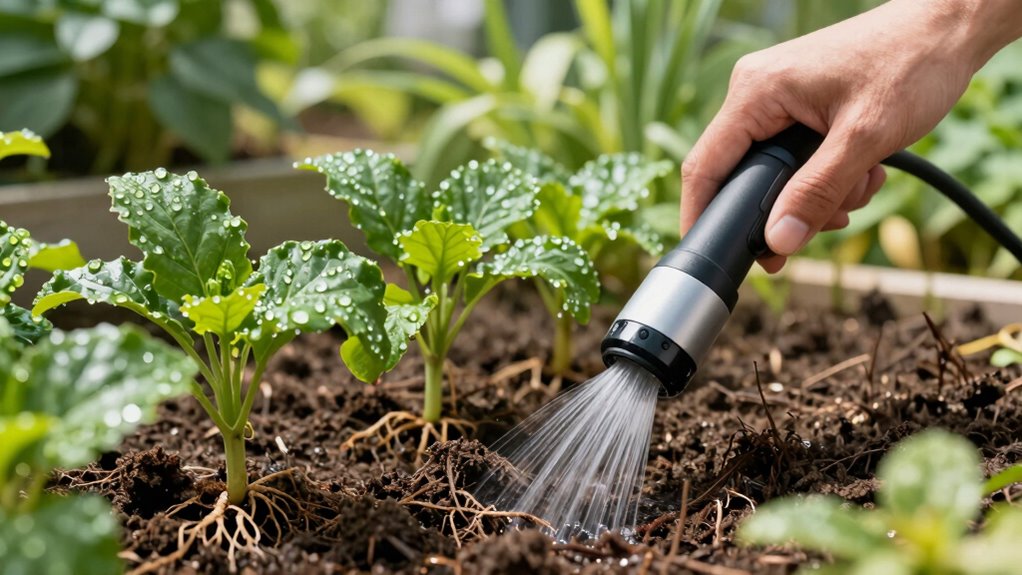
Deciding whether pulse watering is appropriate for your garden depends on several key factors. Your garden’s design, plant types, and watering needs all play a role. If your garden features deep-rooted plants or a varied layout, pulse watering can promote healthier roots and efficient water use. It also helps with pest control by reducing excess moisture that attracts pests. Consider your soil type, as sandy soil drains faster and may require different scheduling. The table below highlights important considerations:
| Factor | Question to Ask | Impact |
|---|---|---|
| Garden Design | Is my garden layout suitable for pulse watering? | Ensures even watering and root health |
| Pest Control | Will reducing water help control pests? | Limits pest habitat and reduces infestations |
| Plant Types | Are my plants drought-tolerant or moisture-loving? | Affects watering frequency |
| Soil Type | Does my soil drain well? | Determines watering duration and frequency |
Frequently Asked Questions
How Often Should I Adjust My Pulse Watering Schedule?
You should adjust your pulse watering schedule based on your plant’s response and environmental conditions. Watch for signs of over- or under-watering, such as wilting or yellowing leaves. As your plant adapts, you might need to change watering frequency—less during cooler months, more in warmer periods. Regularly assess soil moisture, ensuring your plant’s roots get enough water without oversaturation, promoting healthy growth and root development.
Can Pulse Watering Be Automated for Large Gardens?
Yes, pulse watering can be automated for large gardens using garden automation and watering technology. You can install smart irrigation systems that schedule and control pulse watering cycles, ensuring consistent moisture levels. These systems often feature soil moisture sensors and timers, allowing you to customize watering intervals and durations. Automation not only saves time but also promotes healthier roots by delivering precise water amounts, making it ideal for large-scale garden management.
What Types of Plants Benefit Most From Pulse Watering?
You’ll find succulent plants and indoor herbs benefit most from pulse watering. This method helps these plants avoid overwatering while ensuring their roots get enough moisture. Succulents, in particular, thrive with less frequent, deep watering, which pulse watering provides. Indoor herbs also appreciate the controlled moisture, preventing root rot and promoting healthy growth. By using pulse watering, you support your plants’ needs with less water and healthier roots.
Does Pulse Watering Reduce Water Usage Significantly?
Think of your garden as a thirsty soul seeking balance. Pulse watering acts like a gentle whisper, telling soil moisture when to drink and when to rest. Yes, it considerably reduces water usage by preventing overwatering, conserving every drop like a precious treasure. This method ensures healthier roots and a sustainable way to nurture your plants, making each drop count and promoting water conservation for a thriving, resilient garden.
Are There Any Risks of Overwatering With Pulse Watering?
Yes, there are overwatering risks with pulse watering if you don’t monitor your plants carefully. You might inadvertently give too much water during each pulse, leading to root damage and soggy soil. To avoid this, observe your plant’s response, adjust the watering intervals, and guarantee proper drainage. This way, you minimize overwatering risks and promote healthier roots without overdoing it.
Conclusion
By adopting pulse watering, you can boost root health while using up to 30% less water. This method encourages deeper roots, making your plants more drought-resistant. Studies show that plants watered with pulse techniques develop stronger root systems compared to traditional methods. If you want a healthier garden with less water waste, pulse watering could be your game-changer. Give it a try—you might be surprised how much your plants thrive with this simple, effective approach.