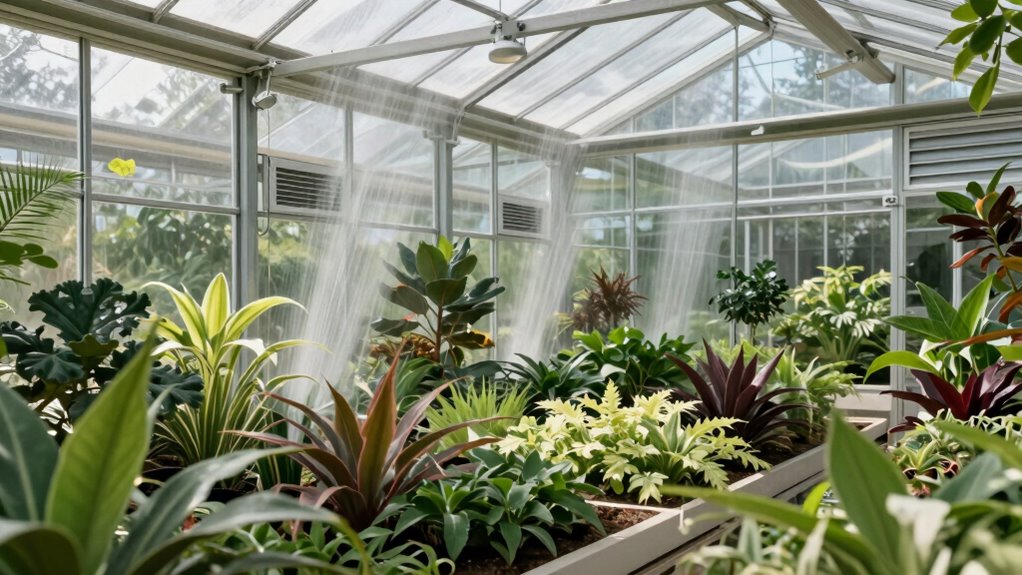

To build a better airflow path in your greenhouse, start by positioning openings like doors, windows, and vents for cross-ventilation, ensuring air flows steadily from one side to the other. Use natural sources along with mechanical fans and exhausts to enhance movement, placing fans strategically to reach all areas. Keep an eye on airflow patterns and make adjustments as needed. With some simple tuning, you’ll create an ideal environment for healthy plants, and more tips await if you keep exploring.
Key Takeaways
- Design openings (doors, windows, vents) for cross-ventilation, positioning them to facilitate steady airflow from one side to the other.
- Install exhaust fans at high points and intake vents lower down to promote vertical and continuous airflow.
- Use natural wind patterns and prevailing winds to orient the greenhouse and enhance passive ventilation.
- Incorporate oscillating fans and strategically place fans to reach all corners and prevent stagnation zones.
- Regularly monitor airflow and adjust vents and fans to optimize circulation and prevent poor air exchange areas.
Are you looking to improve the airflow in your space? Achieving ideal ventilation efficiency in your greenhouse isn’t just about adding fans or vents—it’s about designing an effective airflow path that promotes consistent air circulation. When you focus on air circulation strategies, you guarantee that warm, stale air is replaced with fresh, oxygen-rich air, which helps your plants thrive and reduces issues like mold or disease. The key is understanding how air naturally moves and how to guide it through your greenhouse in a way that maximizes efficiency.
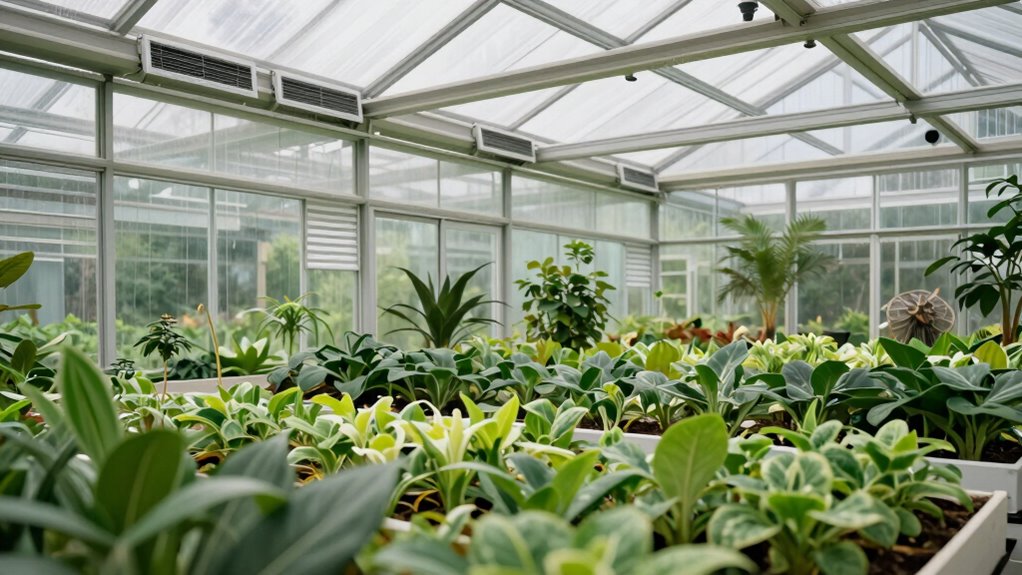
Start by analyzing your greenhouse’s layout. Identify natural air sources, such as doors, windows, or vents, and position them to facilitate cross-ventilation. When air enters from one side and exits from the opposite end, you create a steady flow that prevents stagnation. This approach greatly improves ventilation efficiency because it maintains a continuous exchange of air. If natural airflow isn’t enough, consider installing exhaust fans and intake vents strategically. Place exhaust fans at high points where hot, humid air tends to accumulate, and set intake vents lower down to bring in cooler, fresh air. This setup encourages a vertical airflow pattern, which helps regulate temperature and humidity more effectively.
Incorporate air circulation strategies that promote consistent movement. For example, using oscillating fans can help distribute air evenly throughout the space, reaching corners and areas that might otherwise remain stagnant. Position fans so they don’t create direct drafts on plants but instead generate a gentle breeze that encourages air movement. Proper fan placement is vital; too many fans can cause turbulence, reducing airflow efficiency, while too few may not circulate the air enough. Balance is key. Additionally, understanding how natural airflow interacts with mechanical systems can help you optimize overall ventilation performance. Recognizing the influence of prevailing winds can also guide your design choices for vent placement and greenhouse orientation. Monitoring airflow patterns regularly will enable you to identify and address any stagnation points that develop over time. Regularly assessing air circulation helps ensure your plants continue to receive the optimal environment for growth and health.
Additionally, consider the greenhouse’s orientation and shading. Proper shading reduces temperature extremes, which in turn minimizes the need for excessive ventilation. Properly placed vents and fans, combined with an understanding of prevailing winds, can enhance natural airflow, reducing reliance on mechanical devices. Regularly monitor your greenhouse’s internal conditions, adjusting vent sizes, fan speeds, or the placement of air circulation devices as needed. This ongoing fine-tuning ensures your air circulation strategies continually support healthy plant growth.

iLIVING 12" Wall Mounted Shutter Exhaust Fan, Automatic Shutter, with Thermostat and Variable Speed controller, 0.6A, 960 CFM, 1400 SQF Coverage Area Silver (ILG8SF12V-ST)
- High CFM Ventilation: 960 CFM airflow for large areas
- Automatic Shutter System: Built-in shutters for automatic operation
- Variable Speed Control: Adjust airflow with variable speed feature
As an affiliate, we earn on qualifying purchases.
As an affiliate, we earn on qualifying purchases.
Frequently Asked Questions
What Are the Best Materials for Greenhouse Vents?
You should choose durable, weather-resistant ventilation materials like aluminum or galvanized steel for greenhouse vents, as they withstand the elements and last long. Polycarbonate or tempered glass panels also work well, providing good insulation and durability. These materials optimize airflow by allowing easy opening and closing, which enhances ventilation. Properly selected ventilation materials are essential for airflow optimization, helping you regulate temperature and humidity efficiently inside your greenhouse.
How Often Should Fans Be Maintained?
You should maintain your fans at least twice a year to guarantee peak fan efficiency. Follow a regular maintenance schedule that includes cleaning blades, checking for debris, and lubricating moving parts. Regular upkeep prevents dust buildup and mechanical issues, keeping airflow consistent and effective. Proper maintenance not only prolongs the lifespan of your fans but also ensures your greenhouse maintains the best environment for plant growth.
Can Natural Airflow Be Sufficient Without Fans?
Imagine your greenhouse as a living breath, where natural ventilation acts like gentle lungs, drawing in fresh air and releasing stale warmth. Yes, natural airflow can be sufficient without fans, especially with passive cooling techniques. By designing vents and openings strategically, you harness wind and temperature differences to maintain ideal conditions. This eco-friendly approach reduces energy use and creates a healthier, more sustainable environment for your plants.
How Does Plant Placement Affect Airflow?
Plant placement greatly impacts airflow by influencing air circulation within your greenhouse. When you space plants appropriately, you prevent overcrowding, allowing air to move freely around each one. Proper plant spacing ensures better ventilation, reduces humidity, and minimizes disease risk. Keep plants neither too close nor too far apart, and position taller plants strategically to promote even airflow throughout the space. This approach maximizes your greenhouse’s overall air circulation.
What Is the Ideal Temperature for Optimal Airflow?
You should aim for a temperature around 75-80°F to maximize airflow and humidity control in your greenhouse. At this range, air moves efficiently, reducing stagnation and uneven humidity. Cooler temperatures slow airflow, while higher temperatures can create excessive humidity, hindering plant growth. Maintaining this ideal temperature promotes effective airflow efficiency, ensuring your plants receive consistent, balanced conditions essential for healthy growth and ideal environmental control.
Conclusion
Think of your greenhouse as a living breathing forest, where airflow is the gentle breeze that keeps every leaf vibrant. When you craft a better airflow path, you’re guiding this breeze to dance seamlessly through your plants, preventing stagnation and fostering growth. Like a skilled conductor, you orchestrate a harmony of movement that nurtures life within. Embrace this delicate balance, and your greenhouse will flourish as a lush, thriving sanctuary of essential energy.