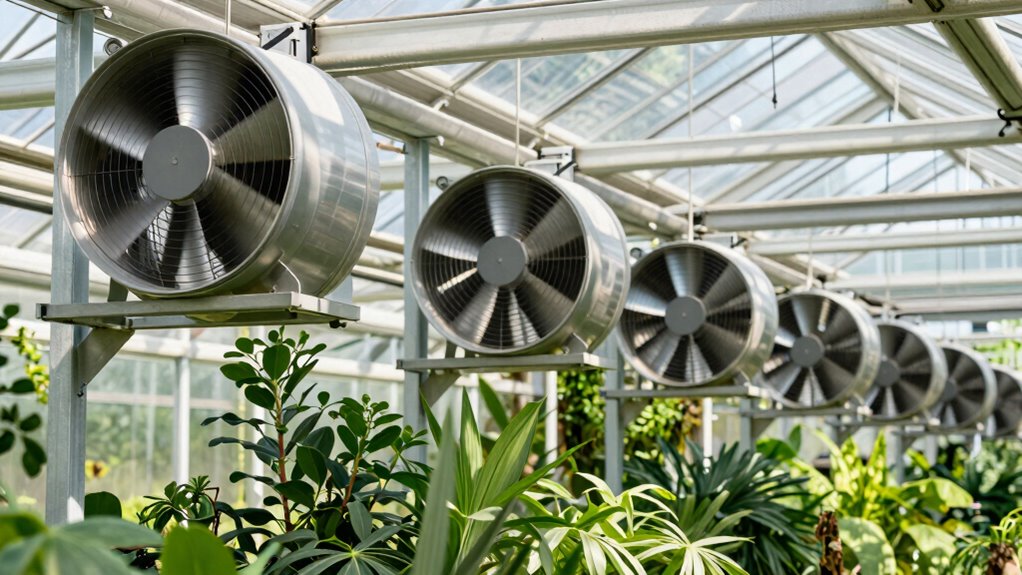

Greenhouse exhaust fans work best when you install them near the roof’s highest point, where they can effectively draw out warm, stale air. Placing fans close to natural ventilation openings, like roof vents or side windows, enhances airflow and temperature control. Proper placement prevents stagnant zones and helps maintain even conditions throughout your space. By positioning fans strategically, you’ll improve air exchange and create a healthier environment for your plants. Keep exploring to discover more tips on optimizing your ventilation system.
Listen free for 30 days with Audible
Thousands of audiobooks and originals — cancel anytime.
As an affiliate, we earn on qualifying purchases.
Key Takeaways
- Near the roof’s highest point to maximize hot air removal and promote effective air exchange.
- Adjacent to natural ventilation openings like vents or side windows to enhance airflow integration.
- In positions free from obstructions, ensuring unobstructed airflow and consistent circulation.
- In larger greenhouses with multiple fans to achieve even air distribution throughout the space.
- Close to heat sources or areas prone to humidity buildup for targeted temperature and moisture control.

Have you ever wondered how to keep your greenhouse environment healthy and productive? The key lies in effective ventilation, which guarantees plants receive the right amount of fresh air, prevents overheating, and maintains ideal humidity levels. Greenhouse exhaust fans play a critical role here, but their effectiveness depends heavily on where you place them and how well they perform ventilation efficiency. If you want your greenhouse to thrive, understanding the perfect conditions for exhaust fan placement is essential.
First, consider fan placement carefully. Proper positioning maximizes airflow, removes excess heat, and reduces humidity buildup. Typically, exhaust fans work best when installed near the roof’s highest point, where hot air naturally rises. By placing fans at the apex, you can effectively draw out the warm, stale air that accumulates near the ceiling. This creates a natural cycle where cool, fresh air enters through vents or side openings, replacing the heated air, and enhancing overall ventilation efficiency. If fans are placed too low or in an awkward spot, airflow becomes uneven, leading to stagnant pockets of air that can harm your plants.
Place exhaust fans near the roof’s highest point for optimal airflow and efficient heat removal.
Another factor influencing fan placement is the layout of your greenhouse. For larger structures, you might need multiple fans strategically positioned to promote uniform airflow throughout the space. Positioning fans near vents or intake openings can help create a steady circulation pattern, ensuring that no corner remains poorly ventilated. When installing exhaust fans, avoid obstructing their airflow with shelving or equipment; unobstructed airflow is essential for maintaining consistent ventilation efficiency. Proper fan placement in relation to natural ventilation features, such as roof vents and side windows, can significantly enhance the air exchange process. Additionally, understanding how airflow patterns work within your space can help you optimize fan placement for the best results. Employing ventilation strategies that consider air circulation not only improves air quality but also reduces the risk of humidity buildup and temperature fluctuations.
As an affiliate, we earn on qualifying purchases.
Frequently Asked Questions
How Do I Calculate the Right Size of Exhaust Fan for My Greenhouse?
To calculate the right size of exhaust fan for your greenhouse, first determine its volume in cubic feet. Then, decide on the recommended air changes per hour, typically 4-6 for greenhouses. Use this formula: Fan CFM = (Greenhouse volume × air changes per hour) ÷ 60. Proper fan placement is key to airflow optimization, ensuring even ventilation and preventing hot spots.
What Maintenance Is Required for Greenhouse Exhaust Fans?
You need to regularly inspect your greenhouse exhaust fans for fan blade maintenance, ensuring blades are clean and free of debris to maintain efficiency. Additionally, check and lubricate the motor as needed to prevent overheating and prolong its lifespan. Regular maintenance also includes tightening loose parts, replacing worn belts, and inspecting electrical connections. Doing these simple tasks keeps your exhaust fans running smoothly, helping your greenhouse maintain ideal airflow and plant health.
Can Exhaust Fans Be Used in Small or Vertical Greenhouses?
Yes, exhaust fans work well in small greenhouses and vertical ventilation setups. Think of them as the heartbeat of your greenhouse, keeping airflow steady and plants healthy. In small greenhouses, they efficiently remove excess heat and humidity. For vertical greenhouses, they promote even air circulation, preventing hot spots. Installing the right exhaust fans guarantees your space remains ideal for plant growth, regardless of size or design.
How Do Outdoor Weather Conditions Affect Fan Performance?
Outdoor weather conditions greatly impact your exhaust fan’s performance. Climate variability, like humidity, wind, and temperature fluctuations, can hinder airflow enhancement. Strong winds might reduce fan efficiency or cause turbulent airflow, while high humidity can strain ventilation systems. To maintain ideal performance, you should adjust fan settings or install weather-resistant features, ensuring consistent airflow regardless of outdoor conditions. Properly managing these factors helps keep your greenhouse environment stable and healthy.
Are There Eco-Friendly or Energy-Efficient Exhaust Fan Options Available?
Think of choosing an exhaust fan as selecting a wise turtle in a race—steady, mindful, and eco-conscious. Yes, eco-friendly options and energy-efficient designs exist, helping you reduce your environmental impact while maintaining ideal airflow. These fans use advanced technology to consume less power and operate sustainably. By opting for such designs, you guarantee your greenhouse stays productive while supporting eco-friendly practices. It’s a smart, responsible choice for a greener future.
Conclusion
Greenhouse exhaust fans are most effective when placed strategically near heat sources and vents, ensuring ideal airflow and temperature control. By understanding where these fans work best, you can create a healthier environment for your plants, boosting growth and yield. Did you know that proper ventilation can increase plant productivity by up to 25%? So, invest in the right placement, and you’ll see your greenhouse thrive with healthier, happier plants.
Flea & tick season Picks
flea and tick prevention
As an affiliate, we earn on qualifying purchases.