When building on wet, sandy, or frozen ground, the best options include deep foundations like piles or drilled shafts that transfer loads to stable layers below the surface. Elevating structures on piers or posts helps prevent flood damage and frost heave. Waterproof membranes and advanced drainage systems keep moisture away, while insulation and frost-protected shallow foundations guard against freezing. Understanding your soil type guarantees you select the most effective foundation — continue to discover which methods suit your site best.
Key Takeaways
- Deep foundations like piles and drilled shafts transfer load to stable soil or bedrock, ideal for loose, sandy, or frozen ground.
- Elevated or pier-and-post foundations prevent water damage and frost heave in flood-prone or frozen areas.
- Soil stabilization techniques such as geogrids and soil nails improve weak or loose soils before construction.
- Insulation and frost-protected shallow foundations mitigate frost heave in frozen ground conditions.
- Effective drainage and waterproofing systems are essential to prevent water infiltration and soil erosion around foundations.
Why Does Soil Type Matter When Building on Wet, Sandy, or Frozen Ground?
Have you ever wondered why soil type is so crucial when constructing on wet, sandy, or frozen ground? Your building’s stability heavily depends on soil composition, which influences how well the ground supports structures. Wet or sandy soils tend to drain quickly, but they can also shift or settle unevenly, causing foundation problems. Frozen ground presents unique challenges because it expands and contracts with temperature changes. To address these issues, effective drainage solutions are essential. Proper drainage helps control water movement, reducing the risk of erosion and water infiltration that can weaken foundations. Additionally, understanding the soil’s drainage capacity allows you to choose the right foundation type and drainage strategies, ensuring your structure remains stable and durable despite challenging ground conditions.
What Are the Main Challenges of Building on Difficult Soils?
Building on challenging soils introduces a range of significant difficulties that can impact your project’s success. Poor soil compaction reduces stability, making it harder to support structures and increasing the risk of settlement or shifting over time. In wet or sandy ground, drainage solutions become critical to prevent water accumulation that can weaken the soil and cause erosion. Frozen soil presents its own issues, such as shifting and frost heave, which can damage foundations. These conditions require careful planning, like improving soil compaction through specialized techniques or installing effective drainage systems to manage water flow. Additionally, European cloud innovation can offer advanced monitoring technologies that help detect soil movement early, allowing for timely interventions. Without addressing these challenges, your foundation may settle unevenly, leading to costly repairs or structural failure. Understanding these issues helps you choose the right foundation strategy for difficult soils.
Which Foundations Are Best for Wet and Flood-Prone Sites?
When building on wet or flood-prone sites, selecting an elevated foundation can safeguard your home from water damage. Pier and post options provide stability and allow for easier waterproofing strategies. Implementing effective waterproofing methods is essential to keep moisture out and ensure long-term durability. Additionally, incorporating smart drainage systems can further protect your structure by directing excess water away from the foundation.
Elevated Foundation Benefits
Elevated foundations are an excellent choice for sites prone to flooding or persistent moisture, as they raise the structure above potential water levels. This design helps prevent water damage and reduces the risk of foundation settlement caused by soil movement. Elevated foundations improve soil compaction underneath, ensuring a stable base and minimizing shifting over time. By elevating the structure, you also avoid direct contact with saturated soils that can weaken support and lead to uneven settling. This approach is especially effective in flood-prone areas, where rising water levels can compromise traditional foundations. Proper drainage strategies are also essential to complement elevated foundations and manage water flow effectively. Overall, elevated foundations enhance durability, protect against moisture-related issues, and provide peace of mind in challenging environments.
Pier and Post Options
Pier and post foundations are ideal for wet and flood-prone sites because they elevate your structure above ground level, reducing exposure to water and moisture. This approach works well where soil bearing capacity is limited or uneven, as the piers can be placed directly on stable soil or bedrock, ensuring better support. Additionally, piers help prevent frost heave damage, which can lift and shift the foundation during freeze-thaw cycles. By elevating your building, you minimize contact with saturated soil, lowering the risk of settlement and water intrusion. These foundations are adaptable for uneven terrain and can be reinforced easily if soil conditions change. Furthermore, free floating foundations are often considered in areas with high water tables because they allow for movement and flexibility. Overall, pier and post options offer a practical, durable solution for challenging ground conditions typical of wet or flood-prone areas.
Waterproofing Strategies
Choosing the right waterproofing strategies is key to protecting foundations in wet and flood-prone areas. You should start by implementing effective drainage solutions around your site to direct water away from the foundation. Proper drainage prevents hydrostatic pressure buildup that can compromise your structure. Additionally, applying waterproof membranes on foundation walls and slabs creates a reliable barrier against moisture infiltration. These membranes, often made of rubberized asphalt or plastic, seal out water and prevent leaks. Combining drainage solutions with waterproof membranes ensures thorough protection, especially in areas prone to heavy rainfall or flooding. Regular inspections and maintenance of these systems will help you catch and address issues early, keeping your foundation dry and stable over time. Incorporating foundation waterproofing techniques that are proven effective in wet environments can further enhance your protection.
How Can You Build on Sandy or Loose Soils?
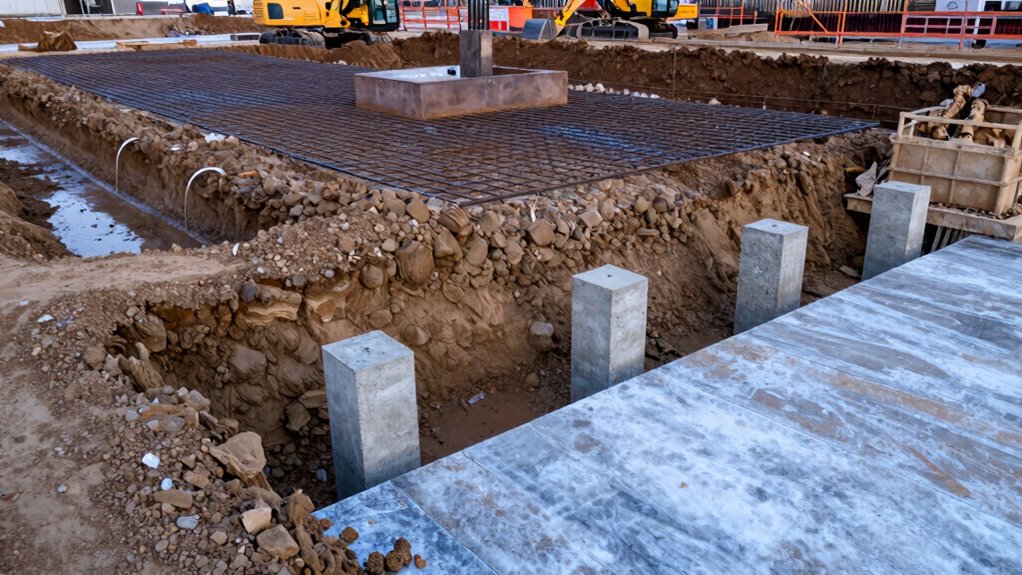
Building on sandy or loose soils requires careful planning and specific techniques. You might use soil stabilization methods, deep foundation options, or reinforced slabs to guarantee stability. Understanding these strategies helps you choose the right approach for a solid, lasting foundation. Additionally, incorporating science‑backed knowledge ensures that your construction methods are effective and durable over time.
Soil Stabilization Techniques
When working with sandy or loose soils, proper stabilization is essential to guarantee a solid foundation for construction projects. Soil reinforcement techniques, such as adding geogrids or soil nails, help bind the particles together, increasing stability and load-bearing capacity. Erosion control methods, like installing silt fences or applying stabilizing agents, prevent soil displacement caused by water or wind. You can also incorporate compaction to reduce voids and improve soil density. These techniques work together to create a more uniform and reliable base, minimizing settlement and shifting over time. Implementing proper shop fundamentals and techniques can further enhance stability during construction. By investing in effective soil stabilization, you assure the ground can support your structure safely and sustainably, even in challenging conditions like loose or sandy terrains.
Deep Foundation Strategies
To guarantee stability in sandy or loose soils, implementing effective deep foundation strategies is essential. Deep foundations transfer the building’s load to more stable strata below the surface, reducing the risk of excessive foundation settlement. Techniques like piles or drilled shafts are common choices, as they bypass weak, loose layers and reach compacted, load-bearing soils. Soil compaction around the foundation enhances stability, minimizing settlement over time. Pile driving or drilling allows you to place supports deep into the ground, ensuring the structure remains secure despite the looseness of the surface soil. These strategies help distribute weight evenly and prevent shifting or sinking, providing peace of mind even in challenging conditions. Proper deep foundation design is key to building durable, long-lasting structures on sandy or loose soils. Additionally, understanding the soil properties through geotechnical analysis can help tailor the most effective foundation approach for specific site conditions.
Reinforced Slab Applications
Ever wondered how to create a stable foundation on sandy or loose soils? Reinforced slab applications are your best option. To guarantee stability, focus on proper soil compaction before pouring the slab. This increases load-bearing capacity and minimizes settling. Incorporate reinforcement, like steel rebar or mesh, to add strength and prevent cracking. Additionally, effective drainage solutions are vital; they help control moisture levels, reducing the risk of soil shifting or erosion over time. Consider installing a drainage layer beneath the slab or grading the site to direct water away. Proper soil preparation is essential for long-term stability and durability. These measures work together to create a more stable base, even in challenging sandy or loose soils. Reinforced slabs, combined with soil compaction and good drainage, give you a durable foundation that can withstand environmental stresses.
How Do You Prepare and Insulate Foundations in Frozen Soil?
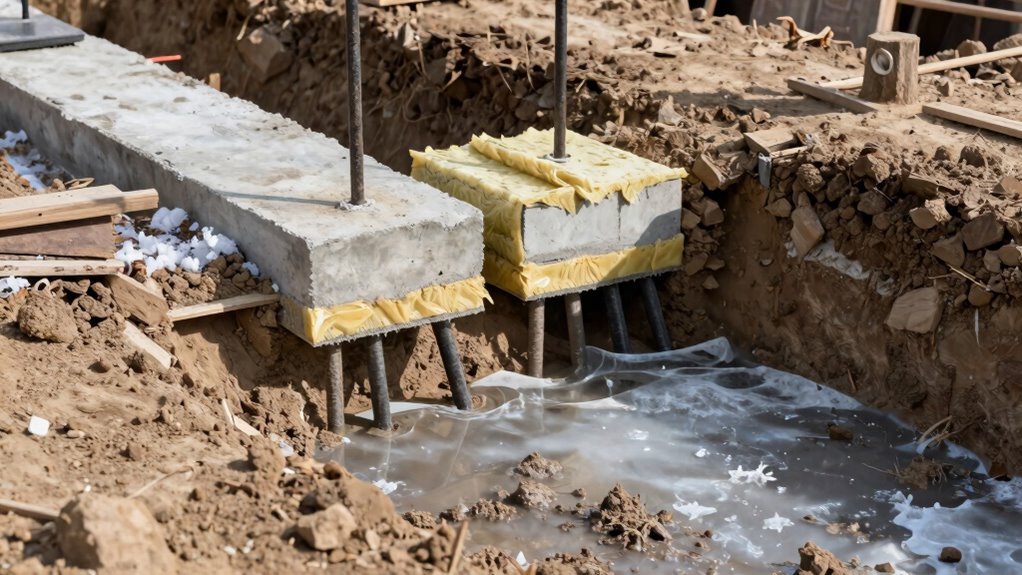
Preparing and insulating foundations in frozen soil requires careful planning to prevent frost heave and structural damage. You need effective insulation methods and frost protection strategies to maintain ground stability. Start by installing rigid foam boards beneath the foundation to minimize heat loss. Use insulated concrete forms (ICFs) or incorporate frost-protected shallow foundations to keep the soil warmer. Elevate the foundation slightly above grade to prevent direct contact with cold ground. Consider geothermal insulation around the perimeter for added frost protection. Proper drainage is essential to avoid water accumulation that can freeze and cause shifting. Ensuring these measures are in place helps your foundation withstand freezing temperatures without shifting or cracking.
- Implement insulation methods that retain heat
- Use frost-protected foundation designs
- Elevate the structure for better frost resistance
- Maintain proper drainage around the site
How to Choose the Right Foundation Based on Your Soil Conditions

Choosing the right foundation depends heavily on your soil conditions, as different soils have unique properties that affect stability and load-bearing capacity. To make an informed decision, start with soil testing to analyze moisture levels, compaction, and bearing capacity. Once you understand your soil type—whether it’s wet, sandy, or frozen—you can select appropriate foundation materials. For example, concrete piers work well in sandy soils, while reinforced foundations suit wet or unstable ground. Frozen soil requires special considerations, like insulation or deep foundations. By matching your soil test results with suitable foundation materials, you ensure a stable, durable base for your structure, reducing future risks of settling or shifting caused by soil movement or moisture changes.
Frequently Asked Questions
How Do Foundation Options Differ in Cold Versus Wet Environments?
In cold environments, you typically use insulated or deep foundations to prevent frost heave, while in wet areas, soil stabilization and foundation reinforcement are vital to prevent shifting. You should opt for pier or pile foundations to reach stable ground, and consider moisture barriers. Understanding how soil behaves in each setting helps you choose the right approach, ensuring your structure remains secure despite challenging conditions.
What Are the Environmental Impacts of Different Foundation Types?
You should consider how different foundation types impact the environment through soil stabilization and environmental mitigation. For example, deep foundations like piles can disturb soil but provide stability on challenging ground, while slab-on-grade minimizes disturbance but may require soil reinforcement. Using eco-friendly materials and techniques, such as soil stabilization, reduces environmental harm. Choosing the right foundation helps protect natural resources, minimizes habitat disruption, and promotes sustainable construction practices.
How Long Do Foundations Last on Challenging Soil Types?
Think of your foundation like a sturdy ship, built to weather storms. On challenging soil types, it can last 50-100 years with proper soil stabilization and foundation reinforcement. Regular inspections help identify shifting or settling early, extending its lifespan. Using durable materials and expert techniques guarantees your foundation remains resilient against the unpredictable nature of wet, sandy, or frozen ground. Proper care keeps your structure afloat through time’s tides.
Are There Cost-Effective Foundation Solutions for Difficult Soils?
You can find cost-effective foundation solutions for difficult soils through soil stabilization techniques, which improve soil strength and reduce long-term costs. Conducting a thorough cost analysis helps you compare options like driven piles, reinforced slabs, or ground improvement methods. These approaches often save money by minimizing risks of future settlement or damage, ensuring your foundation remains durable without overspending. Always consult with experts to identify the best, most budget-friendly solution for your specific soil conditions.
Can Advanced Technology Improve Foundation Stability in Problematic Soils?
Yes, advanced technology can improve foundation stability in problematic soils. You can utilize innovative foundations that incorporate soil stabilization techniques, such as deep injection or chemical treatments, to reinforce weak ground. These methods enhance load-bearing capacity and reduce settlement risks. By adopting such cutting-edge solutions, you ensure your structure remains secure even in challenging conditions, making your project more resilient and cost-effective over time.
Conclusion
So, after all this talk about tricky soils, you’d think building on wet, sandy, or frozen ground is impossible. Ironically, it’s often the simplest solutions—like proper drainage or insulation—that save your project. Instead of fighting nature, embrace smart foundation choices tailored to your soil. After all, the real challenge isn’t the ground beneath you—it’s knowing when to listen to it. And lucky for you, now you’re better prepared to do just that.