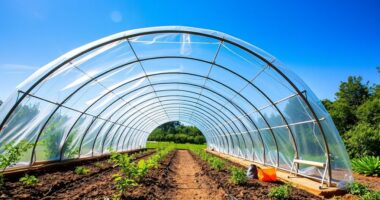
When choosing heating options for your greenhouse, you can consider electric heaters for precise control, gas heaters for larger areas, or renewable solutions like solar heaters and heat pumps. Combining these with proper insulation and ventilation helps optimize energy efficiency and maintain stable temperatures year-round. Exploring different systems and their benefits can help you find the best fit for your needs. Keep exploring to discover more innovative ways to keep your greenhouse warm and productive.

Get garden gear delivered free — and shop member deals
- Fast, free delivery on millions of items
- Access to Prime Big Deal Days deals on October 6–7
- Prime Video, Amazon Music and more included
Key Takeaways
- Electric heaters provide precise temperature control and are suitable for small to medium greenhouses.
- Gas heaters are cost-effective for larger areas, offering higher heat output.
- Solar-powered heaters and heat pumps are eco-friendly options that reduce energy costs.
- Combining insulation with efficient heating systems minimizes heat loss and energy consumption.
- Integration of heating with ventilation and automation systems enhances environmental stability and efficiency.
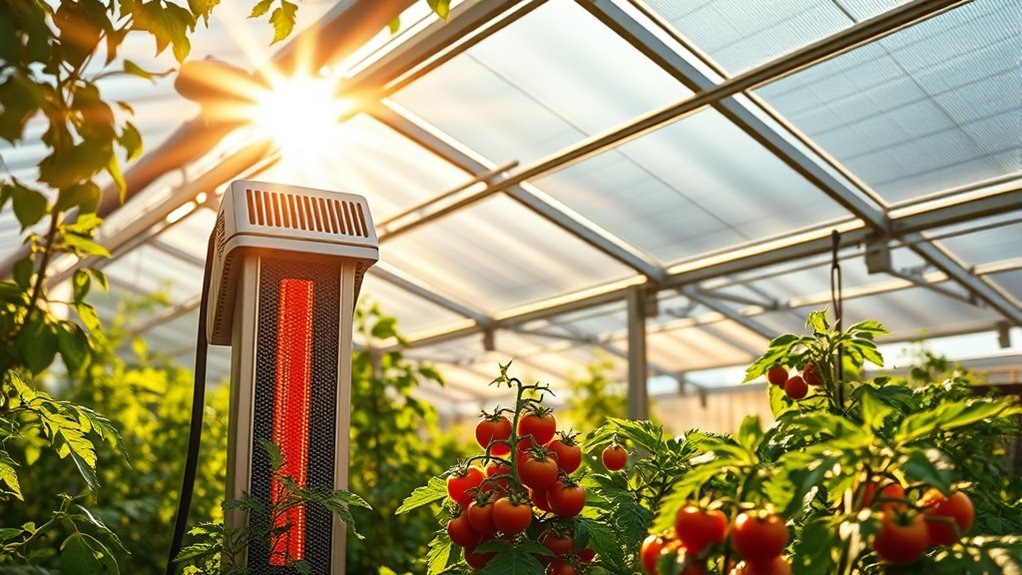
Heating is essential for maintaining ideal growing conditions in greenhouses, especially during colder months. When temperatures drop, you need reliable ways to keep your plants warm without sacrificing airflow or energy efficiency. One of the most effective ways to do this is by implementing proper ventilation strategies alongside the right insulation materials. Ventilation ensures that excess humidity and stale air are expelled, preventing issues like mold and fungal diseases, while insulation keeps the heat in and reduces energy costs. Combining these approaches creates a balanced environment where your plants can thrive, even in winter.
Ventilation strategies play a vital role in maintaining temperature stability inside your greenhouse. Proper airflow helps distribute heat evenly and prevents hot or cold spots. You might consider installing exhaust fans, ceiling vents, or sidewall openings that can be automated to respond to temperature changes. These systems work best when paired with insulation materials that minimize heat loss. For example, double-glazed panels, bubble wrap, or foam insulation can considerably reduce the amount of heat escaping through walls and roofs. When you choose the right insulation materials, you’ll find that your heating system doesn’t need to work as hard, saving you money and reducing energy consumption.
Proper airflow and insulated panels ensure stable temperatures and reduce heating costs in your greenhouse.
In colder months, supplemental heating becomes necessary, and there are various options available. Electric heaters are popular for their ease of use and precise control, making it simple to maintain consistent temperatures. Gas heaters, on the other hand, can cover larger areas more cost-effectively, especially if you already have a gas supply. If you’re eco-conscious, solar-powered heaters or heat pumps can be excellent choices, especially when combined with well-insulated structures that maximize heat retention. The key is to select a heating system compatible with your greenhouse’s size, design, and energy sources, ensuring it integrates seamlessly with your ventilation strategies and insulation materials.
You should also consider how these components work together to maximize energy efficiency. For instance, using insulation materials reduces the workload on your heaters, which means less energy is needed to sustain ideal temperatures. Proper ventilation ensures that heat is distributed evenly and that your greenhouse remains free of excess moisture, which can negatively impact plant health. Additionally, monitoring your digital literacy can help optimize your heating setup by enabling better control and automation. By balancing these elements, you create a controlled environment that supports healthy plant growth year-round. Ultimately, combining smart ventilation strategies with high-quality insulation and an appropriate heating system provides the most reliable, efficient solution for maintaining the ideal temperature inside your greenhouse.
As an affiliate, we earn on qualifying purchases.
Frequently Asked Questions
What Is the Most Energy-Efficient Heating Method for Large Greenhouses?
The most energy-efficient heating method for large greenhouses is combining thermal insulation with a sustainable heat source like solar energy. You should focus on insulating your greenhouse well to minimize heat loss, which reduces energy consumption. By integrating solar heating systems, you harness renewable energy, promoting energy conservation. This approach not only lowers operational costs but also makes your greenhouse more environmentally friendly and efficient, ensuring plants stay warm without excessive energy use.
How Do I Maintain and Service Greenhouse Heaters Effectively?
To maintain and service your greenhouse heaters effectively, you should regularly perform heater maintenance by cleaning filters, inspecting for corrosion, and checking electrical connections. Always follow the manufacturer’s servicing greenhouse heaters guidelines, including testing safety features and replacing worn parts promptly. Schedule routine inspections before the heating season starts, and keep detailed records of maintenance activities. Proper servicing guarantees your heaters operate efficiently and safely, extending their lifespan and safeguarding your plants.
Can Solar Heating Alone Meet All Greenhouse Heating Needs?
You might think solar heating alone can fully meet your greenhouse needs, but solar limitations mean it often isn’t enough year-round. Solar energy depends on sunlight, which varies daily and seasonally, so relying solely on it can leave your plants vulnerable. To guarantee consistent warmth, you need heating integration—combining solar with backup systems like heaters. This approach guarantees your greenhouse stays warm regardless of solar availability.
What Are the Environmental Impacts of Different Greenhouse Heating Options?
You’ll find that different greenhouse heating options have varying environmental impacts. For instance, solar heating has a low carbon footprint and minimal resource consumption, making it eco-friendly. Traditional heaters, especially those relying on fossil fuels, increase your carbon footprint and deplete resources. While renewable options like geothermal or biomass reduce environmental harm, they may require more resource input initially. Choosing sustainable methods helps protect the environment and reduces your greenhouse’s overall impact.
How Do Outdoor Weather Conditions Affect Greenhouse Heating Performance?
Outdoor weather conditions critically impact your greenhouse heating performance. Wind chill can lower temperatures rapidly, making it harder to maintain consistent warmth, so you’ll need more energy to compensate. Humidity control becomes essential during rain or high humidity, as excess moisture can reduce heating efficiency and promote mold. Monitoring these conditions helps you adjust your heating system effectively, ensuring your plants stay healthy despite external weather fluctuations.
Conclusion
Choosing the right heating option guarantees your greenhouse stays productive year-round. For example, imagine installing solar heaters combined with traditional options, reducing energy costs while maintaining ideal temperatures. By evaluating your space, budget, and sustainability goals, you can select the best system. Remember, a well-heated greenhouse not only boosts plant growth but also extends your growing season. So, explore your options, and create a warm, thriving environment for your plants to flourish all year long.
Evergreen bestsellers Picks
bestsellers
As an affiliate, we earn on qualifying purchases.