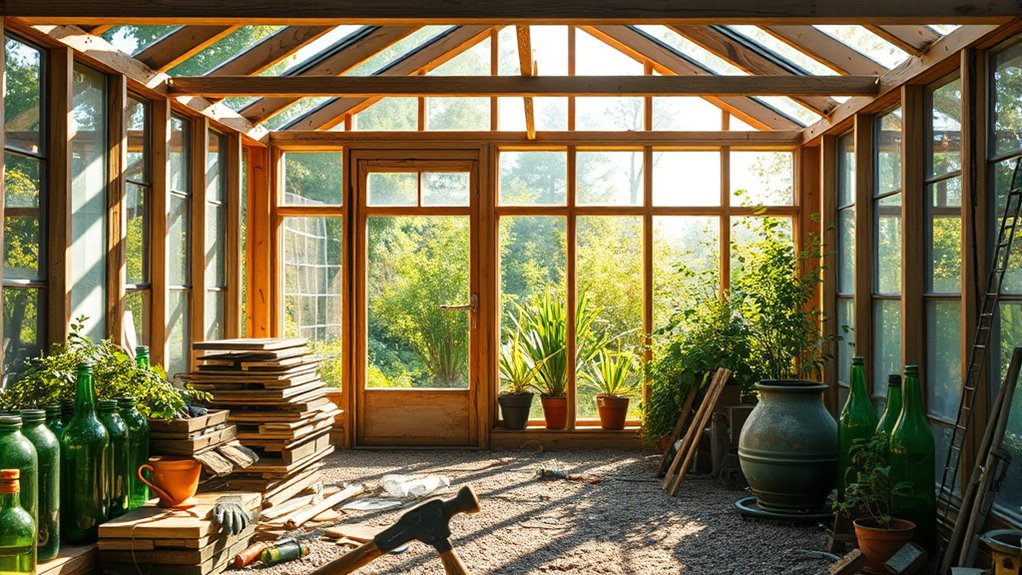

Building a greenhouse from salvaged materials is an eco-friendly and budget-conscious project. You’ll want to select sturdy, weathered items like old windows, reclaimed lumber, and pallets for framing and glazing. Position your structure to maximize sunlight and consider incorporating thermal mass and ventilation solutions made from recycled parts. Using these materials adds rustic charm and reduces waste. If you want to discover tips on design, insulation, and solar heating, keep exploring how you can customize your greenhouse successfully.
Key Takeaways
- Select durable, weather-resistant salvaged materials like storm windows and reclaimed lumber for framing and glazing.
- Optimize greenhouse placement for maximum south-facing sunlight and passive solar heating efficiency.
- Incorporate thermal mass elements such as water barrels or stone beds to store and release heat.
- Repurpose old appliances or industrial parts into ventilation systems to ensure proper airflow.
- Use reflective surfaces and strategic layout to enhance light distribution and reduce energy needs.
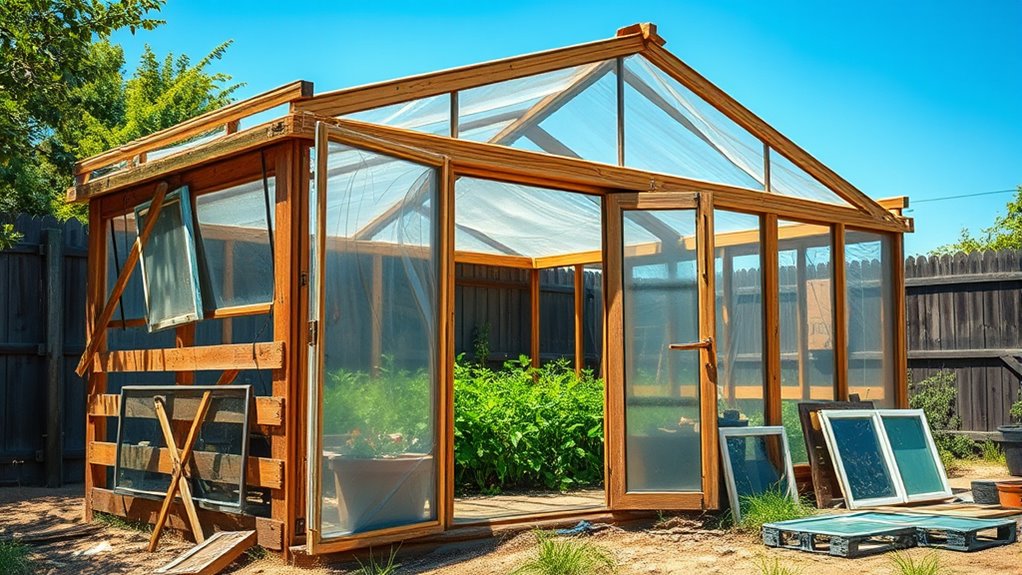
Creating a greenhouse from salvaged materials is an affordable and eco-friendly way to grow your own plants year-round. By repurposing items like old windows, scrap wood, and discarded metal, you not only save money but also reduce waste. One of the key considerations in building an efficient greenhouse is ensuring it maintains a stable temperature, which is where solar heating and ventilation systems come into play. Solar heating harnesses the sun’s energy to naturally warm your greenhouse during colder months, decreasing reliance on electric or gas heaters. You can achieve this by installing south-facing windows or glass panels, which maximize sunlight exposure, or by placing reflective materials to bounce light deeper into the space. Incorporating salvaged materials for these elements keeps costs low and aligns with eco-friendly practices.
Ventilation is equally important to prevent overheating and maintain healthy air circulation. Salvaged ventilation systems, such as exhaust fans from old appliances or industrial equipment, can be adapted to your greenhouse. Proper airflow helps regulate temperature and humidity, reducing the risk of mold or pests. You might also consider repurposing old vents or installing adjustable louvers made from reclaimed materials. A well-designed ventilation system works in tandem with solar heating to create a balanced environment, ensuring your plants thrive regardless of outdoor conditions.
When selecting salvaged materials for your greenhouse, think about durability and insulation. Old storm windows or thick glass panels can serve as excellent glazing, trapping heat while allowing sunlight to penetrate. Wooden pallets or reclaimed lumber make sturdy framing options, but always check for rot or damage before use. Using weathered but solid materials contributes to the sustainability of your project and offers a rustic charm that new materials often lack.
Planning your greenhouse layout with these energy-efficient systems in mind will make a big difference in its performance. Position your structure to maximize sun exposure, and incorporate passive solar design principles—like thermal mass elements such as water barrels or stone beds—to absorb and store heat during the day for release at night. Additionally, considering the insulation properties of your salvaged materials can greatly improve temperature regulation. When you combine salvaged building materials with smart design choices like solar heating and ventilation systems, you create an environment that’s both cost-effective and environmentally responsible. This approach not only supports sustainable gardening but also gives you the satisfaction of building something with your own hands, repurposing materials that might otherwise go to waste.
Frequently Asked Questions
How Do I Ensure Proper Insulation With Salvaged Materials?
To guarantee proper insulation with salvaged materials, focus on effective insulation techniques like layering and sealing gaps. Select materials such as reclaimed foam, old blankets, or recycled bubble wrap that provide good thermal resistance. You can also add weatherstripping around doors and windows to prevent drafts. By carefully choosing your materials and applying proper insulation techniques, you’ll create a warm, energy-efficient environment inside your greenhouse.
What Permits Are Required for Building a Salvaged-Material Greenhouse?
You’ll need to navigate the permitting process and check zoning regulations before building your greenhouse. Many areas require permits for structures over a certain size or specific use, so don’t skip this step—delays can happen otherwise. Contact your local building department early to understand the requirements, gather necessary documents, and verify your salvaged materials meet safety standards. Doing this upfront saves headaches and keeps your project on track.
How Can I Prevent Pests in a DIY Greenhouse?
To prevent pests in your DIY greenhouse, you should focus on natural pest control and greenhouse sanitation. Regularly clean your greenhouse to remove debris and dead plant material, which attract pests. Use natural predators like ladybugs or neem oil for pest control. Keep plants healthy by providing proper ventilation and watering practices. Monitoring your plants frequently helps catch issues early, ensuring your greenhouse stays pest-free and productive.
What Are the Best Tools for Working With Reclaimed Wood and Materials?
To work effectively with reclaimed wood and materials, you need both power tools and hand tools. Power tools like circular saws, cordless drills, and jigsaws make cutting and shaping easier, especially with rough or uneven wood. Hand tools such as chisels, hammers, and screwdrivers give you precision and control for detailed work. Using a combination of these tools guarantees safe, efficient, and accurate craftsmanship when building your greenhouse from salvaged materials.
How Do I Evaluate the Structural Integrity of Salvaged Building Components?
Think of evaluating salvaged components like a doctor checking crucial signs. Start with a thorough foundation assessment, inspecting for cracks, rot, or signs of wear. Test material durability by examining for softness, warping, or splitting. Tap or press gently to assess strength, and consider age and previous use. If anything feels questionable, don’t hesitate to replace it—your greenhouse’s stability depends on sound, reliable materials.
Conclusion
By choosing to build your greenhouse from salvaged materials, you’re embracing a clever way to nurture growth while giving old resources a new purpose. It’s a gentle reminder that sustainability can be both inspiring and rewarding, transforming what might seem past its prime into a thriving haven. So, with a little creativity and care, you can create something truly special—where your plants can flourish quietly, all while making a positive impact on the environment.