TL;DR
A gardener writing for Amateur Gardening says summer heat and drought in South East England damaged many crops, despite years of soil improvement, mulching and hand watering. Containers and crops that could be watered directly did better, while figs and grapes stood out; he plans to grow fewer annuals and more perennial fruit next year.
A gardener writing for Amateur Gardening says summer heat and drought in South East England left many crops struggling, even after extensive hand watering, mulching and soil improvement. His account identifies container-grown plants, figs and grapes among the season’s successes and says he plans to grow fewer annual vegetables and flowers and more perennial fruit next year.

Get garden gear delivered free with Prime
- Fast, free delivery on millions of items
- Prime Video, Amazon Music and more included
- Member-only deals all year
The writer, identified as Bob, describes a season in which watering the vegetable plot became difficult, particularly after a hosepipe ban. He says the soil dried rapidly despite repeated efforts, and that many plants and flowers ultimately had to be abandoned. He does not provide a complete crop-by-crop record or measured yields.
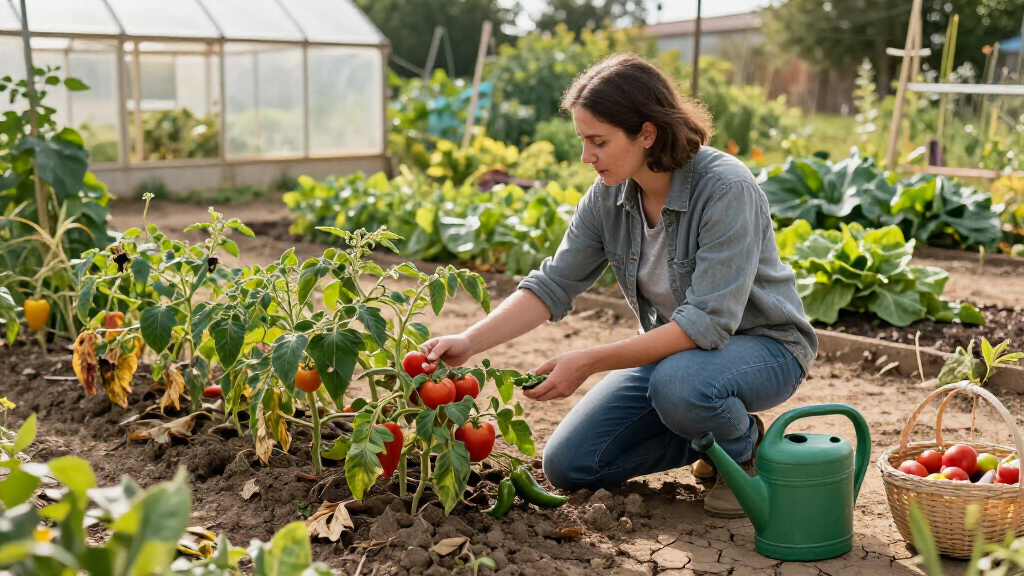
Containers performed better in his garden because, he says, they held water more effectively than the surrounding ground. In beds, tomatoes and squashes that could be watered near their roots using plastic bottle funnels also did relatively well, although their growth remained limited by dry soil around them. Bob says dry air and strong sun appeared to help some plants and that he saw fewer slugs than usual.
The account describes mixed results among fruit and vegetables. Early onions, garlic and potatoes did adequately, while early berries and currants were good; later blackberries were poor, and later plums, apples and pears also disappointed. Bob says apples and pears remained small and were affected by worms despite thinning. In contrast, he calls his figs and grapes exceptional. He proposes planting more currants, berries, apricots and grapes, naming ‘Siegerrebe’, ‘Suffolk Red’, ‘Regent’ and ‘Boskoop Glory’ as grape varieties to consider.
How Drought Changed the Crop Choices
The account offers a practical example of how a dry growing season can affect decisions in a home garden: not only which crops produce well, but where they are planted and how water is delivered. Bob’s experience suggests that water-retaining containers and watering directed to roots may help some plants under the conditions he faced. It does not establish that these methods will work equally well in other gardens or climates.
His planned move toward perennial fruit reflects a longer-term response to the season. Fruit bushes and vines may remain in place across multiple years, while annual vegetables and flowers require replanting. The report is one gardener’s account, not a controlled comparison or a forecast that the same crops will succeed in future summers. Still, it gives readers a specific record of what one garden produced during a challenging season and what its gardener intends to try next.
Products Worth Considering

EGO Power+ 21 Self-Propelled Cordless Electric Lawn Mower Kit (LM2135SP)

Orbit B-hyve Smart Indoor/Outdoor 12-Zone Sprinkler Controller

Orbit B-hyve XR 8-Zone Indoor/Outdoor Smart Sprinkler Controller
As an affiliate, we earn on qualifying purchases.
A Season of Heat and Water Limits
Bob places the problems in the South East of England, where he says extreme heat and drought made the season difficult. He writes that watering was already ineffective before a hosepipe ban and became harder afterward. The account does not name the local authority, give the ban’s dates or specify how much rain fell.
He also notes that a wetter winter had left some soil moisture early in the growing year, helping early-harvested crops such as onions, garlic and the first potatoes. As the season went on, results varied: early fruit generally fared better in his garden than some later crops. That sequence is central to his reflection, but it should not be read as a general ranking of crops for all UK gardens.
““Containers were for me, the winners.””
— Bob, an Amateur Gardening contributor
What One Garden Cannot Establish
The report does not state the exact location, dates, temperatures, rainfall totals, water volumes or crop yields. It also does not identify the hosepipe ban’s rules or duration. Without those details, the severity of conditions cannot be compared precisely with other seasons or areas.
The account records one gardener’s observations, not a trial comparing varieties or growing methods. It is unclear whether the same plants will fare similarly next year, when weather, soil and care may differ. Bob himself cautions that another season like this is not guaranteed, even as he expects similar or worse conditions to recur more often.
Planting Plans for Next Year
Bob says he intends to reduce the number of annual vegetables and flowers he grows, keeping some of them for early crops or for containers, and to plant more perennial fruit. He recommends considering currants, berries, apricots and grapes, including the four named grape varieties. The article says autumn is a suitable time to plant, but it does not set out a detailed planting schedule or give variety-specific growing instructions.
For readers considering similar changes, the report provides a starting point rather than a guarantee: outcomes will depend on local conditions and care. Bob’s next growing season will show whether his revised mix performs better, but no follow-up results are available in the source report.
Key Questions
Which crops did Bob say performed best?
He singled out figs and grapes as the season’s strongest fruit successes. Containers also did relatively well, and early onions, garlic and potatoes were acceptable in his garden.
What struggled during the dry summer?
Bob says many crops and flowers had to be given up. Later blackberries were poor, while later plums, apples and pears disappointed; he describes apples and pears as small and worm-affected.
Why did containers do better in his garden?
He says containers held water more effectively than the dry surrounding soil. This is his observation from one garden, not a guarantee that containers will outperform beds everywhere.
What does Bob plan to grow next year?
He plans to grow fewer annual vegetables and flowers, while adding more perennial fruits such as currants, berries, apricots and grapes. He specifically names ‘Siegerrebe’, ‘Suffolk Red’, ‘Regent’ and ‘Boskoop Glory’ as grape varieties.
Source: rss