Many people think greenhouses are just for large-scale farming, but that’s not true! They come in various sizes and can be quite affordable. You don’t always need constant monitoring; with IoT sensors, adjustments can be made easily. Plus, greenhouse produce can be just as nutritious, if not more so. They’re adaptable to different climates too, so there’s no need to worry about that. Curious to learn more about the benefits and versatility of greenhouses?
Key Takeaways
- Greenhouses are not only for large-scale farming; they can effectively support small operations and urban agriculture.
- The cost of greenhouses varies widely, with options for every budget, including DIY kits and reclaimed materials.
- Effective greenhouse management involves continuous monitoring of temperature, humidity, and CO2 levels for optimal crop yields.
- Greenhouse produce can have superior nutritional value due to controlled environments that enhance nutrient uptake and quality.
- Greenhouses can be designed for various climates, utilizing advanced technologies to improve performance and adaptability.
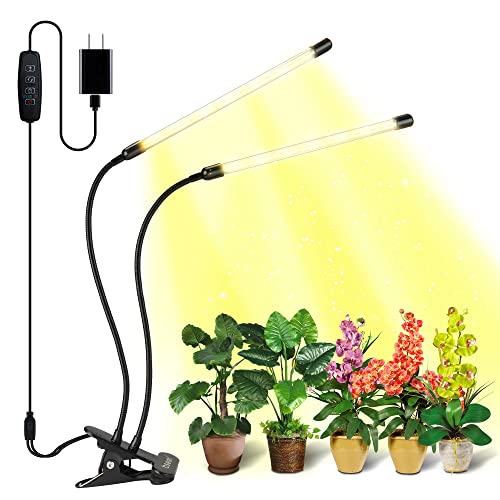
bseah Grow Light Plant Lights for Indoor Plants, Full Spectrum Plant Grow Lamp, 10 Dimmable Levels, Auto ON & Off with 3/9/12H Timer
Full Spectrum LED with Yellow and White Combination: Bseah led grow light can promote photosynthesis, germination, growth, flowering...
As an affiliate, we earn on qualifying purchases.
Greenhouses Are Only for Large-Scale Farming
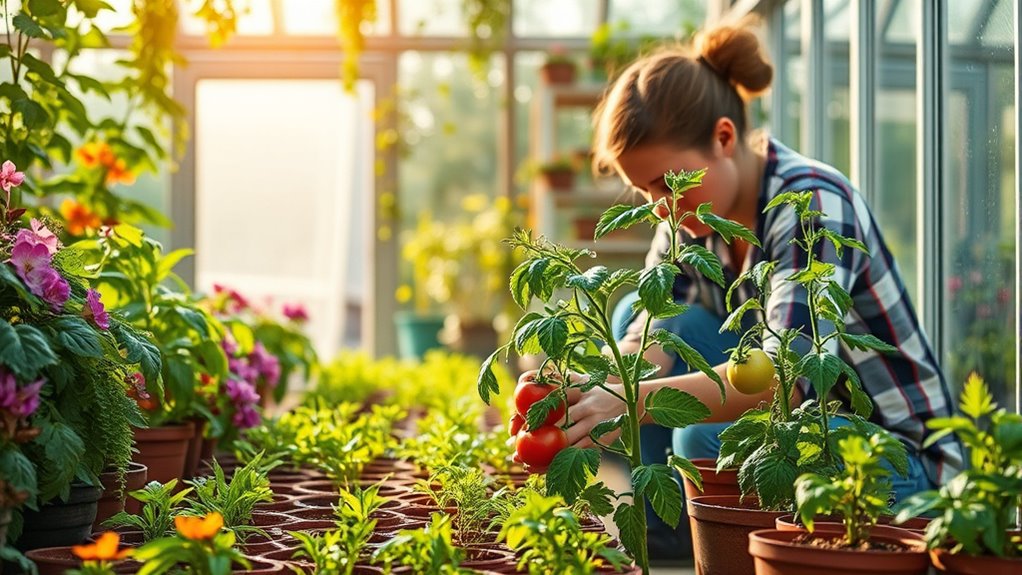
While many people assume greenhouses are only for large-scale farming, the reality is quite different.
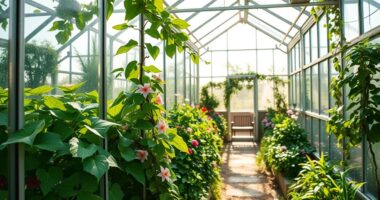
Greenhouses come in various types that cater to small-scale operations. Hoop houses, for example, are inexpensive and easy to construct, making them accessible for individuals like you. Gothic arch greenhouses offer better wind resistance and space efficiency, perfect for smaller plots. Urban greenhouses can even thrive on rooftops or in backyards, providing fresh produce right in the city.
Modular designs allow you to scale your greenhouse as your needs grow. Plus, by controlling the environment, you can produce crops year-round, boost yields, and reduce chemical use.
Greenhouses empower small farmers to thrive, proving they’re not just for large-scale endeavors.

Uallhome 2 Pack LED Grow Light Panel 200W Lamp for Indoor Plants, Full Spectrum with White Blue Red UV IR LEDs for 4x4ft Coverage Grow Tent Greenhouse Veg and Bloom Seedlings Hydroponics
Beetter light spectrum optimization: Full spectrum lights are all-around products that can provide adequate and balanced lighting for...
As an affiliate, we earn on qualifying purchases.
All Greenhouses Are Expensive to Build and Maintain

Many people think that all greenhouses come with a hefty price tag, but that’s not the case. Greenhouse costs vary significantly, ranging from $500 for simple DIY kits to $35,000 for larger, more sophisticated models.
On average, you might expect to spend around $9,640, but many options can fit different budgets. For instance, hoop houses and utilitarian designs offer affordable solutions. By using reclaimed materials or opting for DIY construction, you can further reduce costs.
While maintenance is essential, choosing high-quality materials can minimize long-term expenses. Ultimately, with the right approach, building and maintaining a greenhouse can be a cost-effective investment that pays off in extended growing seasons and increased crop yields.

VIPARSPECTRA P1000 LED Grow Light for Seed Starting Vegetables Bloom, Dimmable Plant Lights Dimming Daisy Chain Grow Lights for Indoor Plants Full Spectrum for 3x3/2x2 Grow Tent
NEW DIODE LAYOUT & LOWER RUNNING COST: VIPARSPECTRA upgraded P1000 grow light adopts a more scientific diode distribution...
As an affiliate, we earn on qualifying purchases.
Greenhouses Require Constant Monitoring and Management
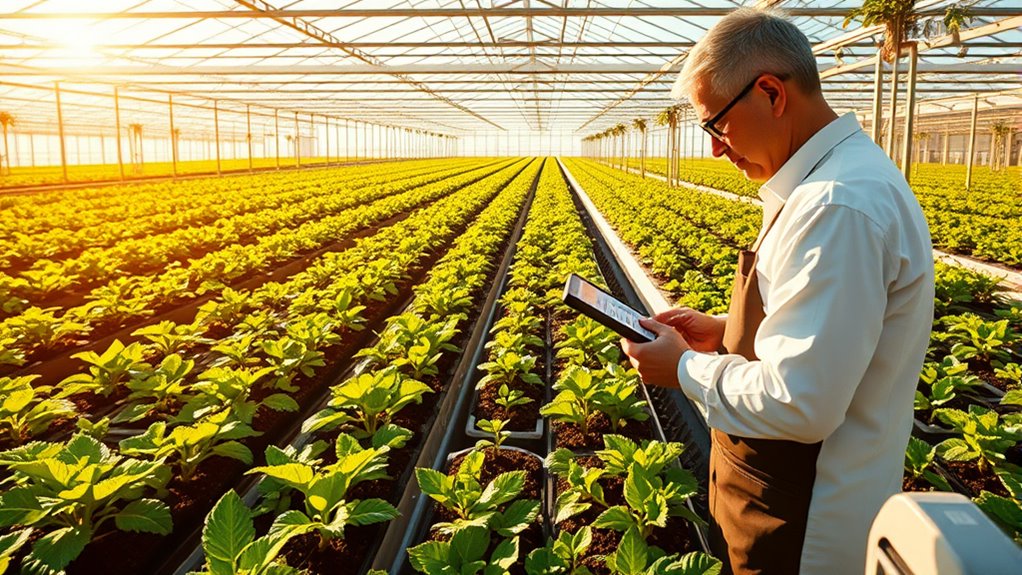
Effective greenhouse management hinges on continuous monitoring, as even minor fluctuations in environmental conditions can significantly impact plant health.
You need to keep a close eye on temperature, humidity, and CO2 levels to ensure optimal growth. Using IoT sensors can help you gather real-time data, allowing for immediate adjustments.
Automated systems can manage ventilation and irrigation, enhancing efficiency. By regularly monitoring these factors, you’ll spot problems early, like pest infestations or lighting inconsistencies, and address them before they escalate.
This proactive approach not only conserves resources but also boosts your crop yields. Remember, maintaining the right environment is key to thriving plants, so embrace technology for effective management and peace of mind. Additionally, proper priming ensures that your plants receive the right nutrients and support for healthy growth.

TONYFUL Grow Lights for Indoor Plants, 40W LEDs Plant Lights for Indoor Growing, 360 LEDs Full Spectrum Grow Lights for Seed Starting, Led Grow Light with 3/9/12H Timer,10 Dimmable Levels (4pcs)
【Professional Full Spectrum Grow Light】: Cutting-edge grow light with 360 LEDs (Red 100pcs, Warm white 128pcs,White 132pcs )...
As an affiliate, we earn on qualifying purchases.
Produce Grown in Greenhouses Lacks Nutritional Value
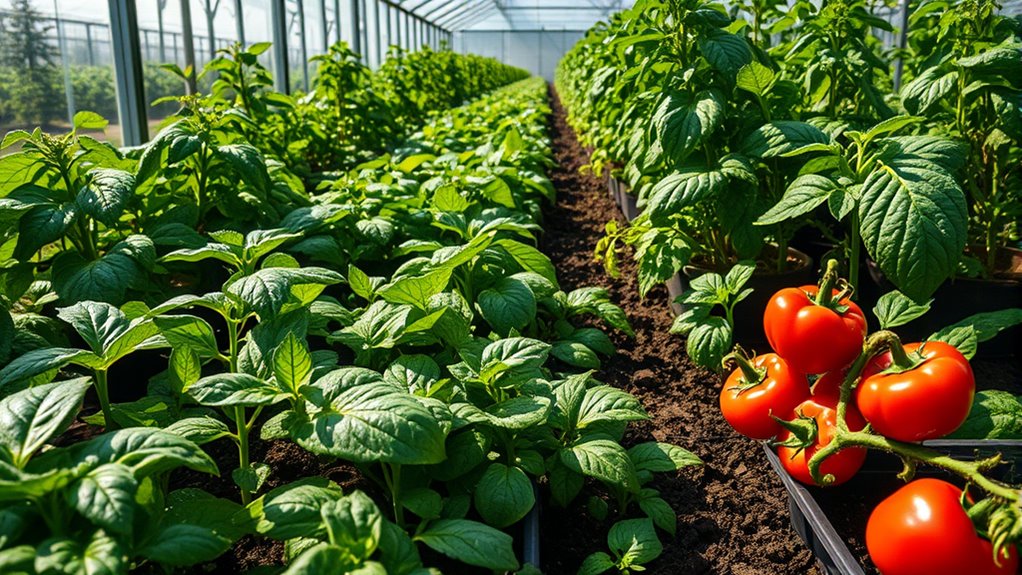
Despite common beliefs, produce grown in greenhouses often holds comparable, if not superior, nutritional value to that cultivated outdoors.
While some studies show greenhouse vegetables may have lower mineral content or crude fiber levels, controlled environments can optimize nutrient uptake and enhance overall quality.
For instance, precise temperature control boosts photosynthesis, while managing light intensity and root zone temperatures improves nutrient profiles.
Additionally, organic greenhouse produce might have higher nitrate levels, which can be beneficial in moderation.
The focus on sustainable practices, like reduced chemical use and effective pest management, further contributes to the nutritional integrity of greenhouse-grown foods.
Greenhouses Are Inefficient and Wasteful

Greenhouses often get a bad rap for being inefficient and wasteful, but that couldn’t be further from the truth. In fact, greenhouses can be highly efficient, especially in hot climates like Miami, where energy use efficiency can reach up to 0.35 kg kWh^-1.
They adapt to various climates by utilizing shading and supplemental lighting, optimizing energy use effectively. While indoor systems may excel in cold climates, greenhouses harness natural light, reducing energy costs.
Modern technology enhances their efficiency, leading to long-term savings and increased profitability. Plus, many greenhouses incorporate sustainable practices, mitigating environmental impacts.
You Can’t Grow Organic Produce in a Greenhouse

While many believe you can’t grow organic produce in a greenhouse, this misconception overlooks the numerous benefits and methods available.
In fact, greenhouses allow for year-round production of organic crops, giving you control over environmental factors. You can cultivate various vegetables and herbs using organic soil, whether by building it with compost or purchasing prepackaged options.
Techniques like soil culture, bag culture, and vertical towers enhance your ability to grow organically. Plus, organic produce often boasts higher nutrient levels and better flavors, aligning with increasing consumer preferences. Additionally, greenhouse gardening opens up new possibilities for creative growing techniques.
Innovative techniques like soil culture and vertical towers empower organic growth, delivering nutrient-rich, flavorful produce that meets consumer demand.
With practices like compost use and integrated pest management, you can create a sustainable, profitable greenhouse that thrives on organic principles. Additionally, backyard greenhouses provide an excellent environment for maximizing your gardening potential.
Greenhouses Are Only Suitable for Certain Climates
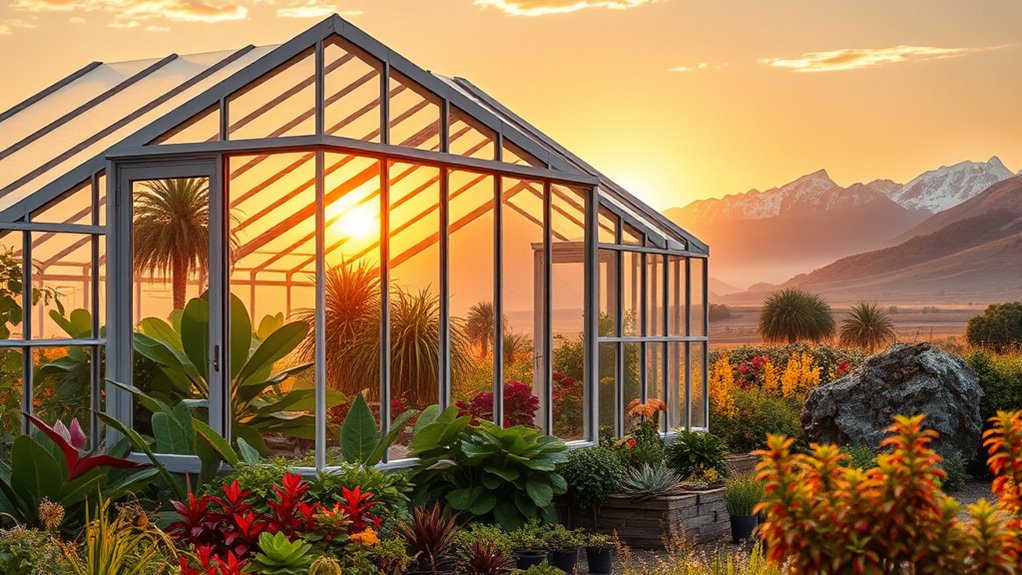
Many people mistakenly think greenhouses are only effective in specific climates, but they can actually thrive in a wide range of environments with the right design and technology.
You can adapt greenhouses to suit cold, hot, or temperate climates by using specialized designs. For instance, double-layer inflatable greenhouses retain heat in colder areas, while sawtooth-shaped structures promote airflow in hotter regions.
In subtropical climates, ‘pad and fan’ systems manage humidity, and simple designs with insect mesh suffice in tropical zones. Incorporating advanced technologies like intelligent ventilation and precision irrigation enhances performance further.
With the right adjustments, greenhouses become versatile tools for sustainable agriculture, regardless of climate, increasing crop yields and reducing environmental impact.
Frequently Asked Questions
Can Greenhouses Be Built Using Recycled Materials?
Yes, you can definitely build greenhouses using recycled materials! By repurposing items like old windows, doors, and lumber, you’ll not only save money but also contribute to sustainability.
You’ll find that using recycled materials allows for creative designs and unique aesthetics. Just make sure to consider the structural integrity and weather resistance of the materials you choose.
Embrace the challenge, and you’ll create an eco-friendly greenhouse that’s both functional and attractive!
Are There Specific Plants That Thrive Better in Greenhouses?
Imagine stepping into a lush oasis where vibrant tomatoes, sweet strawberries, and exotic orchids flourish.
In greenhouses, specific plants thrive due to controlled conditions. Fruit-bearing plants like Meyer lemons and blueberries love the warmth, while vegetables like cucumbers and peppers bask in the humidity.
You can also nurture delicate flowers and herbs year-round. This tailored environment lets you cultivate a diverse array of plants, creating your own botanical paradise.
How Do Greenhouses Affect Local Wildlife?
Greenhouses can significantly impact local wildlife in various ways.
They often compete for water resources, which can stress wildlife habitats and lead to drought. The expansion of greenhouses may disrupt natural habitats, forcing animals to adapt or migrate.
Additionally, the use of pesticides can contaminate local ecosystems, affecting aquatic life. Changes in microclimates due to greenhouses can also alter local biodiversity, impacting the delicate balance of ecosystems in the area.
Can Greenhouses Operate Off-Grid With Renewable Energy?
Yes, greenhouses can definitely operate off-grid using renewable energy.
Picture a sunny day where solar panels power your greenhouse, keeping it warm and thriving. You harness sunlight for energy, enabling year-round production without relying on the grid.
While initial costs might seem daunting, the long-term savings on electricity and the environmental benefits make it worthwhile.
Plus, with proper planning and technology, you can overcome challenges like weather dependence and space requirements.
What Are the Best Practices for Greenhouse Ventilation?
To achieve optimal greenhouse ventilation, you should ensure proper airflow by using roof and side vents.
Install automated systems that adjust based on temperature and humidity levels, keeping your plants healthy.
Incorporate fans to promote air circulation, which helps with CO₂ distribution and pest deterrence.
Regularly monitor moisture levels to prevent fungal diseases.
Conclusion
In conclusion, it’s clear that greenhouses are versatile tools, not just for agrarian titans of yore. They’re accessible, efficient, and capable of producing high-quality, organic produce in various climates. By dispelling these common misconceptions, you can appreciate the true potential of greenhouses in modern agriculture. Whether you’re a hobbyist or a budding farmer, embracing this innovative approach can yield bountiful rewards, transforming your gardening experience for the better.