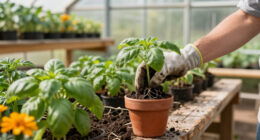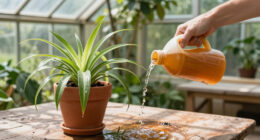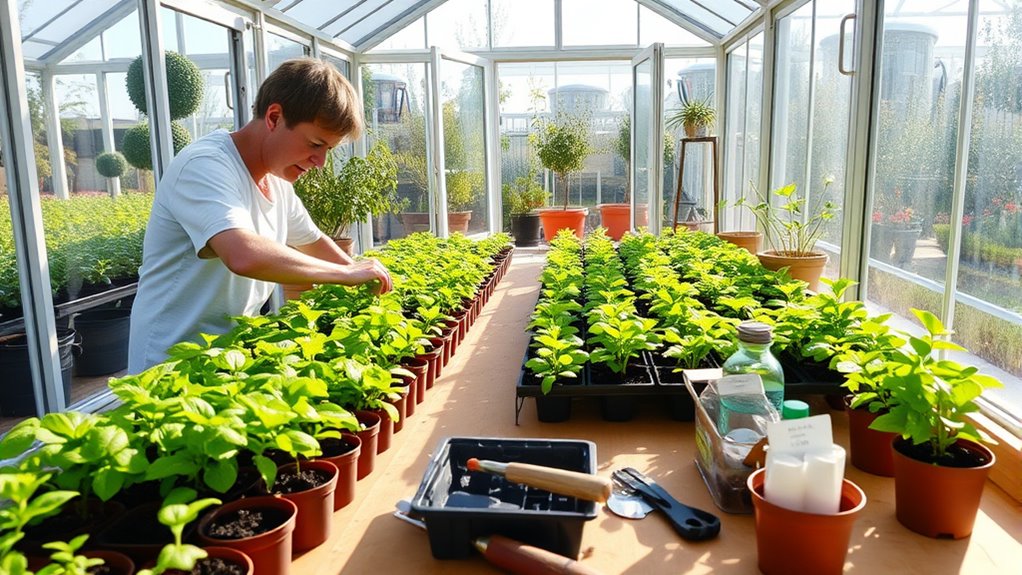
To avoid common mistakes as a first-time greenhouse gardener, focus on proper soil preparation by testing and enriching it before planting. Don’t overcrowd your space—leave enough room for airflow and healthy growth. Choose plants suited to your greenhouse conditions and avoid delicate varieties until you’re more experienced. Regularly monitor plant health and environmental factors to catch issues early. Keeping these tips in mind will give you a strong start and more success as you grow—keep exploring to learn how.

Get garden gear delivered free — and shop member deals
- Fast, free delivery on millions of items
- Access to Prime Big Deal Days deals on October 6–7
- Prime Video, Amazon Music and more included
Key Takeaways
- Start with easy-to-grow, suitable plants to build confidence and avoid overwhelming yourself.
- Prepare and amend soil properly to prevent poor growth and root problems.
- Avoid overcrowding plants to ensure proper air circulation and reduce disease risk.
- Monitor plant health regularly to catch pests and diseases early.
- Learn and adapt to your greenhouse conditions rather than rushing into complex setups.
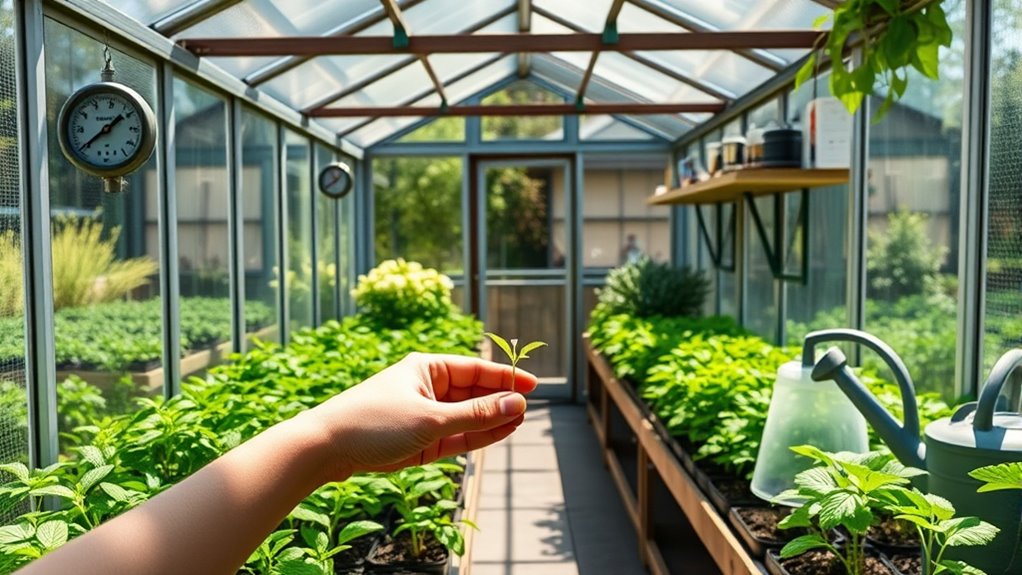
Starting a greenhouse garden can be an exciting journey, but it’s easy to make mistakes that hinder your success. One of the most critical steps is soil preparation. If you skip or rush this stage, your plants won’t have the right foundation to thrive. You need to make sure your soil is well-draining, nutrient-rich, and properly balanced in pH. Before planting, test your soil to understand its current condition. This helps you determine if you need to add amendments like compost, peat moss, or other organic matter to improve fertility and structure. Avoid planting directly into untreated garden soil, especially if it’s heavy clay or sandy, because poor soil structure can lead to root rot or drought stress. Instead, think about using raised beds or containers filled with a high-quality potting mix tailored for greenhouse environments. Proper soil preparation creates a stable environment, giving your plants a healthy start and reducing the risk of pests and diseases.
Another common mistake involves plant selection. When choosing what to grow, you might be tempted to pick plants based solely on personal preference or what’s popular, but it’s essential to contemplate your greenhouse’s specific conditions. Think about the climate inside your greenhouse, including temperature, humidity, and light levels. Select plants that are suited for those conditions and are compatible with each other to prevent issues like overcrowding or competition for resources. For beginners, starting with easy-to-grow vegetables like lettuce, herbs, or cherry tomatoes can build confidence and ensure a more successful harvest. Avoid overcrowding your greenhouse with too many varieties or delicate plants that require specialized care if you’re just starting out. It’s also wise to think about your local growing season and market demands—growing what you’ll actually use or sell helps justify your effort and investment. Additionally, choosing plants with high color accuracy and robust contrast ratios can help you better monitor their health and growth progress.
As an affiliate, we earn on qualifying purchases.
Frequently Asked Questions
What Are the Best Beginner-Friendly Greenhouse Plants?
When choosing beginner-friendly greenhouse plants, opt for easy-to-grow options like herbs, lettuce, and cherry tomatoes. Focus on succulent selection for low-maintenance greenery, and master seed starting techniques to guarantee healthy seedlings. These plants thrive with minimal fuss and are forgiving for newcomers. By starting with these, you’ll build confidence while enjoying fresh produce and greenery, setting a strong foundation for your greenhouse gardening journey.
How Do I Control Pests Without Harming My Plants?
Think of pests as uninvited guests crashing your greenhouse party. To keep them at bay without harming your plants, you can use biological pest control methods like introducing beneficial insects or applying natural repellents such as neem oil. These eco-friendly strategies act like gentle guards, protecting your plants while keeping your greenhouse a safe, thriving oasis. Stay vigilant and choose natural solutions to maintain a healthy, pest-free environment.
What Is the Ideal Temperature Range for a Beginner’S Greenhouse?
For a beginner’s greenhouse, maintaining an ideal temperature range of 65-75°F is key. Focus on temperature regulation by using fans or heaters, especially during temperature swings. Also, keep humidity control in mind; aim for 50-70% humidity to prevent mold and encourage healthy growth. Regularly monitor your greenhouse with a thermometer and hygrometer, adjusting ventilation and heating as needed to create a stable environment for your plants.
How Often Should I Water My Greenhouse Plants?
You should establish a consistent watering schedule to maintain proper plant hydration. Check your plants daily, feeling the soil about an inch deep—water when it feels dry. Avoid overwatering or underwatering by observing your plants’ leaves and soil moisture. Remember, each plant may have different needs, so adapt your watering frequency accordingly. Keeping an attentive watering schedule guarantees your plants stay healthy, thriving, and well-hydrated in your greenhouse.
What Supplies Are Essential for First-Time Greenhouse Gardeners?
As a first-time greenhouse gardener, you’ll need essential supplies like quality soil and proper lighting to guarantee healthy growth. Focus on soil preparation by choosing nutrient-rich, well-draining soil to support your plants. Additionally, understand the lighting requirements of your plants—whether natural sunlight or supplemental grow lights—to promote ideal photosynthesis. With these basics in place, you’ll set a strong foundation for your greenhouse success and healthy, thriving plants.
Conclusion
Think of your first greenhouse adventure like planting a seed—with patience and care, it’ll grow into something beautiful. By avoiding common mistakes, you set yourself up for success and enjoy a thriving garden. Remember to stay attentive, learn as you go, and don’t be discouraged by setbacks. Every mistake is just a stepping stone toward becoming a confident gardener. Keep nurturing your passion, and soon you’ll be reaping the rewards of your green thumb.
Fall yard work Picks
leaf blowers
As an affiliate, we earn on qualifying purchases.