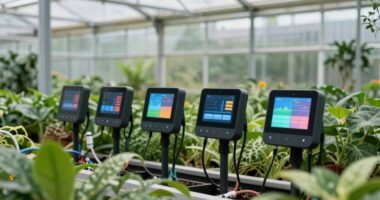
To achieve a calm, productive greenhouse, focus on maintaining a balanced environment by regulating humidity and temperature, and promoting beneficial insects to naturally control pests. Regular inspections and prompt removal of infected plants prevent infestations from spreading. Support biological balance with healthy soil and organic amendments, avoiding over-tilling. Consistently managing your microclimate and soil health creates harmony, discouraging pests and diseases. Keep learning more—these simple rules can transform your greenhouse into a thriving, peaceful space.
Key Takeaways
- Maintain a balanced microclimate by regulating humidity and temperature to discourage pests and promote plant health.
- Implement regular inspections and prompt removal of infected foliage to prevent pest spread and infestations.
- Foster biological controls and beneficial insects to naturally manage pests without chemicals.
- Prioritize soil health through organic amendments, crop rotation, and minimal tillage to enhance plant resilience.
- Promote ecosystem harmony by integrating pest management, soil vitality, and microclimate stability for sustained productivity.

A calm, productive greenhouse doesn’t happen by chance; it results from following essential rules that promote balance and efficiency. The key lies in understanding that each element within your greenhouse interacts with others, so maintaining harmony is *crucial*. Pest management isn’t just about eliminating pests; it’s about creating an environment where pests struggle to establish themselves in the first place. This means regularly inspecting your plants, promptly removing infected foliage, and encouraging beneficial insects that prey on common pests. When you stay vigilant, you prevent infestations from spiraling out of control, reducing the need for chemical interventions that can disrupt your greenhouse’s delicate ecosystem. Additionally, integrating biological controls can further enhance pest management by naturally reducing pest populations without chemical use. Maintaining biological balance within your greenhouse is essential for long-term health and productivity. Promoting a healthy microclimate also supports plant growth by regulating humidity and temperature levels that discourage pests and diseases. Maintaining soil health is vital; healthy soil acts as the foundation for strong, vigorous plants. You should focus on building soil fertility through composting, crop rotation, and organic amendments. Avoid over-tilling, which can disturb soil structure and reduce its ability to retain moisture and nutrients. Instead, adopt practices that promote a thriving microbial community, such as adding organic matter or using cover crops. This microbial activity naturally suppresses diseases and pests, creating a healthier environment for your plants. Well-balanced soil also improves water retention, reducing stress on plants and minimizing the risk of disease. Regularly monitoring soil health supports sustainable gardening practices and understanding soil microbiology can significantly enhance plant resilience.

Inkbird Humidity Controller IHC200 Humidistat Mushroom Greenhouse Pre Wired Outlet Dual Stage Humidifier Dehumidifier.
The humidity controller ranges from 5 to 99.99% RH
As an affiliate, we earn on qualifying purchases.
As an affiliate, we earn on qualifying purchases.
Frequently Asked Questions
How Do I Prevent Pests Without Harming My Plants?
To prevent pests without harming your plants, start with effective composting techniques to keep your soil healthy and resilient. Use natural pest repellents like neem oil, garlic spray, or companion planting to deter pests safely. Regularly inspect your plants for early signs of trouble, and keep your greenhouse clean to minimize pest habitats. These eco-friendly methods protect your plants while supporting a balanced, pest-free environment.
What Is the Ideal Humidity Level for a Greenhouse?
You should aim for a humidity level between 60-70% in your greenhouse. Humidity control and moisture management are key to healthy plants and pest prevention. Use a hygrometer to monitor levels regularly, and adjust with ventilation, fans, or misting systems as needed. Keeping humidity consistent helps prevent mold, fungi, and pests, creating an ideal environment for your plants to thrive.
How Often Should I Water Different Types of Plants?
Dive right in—knowing when to water is key to your plant hydration success. For most houseplants, follow a watering schedule of once a week, but adjust for species like succulents or tropicals. Check the soil’s top inch; if it’s dry, it’s time to water. Overwatering can drown roots, so stay attentive. Remember, a little attentiveness goes a long way in keeping your plants thriving and happy.
Can I Automate My Greenhouse Climate Control?
Yes, you can automate your greenhouse climate control using solar energy-powered systems. Install sensors to monitor temperature, humidity, and light levels, then connect them to automated vents, fans, and heaters. This setup maintains ideal conditions for plant propagation and growth. Solar energy reduces electricity costs and guarantees sustainable operation. Automating climate control saves you time and effort, creating a stable environment that promotes healthy plants and higher yields.
What Are Common Mistakes to Avoid in Greenhouse Management?
Think of your greenhouse as a delicate symphony, where every note matters. Avoid neglecting greenhouse illumination, which is like the rhythm that keeps plants thriving. Don’t overlook soil preparation; it’s the foundation of your melody. Common mistakes include inconsistent watering, ignoring ventilation, and overlooking the importance of proper plant spacing. Stay attentive to these details, and your greenhouse will produce a harmonious, thriving environment that sings with health and productivity.

Insect Specimen Tools Kit – EVA Foam Pinning Board, Coordinate Paper, Wings Pressing Paper, Insect Pins, Complete Entomology Kit for Beginners (Insect Specimen Tools Kit)
Complete Kit for Insect Specimen Preparation – This all-in-one set includes pinning boards, 2 coordinate papers, 4 wings…
As an affiliate, we earn on qualifying purchases.
As an affiliate, we earn on qualifying purchases.
Conclusion
So, here’s the surprise: keeping your greenhouse calm and productive isn’t about complex tricks or high-tech gadgets. It’s about simple rules—like patience, consistency, and listening to your plants. Ironically, the more you try to control everything, the less you’ll achieve. Sometimes, the best way to nurture growth is to step back, breathe, and trust the basics. After all, nature’s own rules are surprisingly easy—and they work better than anything fancy you could buy.

Back to The Roots Organic Coir, 51 Quart Expanding Soil, Great for Seeds and Potting
Includes 10lb block of Back to the Roots compressed Coconut Coir that expands to 51qt of potting soil….
As an affiliate, we earn on qualifying purchases.
As an affiliate, we earn on qualifying purchases.

Mighty Mint Peppermint Oil Plant Protection Spray – Insect & Pest Control for Gnats, Spider Mites & Aphids – Plant-Based, Easy-to-Use – 16 oz
Plant-Based Pest Protection: Helps protect plants from common pests including gnats, spider mites, aphids, fungus issues, and other…
As an affiliate, we earn on qualifying purchases.
As an affiliate, we earn on qualifying purchases.