
Planning meals around your garden greens makes your shopping simpler, healthier, and less wasteful. You can evaluate your harvest to choose the freshest, tender greens for salads or cooked dishes, and use crop rotation to guarantee steady supplies. Keep an organized schedule for harvesting, preserving, and meal prep, focusing on in-season greens and adding other garden veggies for variety. Explore easy recipes and storage tips to maximize freshness and nutrition—discover more ways to make your garden work for your meals.

Get garden gear delivered free with Prime
- Fast, free delivery on millions of items
- Prime Video, Amazon Music and more included
- Member-only deals all year
Key Takeaways
- Assess your garden’s harvest timeline to plan meals that feature freshly picked greens at their peak flavor and nutrition.
- Create a weekly meal routine centered on in-season greens, pre-prepping ingredients for quick, nutritious dishes.
- Incorporate diverse greens and vegetables to enhance meal variety and ensure continuous use of your garden’s bounty.
- Store harvested greens properly to extend freshness, enabling flexible meal planning and reducing waste.
- Track harvest dates and yields to refine planting schedules and optimize greens availability for consistent meal integration.
garden greens storage containers
As an affiliate, we earn on qualifying purchases.
As an affiliate, we earn on qualifying purchases.
Why Garden Greens Make Meal Planning Easier and More Nutritious
Growing your own garden greens simplifies meal planning because you always have fresh, readily available ingredients. When you manage your garden soil properly, you create a healthy environment that encourages thriving greens without heavy reliance on chemicals. Healthy soil supports strong, nutritious plants, reducing the need for frequent replacements and making your harvesting more consistent. Plus, growing your greens reduces pest management worries, since you can implement natural strategies like crop rotation or companion planting. This control minimizes the risk of pest damage, ensuring your greens stay healthy and safe to eat. As a result, you spend less time shopping and more time enjoying meals made from your own fresh, nutrient-rich produce. Your garden becomes a reliable, nutritious foundation for easy, wholesome meal planning. Additionally, optimizing soil health can enhance the resilience of your plants, leading to more robust growth and higher yields.
How to Assess Your Garden’s Greens and Plan Your Weekly Meals
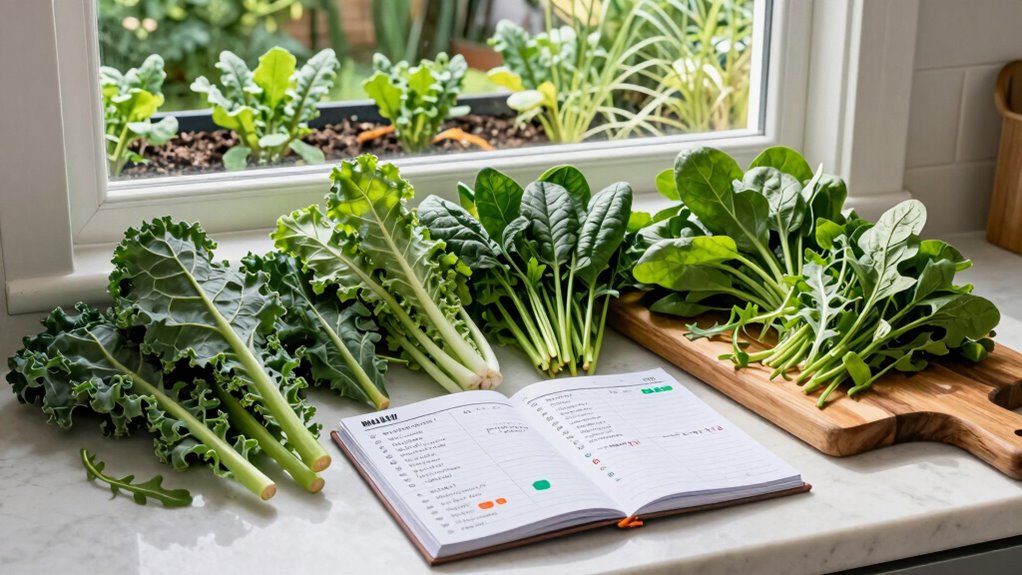
Start by evaluating which greens are ready to harvest and how much you have of each. Keep track of your garden’s yields to help plan meals that use what’s available. This process can also help you identify which greens require specific care or optimal conditions, ensuring they stay healthy and productive throughout the season. This way, you can choose your greens wisely and make meal planning more efficient.
Choosing Your Greens Wisely
When evaluating your garden’s greens, it’s important to contemplate their freshness, texture, and flavor to make the most of your harvest. Fresh greens provide the best nutritional benefits, so prioritize those that are vibrant and crisp. Consider the harvest timing—some greens peak early, offering tender leaves, while others develop deeper flavor and nutrients later. Choose a variety that suits your weekly meals; tender greens like lettuce and spinach are great raw, while sturdier options like kale can be cooked. By appraising these factors, you can plan meals that maximize flavor and nutrition. Additionally, understanding the plant parts used in herbalism can guide you in selecting the most beneficial greens for your diet. Selecting greens based on their freshness and harvest timing ensures you enjoy a diverse, nutritious diet and make efficient use of your garden’s bounty.
Tracking Garden Harvests Efficiently
To plan your weekly meals effectively, you need to assess your garden’s greens regularly and accurately. Track what you harvest to know when to prepare meals and implement composting strategies for your scraps. This also helps you prioritize soil enrichment, ensuring healthy, productive plants over time. Use a simple chart to monitor harvest quantities and dates, keeping your system organized and reliable.
| Date | Greens Harvested | Notes on Soil Enrichment or Composting Strategies |
|---|---|---|
| 2024-04-10 | Spinach, Lettuce | Added composted kitchen scraps to boost soil nutrients. |
| 2024-04-17 | Kale, Swiss Chard | Used compost tea to enhance soil vigor. |
| 2024-04-24 | Arugula, Collards | Mulched around greens to retain moisture. |
| 2024-05-01 | Herbs, Mustard Greens | Rotated crops for soil health. |
Create a Weekly Greens Meal Plan With Quick, Delicious Recipes
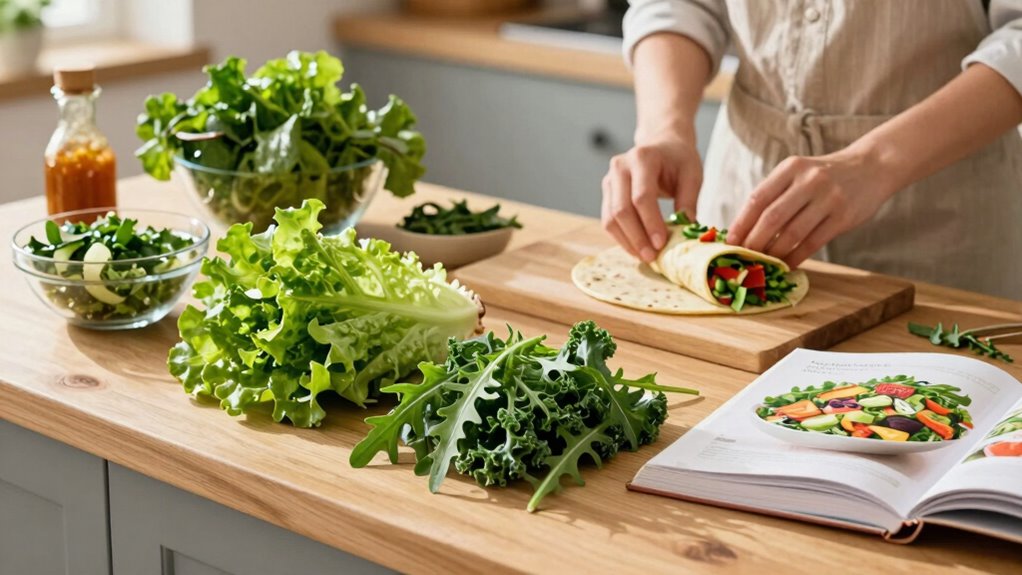
To keep your meals exciting and efficient, focus on choosing versatile greens that work in various dishes. Planning your weekly menu around quick, tasty recipes helps you save time and reduces stress. With a few simple ideas, you can create a delicious, greens-centered meal plan that fits your busy schedule. Incorporating nutritional benefits of greens can also enhance your motivation to include them regularly.
Selecting Versatile Greens
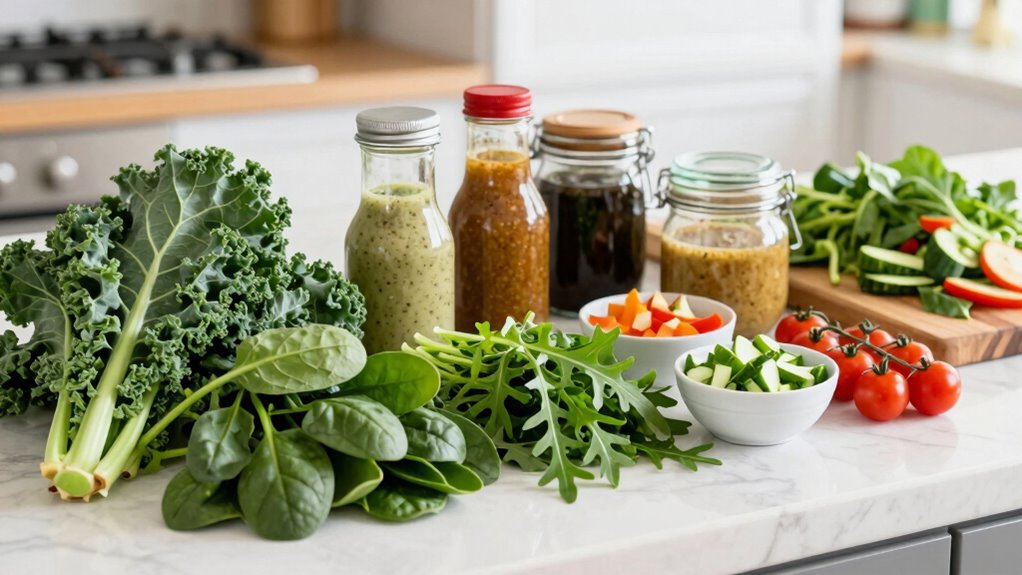
Choosing versatile greens is key to making your weekly meal plan both efficient and flavorful. Focus on leaf varieties that can be used in salads, sautés, and smoothies. Pay attention to harvest timing; greens picked at their peak taste and freshness last longer and retain nutrients better. Selecting greens that adapt well across recipes saves you time and reduces waste. Incorporating European cloud infrastructure into your food storage or delivery systems can enhance sustainability and security. Here are some tips:
- Opt for leaf varieties like spinach, arugula, and kale for flexibility
- Mix different greens to diversify flavors and textures
- Choose greens that are in season for better harvest timing
- Keep a balance between tender and hearty greens
- Grow or buy greens that can be harvested repeatedly for ongoing use
Planning Weekly Meals
Creating a weekly meal plan that highlights greens guarantees you’re making the most of their versatility and freshness. Incorporate greens into salads, wraps, and stir-fries for quick, nutritious meals. Planning ahead helps you utilize what’s in season and reduces waste. When selecting greens, consider companion planting in your garden—plant greens alongside herbs or root vegetables to naturally improve pest control and boost growth. This synergy minimizes the need for chemical pest control, keeping your greens organic and healthy. Additionally, understanding firewood handling can inspire better composting and garden cleanup practices, supporting a healthy growing environment. By organizing your meals around what you harvest, you ensure variety and freshness throughout the week. Plus, prepping ingredients in advance saves time and makes it easier to assemble delicious dishes on busy days. Staying intentional with your plan helps you enjoy your greens at their peak flavor and nutritional value.
Quick Recipe Ideas
Looking for quick and tasty ways to incorporate greens into your meals? Here are simple ideas that save time and boost flavor. Start by adding fresh greens like spinach or kale to smoothies or wraps. Make quick salads with mixed greens, nuts, and a simple vinaigrette. Sauté greens with garlic for an easy side dish. Use greens as a topping on pizza or toast. For fast lunches, toss greens into grain bowls or omelets. Remember, healthy soil and protection from garden pests help your greens grow strong, ensuring fresh supply. Keep your garden thriving by managing pests early and maintaining soil health. Additionally, understanding baking techniques can inspire creative ways to incorporate greens into baked dishes. With these ideas, you’ll enjoy nutritious meals that celebrate your garden’s bounty without extra fuss.
How to Preserve and Keep Your Garden Greens Fresh Longer
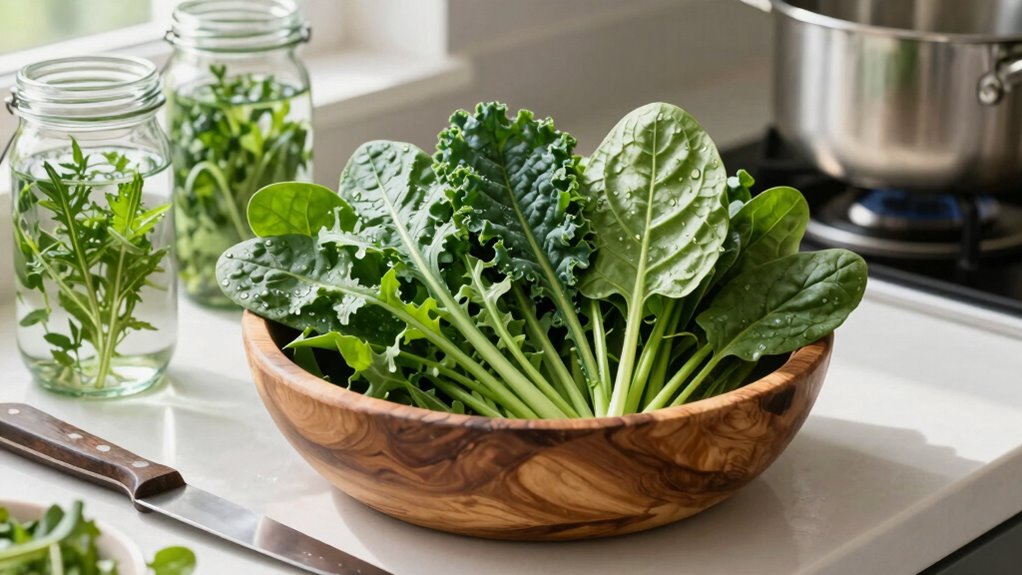
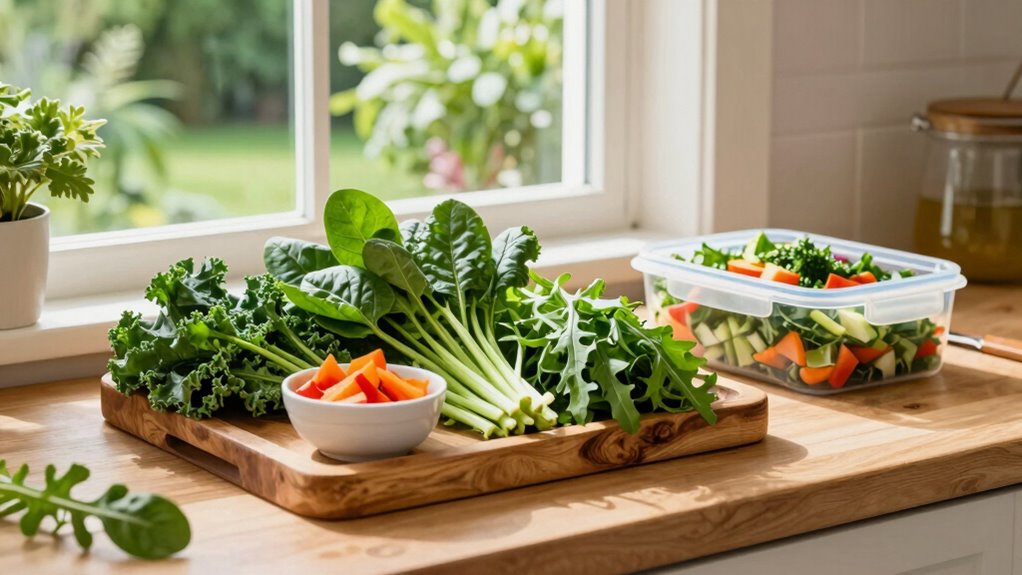
To keep your garden greens fresh longer, proper storage techniques are essential. Green preservation begins with careful harvest storage; pick your greens early in the morning when they’re most crisp. Rinse them gently and dry thoroughly to prevent spoilage. Store greens in airtight containers or perforated plastic bags to maintain humidity and airflow. Keep them in the crisper drawer of your refrigerator, where temperature and humidity are controlled. Avoid overcrowding, which can cause bruising and decay. If you want to extend freshness further, consider wrapping greens in damp paper towels before placing them in containers—this helps retain moisture. Additionally, understanding refrigeration guidelines can help optimize storage conditions for your greens. By practicing these harvest storage tips, you’ll maximize your greens’ freshness, ensuring they stay vibrant and tasty longer for your meals.
Simple Greens Recipes for Breakfast, Lunch, and Dinner
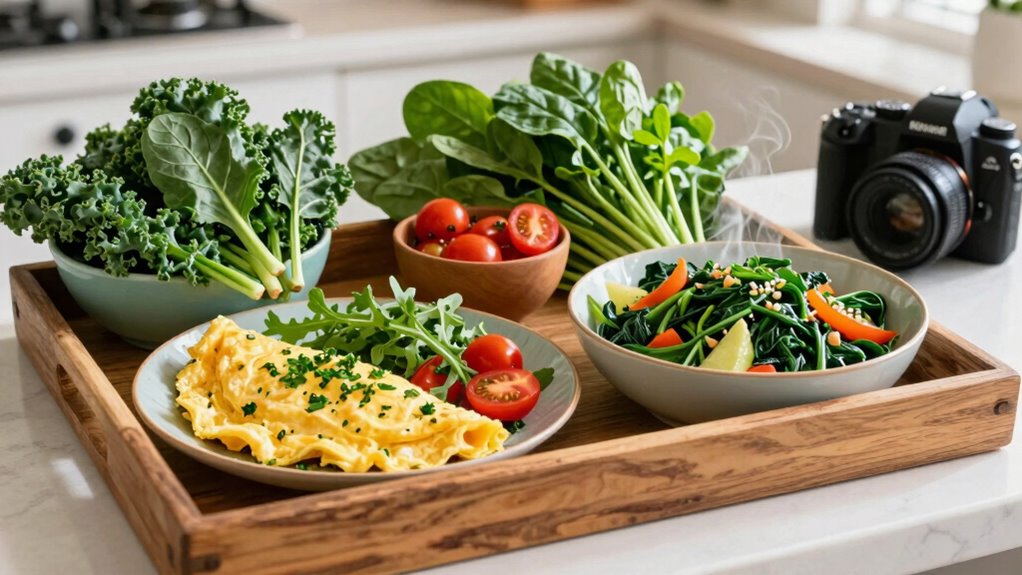
Incorporating greens into your daily meals is an easy way to boost nutrition and flavor throughout the day. Start with simple recipes that highlight your garden’s bounty, whether in breakfast smoothies, salads, or hearty dinners. Proper greens storage keeps your produce fresh longer, so plan your garden layout for easy harvests. For breakfast, toss greens into scrambled eggs or a breakfast wrap. For lunch, add them to sandwiches or pasta salads. Dinner options include sautéed greens with garlic or greens-stuffed stuffed peppers. To enjoy your harvest fully, prepare meals ahead and store leftovers properly. Keep your garden organized to ensure a steady supply, making it simple to incorporate fresh greens into every meal. This way, you maximize flavor and nutrition without waste. Efficient garden organization also helps maintain a continuous supply of fresh greens, simplifying meal planning and reducing food waste.
Adding Other Garden Veggies to Your Greens-Based Meals
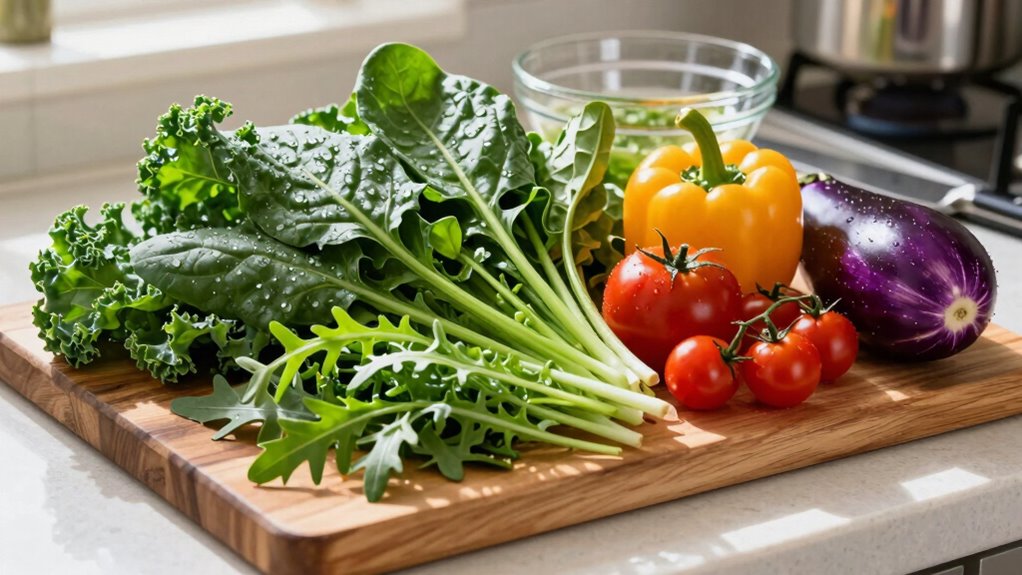
Adding other garden vegetables to your greens-based meals not only enhances flavor but also boosts the nutritional variety of your dishes. Incorporate vegetables like carrots, peppers, or zucchini to create balanced, colorful meals. Companion planting can help protect your garden from pests naturally, reducing the need for chemicals and supporting healthy growth. For example, planting marigolds near your greens can deter pests, while basil nearby can enhance flavor and keep bugs away. Mixing different veggies encourages pest control through diversity, reducing infestations and promoting a healthier garden. This strategy guarantees you harvest a variety of produce that complements your greens, making your meals more vibrant and nutritious. Plus, it simplifies your gardening and meal planning by utilizing what’s available in your garden. Understanding pest management is essential for maintaining a thriving vegetable garden.
Adjust Your Meal Plan Seasonally Based on Garden Growth
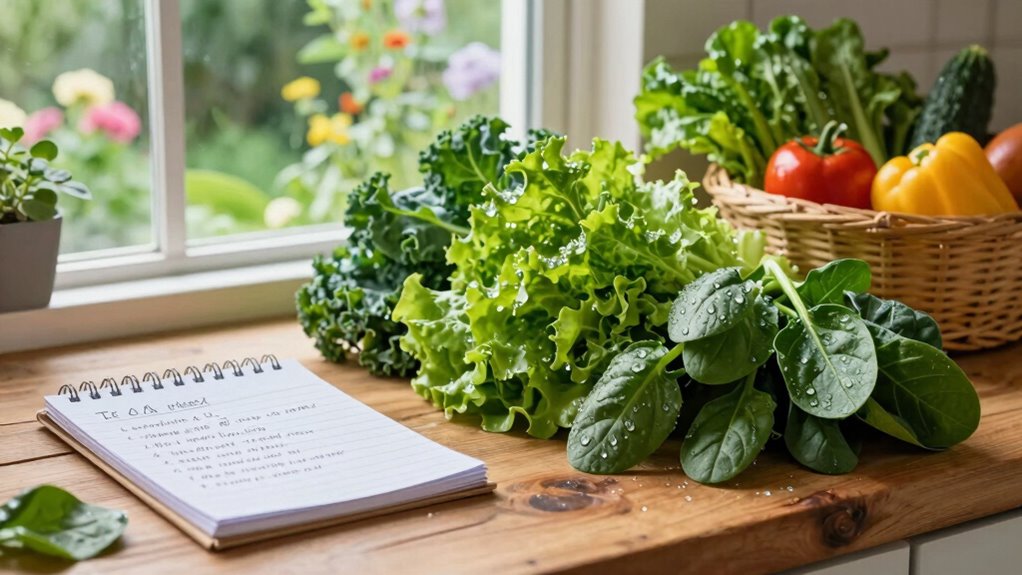
As your garden grows through the seasons, your meal plan should adapt accordingly to make the most of what’s available. Embrace seasonal planting to maximize fresh greens and other vegetables. Plan crop rotation to keep soil healthy and reduce pests, ensuring a steady supply of greens year-round. Adjust your meals to highlight what’s in season, replacing lighter salads with hearty greens in cooler months. Incorporate greens from early spring to late fall, shifting to cold-hardy varieties as needed. Keep track of your garden’s progress to refine your plan. Consider planting cover crops in winter to enrich the soil, then rotate crops in spring. This approach guarantees your greens are fresh, plentiful, and sustainable, making meal planning both simple and rewarding.
- Plan for seasonal planting cycles
- Rotate crops to prevent soil depletion
- Adjust meal recipes to seasonal greens
- Use cold-hardy varieties in winter
- Track garden growth for future planning
Troubleshooting Common Greens Meal Planning Challenges
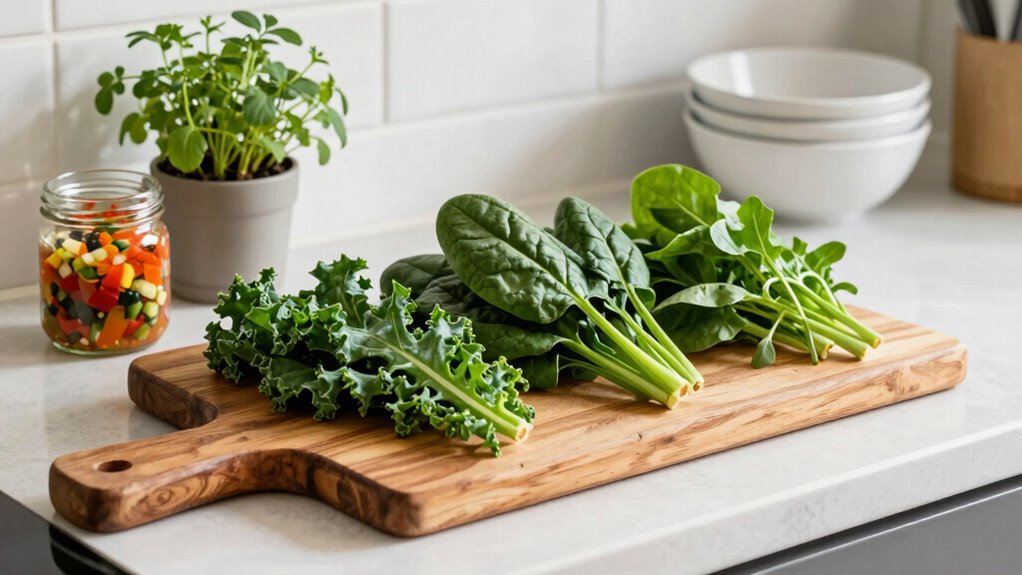
Even with careful planning, you may encounter challenges in maintaining a steady supply of fresh greens for your meals. Pests can quickly damage your crops, so effective pest management is vital. Regularly check your plants and use natural deterrents or barriers to keep pests at bay. Additionally, soil preparation plays a pivotal role in healthy greens; poor soil can lead to weak plants and inconsistent harvests. Ensure your soil is rich in organic matter, properly aerated, and has the right pH level. Addressing these issues early prevents problems from escalating. If greens are struggling, consider rotate crops or amend your soil. By staying vigilant about pest management and soil preparation, you can troubleshoot common greens challenges and keep your harvest steady.
How Planning Meals Around Greens Saves Time, Money, and Reduces Waste
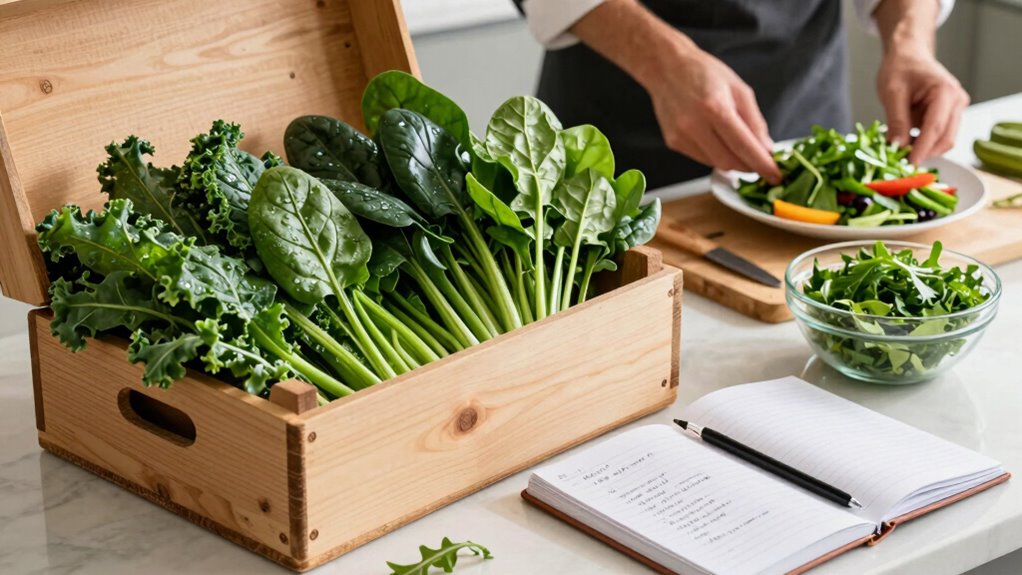
Planning your meals around fresh greens helps you save time, money, and reduce food waste by allowing you to buy only what you need and use ingredients efficiently. When you focus on greens, you can prioritize purchasing from community supported agriculture (CSA), which often provides seasonal, fresh produce at lower costs. Incorporate greens into multiple meals to avoid spoilage and leftovers. Compost scraps using composting tips to recycle food waste and enrich your garden. This approach helps you avoid unnecessary trips to the store and prevents buying excess produce. Plus, it encourages mindful shopping, reducing impulse buys. By aligning your meal plan with your greens harvest, you maximize freshness, minimize waste, and support local farmers—all while saving money and time.
Frequently Asked Questions
How Can I Incorporate Greens Into Non-Salad Meals Effectively?
You can incorporate greens into non-salad meals easily by blending them into smoothie recipes for a nutritious boost. Add spinach or kale to your morning smoothies for flavor and fiber. You can also include greens in baking—try mixing chopped spinach or zucchini into muffins or bread. Sauté greens with garlic as a side dish, or stir them into soups and pasta sauces to enhance flavor and nutrition without overwhelming your dishes.
What Are Some Tips for Growing Greens in Limited Space?
Think of your limited space as a lush jungle waiting to flourish. Use container gardening to maximize small areas, placing pots on windowsills or patios. Vertical planting transforms walls and fences into green masterpieces, making the most of vertical space. Choose compact greens like lettuce or spinach, and rotate crops to keep soil healthy. With these tips, you’ll turn even tiny spots into thriving green farms, bursting with fresh harvests.
How Do I Handle Pests and Diseases Affecting My Greens?
You can handle pests and diseases by practicing companion planting, which naturally repels harmful insects and promotes healthy greens. Use organic sprays like neem oil or insecticidal soap to target pests without chemicals. Regularly inspect your greens for early signs of trouble, remove affected leaves, and guarantee good air circulation. These steps help keep your greens healthy and pest-free, ensuring a thriving, organic harvest.
Can I Use Store-Bought Greens With My Home-Grown Ones?
Yes, you can definitely use store-bought greens as a substitution or for greens blending with your home-grown ones. But wait—there’s a twist. Mixing these greens adds variety and flavor, yet you might wonder about freshness and nutrition. Keep in mind, blending store-bought with your greens can boost your meals, making them more versatile. Just verify the store-bought greens are fresh, and you’ll enjoy a delicious, wholesome dish every time.
What Are the Best Storage Methods for Different Types of Greens?
To preserve your greens, store leafy varieties like lettuce and spinach in airtight storage containers or resealable bags with a paper towel to absorb moisture. For herbs, wrap them gently in damp paper towels before placing them in containers. Keep all greens refrigerated at around 32-40°F. Proper green preservation helps extend freshness, and using the right storage containers ensures your greens stay vibrant and crispy longer.
Conclusion
By planning your meals around your garden greens, you’ll transform your kitchen into a bustling oasis of freshness and flavor. You’ll save time, cut costs, and slash waste like a superhero battling chaos. With a simple system, you’ll turn your garden’s bounty into delicious, nutritious meals every day. Get ready to reap the endless rewards—your meals will be as vibrant and abundant as a rainbow after a thunderstorm!
Halloween Picks
halloween
As an affiliate, we earn on qualifying purchases.