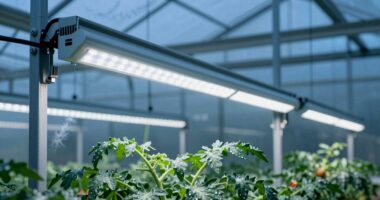
Before mixing fertilizer in your greenhouse, you need to test your water for pH, electrical conductivity (EC), and nutrients like calcium and magnesium. These tests help you understand water’s acidity or alkalinity, salinity levels, and overall quality, ensuring plants can efficiently absorb nutrients. Proper sampling and using reliable tools make your results accurate. Keep tracking these parameters to optimize plant growth—if you keep going, you’ll learn how to interpret your test results effectively.
Key Takeaways
- Measure pH to ensure water acidity or alkalinity is within the optimal 6.0–7.0 range for nutrient availability.
- Test electrical conductivity (EC) to determine mineral content and salinity levels affecting plant health.
- Check for key nutrients like calcium, magnesium, and sodium to prevent imbalances that hinder growth.
- Collect water samples with sterile containers from the source, avoiding contamination and ensuring representativeness.
- Use reliable testing tools or labs to accurately assess water quality, contaminants, and chemical levels before fertilizing.
Why Water Testing Matters Before Fertilizing in Greenhouses

Testing your greenhouse water before fertilizing is essential because it helps you understand the existing nutrient levels and pH balance. Good water quality is critical for healthy plant growth, ensuring your plants absorb nutrients effectively. By evaluating water quality upfront, you avoid over- or under-fertilizing, which can harm plants or reduce yields. Testing methods vary—from simple test strips to more precise digital meters—so choose the approach that fits your needs and budget. Proper testing gives you a clear picture of the water’s current condition, allowing for better decision-making when mixing fertilizers. Understanding water chemistry is vital for customizing your fertilization plan and maintaining optimal plant health. Regular testing also helps you identify potential contaminants, such as heavy metals or pathogens, that could negatively impact your crops. Skipping this step risks applying nutrients that may be unnecessary or harmful, ultimately compromising your greenhouse’s productivity. Accurate water testing is a crucial first step toward optimal fertilization and healthy plant development.
What Water Tests Should You Do Before Fertilizer?
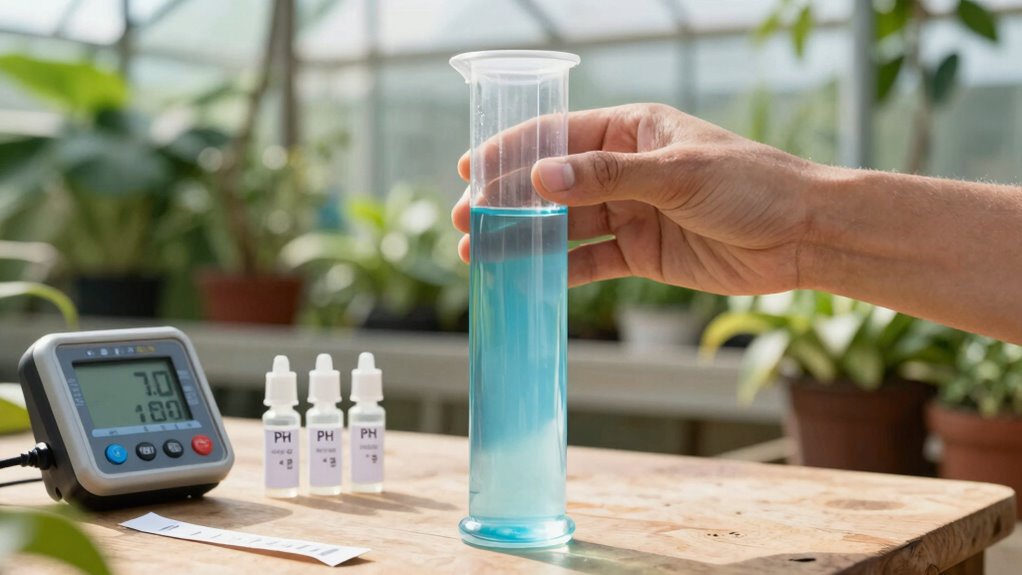
Before applying fertilizer, it’s important to perform specific water tests to accurately assess your water quality. These testing procedures help identify key factors like pH, electrical conductivity (EC), and nutrient levels, which influence fertilizer effectiveness. Start by testing pH to ensure your water isn’t too acidic or alkaline, as this affects nutrient availability. Check EC to determine the water’s overall mineral content, indicating whether it’s suitable for fertilization or needs adjustment. Additionally, testing for specific nutrients like calcium, magnesium, and sodium can prevent imbalances. Conducting these water quality tests provides a clear picture of your water’s composition, allowing you to tailor your fertilizer mix for ideal plant growth and avoid potential issues caused by unsuitable water conditions. Recognizing the importance of water quality testing can also support efficient data management and analysis of your water testing results. Proper testing can help you avoid issues such as nutrient deficiencies, and understanding the influence of water chemistry helps optimize fertilization practices for healthy plant development. Incorporating testing techniques ensures accurate results and more precise adjustments for your fertilizer application.
How to Collect Water Samples Correctly for Accurate Testing
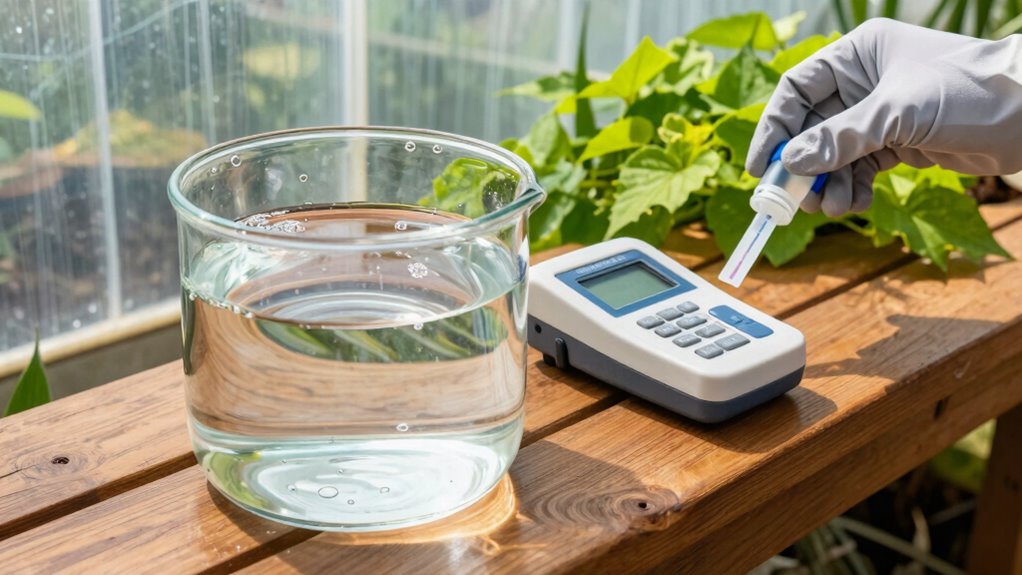
To guarantee your water test results are accurate, it’s essential to collect samples properly from the start. Using correct sampling techniques ensures your results reflect true water conditions. First, choose the right container—preferably sterile, clean, and sample-specific—to prevent contamination. When collecting, avoid rinsing the container with water from the tap, as it can alter the sample’s composition. Instead, fill the container directly from the source, submerging it below the surface to get a representative sample. Be careful not to disturb sediments or surface films. Label your container clearly and keep samples cool until testing. Following proper sampling techniques and container selection will help you obtain reliable data, guiding you toward the best fertilizer decisions for your greenhouse. Properly sampling procedures are essential for accurate water testing and effective fertilizer management. Additionally, understanding the water quality parameters to measure can significantly influence your fertilizer strategy. Ensuring you are aware of testing protocols can further enhance the accuracy of your results. Remember, the sampling process directly impacts the reliability of your test outcomes and subsequent fertilization decisions. Incorporating knowledge about sample preservation can also help maintain sample integrity during transport.
Why pH Levels Matter for Healthy Plants

Your plants thrive best within a specific pH range, which influences how they absorb nutrients. When pH levels are off, nutrients become less available, affecting growth and health. You can adjust soil pH to keep it ideal and guarantee your plants get what they need to flourish.
Optimal pH Range
Have you ever wondered why maintaining the right pH level is essential for healthy plants? The ideal pH range ensures your plants absorb nutrients effectively and promotes proper pH balance in your soil or water. When pH levels are outside this range, nutrient uptake can be hindered, affecting growth and health. Typically, most greenhouse plants thrive in a pH range of 6.0 to 7.0. Monitoring pH helps you manage mineral content and prevent deficiencies or toxicities. Keep in mind:
- pH influences nutrient solubility
- Different plants have specific pH preferences
- Regular testing helps maintain consistency
- Adjusting pH ensures better fertilizer efficiency
- Understanding digital asset management can help you utilize testing tools more effectively
Staying within the ideal pH range keeps your plants healthy and thriving.
pH and Nutrients
Ever wonder how pH levels directly impact the nutrients your plants need? Maintaining pH stability is vital because it influences nutrient availability in your soil or water. When pH is too high or too low, certain nutrients become less accessible to your plants, leading to deficiencies or toxicities. A balanced pH ensures that essential nutrients like nitrogen, phosphorus, and potassium are readily available, supporting healthy growth. By monitoring pH regularly, you can prevent imbalances that disrupt nutrient uptake. This helps keep your plants healthy and productive. Remember, even small pH fluctuations can considerably affect nutrient absorption, so staying within the ideal range is key to achieving a nutrient balance that promotes vigorous, healthy plants in your greenhouse.
Adjusting Soil pH
Adjusting soil pH is essential because it directly influences nutrient availability and overall plant health. When your soil pH is off, plants can struggle to absorb key nutrients, leading to poor growth. To correct pH imbalances, you might need specific soil amendments like lime or sulfur. Regularly monitor soil pH levels to determine the right adjustments. Consider your watering schedules, as frequent watering can affect pH over time. Proper pH adjustment ensures nutrients remain accessible and supports healthy root development. Keep these tips in mind:
- Use soil amendments carefully based on test results
- Adjust watering schedules to prevent pH fluctuations
- Re-test soil after amendments to confirm changes
- Maintain consistent pH levels for ideal plant growth
- Understanding soil health can help you better manage pH and overall plant vitality. Additionally, being aware of Vetted – Perfect Fit Living options can provide insights into reliable tools and solutions for maintaining optimal soil conditions. Incorporating soil testing kits can further refine your pH management strategies to promote healthier plant growth. Regularly checking pH levels is also crucial for detecting early signs of imbalance, which can save you time and resources in the long run.
How to Measure EC and What It Tells You About Salinity

Measuring electrical conductivity (EC) helps you gauge the salinity of your water, which directly affects plant health. Higher EC indicates more salts in the solution, potentially causing stress or damage to your plants. Understanding this connection allows you to adjust your watering practices for ideal growth. Proper electrical conductivity measurement and maintenance are essential for creating a safe and healthy environment for your plants. Regular testing can help you detect changes in salinity levels caused by fertilizer application, ensuring optimal nutrient balance.
Understanding Electrical Conductivity
Understanding electrical conductivity (EC) is essential for evaluating the salinity of your greenhouse water. EC measures how well water conducts electricity, which directly relates to the amount of dissolved salts present. High EC indicates elevated salinity, which can affect plant health and water quality. To measure EC, you’ll use a handheld EC meter or a test kit, ensuring proper calibration for accurate results. Remember, water with low EC typically indicates low salinity, while high EC suggests higher salt levels that could hinder nutrient uptake. Regular testing helps you maintain excellent water quality and prevents salt buildup. Keep these points in mind:
- EC readings reflect water’s salt content
- Proper calibration ensures accuracy
- High EC can harm sensitive plants
- Use EC as a baseline for fertilizer adjustments
- Salinity levels can fluctuate depending on watering practices and environmental conditions. Proper understanding of salinity management can help optimize plant growth and prevent nutrient deficiencies. Monitoring EC regularly can also assist in preventing salt accumulation, ensuring a healthier growing environment for your plants. Additionally, understanding salinity fluctuations helps you adapt your watering and fertilization strategies effectively.
Salinity’s Impact on Plants
Monitoring electrical conductivity (EC) provides valuable insight into how salt levels in your greenhouse water affect plant health. High salinity can lead to plant stress, impairing nutrient uptake and growth. By measuring EC regularly, you can gauge salinity levels and manage salinity effectively. Elevated EC indicates increased salinity, which may require flushing the system or adjusting fertilizer rates to prevent damage. Proper salinity management helps guarantee plants aren’t exposed to harmful salt concentrations that hinder development. Understanding EC also allows you to maintain ideal conditions, promoting healthy root systems and consistent growth. Regular testing keeps you informed, enabling proactive adjustments before problems escalate. Smart gear can assist in precise measurements and monitoring to optimize your salinity management.
How to Test for Heavy Metals and Water Contaminants
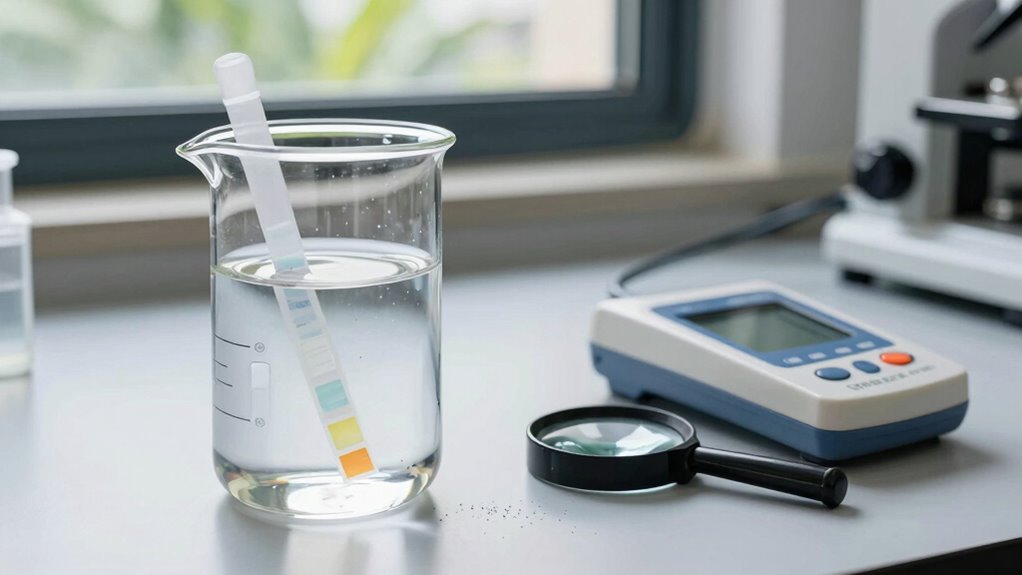
To test for heavy metals and water contaminants effectively, you need to select the right testing methods and tools. Accurate detection helps guarantee your water is safe for plants and prevents potential toxicity. Start by choosing laboratory testing kits or services that analyze for common heavy metals like lead, arsenic, and cadmium. You’ll also want to identify water contaminants such as nitrates or pesticides that could harm your crops. Consider these options:
- Collect water samples following proper procedures
- Use certified testing laboratories for precise results
- Opt for test kits that specify heavy metals and water contaminants
- Record all data meticulously for future reference
How to Interpret Your Water Test Results for Fertilizer Decisions

Once you receive your water test results, it’s vital to understand what they mean for your fertilizer choices. By interpreting the data accurately, you can make informed adjustments to guarantee your plants get the nutrients they need. This way, you optimize growth while maintaining a healthy greenhouse environment.
Understanding Water Test Reports
Understanding water test reports is essential for making informed fertilizer decisions because these reports reveal the nutrient levels and pH balance in your water. Accurate interpretation helps you determine if your water needs pH balancing or if it contains contaminants. Look for key indicators such as pH, which influences nutrient availability, and heavy metal detection, which can harm plants. A high or low pH may require adjustments before fertilizing. Heavy metals like lead or cadmium indicate pollution and require special handling. Your report may also show levels of nutrients like calcium, magnesium, and sodium, guiding your fertilizer choices. Be sure to review the results carefully to understand your water’s condition and ensure your greenhouse plants thrive. Proper interpretation helps prevent issues before they start.
Adjusting Fertilizer Accordingly
Interpreting your water test results accurately is essential for adjusting your fertilizer regimen effectively. If your pH is too high or low, you’ll need to perform pH adjustment to optimize nutrient availability for your plants. A balanced pH ensures nutrients are accessible, preventing deficiencies or toxicities. Review your test for nutrient levels like calcium, magnesium, and sodium; if they’re off, you’ll need to modify your fertilizer to achieve proper nutrient balancing. For example, excess sodium might call for adjustments in fertilizer composition, while low calcium indicates a need for calcium supplementation. By understanding your water’s chemistry, you can tailor your fertilizer application precisely, ensuring healthy growth and maximizing your greenhouse’s productivity. Accurate interpretation helps you create a nutrient-rich environment that supports your plants’ needs.
Common Water Problems That Can Hurt Your Plants

Poor water quality can considerably harm your greenhouse plants, even if you’re providing regular watering. High water hardness and mineral content can cause problems like nutrient imbalances, root damage, and slowed growth. Hard water contains excessive minerals such as calcium and magnesium, which can lead to salt buildup and interfere with nutrient uptake. Additionally, water with high mineral content can cause leaf spots, browning, or stunted development. Being aware of these issues helps you prevent long-term damage to your plants.
Watch out for these common water problems:
- Excessive water hardness affecting nutrient absorption
- High mineral content causing salt buildup
- pH imbalance disrupting nutrient availability
- Chlorine or chloramine presence harming roots
Tools and Kits for Easy Water Testing at Home
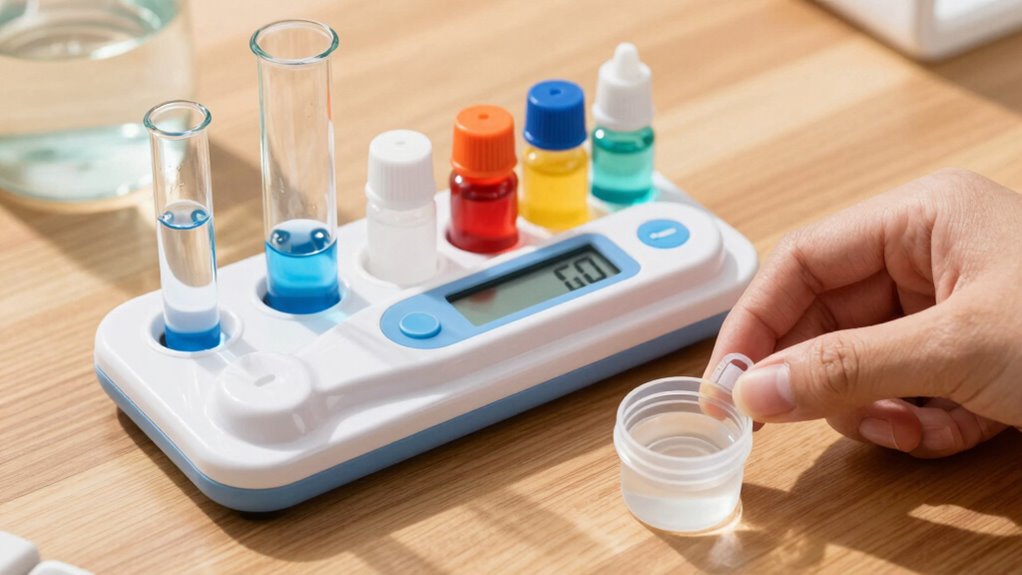
Maintaining healthy greenhouse plants requires more than just regular watering; you also need to monitor your water quality regularly. Using simple tools and kits makes testing straightforward and effective. A basic pH test kit helps you verify proper pH balancing, preventing nutrient lockout. Water test strips quickly measure pH and other parameters, while digital meters provide more precise readings. For water filtration, test kits can identify contaminants and help you decide if additional filtration is needed. Here’s a quick comparison:
| Tool/Kits | Best For |
|---|---|
| pH Test Strips | Quick pH checks |
| Digital pH Meters | Accurate pH measurement |
| Water Testing Kits | Detecting contaminants and overall water quality |
| Water Filtration Test Kits | Evaluating filtration effectiveness |
| Chemical Test Kits | Measuring nutrients and chemical levels |
How to Use Water Test Data to Improve Fertilizer Application

When you have accurate water test data, adjusting your fertilizer application becomes much more effective. Knowing your water’s pH helps you focus on pH balancing, ensuring nutrients are available for plant uptake. Monitoring nutrient levels guides you to fine-tune fertilizer strength, preventing deficiencies or overfeeding. Use your data to identify issues like high alkalinity or acidity that hinder nutrient absorption. Regular testing allows you to adapt your fertilization schedule as water conditions change, optimizing plant growth. To make the most of your results:
- Adjust fertilizer pH to match water test pH for better nutrient availability
- Increase or decrease fertilizer concentration based on nutrient levels
- Correct pH imbalances to improve nutrient absorption
- Schedule testing regularly to stay ahead of water quality shifts
Accurate data empowers you to create a healthier, more productive greenhouse environment.
Frequently Asked Questions
How Often Should I Test My Greenhouse Water?
You should test your greenhouse water weekly to guarantee ideal watering frequency and maintain proper water pH levels. Regular testing helps you catch any imbalances early, preventing plant stress or nutrient deficiencies. If your water source varies or you’re using fertilizer, increase testing to twice a week. Consistent monitoring allows you to adjust watering and fertilization schedules promptly, keeping your plants healthy and thriving.
Can I Test Water Quality With DIY Kits?
Yes, you can test water quality with DIY water testing kits. These kits help you identify key water quality indicators like pH, nutrient levels, and contaminants, giving you a quick snapshot of your water’s condition. While DIY methods are convenient and affordable, keep in mind they may not be as precise as lab tests. Use them regularly to monitor your water and guarantee ideal conditions for your greenhouse plants.
What Are the Signs of Poor Water Quality in Plants?
You might notice your plants’ leaves turning yellow or brown, which signals poor water quality. Watch for water turbidity—cloudy or murky water—that indicates contamination. Additionally, if soil pH is off, plants may struggle to absorb nutrients, causing stunted growth or wilting. Don’t ignore these signs; regular testing helps you identify issues early, ensuring your plants stay healthy and vibrant.
How Do Water Contaminants Affect Fertilizer Effectiveness?
Water contaminants can considerably reduce fertilizer effectiveness by interfering with nutrient absorption. Water pollutant impact includes binding essential nutrients, making them unavailable to plants, or altering pH levels, which can hinder nutrient uptake. To guarantee ideal results, focus on contaminant mitigation by testing water quality and adjusting your fertilizer mix accordingly. This proactive approach helps maintain healthy plant growth and prevents nutrient lockout caused by harmful pollutants.
Are There Seasonal Changes That Impact Water Testing Needs?
Yes, seasonal variations do impact water testing needs. During different seasons, water chemistry can change due to factors like temperature, runoff, and rainfall. You should regularly test your water to detect shifts in pH, nutrient levels, and contaminants. These changes influence how your fertilizer interacts with water, so understanding seasonal variations helps you adjust your fertilizer mix for ideal plant health and growth throughout the year.
Conclusion
By testing your water before fertilizing, you guarantee healthy, thriving plants and avoid costly mistakes. With the right tools and knowledge, you can interpret your results confidently and make informed decisions. Remember, isn’t it worth taking a few minutes now to prevent problems down the line? Proper water testing sets the foundation for a successful greenhouse. Start measuring today, and watch your plants flourish with every healthy step you take.