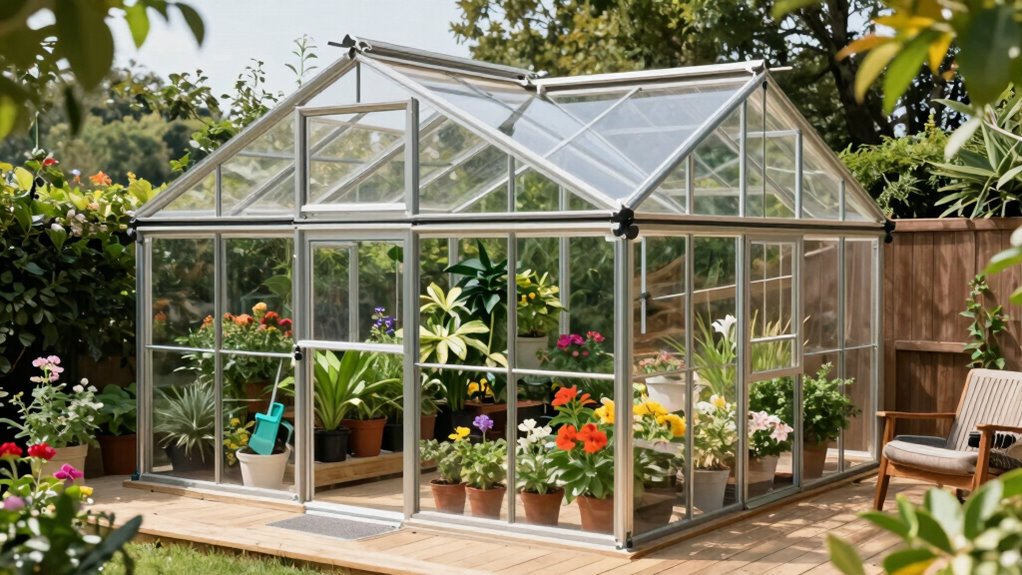

Before choosing a backyard greenhouse, ask yourself about your climate’s demands—can it handle harsh winters or heavy rainfall? Consider the materials’ durability, like aluminum frames or polycarbonate covers, to guarantee longevity and weather resistance. Think about the size and layout for easy access and proper airflow. Don’t forget to evaluate ventilation options to prevent mold and pests. Keep these questions in mind to find a greenhouse that suits your needs—more tips to help you decide lie just ahead.
Listen free for 30 days with Audible
Thousands of audiobooks and originals — cancel anytime.
As an affiliate, we earn on qualifying purchases.
Key Takeaways
- Does the greenhouse design suit your climate, including temperature fluctuations, humidity, and winter protection needs?
- Are the materials durable, weather-resistant, and easy to maintain or repair over time?
- Is the size and layout appropriate for current and future plant growth, with accessible maintenance and proper airflow?
- Does the greenhouse feature effective ventilation options to regulate temperature, humidity, and prevent mold or pests?
- Are the structural components and covering materials resistant to UV damage, rust, and extreme weather conditions?
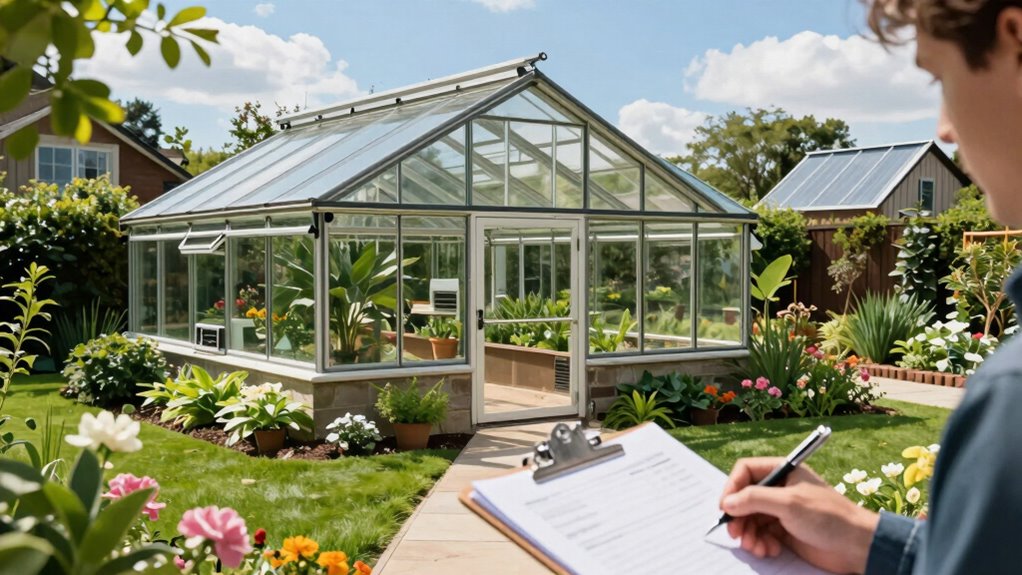
Choosing the right backyard greenhouse can considerably impact your gardening success, but with so many options available, it’s vital to ask the right questions beforehand. One of the first things you should consider is how well the greenhouse will handle your local climate. Will it withstand harsh winters, or is it better suited for milder seasons? Think about temperature fluctuations, humidity levels, and wind exposure in your area. If you live in a colder climate, you’ll want a structure that offers good insulation and protection against frost. Conversely, if your area experiences high temperatures or heavy rainfall, look for a greenhouse that can manage those conditions without excessive wear. Climate considerations aren’t just about keeping plants warm; they also involve guaranteeing proper ventilation and humidity control, which are essential for healthy plant growth. Additionally, it’s important to consider the material’s durability in various weather conditions to ensure your greenhouse remains functional over time. This durability can be enhanced by choosing materials that resist UV damage and extreme temperatures. Regular exposure to sunlight and weather fluctuations can degrade some materials, so selecting weather-resistant materials can significantly extend your greenhouse’s lifespan.
Material durability is another key factor. Greenhouses are an investment, so you want a structure that will last for years without needing constant repairs. Consider the materials used for framing, such as aluminum, galvanized steel, or wood. Aluminum and galvanized steel are typically more durable and resistant to rust and corrosion, especially in humid environments. Wood can look attractive but often requires more maintenance and may not be as long-lasting if not properly treated. The covering material is equally important—polymers like polycarbonate or polyethylene tend to be more durable and UV-resistant than traditional glass, which can crack or break more easily. The right combination of sturdy framing and resilient covering materials guarantees your greenhouse remains safe and functional through seasonal changes. When evaluating different options, also consider how easy it is to find replacement parts or repairs, which can extend the lifespan of your greenhouse.
Beyond climate considerations and material durability, you should also evaluate the greenhouse’s size and layout. Will it comfortably accommodate your current plants and future additions? Is there enough space for watering and maintenance? Think about ease of access, door placement, and whether the structure allows for proper airflow. An adequately ventilated greenhouse prevents issues like mold and pest infestations, helping maintain a healthy environment for your plants. Proper ventilation also contributes to maintaining consistent temperature control and humidity levels, essential for optimal plant growth. When planning your greenhouse, consider how adjustable features like vents or fans might improve its overall functionality and adaptability to changing conditions. A well-designed layout can make gardening tasks more efficient and enjoyable, especially as your plant collection grows.

AMERLIFE 12 x 10 x 8-Ft Hybrid Polycarbonate Greenhouse
- Quick-Connect Assembly: Assembly in about 6 hours with 3 DIYers
- Hybrid Polycarbonate Panels: Clear and translucent panels for impact and UV protection
- All-Weather Durability: Reinforced aluminum frame withstands high winds and snow
As an affiliate, we earn on qualifying purchases.
As an affiliate, we earn on qualifying purchases.
Frequently Asked Questions
How Much Does a Backyard Greenhouse Typically Cost to Maintain Annually?
A backyard greenhouse typically costs around $200 to $600 annually to maintain, depending on size and usage. Your cost considerations include heating, cooling, lighting, and occasional repairs. To keep expenses manageable, follow maintenance tips like regularly cleaning the glass, monitoring humidity levels, and insulating properly. Proper upkeep guarantees your greenhouse runs efficiently, saving you money in the long run while keeping your plants healthy year-round.
Are There Any Local Regulations or Permits Required for Installing a Greenhouse?
Imagine your backyard transformed into a lush oasis, but before you start building, check local regulations. You must determine permit requirements and zoning regulations, as some areas restrict structures or require permits for greenhouses. Ignoring these rules could lead to fines or forced removal. It’s vital to contact your local planning office or review municipal codes to guarantee your greenhouse complies with all legal requirements, making your dream both beautiful and lawful.
What Are the Best Materials for Insulation in Different Climate Zones?
For insulation in different climate zones, choose insulation types suited to your area’s needs. In colder climates, consider double-pane polycarbonate panels or foam board insulation, which retain heat effectively. In milder zones, bubble wrap or reflective foil insulation can help maintain temperature without excessive cost. Always consider climate considerations when selecting insulation, ensuring your greenhouse stays warm in winter and cool in summer, maximizing plant growth year-round.
How Can I Prevent Pests and Diseases in My Greenhouse?
To keep pests and diseases at bay in your greenhouse, you should practice diligent pest control and disease prevention strategies. Regularly inspect plants for early signs of trouble, remove infected foliage, and maintain good airflow. Use natural deterrents and introduce beneficial insects when appropriate. Keep your greenhouse clean and dry, and quarantine new plants. These proactive steps help create a healthy environment, reducing the risk of pest and disease issues.
What Are Some Energy-Efficient Options for Heating and Cooling?
You can boost your greenhouse’s energy efficiency by using passive solar design, which maximizes sunlight for heating naturally. Install solar ventilation systems to improve airflow and regulate temperature without relying heavily on electricity. Combining these options, you’ll reduce energy costs and keep your plants comfortable year-round. Consider adding thermal curtains or insulation to further enhance temperature control, making your greenhouse eco-friendly and cost-effective.
Conclusion
Before you commit to a backyard greenhouse, picture yourself tending lush, thriving plants beneath a sturdy frame, sunlight pouring through clear panels. Ask yourself if it fits your space, budget, and gardening goals. Envision mornings spent sipping coffee while watching your plants flourish, the smell of soil filling the air. With the right questions answered, you’ll create a vibrant sanctuary that turns your gardening dreams into a beautiful, blooming reality.
Baby shower & registry season Picks
baby registry must-haves
As an affiliate, we earn on qualifying purchases.