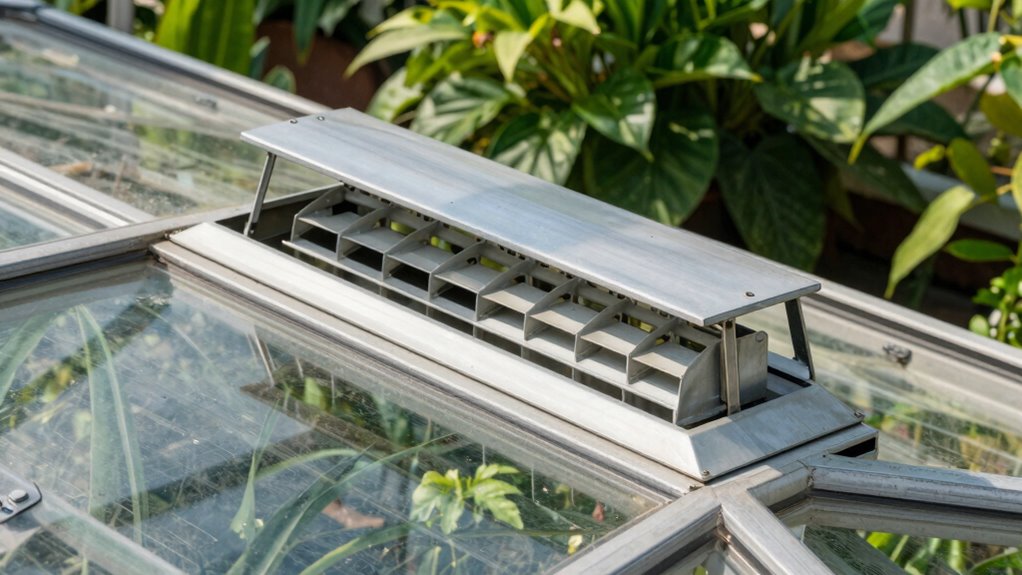

Roof vents help you control your greenhouse’s climate by facilitating airflow, releasing excess heat, humidity, and stagnant air. They pull in cooler air from below and vent out hot air at the top, preventing heat stress and humidity build-up. Properly installed, they work with other systems to create a breezy, stable environment that promotes healthy plant growth. Keep going to discover how these vents can truly transform your greenhouse conditions.

Get garden gear delivered free — and shop member deals
- Fast, free delivery on millions of items
- Access to Prime Big Deal Days deals on October 6–7
- Prime Video, Amazon Music and more included
Key Takeaways
- Roof vents facilitate effective airflow, helping to remove excess heat and humidity from the greenhouse.
- They enable hot air to escape, maintaining a balanced and stable internal climate.
- Roof vents work with other ventilation systems to optimize temperature and moisture control.
- Properly installed vents promote natural convection, improving overall ventilation efficiency.
- They help prevent disease and pest problems by reducing stagnant air and excess moisture.

Are roof vents essential for maintaining the ideal climate inside your greenhouse? Absolutely. They play a pivotal role in enhancing ventilation efficiency, which directly impacts your greenhouse’s overall environment. Without proper ventilation, your plants can struggle with excess heat, humidity, and stagnant air—all of which can hinder growth and increase the risk of disease. Roof vents help you control these factors by allowing hot air to escape and cooler, fresh air to enter. This process keeps the internal climate balanced, guaranteeing your plants thrive.
When it comes to temperature regulation, roof vents are your best allies. During hot days, the sun heats up your greenhouse, causing temperatures to rise quickly. Without a way to release that heat, your plants could suffer from heat stress, leading to stunted growth or even death. Roof vents open up to let out the warm air, preventing dangerous temperature spikes. Conversely, on cooler days or at night, these vents can be closed to retain heat, helping your greenhouse stay warm enough for sensitive plants. This dynamic exchange of air maintains a stable environment, regardless of the weather outside. Proper ventilation strategies are vital for maintaining this balance effectively. Additionally, understanding the role of airflow in greenhouse climate control can help optimize vent placement and operation. Incorporating natural convection principles can further improve the efficiency of your ventilation system. Recognizing the importance of air circulation can also enhance the overall climate management in your greenhouse.
The design and placement of roof vents are key to maximizing their effectiveness. When installed properly, they create a natural airflow pattern that pulls in cooler air from below while venting out the warmer air at the top. This convection process is essential for achieving high ventilation efficiency. You’ll notice that a well-ventilated greenhouse feels breezier and more comfortable, which supports healthy plant growth and reduces pests or mold problems caused by excess moisture. Roof vents also work in tandem with other ventilation systems, like side vents or exhaust fans, to create an ideal climate. Proper installation of roof vents and other ventilation components is crucial for optimal airflow.
In essence, roof vents do more than just let out heat—they actively shape the internal climate of your greenhouse. They enable you to fine-tune temperature regulation and improve ventilation efficiency, making your greenhouse a healthier, more controlled environment. Whether you’re growing delicate seedlings or tropical plants, these vents help you maintain the right conditions for optimal growth. When you consider how much they contribute to air circulation, humidity control, and temperature stability, it’s clear that roof vents are an indispensable feature for any serious greenhouse operation. Properly installed and managed, they guarantee your plants always have the best environment to flourish.
As an affiliate, we earn on qualifying purchases.
Frequently Asked Questions
Do Roof Vents Require Regular Maintenance or Cleaning?
Yes, roof vents do require regular maintenance and cleaning. You should follow a consistent ventilation efficiency and vent maintenance schedule to guarantee they operate properly. Dust, dirt, and debris can accumulate, hindering airflow and reducing effectiveness. By inspecting and cleaning your roof vents periodically, you prevent blockages, preserve ideal airflow, and extend their lifespan. This upkeep ultimately keeps your greenhouse climate balanced and healthy for your plants.
Can Roof Vents Prevent Overheating During Hot Days?
Think of roof vents as your greenhouse’s cooling heroes, preventing overheating during hot days. They boost ventilation efficiency by allowing hot air to escape and cooler air to enter, much like a natural breeze. This airflow regulation helps maintain a stable environment, safeguarding your plants from temperature spikes. Properly functioning roof vents are essential for overheating prevention, ensuring your greenhouse stays healthy and productive even under intense summer sun.
Are Roof Vents Suitable for All Greenhouse Sizes?
Roof vents are suitable for many greenhouse sizes, but you need to take into account size considerations and structural compatibility. Larger greenhouses benefit from multiple vents to ensure proper airflow and temperature control, while smaller structures might only need a few. Always check if your greenhouse’s frame can support the vents you choose, and guarantee they fit securely to avoid leaks or damage. Properly installed, roof vents enhance climate regulation regardless of size.
How Do Roof Vents Impact Humidity Levels Inside the Greenhouse?
A stitch in time saves nine, and proper roof vents considerably impact your greenhouse’s humidity control. They enhance airflow, helping to reduce excess moisture that can cause mold and plant diseases. By automatically opening and closing, roof vents promote consistent air exchange, keeping humidity levels balanced. This improved airflow enhancement creates an ideal environment for plant health, preventing the buildup of humidity that could otherwise compromise your greenhouse’s climate stability.
What Is the Ideal Placement for Roof Vents?
You should place roof vents near the peak or highest point of your greenhouse to optimize airflow and guarantee heat buildup. Proper vent placement ensures hot, stale air rises and escapes efficiently, promoting better airflow. To maximize ventilation, consider installing vents on opposite sides or at different heights for cross-ventilation. This setup helps maintain a balanced climate, reducing humidity levels and creating a healthier environment for your plants.
Conclusion
Now that you understand how roof vents control your greenhouse’s climate, imagine the perfect environment you could create—where plants thrive and pests stay at bay. But what if the real secret lies in how you use these vents during those critical moments of the day? As you watch the temperature and humidity dance beneath your roof, you realize the true power lies in your hands. Are you ready to reveal the full potential of your greenhouse?
Fall yard work Picks
leaf blowers
As an affiliate, we earn on qualifying purchases.