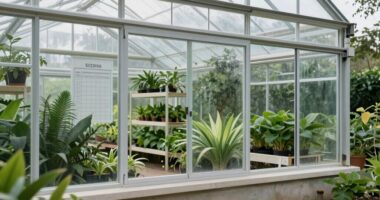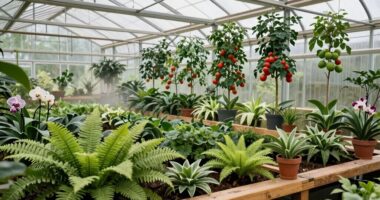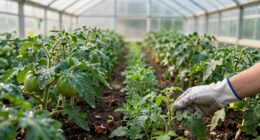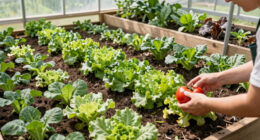
When setting up your greenhouse, ask about pest prevention, such as which pests are common in your region and how to keep them out with physical barriers or biological controls. Consider your ventilation options to guarantee good airflow, prevent humidity buildup, and reduce disease risks. Planning placement for vents and fans early helps avoid stagnant air and pest-friendly spots. Addressing these questions now creates a healthier environment; learn more to ensure your setup is both pest-free and efficient.
Key Takeaways
- What are the optimal ventilation strategies to ensure good airflow and control humidity?
- How should vents and fans be positioned for effective air circulation?
- Which physical barriers and biological controls can prevent pest entry and infestation?
- How can early pest prevention planning reduce future pest and disease issues?
- What environmental factors should be considered for a pest-resistant, sustainable greenhouse setup?
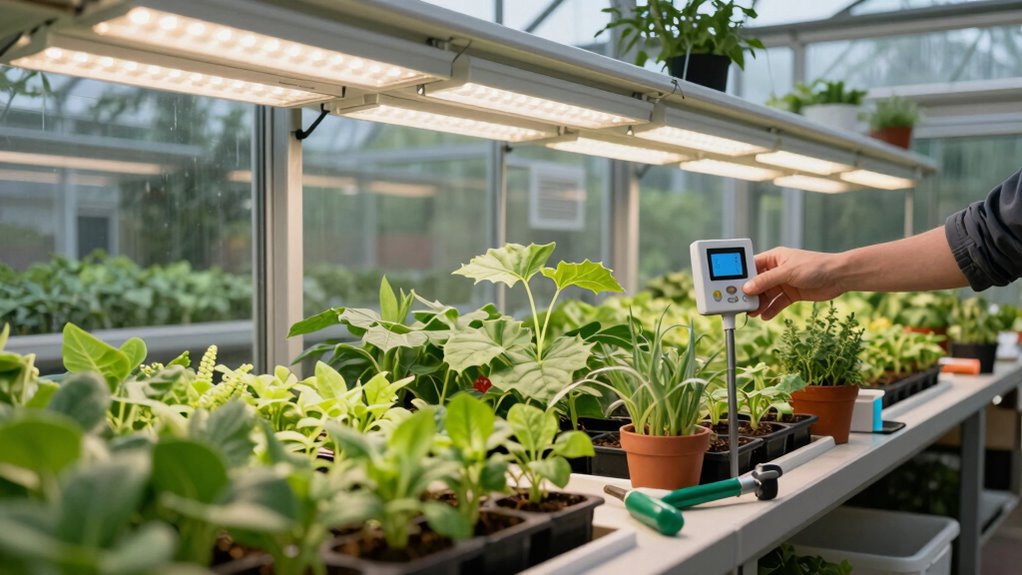
Thinking about setting up a greenhouse can feel overwhelming, but asking the right questions makes the process much easier. One of your first concerns should be pest control. You want to create an environment that discourages pests from taking hold but also allows for easy management if they do appear. Consider how you’ll prevent common issues like aphids, whiteflies, and fungus gnats. Will you use physical barriers like insect screens at vents and doorways? Or will you incorporate biological controls, such as beneficial insects or organic sprays? Planning pest control early helps you choose the right materials and placement for your greenhouse, reducing the risk of infestations that could damage your plants. Understanding biodiversity and integrating natural pest predators can also enhance your pest management strategy. Additionally, knowing which pests are prevalent in your region can help you tailor your approach more effectively. Incorporating regional pest knowledge into your planning can further improve your pest prevention methods.
Ventilation strategies are equally essential. Proper airflow keeps temperatures consistent, prevents humidity buildup, and minimizes disease risks. Ask yourself how you’ll achieve good ventilation. Will you rely on passive methods, such as side vents that open automatically with temperature changes? Or do you prefer active systems like exhaust fans and circulating fans? Knowing how you’ll manage airflow influences your greenhouse’s design and placement. For example, positioning vents and fans correctly ensures fresh air circulates evenly, avoiding stagnant pockets that could foster mold or pests. Good ventilation also helps control pests indirectly by reducing humidity, which many pests and diseases thrive in. Properly designed ventilation systems can significantly support your pest control efforts and promote plant health.
Planning your greenhouse with these questions in mind helps you set up a space that’s both productive and manageable. By proactively addressing pest control and ventilation strategies, you reduce potential problems before they start. This foresight saves you time, effort, and resources down the line. It also provides peace of mind, knowing you’ve created a healthy environment for your plants to thrive. Focusing on these foundational questions early on makes the entire setup process smoother, ensuring your smart garden becomes a sustainable, pest-resistant oasis.

8-Pack 2" Circular Vent Covers, Steel Mesh Screen,Circular Screen with Tab Fasteners for Pet Cages (Reptiles/Birds) and Storage Shelves, Home, Garage & Industrial Airflow
- Insect-proof Metal Mesh: Blocks insects effectively with high-density weave
- Versatile Application: Suitable for pet cages, storage, and ventilation
- Rust-proof and Durable: Resistant to rust for long-lasting use
As an affiliate, we earn on qualifying purchases.
As an affiliate, we earn on qualifying purchases.
Frequently Asked Questions
What Is the Ideal Greenhouse Size for Beginners?
For beginners, a 6×8-foot greenhouse is ideal, offering enough space for diverse plants while remaining manageable. You’ll want to focus on proper plant watering and soil preparation to guarantee healthy growth. This size allows easy access for watering, monitoring, and adjusting your plants. Additionally, it’s small enough to learn the basics of greenhouse management without feeling overwhelmed, making it perfect for new gardeners starting their green thumb journey.
How Do I Choose the Best Location for My Greenhouse?
You should choose a location that offers ideal climate control and good ventilation design, which are essential for healthy plant growth. Investigate whether the site receives ample sunlight—ideally six hours or more daily—and is shielded from harsh winds. A south-facing spot is often best. Make certain of easy access to water and electricity, and avoid low-lying areas prone to frost or flooding to create a stable environment for your greenhouse.
What Are the Most Energy-Efficient Heating Options?
You should consider solar heating to maximize energy efficiency, as it harnesses free, renewable energy from the sun. Installing thermal curtains can also help retain heat overnight, reducing energy use. Combining these options allows you to maintain consistent temperatures without relying heavily on electric or gas heaters. By integrating solar heating with thermal curtains, you create an eco-friendly, cost-effective heating system that keeps your greenhouse warm and your plants healthy.
How Do I Prevent Pests Inside the Greenhouse?
To prevent pests inside your greenhouse, start with regular greenhouse sanitation—remove dead leaves and debris to eliminate hiding spots. Introduce pest repellent plants like marigolds or basil, which naturally deter insects. Keep doors and vents closed when not in use, and monitor plants regularly for signs of pests. Using these strategies together creates a hostile environment for pests, helping you keep your greenhouse healthy and productive.
What Are the Costs Associated With Greenhouse Setup?
The costs for setting up a greenhouse vary based on size, materials, and features. You should conduct a cost analysis to estimate expenses like framing, glazing, ventilation, and shelving. Budget planning helps you prioritize essentials and avoid overspending. Expect to spend anywhere from a few hundred dollars for a small DIY setup to several thousand for a larger, professional greenhouse. Planning ahead guarantees you stay within your financial limits and create a functional space.
Conclusion
Just like Da Vinci envisioned perfect harmony in nature, your greenhouse setup is your masterpiece. By asking the right questions early, you lay the foundation for a thriving garden that’s both resilient and vibrant. Remember, every wise gardener’s journey begins with curiosity and careful planning—so don’t rush. With patience and insight, you’ll create a sanctuary where plants flourish and your green thumb truly shines. Start smart, and let your garden’s story unfold beautifully.