TL;DR

Get garden gear delivered free with Prime
- Fast, free delivery on millions of items
- Prime Video, Amazon Music and more included
- Member-only deals all year
A report by Amateur Gardening describes ways people without gardens can compost food scraps, including a small balcony bin, a wormery or countertop bokashi system. It also suggests shared outdoor spaces, while noting that the best method depends on available space and local rules.
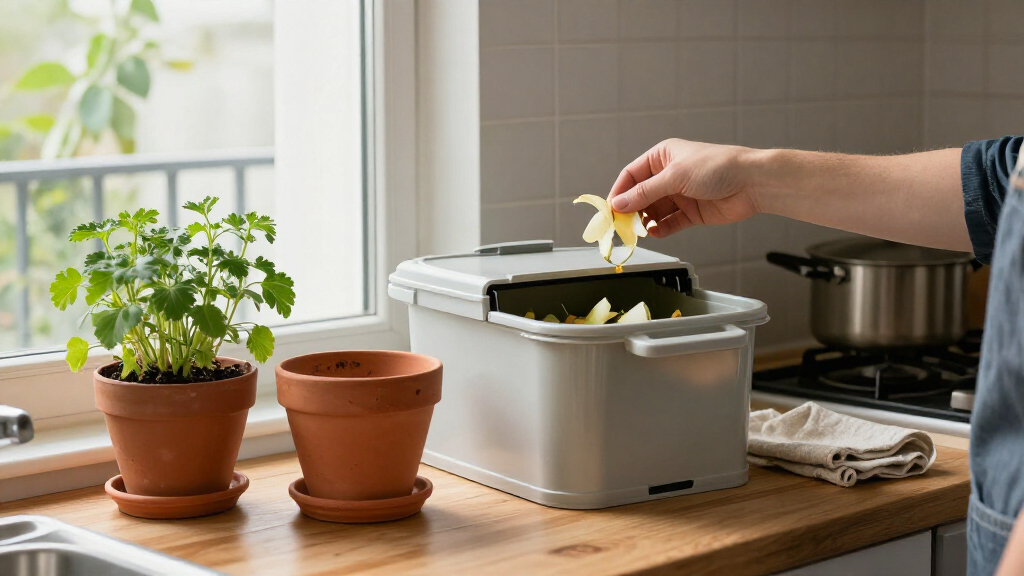
People without gardens can still compost food scraps, using options such as a small balcony bin, a wormery or a countertop bokashi system, according to a report by Amateur Gardening. The guidance matters to flat-dwellers and others with limited outdoor space who want to recycle kitchen waste and make material for pots and planters, perhaps with a compost bin suited to kitchen scraps.
Gardener Chris Collins, writing from his experience living in a central London flat, says he uses a 20-litre compost bin on his balcony. He describes mixing brown materials, such as shredded paper, with green materials, such as kitchen waste, in roughly equal proportions. This small-bin approach may suit homes with an outdoor corner, but the report does not provide a full equipment list or instructions for managing every type of container.
A wormery, or vermiculture system, is another option. Collins describes a home-made design using three stacking trays: holes are drilled in two trays for airflow and drainage, while the bottom tray remains unperforated to collect liquid. The upper working tray is started with damp soil, compost or shredded paper, then receives worms and suitable kitchen scraps. The report says brandling, red or tiger worms can be bought from fishing shops.
For a countertop method, the report recommends bokashi composting, a closed, oxygen-free process that uses an airtight bin with a tap and an inoculant such as bran. The treated material is described as “pre-compost” and can be placed at the bottom of containers to break down further. The article also suggests looking into a shared ground-level area, such as a community space or car park, where residents might use bins designed for hard surfaces or organize a community composting scheme.
Options for Homes Without Outdoor Space
Food scraps can be difficult to compost when a home has no garden, and residents may have limited room for a conventional outdoor heap. The approaches outlined in the report offer different scales of use: a compact bin or wormery for a balcony, bokashi for a kitchen, and a shared system where residents can coordinate access and upkeep.
The practical benefit is a possible source of material for pots and planters, as well as a way to keep suitable organic scraps in a composting process rather than treating them as ordinary rubbish. These are options, not guarantees: results depend on how the system is managed, what materials are added and whether the household or building can accommodate it.
Products Worth Considering

Husqvarna 525P4S Gas-Powered Pole Saw with 12-Inch Bar

Greenworks 40V Cordless Leaf Blower/Vacuum with 5.0 Ah Battery and Charger

EGO POWER+ LB6151 Cordless Leaf Blower with 2.5Ah Battery and Charger
As an affiliate, we earn on qualifying purchases.
Three Small-Space Composting Methods
The report presents a small compost bin as the most direct option where a balcony or similar spot is available. Collins says he uses a 50:50 balance of brown and green material. For a wormery, the article advises chopping scraps into smaller pieces and lists vegetable peelings, crushed eggshells, coffee grounds, tea bags and torn egg boxes as possible additions. It also recommends keeping greens and browns in equal proportions.
Collins says that after eight to 12 weeks, crumbly worm compost should be collecting in the middle tray, with liquid gathering below. The article says that liquid can be used as plant fertilizer when diluted; it does not specify a dilution ratio. Well-rotted leaves can also be added to potting compost, but the report recommends composting them separately, for example in loosely tied plastic sacks stored for a year or two. It advises getting the landowner’s permission before collecting leaves.
The report points readers to Garden Organic for more information about bokashi and composting. Its advice is based on the author’s experience and practical suggestions; it is not presented as a survey of local waste rules or a comparison of the costs and performance of different systems.
“Don’t let a lack of space put you off recycling your food scraps.”
— Chris Collins, writing in Amateur Gardening
Rules and Results Vary by Home
The report does not establish whether every flat or landlord permits balcony bins, outdoor wormeries or shared composting. Residents should check building rules and local arrangements before setting up a system in a communal space. It also gives no cost estimates, detailed troubleshooting advice or guarantee that compost will be ready within a particular timeframe.
For bokashi, the article describes the process and intended use of the treated material but does not set out a complete step-by-step guide or explain how every household should handle the contents after fermentation. The guidance on diluted wormery liquid likewise gives no dilution rate. These details may vary by product and setup, so readers should consult the equipment instructions or a specialist source for specific directions.
Choose a Setup and Check Access
Readers can start by matching the method to the space they have: a small bin or wormery for a suitable balcony, or a countertop bokashi bin where outdoor equipment is not allowed. Before installing anything outside, check with the landlord or building manager; for a shared site, agree who will provide the bin, maintain it and use the resulting compost.
For further guidance, the report directs readers to Garden Organic, including its bokashi information. Anyone collecting leaves should ask the landowner first. The source provides no later update or scheduled milestone, so the next steps depend on residents’ space, permissions and choice of system.
Key Questions
Can I compost if I live in a flat with no garden?
Yes. The Amateur Gardening report describes small balcony bins, wormeries and countertop bokashi as possible options. Which one fits depends on your space and any building rules.
What can I put in a wormery?
The report lists vegetable peelings, crushed eggshells, coffee grounds, tea bags and torn egg boxes. It recommends chopping scraps into small pieces and keeping a roughly equal balance of green and brown materials.
How long does a wormery take to produce compost?
Collins says crumbly worm compost may appear in the middle tray after eight to 12 weeks. This is guidance from the report, not a guaranteed timeframe for every setup.
What is bokashi composting?
Bokashi is described in the report as a closed, oxygen-free process using an airtight bin and an inoculant such as bran. The treated material is pre-compost and can break down further in a container.
Can I collect nearby leaves for compost?
The report says well-rotted leaves can be used in potting compost and suggests composting them separately. Ask the landowner’s permission before collecting them.
Source: amateurgardening.com