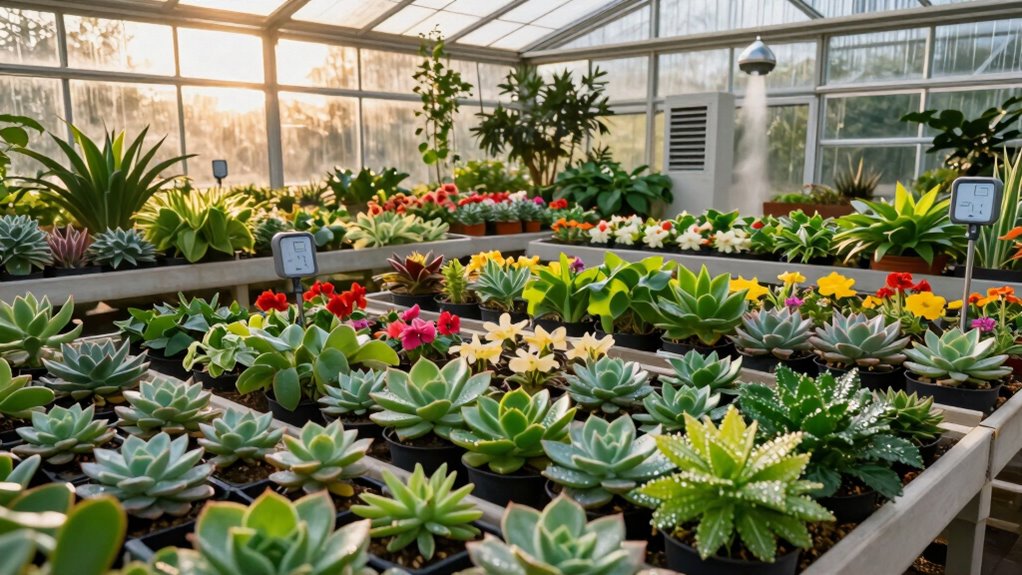

To keep seasonal changes from causing chaos in your greenhouse, regularly monitor and adjust temperature, humidity, and airflow to suit plants’ needs. Keep your space clean, sanitize tools, and remove debris to prevent disease buildup. Use organic pest controls and physical barriers to manage pests early. Stay vigilant about environmental conditions and adapt your practices as seasons shift. Mastering these proactive strategies now will help you maintain a healthy, productive greenhouse year-round.
Key Takeaways
- Regularly monitor and adjust temperature and humidity to prevent swings and create stable conditions.
- Implement good sanitation practices to reduce disease and pest habitats during seasonal transitions.
- Use proper ventilation and airflow management to avoid damp, stagnant air that fosters problems.
- Quarantine new plants and stay informed about seasonal pest trends for proactive prevention.
- Tailor management practices seasonally, including watering, shading, and pest control, to maintain a balanced greenhouse environment.

As the seasons shift, greenhouses can quickly become chaotic if you don’t adjust your management practices, leading to temperature swings, humidity issues, and stressed plants. To maintain a healthy environment, you need to stay vigilant about plant health and environmental control. One key aspect is plant disease prevention, which becomes especially important during seasonal transitions when plants are more vulnerable to infections. Regularly inspect your plants for early signs of disease, such as discolored leaves, spots, or mold. Keep your greenhouse clean by removing fallen debris and dead plant material that can harbor pathogens. Using sterilized tools and proper sanitation routines reduces the risk of disease spread. Controlling humidity is essential, as high moisture levels encourage fungal growth and pathogen proliferation. Use fans and ventilation to maintain proper airflow and avoid overly damp conditions. If you notice persistent humidity issues, consider installing dehumidifiers or adjusting your watering schedules, ensuring plants receive only what they need without excess moisture. Maintaining optimal air circulation is vital for preventing disease and pest problems, especially during seasonal transitions. Pest management strategies also play an important role in preventing chaos as the seasons change. Pests tend to thrive when environmental conditions fluctuate, so proactive measures are essential. Start by monitoring your plants closely, using sticky traps and regular visual inspections to catch early infestations. Implement integrated pest management (IPM) techniques that combine biological controls, such as beneficial insects, with physical barriers and organic treatments. Quarantine new plants before introducing them to your greenhouse to prevent introducing pests. Keep your greenhouse clean and tidy, removing weeds and debris that can serve as pest habitats. Additionally, maintaining proper watering and avoiding overwatering can significantly reduce pest attraction and plant stress. Proper watering practices also help reduce disease susceptibility, which is heightened during seasonal changes. When applying organic pesticides or insecticidal soaps, follow instructions precisely to avoid stressing your plants further. Temperature regulation is another essential factor. As outside temperatures fluctuate, you need to confirm your greenhouse remains within ideal ranges for your plants. Use heaters, cooling systems, or shade cloths as needed, and regularly monitor temperature levels with reliable gauges. Proper airflow, humidity control, and temperature stability help keep plants healthy and resilient against disease and pests. Additionally, staying informed about seasonal pest trends can help you anticipate and prevent outbreaks more effectively. By staying proactive and adjusting your management practices seasonally, you prevent minor issues from escalating into full-blown chaos. Consistent monitoring, combined with good sanitation and integrated pest management strategies, creates a balanced environment where plants can thrive despite the changing seasons. Ultimately, your attentiveness and timely interventions are what keep your greenhouse productive and free of preventable problems.

BEDRED Dehumidifier, 95OZ Dehumidifier for Home 1000 sq ft – Quiet with Auto Shut Off & Relaxing 7 Color Ambient Light, Ideal for Livingroom, Bedroom, Basement (Black)
- Cooling Technology: Thermoelectric dehumidification for moisture removal
- Auto Shutoff: Automatically powers down when tank is full
- Ambient Lighting: 7-color soothing LED light for ambiance
As an affiliate, we earn on qualifying purchases.
As an affiliate, we earn on qualifying purchases.
Frequently Asked Questions
How Do I Prevent Pests During Seasonal Transitions?
To prevent pests during seasonal shifts, you should prioritize pest prevention by maintaining cleanliness and removing debris that attract pests. Regular pest inspections help you catch issues early before they escalate. Use natural barriers or repellents, and guarantee proper ventilation to reduce humidity, which pests love. Staying vigilant and proactive with pest prevention and inspections keeps your greenhouse healthy and minimizes pest-related chaos during seasonal changes.
What Are the Best Ventilation Practices for Changing Seasons?
To optimize ventilation during seasonal changes, you should regularly open vents and windows to promote fresh air exchange, which helps prevent excess humidity and maintain ideal light levels. Use exhaust fans or exhaust openings to control humidity, especially when shifting to wetter seasons. Balancing airflow ensures your plants receive consistent light and humidity, reducing stress and disease risk. Proper ventilation is essential for a healthy, thriving greenhouse year-round.
How Can I Automate Temperature Adjustments Effectively?
You can automate temperature adjustments effectively by installing a smart climate control system that responds to real-time data. Incorporate soil amendments to improve plant health, which helps maintain stable temperatures. Use light optimization strategies, such as automated shade adjustments and supplemental lighting, to regulate heat and light levels. These combined approaches guarantee your greenhouse stays within ideal temperature ranges, reducing manual interventions and keeping your plants thriving through seasonal changes.
What Are Common Signs of Seasonal Stress in Plants?
You’ll notice signs of seasonal stress in your plants, like slowed growth or leaf drop, which often indicate plant dormancy. Yellowing leaves and poor flowering can also signal nutrient deficiencies. During seasonal shifts, watch for these symptoms and adjust care accordingly. By maintaining proper nutrient levels and understanding dormancy periods, you help your plants adapt smoothly, preventing stress from turning into bigger health issues.
How Often Should I Modify Watering Schedules Seasonally?
You should modify your watering frequency with seasonal adjustments, typically watering less in winter and more during the hot summer months. Check your plants daily and adjust based on soil moisture; if it’s dry an inch below the surface, it’s time to water. During spring and fall, monitor closely, as their needs fluctuate. Consistent adjustments help prevent overwatering or underwatering, keeping your plants healthy through seasonal changes.
Conclusion
As you navigate seasonal shifts, think of your greenhouse as a delicate symphony, each change a note that must be carefully tuned. With mindful adjustments, you become the conductor, guiding nature’s rhythm rather than letting it run wild. Embrace each season’s unique song, keeping chaos at bay. When you master this harmony, your greenhouse transforms into a sanctuary—where growth flows smoothly, and the beauty of change becomes a dance, not a disorder.