To protect warm-season crops like tomatoes and peppers during fall nights, aim to keep temperatures above 50°F. Once temperatures dip below 55°F, growth slows, and risks of frost damage increase. Use covers, mulching, or row covers when temperatures approach 45°F to prevent injury. Monitoring with thermometers helps you act quickly. Continue exploring for more simple tips on how to extend your crop’s safety during chilly nights.
Key Takeaways
- Keep night temperatures above 50°F to ensure optimal growth for warm-season crops like tomatoes and peppers.
- Use covers or row blankets when temperatures drop between 45-50°F to protect sensitive plants.
- Avoid planting tender crops if forecasted temperatures fall below 40°F to prevent cold injury.
- Monitor real-time temperatures regularly, especially near freezing, to determine when protective actions are necessary.
- Implement mulching and microclimate techniques to maintain warmer soil conditions during cooler fall nights.
Why Fall Night Temperatures Matter for Warm-Season Crops

Understanding why fall night temperatures matter for warm-season crops is essential because these temperatures influence crop health and yield. Cooler nights can slow down plant growth, affect soil moisture levels, and increase vulnerability to pests or diseases. When nights drop below critical temperatures, plants struggle to maintain healthy metabolic functions. This can also impact soil moisture, as lower temperatures reduce evaporation but may lead to excess moisture that harms roots. Proper crop rotation becomes vital during this period, helping prevent soil degradation and managing moisture levels effectively. By paying attention to fall night temperatures, you can adjust your crop rotation strategies and irrigation practices, ensuring your crops remain healthy and productive through the cooler months. This proactive approach helps protect your investment and maximizes yield potential.
How to Monitor Fall Night Temperatures Effectively
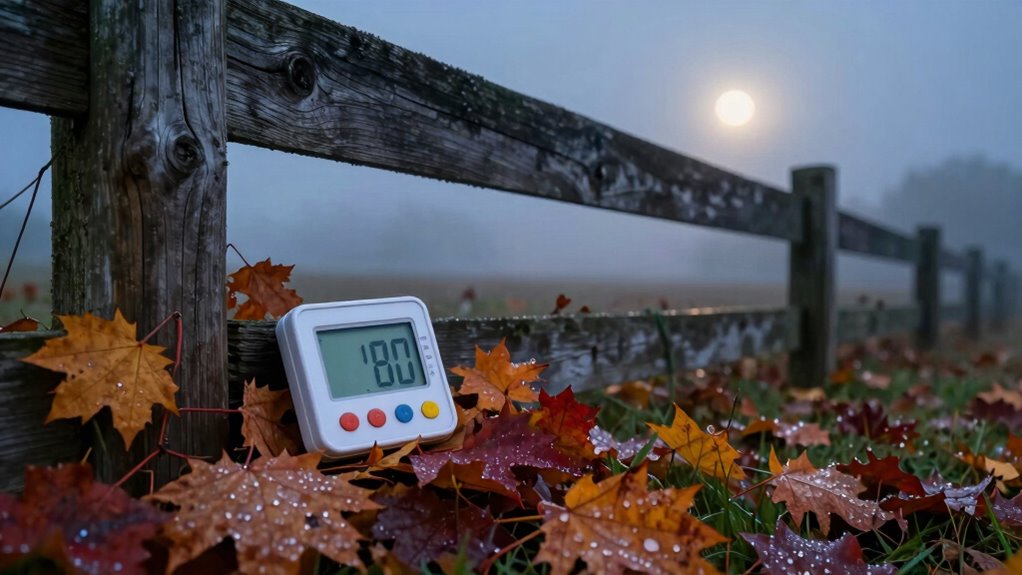
Monitoring fall night temperatures accurately allows you to make informed decisions about your crops and soil management. To do this effectively:
- Place digital or analog thermometers at crop canopy height to get precise readings.
- Check temperatures regularly, especially during cold nights, to spot drops below critical thresholds.
- Record soil moisture levels alongside temperature data, since moisture influences temperature fluctuations and pest activity.
- Use temperature alerts or apps to receive real-time updates, so you can act quickly if temperatures threaten your crops.
- Implement sustainable farming practices that take into account local climate patterns to better protect your crops during cooler nights.
Consistent monitoring helps you adapt pest management strategies and optimize soil conditions, ensuring your crops stay healthy through cooler nights. Keeping a close eye on both soil moisture and temperatures allows you to protect your crops effectively and prevent damage from unexpected cold snaps.
What Temperatures Threaten Your Tomatoes and Peppers?
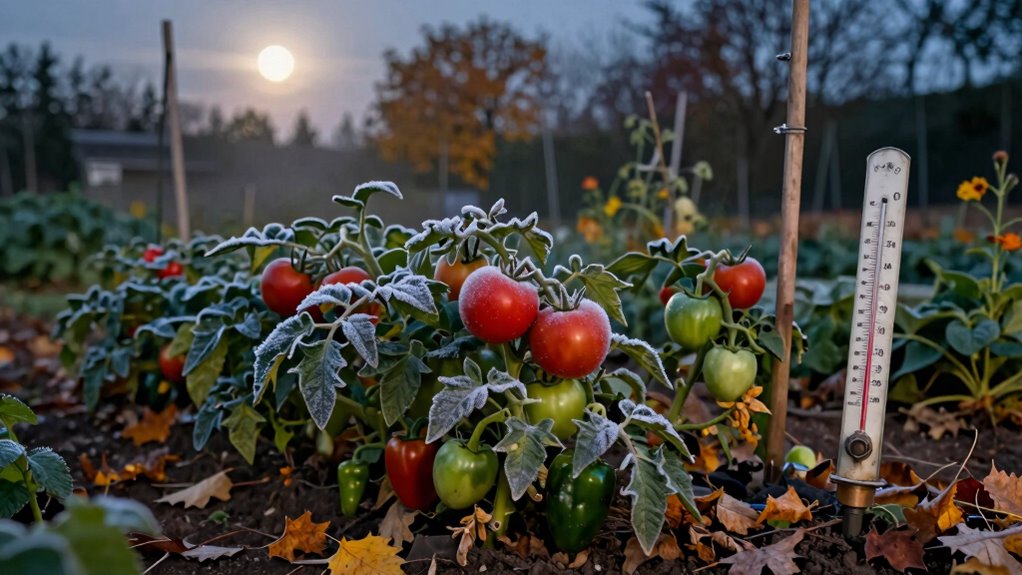
Tomatoes and peppers are sensitive to temperature drops, and prolonged exposure to cold can severely impact their growth and fruit production. When nighttime temperatures fall below 55°F, you risk stunting growth and increasing vulnerability to diseases. Cold soil moisture can exacerbate problems, as wet, chilly soil hampers root development and fosters pests like root maggots. Keep an eye on soil moisture levels, ensuring proper drainage and avoiding overly saturated conditions. Additionally, lower temperatures can weaken plant defenses, making pest control more challenging. Regularly inspect your plants for signs of pest activity, especially during cold snaps, and take preventive measures. Maintaining ideal conditions helps protect your crops from temperature-related stress, ensuring healthy growth and a bountiful harvest. Effective storytelling can also be used to motivate timely actions and foster community support around crop protection efforts.
Easy Ways to Keep Crops Warm During Cold Nights

When nights turn cold, you can easily protect your crops by using simple methods that trap heat and keep temperatures stable. First, adjust your irrigation techniques by watering in the late afternoon; moist soil retains heat longer overnight. Second, use crop rotation to plant hardier varieties after sensitive crops, minimizing cold damage. Third, implement windbreaks or plant wind-resistant species around your crops to reduce heat loss. Fourth, consider mulching with straw or compost, which insulates roots and maintains warmth. Additionally, utilizing floating on water techniques such as placing floating covers can help create a barrier against the cold air and preserve warmth around your plants. These straightforward strategies help create a microclimate that shields your plants from damaging cold, ensuring better growth and yield. By combining smart irrigation, crop planning, physical barriers, and water-based methods, you keep your crops warm during cold nights effectively.
When and How to Use Coverings and Frost Protection

To protect your crops effectively, start by closely monitoring nighttime temperatures. When temperatures drop near freezing, apply coverings promptly using materials that trap heat and allow airflow. Choosing the right covering depends on the forecast and your plants’ needs, so stay informed to prevent frost damage. Additionally, utilizing proper insulation techniques can further enhance protection against sudden temperature drops.
Monitoring Night Temperatures
Monitoring night temperatures is essential for protecting your garden from frost damage, especially during unpredictable spring and fall nights. To do this effectively:
- Check local weather forecasts regularly to anticipate temperature drops.
- Use a thermometer or digital min/max device in your garden for real-time data.
- Keep an eye on soil moisture, as moist soil can influence frost formation and plant susceptibility.
- Be alert to pest activity, since cold nights can suppress pests but also stress plants, making them vulnerable.
- Be aware that essential oils for frost protection can be used in some cases to help plants resist cold stress by creating a protective barrier around them.
Timely Covering Applications
Knowing when to apply coverings can make the difference between safeguarding your plants and risking frost damage. Pay attention to the crop variety, as some are more frost-sensitive than others. When night temperatures approach the critical threshold, typically around 32°F, it’s time to act. Check soil moisture levels; moist soil conducts heat differently, impacting how quickly temperatures drop near the surface. If the soil is dry, coverings can help trap heat and protect roots. Apply coverings just before temperatures dip below the threshold, ensuring they are secure and snug to prevent heat loss. Use lightweight materials like row covers or blankets, but remove them during the day to prevent overheating. Timely, strategic covering helps maintain ideal conditions and minimizes frost risk for your warm-season crops.
Selecting Effective Materials
Choosing the right materials for frost protection is essential to effectively shield your plants from cold temperatures. Your goal is to select coverings that suit your crop varieties and local conditions. First, consider using mulch materials, such as straw or shredded leaves, to insulate soil and roots. Second, choose lightweight row covers or fabric blankets that trap heat while allowing airflow. Third, evaluate the durability of materials—some are better for short-term use, others for extended protection. Fourth, match coverings to your crop’s growth stage; young plants need more insulation. Proper selection guarantees your warm-season crops stay above critical temperatures. By understanding these factors, you can optimize frost protection and extend your growing season confidently. Additionally, referencing UST projector rankings can help you create an optimal environment for plant growth indoors, similar to how effective projection setups enhance home theaters.
Signs Your Crops Are Getting Cold Damage
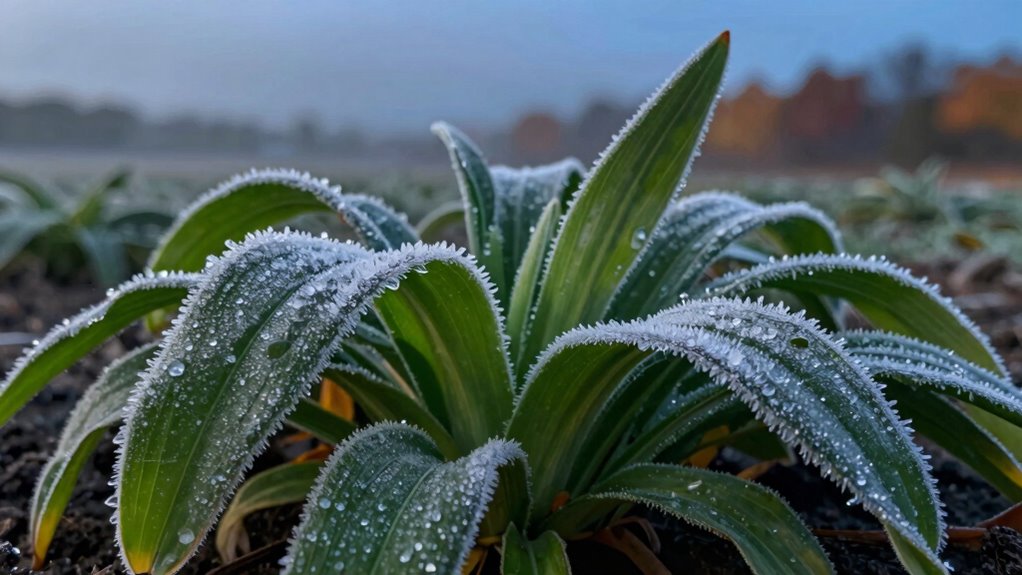
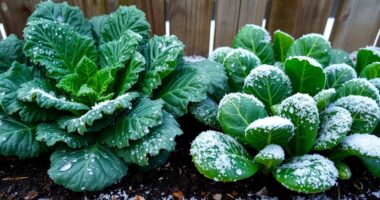
When temperatures drop unexpectedly during fall nights, your crops can quickly show signs of cold damage. Look for cold injury symptoms such as wilted or drooping leaves, which may appear water-soaked or translucent. Frost damage often causes tissue to turn brown or black, especially on exposed parts like leaves and stems. You might notice that new growth becomes stunted or fails to develop properly. In some cases, you’ll see cell rupture, leading to mushy, decayed areas. If you harvest affected plants, they may feel unusually soft or slimy. Recognizing these signs early helps you determine if the cold has caused frost damage or other cold injury, allowing you to decide whether to take protective actions or adjust your crop management. Proper work environment can help monitor and respond to these changes more effectively.
Adjusting Your Harvest Schedule to Minimize Cold Risks

To minimize cold risks during fall, adjusting your harvest schedule is essential. First, monitor fall night temperatures regularly to identify when they approach damaging levels. Second, plan to harvest crops before temperatures dip too low, especially after soil testing reveals soil is cooling. Third, implement crop rotation strategies that favor hardy varieties late in the season, reducing vulnerability. Fourth, keep soil warm by covering beds or mulching, which helps crops withstand cold snaps longer. Fifth, understanding the climate zone of your area can help you anticipate temperature drops and plan accordingly. Adjusting your schedule involves balancing crop maturity and weather forecasts; don’t wait too long. Regular soil testing ensures you’re aware of soil temperature trends, guiding timely harvests. By staying attentive and flexible, you reduce cold damage and protect your warm-season crops effectively.
Tips to Extend Your Growing Season Using Temperature Awareness

By paying close attention to temperature patterns, you can effectively extend your growing season and maximize your harvest. Monitoring fall night temperatures helps you make informed decisions about crop selection and harvest timing. Use protective measures like row covers or cold frames when temperatures approach critical thresholds. Select crops with higher cold tolerance to prolong harvest windows. Consider staggering planting dates to adapt to variable temperatures. Keep a temperature log to identify trends and plan accordingly. Recognizing art care and understanding how temperature affects different crops further enhances your ability to adapt successfully. Here’s a quick reference:
| Temperature Range | Recommended Action | Suitable Crops |
|---|---|---|
| Above 50°F | Continue normal growth | Tomatoes, peppers |
| 45-50°F | Use covers to protect | Leafy greens, carrots |
| 40-45°F | Limit exposure, harvest early | Herbs, root vegetables |
| Below 40°F | Protect or pause planting | Tender annuals |
| Freezing | Cover or bring indoors | Sensitive crops |
Frequently Asked Questions
What Are the Long-Term Effects of Cold Stress on Crop Yields?
Cold stress can lead to frost damage, which weakens plant tissues and hampers growth. This damage often results in yield reduction over time, as crops struggle to recover and produce less fruit or grain. You might notice smaller harvests or lower quality produce, especially if cold stress occurs repeatedly. To minimize long-term effects, you should implement protective measures like frost covers and timely planting, helping your crops withstand early cold snaps.
How Do Soil Temperatures Influence Plant Frost Tolerance?
Think of soil temperature as a cozy blanket, shielding your plants from frost’s icy grip. When soil warms, it enhances temperature buffering, giving roots a fighting chance against cold snaps. A healthy soil microbiome acts like a vigilant guardian, improving nutrient flow and plant resilience. Cooler soil reduces frost tolerance, making plants more vulnerable. By maintaining ideal soil temperatures, you strengthen your crops’ defenses, ensuring they weather winter’s chill with greater ease.
Can Certain Crop Varieties Withstand Lower Night Temperatures?
You can select crop varieties with higher genetic resistance to lower night temperatures, increasing their frost tolerance. By choosing the right crop variety suited for cooler fall nights, you improve your chances of protecting your crops from damage. Focus on crop variety selection to find those bred for cold resilience, ensuring they withstand lower temperatures and give you a better harvest even as night temperatures drop.
How Does Humidity Interact With Temperature to Affect Frost Risk?
Imagine a chilly autumn night where high humidity surrounds your crops. You’ll find that humidity impact can increase frost risk because moist air cools faster and holds frost longer. Conversely, low humidity lessens frost risk by allowing temperatures to drop without as much moisture. So, you must monitor both temperature and humidity, as high humidity markedly amplifies frost risk, threatening your crops’ health and yield.
Are There Natural Methods to Improve Crop Cold Resilience?
You can naturally boost your crop’s cold resilience through companion planting and mulching techniques. Planting cold-tolerant species alongside sensitive crops creates a microclimate that retains warmth and shields against frost. Mulching with straw or leaves insulates roots and maintains soil temperature, reducing frost damage. These methods work together to strengthen your plants’ defenses, helping them withstand lower temperatures during fall nights without relying on artificial protections.
Conclusion
As the nights grow colder, your warm-season crops face an invisible threat. Will you catch the warning signs in time or watch your harvest slip away? By staying vigilant and ready to act, you can safeguard your plants against unexpected frosts. Imagine the last glow of sunset, the air turning crisp—will you be prepared when the cold finally arrives? Stay alert, protect wisely, and keep your bounty safe from the icy grip of fall nights.