TL;DR
Traditional incandescent Christmas lights can add a few degrees of warmth around a potted plant when used inside a covered, ventilated structure, according to university guidance and cold-frame trials. LED strands produce too little heat for frost protection. Outdoor-rated equipment, a GFCI-protected outlet and safe clearance from plants and covers are essential; lights are not a substitute for shelter during prolonged freezes.
Traditional incandescent Christmas lights can provide limited extra warmth for vulnerable potted plants during a brief cold snap, while LED strands are not an effective frost-protection method, according to university guidance and cold-frame testing. The approach can help protect plants such as container citrus, but it requires outdoor-rated electrical equipment and a cover held safely away from hot bulbs.

Get garden gear delivered free with Prime
- Fast, free delivery on millions of items
- Prime Video, Amazon Music and more included
- Member-only deals all year
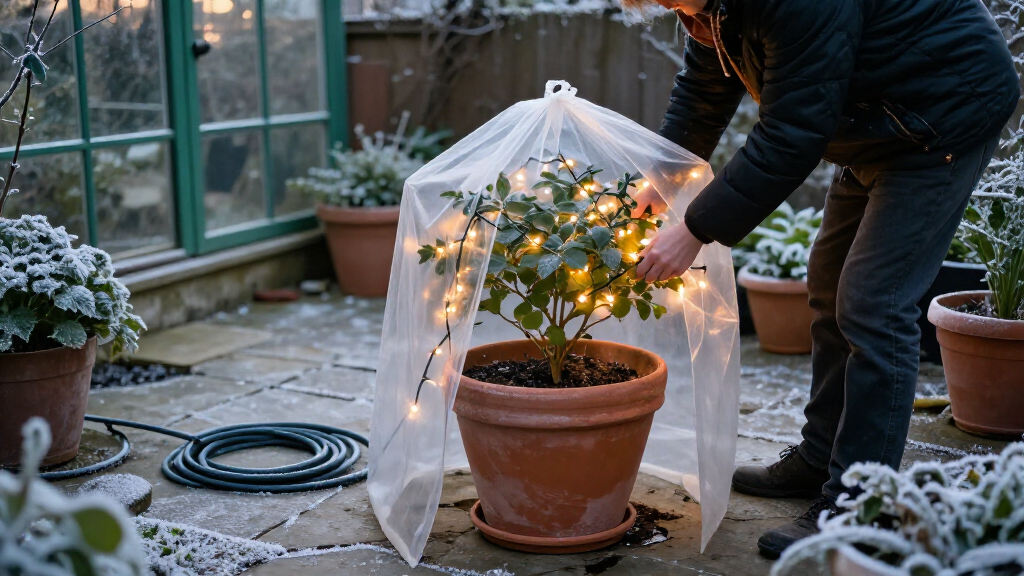
The useful heat comes from bulbs that run hot. The University of California Agriculture and Natural Resources advises home citrus growers to use traditional non-LED lights for added warmth, with or without a frost blanket. In trials described by Colorado State University Extension, a string of 25 mid-size C7 bulbs hung inside a covered cold frame kept the frames noticeably warmer than the outdoor night. The string also warmed cold corners better than one large bulb. The source does not give a specific temperature increase for those trials.
Most Christmas lights sold today are LEDs. They convert more electricity to light and produce comparatively little heat, so they should not be relied on to protect plants from frost. Incandescent mini lights may add some warmth; larger C7 and C9 bulbs produce more heat per bulb, but that also makes safe placement especially important. Use only a strand rated for outdoor use and for the intended setup.
Container citrus is a common candidate because roots in a pot have less protection than roots in the ground. Their small volume of potting mix can cool and freeze more quickly than surrounding garden soil. Cold injury may begin around 30°F (-1°C), depending on the citrus variety and how long it is exposed; limes are generally more sensitive than mandarins. A light string may help during a short, light frost, but it is not enough to protect tropical plants through weeks of hard freezes.
Christmas lights for frost protection What helps potted plants
Incandescent lights can add limited warmth during a brief cold spell when used safely under cover. LEDs produce too little heat to protect plants from frost.
Choose the right bulbs
Bulb type determines whether a strand can contribute useful warmth.
- Can add limited warmth inside a covered enclosure.
- Larger C7 and C9 bulbs produce more heat per bulb.
- Produces comparatively little heat.
- Do not rely on LEDs for frost protection.
What trials showed
A covered cold frame was warmer with a string of lights, though the source gives no temperature increase.
The lights were tested inside a covered cold frame.
One string kept the frame noticeably warmer than the night outside.
The result does not guarantee protection for every plant or setup.
Protect vulnerable roots
Container plants can cool faster because their roots have less surrounding soil than plants in the ground.
Watch the roots
A small volume of potting mix can cool and freeze quickly.
Varieties differ
Cold injury may begin around 30°F (-1°C); limes are generally more sensitive than mandarins.
Set up lights safely
Hot bulbs and outdoor electricity require careful placement and equipment.
- Use outdoor-rated lights and cords with a GFCI-protected outlet.
- Keep bulbs clear of foliage and covers; secure them so they cannot shift.
- Discard strands with cracked sockets or frayed wires, and follow the manufacturer’s connection limits.
- Move plants to a space that stays above freezing when severe or prolonged cold is forecast.
Heat Can Help, but Has Limits
For gardeners trying to protect a valuable container plant, the difference between bulb types matters: an incandescent strand may add supplemental heat, while an LED strand will not provide a comparable source of warmth. Used in a covered cold frame or similar enclosure, incandescent bulbs can contribute to a broader winter plan that includes shelter and insulation.
The method has a narrow role. It is described as a measure for brief cold spells and light frost, not a way to keep a tropical plant safe through extended freezing weather. Moving a pot indoors or into a protected space may be more dependable than relying on lights, especially when temperatures are forecast to stay below freezing. The heat source also introduces fire and electrical risks if bulbs contact foliage, fabric or plastic.
Products Worth Considering

8 × 12 ft Pop-Up Walk-In Greenhouse

EGO POWER+ LB7654 Cordless Leaf Blower with 5.0Ah Battery

Blackstone 1814 17-Inch Portable Propane Gas Griddle
As an affiliate, we earn on qualifying purchases.
Why Container Citrus Needs Protection
A potted tree faces a different cold risk from one planted in the ground. The roots are surrounded by a relatively small amount of potting mix, which can lose heat quickly. Root protection is a particular concern for container citrus, even when the branches appear to tolerate colder conditions. A larger pot can provide more insulating soil volume, but it does not guarantee that roots will avoid freezing.
The guidance places lights alongside standard winter measures rather than in place of them. Gardeners can move containers into an unheated garage, shed or enclosed porch that stays above freezing. If pots must stay outdoors, placing them together against a house wall and out of the wind can provide some shelter. Watering before cold weather and insulating the pot are also suggested ways to reduce exposure. The source gives no detailed schedule for watering or specific temperature thresholds for each plant variety.
“In Fort Collins cold-frame trials, one string of 25 mid-size C7 bulbs inside a covered frame kept the frame noticeably warmer than the night outside.”
— Colorado State University Extension
How Much Protection Is Enough?
The available information does not quantify how many degrees a particular setup will add around a potted plant. Results may depend on the enclosure, the number and size of bulbs, outside conditions and how long the cold lasts. The reported cold-frame result should not be treated as a guarantee for a patio plant, or as proof that lights can prevent damage in every frost.
It is also unclear from the source which specific bulb-and-cover combinations are safe for every structure. Bulbs must remain clear of foliage and coverings, and the setup must follow the light manufacturer’s instructions. Lights should not be used as a substitute for moving a plant to shelter when severe or prolonged freezing is forecast. The source does not provide a single safe minimum temperature for all potted plants.
Prepare Before the Forecast Freeze
Before temperatures fall, check the forecast and decide whether each container can be moved. Choose a frost-protection method suited to the expected cold, and inspect any lighting before bringing it outdoors. Discard strands with cracked sockets or frayed wires; use outdoor-rated lights and cords, connect them to a GFCI-protected outlet, and follow the manufacturer’s limit on strings connected end to end.
If incandescent lights are used, hang them from a stable support inside a cold frame or other suitable enclosure. Keep bulbs separated from plants and from frost cloth, sheets, plastic or other covering materials. Covers should be supported by a separate frame or stakes and must not shift against the bulbs. Keep indoor lights and household power strips indoors, and do not use tape as a way to waterproof electrical connections. For colder or longer spells, move the plant to a space that stays above freezing where possible.
Key Questions
Can Christmas lights keep a potted lemon tree from freezing?
Incandescent lights may add limited warmth under a safe cover during a short cold spell. They are not a guarantee against frost damage and are not enough for prolonged hard freezes.
Do LED Christmas lights protect plants from frost?
No. LEDs produce too little heat to serve as an effective frost-protection source, according to the supplied guidance. Use other winter-protection measures rather than relying on them.
How should the lights be set up safely outdoors?
Use outdoor-rated lights and cords connected to a GFCI-protected outlet. Keep hot bulbs away from foliage and covers, secure them so they cannot shift, and follow the manufacturer’s connection limits and safety instructions.
Are Christmas lights enough for a plant during a hard freeze?
The source describes lights as a limited aid for brief cold spells, not protection for weeks of hard freezes. Moving a container to a sheltered space that stays above freezing is a safer option when available.
Source: gardeningknowhow.com