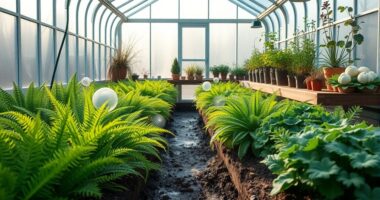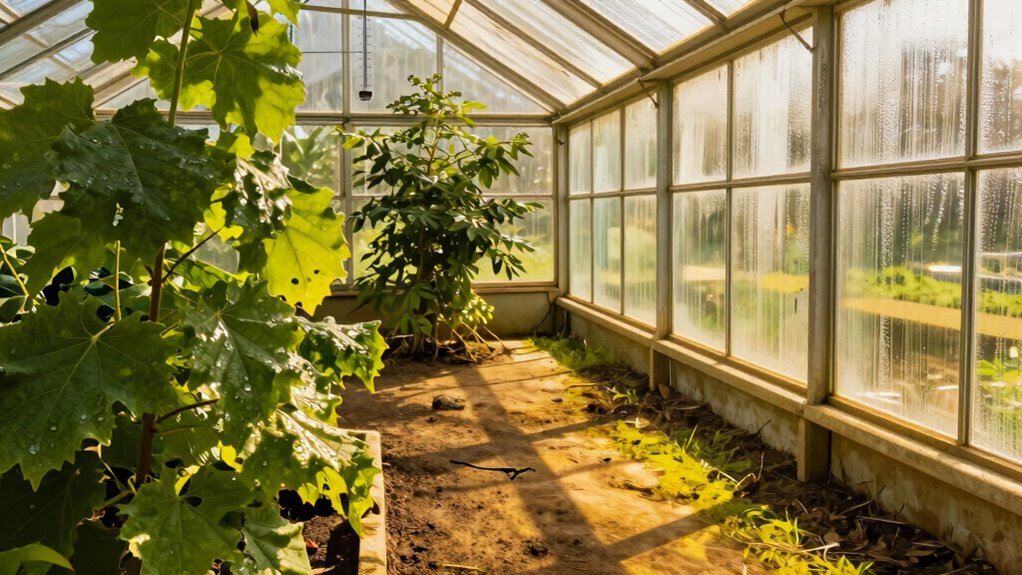

During summer, you can expect heat to build quickly inside your greenhouse, driven mainly by direct sunlight and solar radiation. As temperatures rise, you’ll need to manage heat through ventilation, shading, and timing vent openings carefully. This pattern causes quick temp spikes during peak hours, so proactive heat control is essential. Staying ahead of these patterns helps keep your plants healthy and thriving—you’ll discover more tips to stay cool and in control as you continue exploring.

Get garden gear delivered free with Prime
- Fast, free delivery on millions of items
- Prime Video, Amazon Music and more included
- Member-only deals all year
Key Takeaways
- Greenhouses trap heat through sunlight, causing rapid temperature rises during summer days.
- Peak heat typically occurs in mid-afternoon, requiring proactive ventilation and shading.
- Direct sunlight increases solar radiation, significantly contributing to internal temperature spikes.
- Morning and late afternoon are ideal times to ventilate to prevent excessive heat buildup.
- Combining shading and ventilation optimally manages heat, ensuring healthy plant growth.
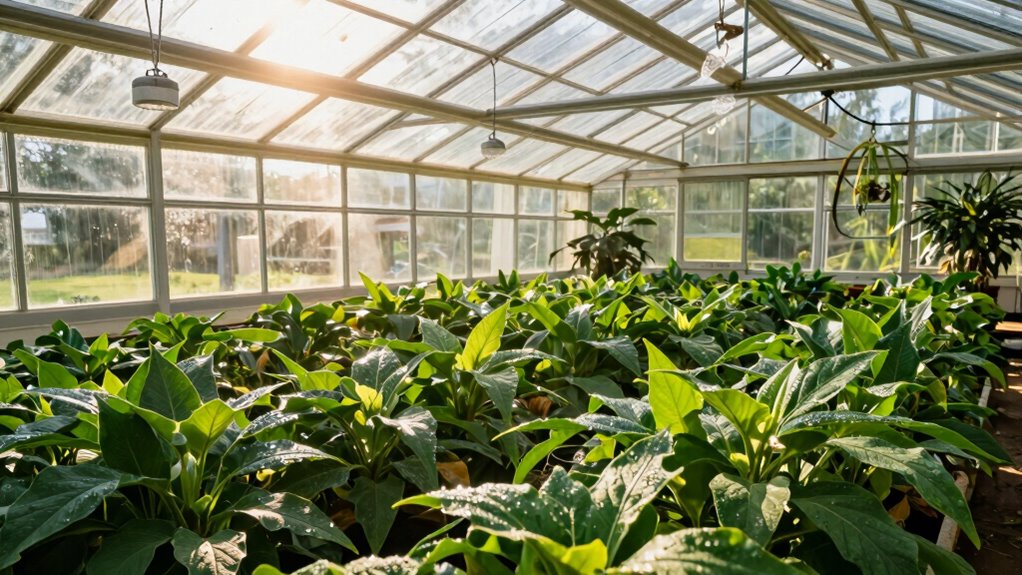
Have you ever wondered why greenhouses tend to heat up so quickly during the summer? It’s because the structure traps heat and sunlight, creating a warm environment inside that can sometimes become uncomfortable for your plants. To manage this, understanding the summer heat pattern becomes essential. One of the most effective ways to keep temperatures in check is by implementing proper ventilation strategies. Good airflow helps to remove excess heat and humidity, preventing the buildup of hot, stagnant air. You might consider installing exhaust fans, roof vents, or sidewall openings that can be automated to open when temperatures rise. These strategies ensure a continuous exchange of air, reducing indoor temperatures substantially. Equally important are shading techniques, which serve to block or reduce the amount of direct sunlight entering the greenhouse. Shade cloths, for example, can be draped over the structure during the hottest parts of the day, decreasing solar radiation and preventing the interior from overheating. You might also use retractable shading panels that can be adjusted based on the intensity of the sun, giving you more control over the environment inside. Combining ventilation strategies with shading techniques offers an extensive approach to managing summer heat. Proper ventilation not only cools the space but also reduces humidity, which can otherwise lead to fungal diseases and other plant issues. Shading, on the other hand, minimizes the heat gain from sunlight before it even enters the greenhouse. When these two methods work together, you create a balance that helps maintain a stable temperature. It’s also important to take into account the timing of these interventions. For example, opening vents early in the morning before the temperature spikes or deploying shading during the peak hours of the day can make a significant difference. You should also keep an eye on weather patterns and adjust your strategies accordingly. During particularly hot days, combining both ventilation and shading will be your best bet to protect your plants and ensure ideal growth conditions. Understanding the summer heat pattern and proactively managing it with effective ventilation strategies and shading techniques is crucial for maintaining a healthy greenhouse environment. Remember, the goal isn’t just to cool the greenhouse but to create a controlled environment that promotes healthy plant development. Maintaining awareness of how heat accumulation occurs can help you better anticipate and respond to these conditions before they become problematic. Being aware of solar radiation and its effects can further enhance your ability to protect your plants from overheating. Additionally, understanding climate control principles can help optimize the overall environment inside your greenhouse, especially during extreme weather conditions. By understanding the summer heat pattern and proactively managing it with effective ventilation strategies and shading techniques, you’re better equipped to handle the challenges of the season. This proactive approach not only protects your plants but also helps you maintain a productive and efficient greenhouse operation throughout the summer months.
As an affiliate, we earn on qualifying purchases.
Frequently Asked Questions
How Can I Predict Sudden Heat Spikes in My Greenhouse?
To predict sudden heat spikes in your greenhouse, monitor weather forecasts closely and use sensors to track internal temperatures. Installing shade cloths helps mitigate rapid temperature increases, while evaporative cooling systems can respond quickly to rising heat. Keep a close eye on outdoor conditions, especially during heatwaves, and adjust your shading and cooling strategies proactively. This way, you stay ahead of unexpected heat spikes and protect your plants effectively.
What Are the Best Cooling Systems for Extreme Heat?
Imagine your greenhouse, sweltering under the blazing sun, needing relief. The best cooling systems for extreme heat include advanced ventilation systems that promote airflow, and cooling technology like exhaust fans and misting systems. These tools work together to lower temperatures quickly, creating a breezy, invigorating environment. By installing efficient ventilation and misting, you guarantee your plants stay healthy and thrive even during the hottest days.
How Does Humidity Affect Heat Management?
Humidity plays a vital role in heat management because high humidity can make it feel hotter and hinder evaporation cooling. To manage this, you should focus on humidity control to keep moisture levels balanced. Evaporation cooling works best in lower humidity environments, helping to reduce temperature naturally. By maintaining ideal humidity, you can improve cooling efficiency, guarantee healthy plant growth, and make your greenhouse more comfortable during hot summer days.
Are There Specific Plants More Heat-Sensitive?
Yes, heat-sensitive crops are more vulnerable during hot weather, so you should monitor their conditions closely. Plants with lower resilience struggle to cope with high temperatures, leading to stress or damage. To protect them, you might need to provide extra shade or ventilation. Understanding plant resilience helps you prioritize care for these sensitive crops, ensuring they stay healthy despite the summer heat.
How Often Should I Monitor Temperature During Heatwaves?
During heatwaves, you should monitor your greenhouse temperature every hour, like a vigilant guardian watching over a delicate flame. Use plant shading and ventilation techniques to keep conditions stable. Keep a thermometer handy to catch rising heat early, adjusting shading or opening vents as needed. Consistent monitoring guarantees your plants stay cool and healthy, preventing heat stress and damage from the relentless summer sun.
Conclusion
As a greenhouse owner, you’re like a captain steering through summer’s blazing storm. Remember, just as a skilled sailor adjusts sails to harness the wind, you can tweak ventilation and shading to keep your plants cool and thriving. A recent study showed that proper ventilation can reduce internal temperatures by up to 10°C. Stay vigilant, adapt quickly, and you’ll sail smoothly through the heat wave, ensuring your greenhouse remains a lush oasis all summer long.
Fall yard work Picks
leaf blowers
As an affiliate, we earn on qualifying purchases.