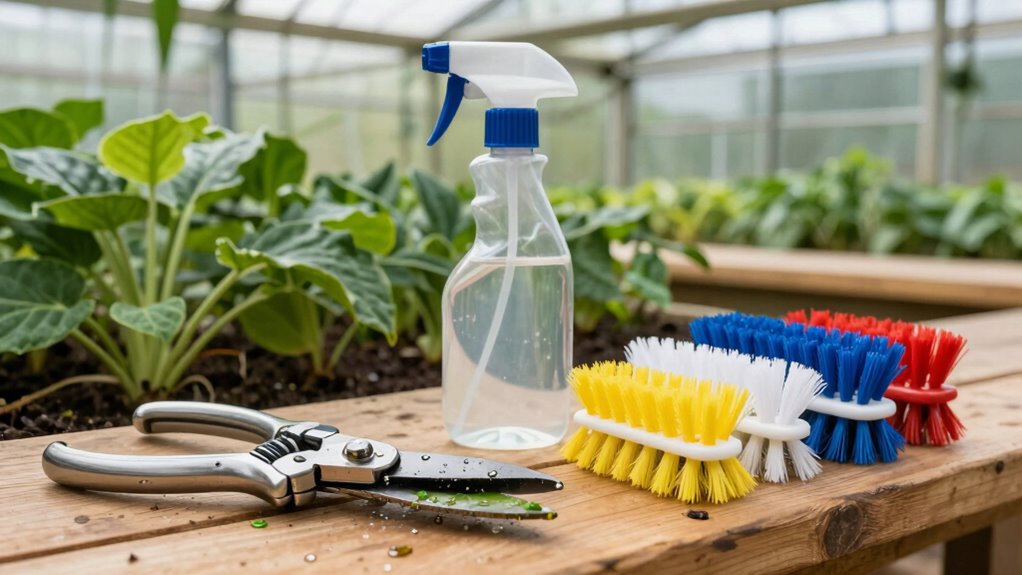
In a busy greenhouse, your most important sanitation tools include sterilized pruning shears, spray bottles, and disinfectant wipes for surfaces. You should regularly clean and disinfect these tools to prevent disease spread. Boot baths and foot mats help control foot traffic and prevent pathogen entry. Proper waste disposal containers and gloves also keep your environment clean and safe. Mastering these tools makes a significant difference in maintaining plant health, and there’s more to discover about keeping your greenhouse pest-free and thriving.

Get garden gear delivered free with Prime
- Fast, free delivery on millions of items
- Prime Video, Amazon Music and more included
- Member-only deals all year
Key Takeaways
- Sterilized pruning and cutting tools prevent disease transmission during plant maintenance.
- Disinfected spray equipment ensures effective application of fungicides and insecticides.
- Boot baths and surface disinfectants reduce pathogen entry via footwear and contact surfaces.
- Proper waste disposal containers minimize mold, pests, and bacterial buildup.
- Regular cleaning and sterilization of work surfaces and tools maintain a healthy growing environment.
Have you ever wondered how greenhouses keep their environments healthy and free from pests and diseases? The answer lies largely in the diligent use of sanitation tools and practices that promote plant disease prevention. When you’re managing a busy greenhouse, you need to stay ahead of potential issues by regularly sterilizing your equipment and maintaining a clean environment. Proper equipment sterilization techniques are essential; they guarantee that no pathogens hitch a ride on tools or surfaces, preventing the spread of bacteria, fungi, and viruses that can devastate your plants.
Effective plant health starts with diligent sanitation and proper sterilization of tools and surfaces.
In your daily routine, you might use pruning shears, scissors, or knives. These tools come into direct contact with plant tissues, making them prime vectors for disease transmission if not properly sterilized. You should always clean them thoroughly after each use, but sterilization takes it a step further. You can use alcohol wipes, bleach solutions, or heat sterilization—whichever fits your setup—to eliminate lingering pathogens. Remember, sterilizing tools between cuts on different plants is a simple yet powerful way to considerably reduce disease risk.
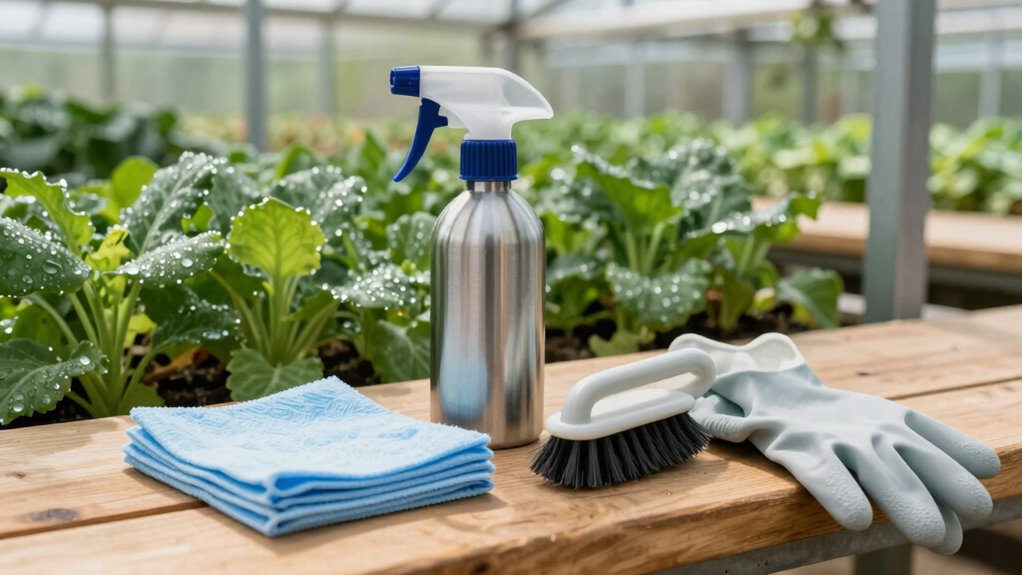
Another critical sanitation tool is your spray equipment. Whether you’re applying fungicides, insecticides, or cleaning solutions, it’s essential to keep sprayers clean and free from residues that could harbor pests or pathogens. Rinsing and disinfecting spray bottles and nozzles after each use prevents cross-contamination, ensuring that each application remains effective and safe. Additionally, equipment sterilization methods can further enhance your efforts in reducing disease spread. Regularly inspecting and maintaining your spraying equipment ensures it functions effectively and minimizes contamination risks.
Waste disposal tools also play an indispensable role. You need designated containers for plant debris, fallen leaves, or discarded plant material. Regularly emptying and cleaning these containers prevents the buildup of mold, bacteria, or pests that could threaten your healthy plants. Using gloves and dedicated shovels or trash bags adds an extra layer of protection, reducing the chance of spreading disease during cleanup. Implementing proper waste management practices can significantly decrease the likelihood of disease outbreaks caused by contaminated waste. Incorporating sanitation standards into your routine can help maintain a consistently healthy environment.
Finally, don’t overlook the importance of foot traffic control and surface cleaning. Implementing boot baths with disinfectant solutions at greenhouse entrances minimizes the risk of bringing in pests or pathogens on footwear. Regularly wiping down work surfaces, benches, and door handles with disinfectants helps maintain a sanitized environment, creating a barrier against disease entry points. The role of equipment sterilization in preventing disease spread emphasizes the need for consistent sanitation practices. Incorporating disinfection protocols into your daily routine can significantly improve overall greenhouse health and productivity.
In essence, your commitment to using the right sanitation tools and adhering to proper equipment sterilization techniques form the backbone of plant disease prevention. By staying meticulous and consistent, you guarantee a healthier, more productive greenhouse where plants can thrive free from the threat of pests and disease.
As an affiliate, we earn on qualifying purchases.
Frequently Asked Questions
How Often Should Sanitation Tools Be Sterilized?
You should sterilize your sanitation tools after each use to prevent disease spread. Establish a strict sanitation schedule best practices recommend, including daily and weekly sterilization routines. For tools used on different plants, sterilize between tasks. Regular tool sterilization frequency is vital, especially during peak times or when handling vulnerable crops. Consistent cleaning reduces contamination risks and promotes healthier plants, ensuring your greenhouse remains productive and disease-free.
What Are Eco-Friendly Sanitation Options for Greenhouses?
You can choose eco-friendly sanitation options like biodegradable disinfectants and reusable cleaning implements. Biodegradable disinfectants break down naturally, reducing environmental impact, while reusable tools minimize waste compared to single-use items. Regularly sterilize your reusable implements with these eco-friendly solutions to keep your greenhouse healthy without harming the environment. This approach guarantees effective sanitation, sustainability, and a greener footprint for your greenhouse operations.
Can Sanitation Tools Be Reused Safely?
Yes, sanitation tools can be reused safely if you consider tool durability and material selection. Opt for tools made from durable, corrosion-resistant materials like stainless steel or high-quality plastics, which withstand repeated cleaning. Regularly inspect and properly sanitize them after each use to prevent cross-contamination. By choosing the right materials and maintaining your tools well, you guarantee they stay effective and safe for ongoing use in your greenhouse.
How Do Sanitation Tools Prevent Pest Outbreaks?
Sanitation tools prevent pest outbreaks by thoroughly removing pests, eggs, and debris that attract them. When you use these tools effectively, they improve pest prevention by targeting hiding spots and breeding grounds. Properly cleaned tools reduce the chance of transferring pests between plants. Their effectiveness depends on diligent use and regular maintenance, ensuring you keep pests at bay and maintain a healthy greenhouse environment.
What Are the Costs of Maintaining Sanitation Tools?
A stitch in time saves nine, and that applies to maintaining sanitation tools. The costs involve regular replacement or repair due to tool durability issues, and investing in quality guarantees longevity. Cost-effective cleaning methods reduce expenses and extend tool life. While initial investments might seem high, proper maintenance saves money over time, preventing costly pest outbreaks or plant diseases. Consistent upkeep keeps your tools efficient and your greenhouse thriving without breaking the bank.
Conclusion
Remember, a clean greenhouse is a healthy greenhouse. By prioritizing the right sanitation tools—like disinfectants, brushes, and wipes—you’ll keep pests and diseases at bay. Regular cleaning isn’t just maintenance; it’s your best defense against costly problems down the line. As the saying goes, “A stitch in time saves nine.” Stay vigilant with your sanitation routine, and your plants will thrive in a safe, productive environment.
Halloween Picks
halloween
As an affiliate, we earn on qualifying purchases.