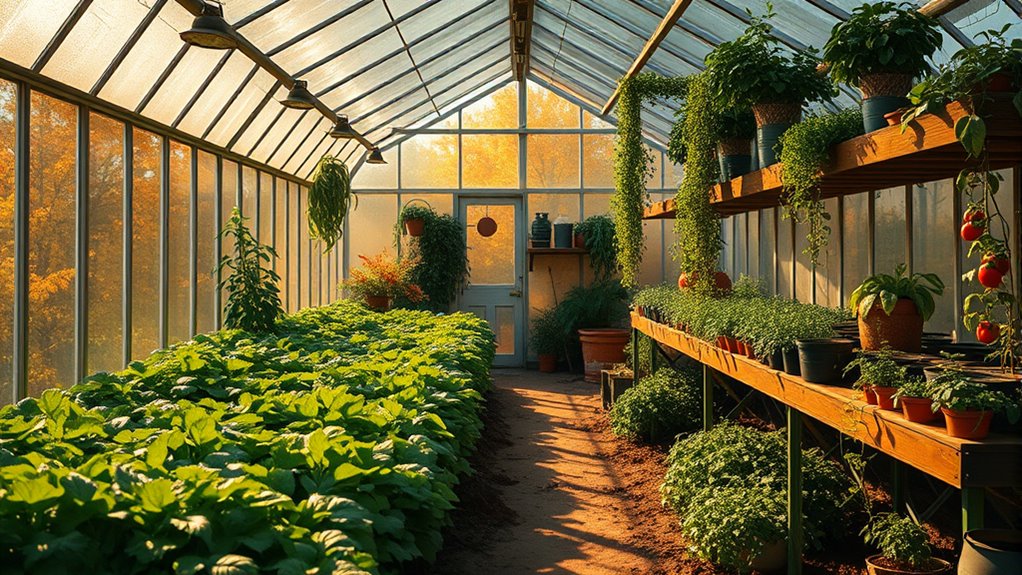
To extend your harvest into late fall, focus on improving insulation, using supplemental grow lights, and controlling temperature and humidity. Install thermal curtains or bubble wraps to reduce heat loss and keep plants warm. Regularly monitor pests and use integrated pest management to prevent outbreaks. Keeping your greenhouse well-ventilated and maintaining consistent conditions helps plants thrive despite shorter days. For more tips on maximizing your late-season harvest, continue exploring these essential strategies.
Key Takeaways
- Maximize insulation with bubble wraps or thermal curtains to retain heat during late fall.
- Use supplemental grow lights to support plant growth despite shorter daylight hours.
- Monitor and adjust temperature and humidity regularly to prevent cold stress and pest issues.
- Implement integrated pest management strategies, including biological controls and physical barriers.
- Extend the growing season by selecting cold-tolerant varieties and employing targeted climate control systems.
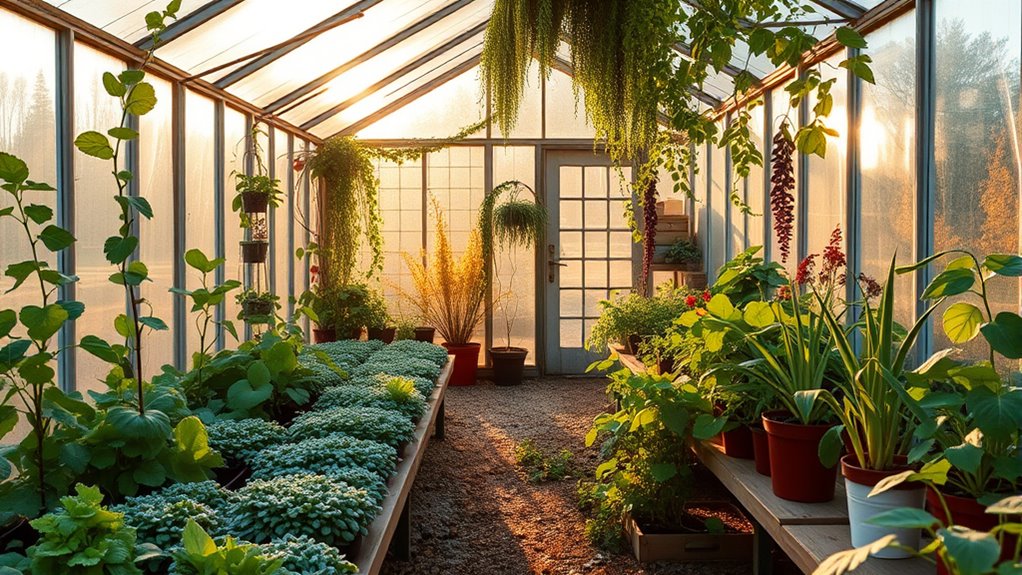
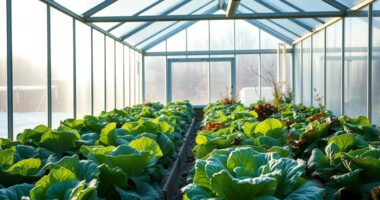
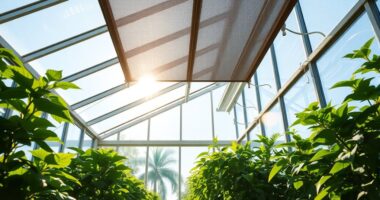
As late fall approaches, maintaining a healthy greenhouse environment becomes essential to protect your plants from dropping temperatures and decreasing daylight. This is the time to focus on season extension strategies that keep your crops thriving longer into the year. To do this effectively, you need to maximize your greenhouse’s insulation, heating, and lighting systems, ensuring your plants stay warm and receive enough light to sustain healthy growth. Using supplemental grow lights can compensate for shorter daylight hours, helping your plants continue photosynthesis and grow robustly. Additionally, installing thermal curtains or bubble wraps can reduce heat loss at night, keeping temperatures stable and preventing cold stress. These measures not only prolong your growing season but also give you a better chance to harvest fresh produce well into late fall. Implementing effective temperature control is crucial for maintaining optimal conditions and preventing cold damage to sensitive plants.
However, as you extend your season, pest management becomes increasingly important. Pests tend to become more active and multiply rapidly in the warmer, sheltered environment of a greenhouse. Vigilance is key; inspect plants regularly for signs of pests like aphids, whiteflies, and spider mites. Implementing integrated pest management (IPM) strategies allows you to control pests without resorting to harsh chemicals that could harm your plants or beneficial insects. Using biological controls such as ladybugs or predatory mites can help keep pest populations in check naturally. You should also consider physical barriers like insect screens on vents and doors to prevent pests from entering. Keeping the greenhouse clean and removing plant debris minimizes hiding spots and breeding grounds for pests. If you do spot an infestation, act quickly with targeted treatments like insecticidal soaps or neem oil, which are safer options for your plants and environment.
Balancing season extension and pest management requires careful planning and consistent effort. Insulation and supplemental lighting help you grow beyond the usual growing season, but they also create a warm, humid environment that pests love. Thus, maintaining proper ventilation is fundamental for controlling humidity levels and reducing disease risk. Regularly monitoring temperature and humidity conditions allows you to adjust your climate controls accordingly, preventing conditions that favor pests and disease outbreaks. By staying proactive, you can enjoy a continuous harvest while keeping your greenhouse healthy and pest-free. The key is to stay vigilant, adapt your strategies as needed, and keep your greenhouse environment suitable for both plant growth and pest control. With these measures in place, you’ll extend your harvest season successfully and enjoy fresh, homegrown produce well into late fall.
Frequently Asked Questions
How Can I Prevent Pests From Entering My Greenhouse in Late Fall?
To prevent pests from entering your greenhouse in late fall, focus on pest exclusion and greenhouse sealing. Start by inspecting and sealing any gaps, cracks, or vents to block entry points. Use fine mesh screens on all openings and vents to keep pests out while allowing airflow. Regularly check for signs of pests, and maintain a clean environment to reduce attractants. These steps help create a pest-resistant greenhouse, ensuring healthy plants year-round.
What Are the Best Soil Amendments for Late Fall Planting?
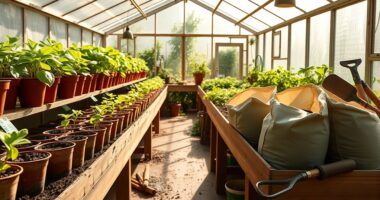
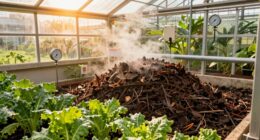
To prepare your soil for late fall planting, start with soil testing to determine nutrient needs. Incorporate compost enrichment to boost organic matter and improve soil structure. You can also add aged manure or organic amendments like bone meal for extra nutrients. These steps will create a fertile environment for your plants, ensuring healthy growth despite the cooler temperatures. Regularly monitor soil conditions to optimize your planting success.
How Do I Manage Humidity Levels During Late Fall?
To manage humidity levels during late fall, you should regularly monitor humidity using a reliable hygrometer. Implement ventilation strategies like opening vents or using exhaust fans to circulate air and reduce excess moisture. Keep humidity at ideal levels to prevent mold and promote healthy plant growth. Adjust ventilation based on humidity readings, and consider using dehumidifiers if needed to maintain a stable environment for your greenhouse.
Are There Specific Plant Varieties That Thrive in Late Fall Greenhouses?
Imagine your greenhouse as a cozy haven where winter vegetables and hardy herbs flourish like resilient warriors against the chill. You’ll find that varieties like kale, Swiss chard, and spinach thrive in late fall, their leaves a vibrant splash of life. Additionally, hardy herbs like thyme, rosemary, and sage stand tall, enduring the cooler temperatures. These plants embrace the changing season, turning your greenhouse into a lush oasis even as outside grows colder.
How Can I Extend Daylight Hours for My Plants in Late Fall?
To extend daylight hours for your plants in late fall, you should use supplemental lighting like LED grow lights to provide extra light during shorter days. Additionally, place reflective surfaces such as white walls or reflective foil around your greenhouse to maximize light distribution. This combination helps your plants receive consistent, adequate light, promoting healthy growth and extending your harvest season even as natural daylight diminishes.
Conclusion
As you extend your harvest into late fall, remember the resilience of nature’s own last stand, like the steadfast oak weathering the storm. Keep nurturing your greenhouse with care and patience, and you’ll enjoy fresh bounty even as the world cools outside. Embrace this season as a gentle reminder that growth persists through adversity—your garden’s own quiet rebellion against the fading year. With each harvest, you’re part of that timeless cycle of renewal and hope.