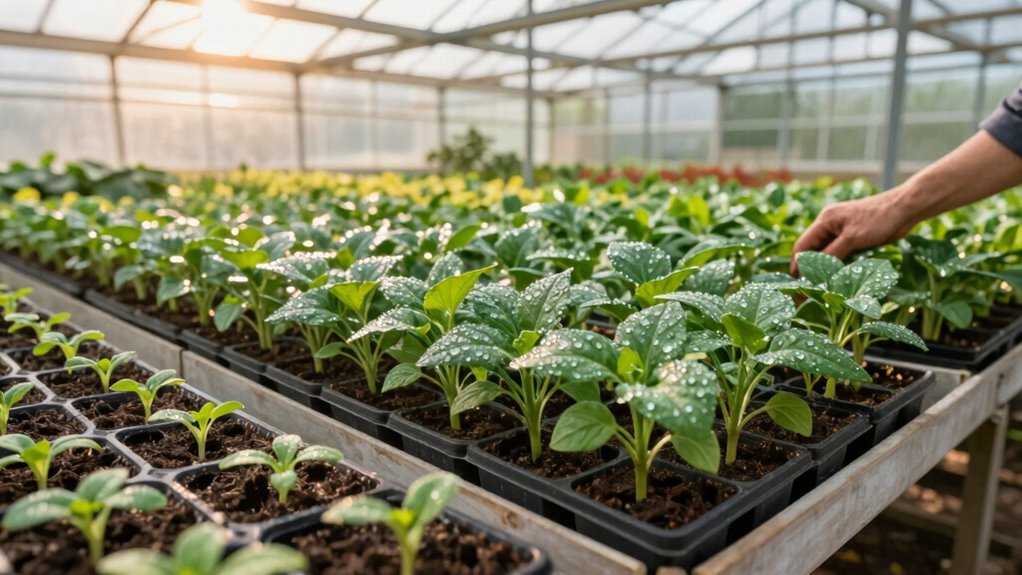
Your success in the greenhouse hinges on making smart decisions early on, especially about timing and preparation. Starting propagation at the right time helps you build healthy, strong plants that resist pests and environmental stresses. Proper environmental controls and careful planning create ideal conditions for growth. These early choices set the stage for better yields, fewer problems, and overall efficiency. Keep exploring how your initial decisions can shape a thriving, resilient greenhouse environment.
Open a free Amazon Business account
Business pricing, bulk buying and tax-exempt orders.
As an affiliate, we earn on qualifying purchases.
Key Takeaways
- Early decisions establish optimal timing for propagation, leading to healthier, more resilient plants.
- Preparatory actions improve environmental controls, creating ideal conditions for growth and pest resistance.
- Initiating propagation early reduces pest outbreaks and simplifies integrated pest management strategies.
- Timely planning ensures better crop yields and efficient greenhouse operations throughout the season.
- Foundation-focused early actions promote sustainability and long-term success in greenhouse productivity.
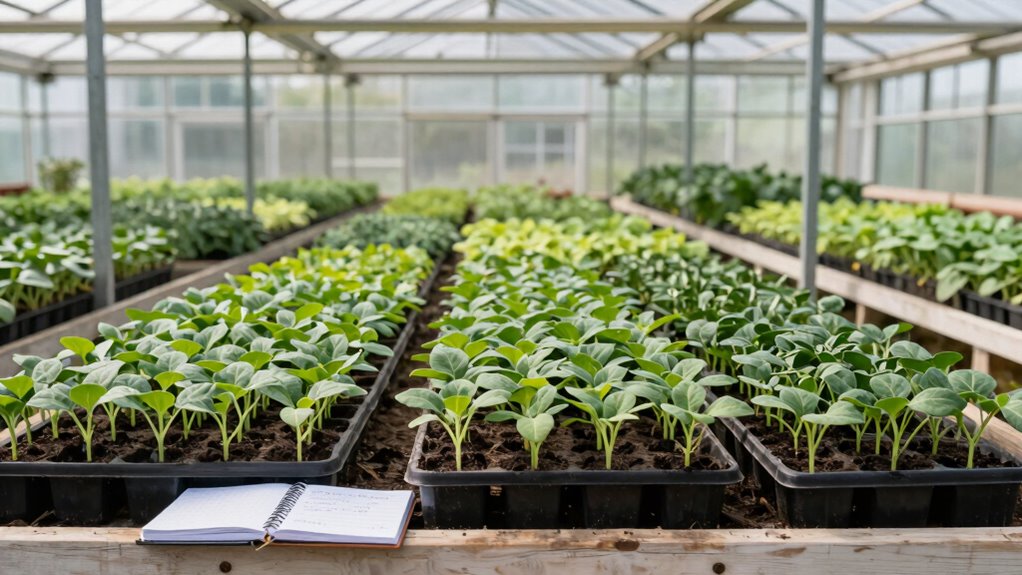
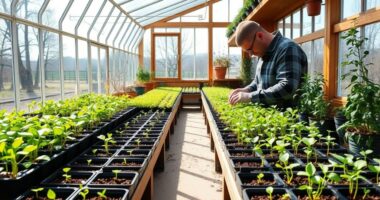
With the changing seasons, now is the perfect time to maximize your greenhouse’s potential for year-round success. Your earlier decisions in planning and preparation directly influence how smoothly your seasonal transitions go. One critical aspect is plant propagation, which sets the foundation for healthy, vigorous plants that can withstand pests and environmental shifts. When you start propagating at the right time, using quality seeds or cuttings, you give your plants a stronger start. This proactive approach helps you build a resilient crop that can better resist pests and diseases, ultimately reducing the need for chemical interventions later on.
Effective plant propagation isn’t just about timing; it’s also about choosing the right techniques and conditions. You want to maintain optimal humidity, temperature, and light levels to encourage root development and healthy growth. If you delay or rush this process, you risk weak plants that are more vulnerable to pests and environmental stresses. Conversely, early, deliberate propagation allows you to develop a robust plant stock, giving you control over your harvest schedule and reducing the chance of pest outbreaks. Strong, healthy plants are naturally better at pest management because they can better defend themselves against invaders, making your pest control efforts more manageable. Proper environmental controls are essential for creating ideal propagation conditions and ensuring your plants thrive from the start. Additionally, implementing climate management techniques can help maintain these optimal conditions more consistently. Establishing a microclimate within your greenhouse can also contribute significantly to successful propagation and growth.
Proper timing and optimal conditions strengthen plants, making pest management easier and enhancing overall greenhouse success.
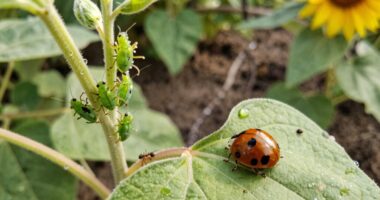
Pest management is another decision that hinges on your earlier planning. By establishing a healthy, vigorous plant population through proper propagation, you create a natural barrier against pests. But you also need to implement integrated pest management strategies before pests become a problem. These include monitoring regularly, removing infected plants, and using biological controls or organic treatments when necessary. The key is to stay ahead of pests rather than react to an infestation. When your plants are strong from the outset, they can better withstand pest pressures, which means you’ll spend less time and resources on constant treatments. Incorporating biological controls can significantly reduce the reliance on chemical pesticides and promote a healthier greenhouse environment.
Additionally, understanding and applying principles of biodiversity within your greenhouse environment can further enhance pest resistance and promote a balanced ecosystem. Your choices today about how and when to propagate plants and how diligently you manage pests set the tone for your entire growing season. If you take the time to prepare properly, you’ll enjoy fewer pest problems and more consistent crop yields. The gains from good early decisions ripple through your entire growing cycle, making your greenhouse more efficient and productive. Ultimately, your success depends on these well-informed, timely choices that give your plants the best possible start and keep pests at bay. By focusing on plant propagation and pest management now, you’re laying the groundwork for a thriving, sustainable greenhouse throughout the seasons.
As an affiliate, we earn on qualifying purchases.
Frequently Asked Questions
How Early Should I Start Planning My Greenhouse Layout?
You should start planning your greenhouse layout at least 3 to 6 months before your desired seasonal timing. This allows you to take into account crop rotation strategies, optimize space, and select appropriate plants. Early planning helps you prepare for seasonal changes, manage planting schedules efficiently, and avoid last-minute surprises. By thinking ahead, you facilitate a smooth shift between crops and maximize your greenhouse’s productivity throughout the season.
What Are the Best Seeds to Plant for Seasonal Success?
Start with carefully chosen seeds like tomatoes, peppers, and herbs, which thrive in your season. Your seed selection and planting timing are vital; plant early for a bumper harvest, but avoid rushing. The right seeds at the right time unleash your greenhouse’s potential, leading to seasonal success. Stay alert for best planting windows—delays or premature planting could jeopardize your crop’s health and yield.
How Does Weather Forecasting Influence Greenhouse Decision-Making?
Weather forecasting, especially climate prediction, greatly influences your greenhouse decisions. By understanding upcoming weather patterns, you can adapt your crops accordingly, choosing varieties that tolerate expected conditions. Accurate forecasts enable you to modify heating, cooling, and watering schedules proactively, reducing risks of crop failure. This proactive crop adaptation ensures your greenhouse remains productive and resilient, maximizing your seasonal success despite unpredictable weather changes.
What Funding Options Are Available for Greenhouse Setup?
They say, “You have to spend money to make money,” and that’s true for greenhouse setup. You can explore financial grants and loan opportunities to fund your project. Grants often come from government programs or agricultural organizations, while loans are available through banks or specialized lenders. By researching these options early, you guarantee your greenhouse gets the support it needs, setting a solid foundation for success.
How Can I Improve Energy Efficiency in My Greenhouse?
To improve energy efficiency in your greenhouse, adopt sustainable practices like proper insulation and sealing to reduce heat loss. Use energy-saving techniques such as installing LED lighting and automated ventilation systems to optimize temperature control. Consider integrating renewable energy sources like solar panels to cut long-term costs. These strategies not only lower energy consumption but also promote environmentally friendly operations, ensuring your greenhouse remains productive and sustainable throughout the season.
Conclusion
By making your decisions early, you set the stage for a thriving greenhouse season. Some might think it’s risky to plan in advance, but the truth is, proactive planning minimizes surprises and maximizes growth. Don’t wait for problems to arise—your success depends on those earlier choices. With careful preparation, you’ll enjoy a bountiful harvest and a more confident, stress-free season. Start early, stay ahead, and watch your greenhouse flourish.
College move-in / dorm season Picks
dorm essentials
As an affiliate, we earn on qualifying purchases.