
In the “in-between” weeks, you can extend your growing season by optimizing your greenhouse environment. Manage heating, ventilation, and lighting to create stable conditions for seedlings or late-season crops. Use this time to control pests proactively, incorporate beneficial insects, and improve soil health through biodiversity. Practicing good hygiene and maintaining equipment will keep your space healthy. Stay tuned for more tips to boost your greenhouse’s productivity during these changing periods.
Key Takeaways
- Adjust environmental controls to maintain stable temperature, humidity, and light levels during unpredictable weather.
- Use the period to start seedlings or grow cool-tolerant crops for an extended season.
- Regularly monitor and manage pests and diseases to prevent outbreaks during transitional weeks.
- Enhance soil health through composting, cover cropping, and biodiversity to prepare for future planting.
- Maintain cleanliness and ventilation to reduce mold, fungi, and pest issues, ensuring a healthy greenhouse environment.
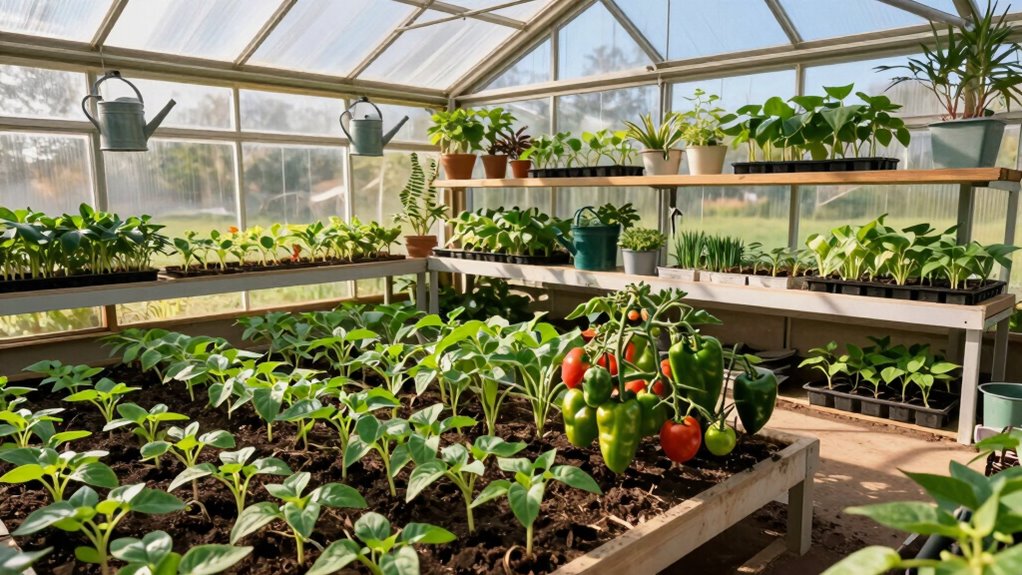
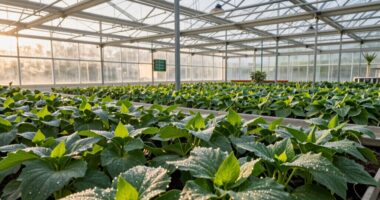
As the seasons shift and the weather becomes more unpredictable, the “in-between” weeks can feel like a lull for gardeners. It’s the time when your greenhouse can serve as an essential tool to maximize your growing potential. Instead of letting these weeks slip by, use this period to focus on season extension strategies. By carefully managing your greenhouse conditions, you can keep your crops going longer into fall or start early spring planting, giving you a head start or a more extended harvest. Adjust your heating, ventilation, and lighting to create a stable environment, even as outdoor conditions fluctuate. Small tweaks can make a big difference, allowing your plants to thrive despite the unpredictable weather outside.
During this transitional period, pest management becomes especially important. The “in-between” weeks often see a lull in natural predators and beneficial insects, which can lead to pest outbreaks if you’re not vigilant. Regularly inspect your plants for signs of pests or disease, and take proactive measures to prevent infestations. Use integrated pest management techniques—such as introducing beneficial insects, applying organic treatments, or physically removing pests—to keep unwanted visitors at bay. Staying on top of pest control now prevents more significant problems later, especially as plants become more vulnerable during seasonal transitions. Maintaining a healthy greenhouse environment also involves understanding the importance of biodiversity, which can help naturally balance pest populations and promote plant health. Incorporating diverse plant species can enhance pest resistance and foster a more resilient ecosystem inside your greenhouse. Additionally, creating a diverse environment can attract beneficial insects that contribute to natural pest control. Recognizing the role of healthy soil in supporting plant resilience can further strengthen your greenhouse’s defenses against pests and diseases.
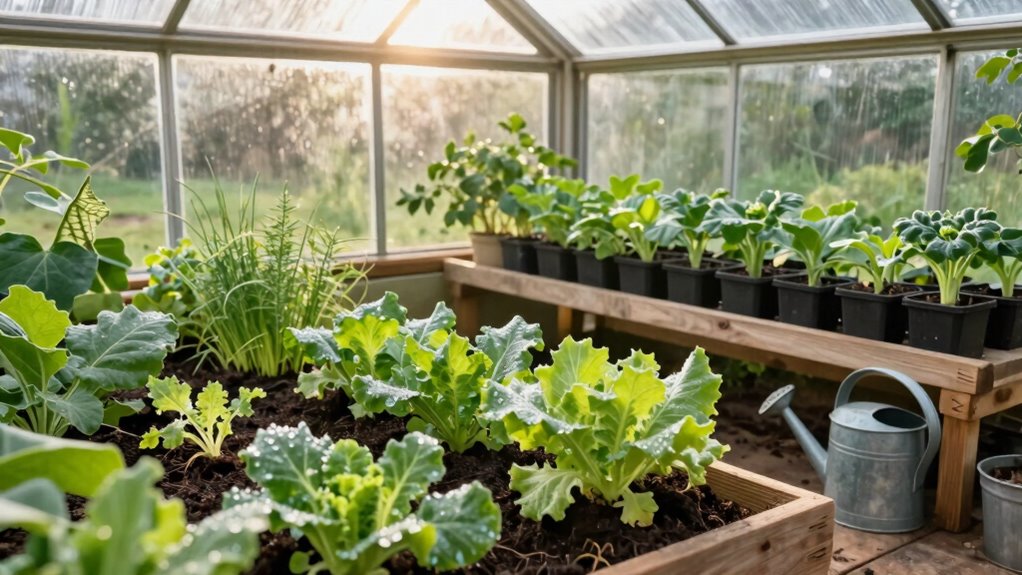
Your greenhouse is also an excellent place to experiment with crop varieties that might not fare well outside during these in-between weeks. Use this time to start seedlings for the next season or grow crops that can handle cooler temperatures. This not only extends your growing season but also allows you to fine-tune your greenhouse setup for future cycles. Keep an eye on soil moisture and temperature levels to make certain seedlings get the right start. Proper season extension techniques inside your greenhouse will help you make the most of every week, no matter how unpredictable the weather.
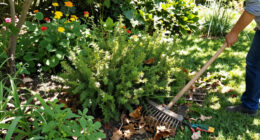
Don’t forget to maintain good hygiene in your greenhouse. Remove fallen leaves, prune dead or diseased plants, and sterilize tools regularly. These steps reduce the risk of pests and diseases taking hold during this delicate period. Ventilate your space adequately to prevent humidity buildup, which can encourage mold and fungi. By staying attentive to these details, you guarantee your greenhouse remains a healthy, productive environment. Regular sanitation practices also contribute to a cleaner, more resilient growing space and help prevent the spread of plant diseases.
In these “in-between” weeks, your greenhouse becomes your strongest ally. With a strategic focus on season extension and pest management, you can keep your garden productive, healthy, and ready for whatever weather comes next.

BioGreen Electric Greenhouse Heater & Fan with Digital Thermostat PALMA | 1500 Watts, 5100 BTU/hr | 5800 ft³/h Air Circulation -58 to 210.2°F | Stainless Steel | Spraywater Proof
- Adjustable Heating Elements: 750W or 1500W power options
- Precise Temperature Control: Automatic thermostat from 32°F to 185°F
- Air Circulation Mode: Functions as a fan to prevent heat buildup
As an affiliate, we earn on qualifying purchases.
As an affiliate, we earn on qualifying purchases.
Frequently Asked Questions
Can I Grow Summer Crops During the “In-Between” Weeks?
Yes, you can grow summer crops during the “in-between” weeks by focusing on season extension techniques and selecting suitable crops. Choose heat-tolerant varieties like peppers or tomatoes, and use row covers or supplemental heating to maintain warmth. Proper crop selection and season extension methods allow you to optimize your greenhouse space, ensuring summer crops thrive even when outside conditions aren’t ideal. This keeps your garden productive year-round.
How Do I Prevent Pests in These Transitional Weeks?
Think of your greenhouse as a peaceful garden sanctuary, where pests are uninvited guests. You prevent them by practicing regular pest monitoring, like a vigilant guardian, scouting for signs of trouble. Use natural repellents—think of them as friendly guards that deter pests without harm. By staying attentive and employing these eco-friendly methods, you keep your seasonal weeks pest-free, ensuring your plants thrive in harmony during these delicate times.
What’s the Best Way to Ventilate My Greenhouse Now?
To ventilate your greenhouse effectively now, prioritize air circulation by opening vents and side windows to promote fresh airflow. Use ventilation techniques like exhaust fans or oscillating fans to enhance circulation, especially during warmer parts of the day. You can also create cross-ventilation by opening multiple vents on opposite sides. Regularly monitor temperature and humidity levels to guarantee your greenhouse stays well-ventilated and healthy for your plants.
Should I Adjust My Watering Schedule During This Period?
Like a gardener tending to shifting seasons, you should tweak your watering schedule now. Adjust watering to prevent overhydration, as the milder weather reduces evaporation. Focus on moisture management by checking soil moisture frequently, ensuring plants get enough water without excess. This way, you maintain healthy growth and avoid stress, mimicking nature’s gentle balance during these in-between weeks, and keeping your greenhouse thriving through subtle changes.
How Can I Extend My Growing Season in the Greenhouse?
You can extend your greenhouse growing season by practicing crop rotation, which helps prevent soil depletion and pests. Use soil enrichment techniques like adding compost or organic fertilizers to boost soil nutrients, ensuring healthy plant growth. Cover crops during off-season periods also protect the soil and improve fertility. By maintaining healthy soil and rotating crops, you create a sustainable environment that supports longer, more productive growing seasons.
Conclusion
As the weeks drift between seasons, think of your greenhouse as a steady heartbeat in your garden’s rhythm. With a little extra care and clever planning, you can turn these in-between times into a symphony of growth and promise. Embrace the changeover, nurture your plants like a gentle conductor, and let your greenhouse be the quiet hero in your gardening story. Before long, you’ll find this lull to be a fertile ground for future bounty.