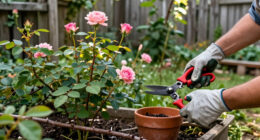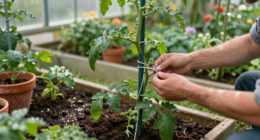

To make early spring starts easier, focus on planning your garden layout, evaluating soil health, and ordering supplies ahead of time. Clean and prune your garden to prevent pests and diseases, and check your irrigation systems for leaks or blockages to guarantee efficient watering. Maintain outdoor tools and structures to avoid surprises later. Starting with these systems helps you avoid common issues and creates a smooth shift into the growing season—keep going for detailed tips.

Get garden gear delivered free with Prime
- Fast, free delivery on millions of items
- Prime Video, Amazon Music and more included
- Member-only deals all year
Key Takeaways
- Implement automated irrigation systems to ensure consistent watering and reduce manual effort.
- Conduct soil tests and amend soil early for optimal planting conditions.
- Schedule regular garden clean-up and pruning to prevent pests and promote healthy growth.
- Repair and maintain outdoor tools and equipment ahead of planting season.
- Plan and order seeds and supplies early to avoid seasonal shortages and delays.
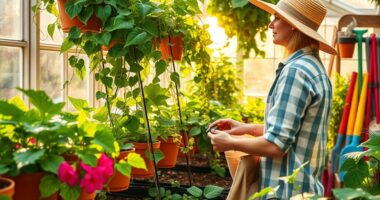
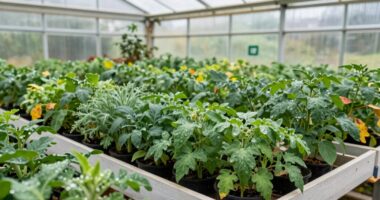
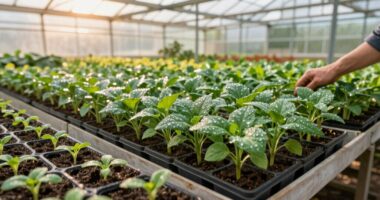
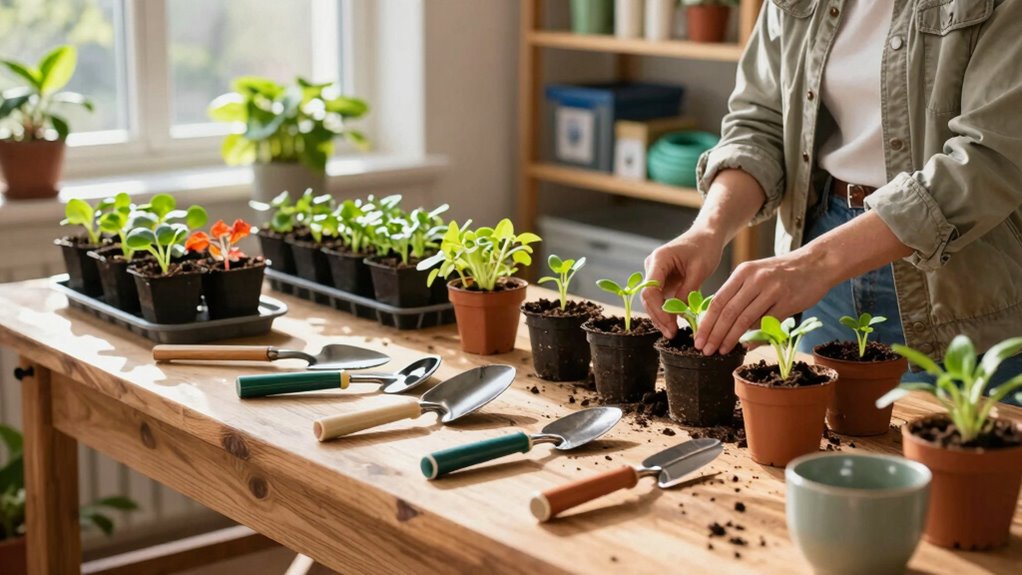
Are you ready to guarantee your systems are fully prepared for spring? Getting ahead of the season not only saves you time and stress but also sets you up for a successful and enjoyable spring. One of the most effective ways to do this is through thorough garden planning and seasonal cleaning. Starting with garden planning allows you to visualize your landscape, decide which plants to keep, and identify new additions that will thrive in the upcoming months. It’s the perfect time to assess your garden’s layout, check soil health, and prepare beds for planting. By planning early, you can order seeds, tools, and supplies ahead of the rush, making certain you have everything you need when it’s time to get your hands dirty. Incorporating biodiversity into your garden design can also promote a more resilient and thriving ecosystem. Seasonal cleaning is equally crucial in spring prep systems. As winter winds down, it’s essential to clear away debris, dead leaves, and any leftover plant material that could harbor pests or diseases. This cleaning process not only makes your garden look tidy but also promotes healthier growth by reducing the risk of mold, fungi, and insect infestations. Make certain to prune dead branches from trees and shrubs and remove weeds that might have taken root over the winter. Don’t forget to clean and sharpen your gardening tools, so they’re ready for action when planting season kicks off. Proper cleaning and maintenance of tools prevent the spread of disease and make your work more efficient. Beyond the garden, spring prep involves checking and updating your outdoor systems. Inspect your irrigation system for leaks or blockages, and consider installing drip lines or sprinklers to guarantee even watering. This proactive approach helps conserve water and prevents drought stress on your plants. Regularly reviewing home automation systems can also optimize watering schedules and reduce manual effort. This proactive approach helps conserve water and prevents drought stress on your plants. It’s also a good idea to service your lawnmower and other outdoor equipment now, so they’re ready to go when you start mowing. Additionally, examine outdoor furniture and structures, making repairs or giving them a fresh coat of paint or sealant if needed. Taking steps to prevent damage can save you time and money in the long run. Maintaining proper drainage is also crucial to avoid water pooling and root rot, especially during heavy spring rains. All these steps—garden planning, seasonal cleaning, system checks—are interconnected parts of a thorough spring prep system. When you start early, you create a smooth shift into the planting and growing season. You’ll spend less time troubleshooting problems later and more time enjoying your garden’s beauty. By establishing a routine now, you’ll feel confident knowing your outdoor space is primed and ready for a vibrant, productive spring.
automatic garden irrigation system
As an affiliate, we earn on qualifying purchases.
As an affiliate, we earn on qualifying purchases.
Frequently Asked Questions
How Do Spring Prep Systems Differ for Various Climate Zones?
You need to make climate-specific adjustments when using spring prep systems, as different zones face unique challenges. In colder areas, focus on hardy plants and extend soil warmth with mulch, while warmer regions benefit from early planting strategies that utilize longer growing seasons. Tailoring your approach ensures successful germination and growth, regardless of your climate zone. Modifications like frost protection and timing are key to optimizing your spring prep efforts.
Are Spring Prep Systems Environmentally Friendly?
Yes, spring prep systems can be environmentally friendly. You’ll find eco-friendly practices like using renewable materials, which reduce your carbon footprint and promote sustainability. Many systems incorporate biodegradable or recycled components, making your gardening efforts more eco-conscious. By choosing these options, you support a healthier environment while preparing your garden efficiently. Embracing sustainable materials and practices helps you enjoy a greener spring, benefiting both your garden and the planet.
What Is the Typical Lifespan of a Spring Prep System?
A typical spring prep system lasts around 10 to 15 years, depending on spring system durability and maintenance. Factors like usage frequency, exposure to weather, and quality of materials influence lifespan. You can prolong its longevity by regular inspections, timely repairs, and keeping it clean. Proper care ensures your system remains efficient and safe, giving you reliable performance during those early mornings.
Can Spring Prep Systems Be Integrated With Existing Irrigation?
Yes, spring prep systems can be integrated with existing irrigation. You’ll want to guarantee the soil moisture levels are maintained for ideal plant health, which these systems help manage efficiently. Plus, integrating pest control features can improve crop protection during early growth stages. Proper setup allows you to automate watering and pest management, saving time and reducing manual effort while keeping your garden or field healthy and productive.
What Maintenance Is Required for Spring Prep Systems?
You should regularly inspect your spring prep systems, including soil testing and equipment calibration, to guarantee peak performance. Soil testing helps you determine nutrient needs, preventing over- or under-fertilization. Meanwhile, calibrating equipment guarantees accurate application rates. Keep parts clean and replace worn components promptly. By maintaining these systems diligently, you’ll guarantee reliable operation, promote healthy growth, and make your early spring start much smoother.
Conclusion
With these spring prep systems in place, you’re not just ready—you’re unstoppable. Imagine your workspace as a well-tuned garden, every tool and task in perfect harmony, ready to bloom at dawn’s first light. As you embrace these strategies, the chaos of early mornings transforms into a symphony of productivity. So, gear up and step into the season with confidence—because when your prep is seamless, success blooms effortlessly.
Halloween Picks
halloween
As an affiliate, we earn on qualifying purchases.