To anticipate seasonal changes inside your greenhouse, pay close attention to subtle cues like temperature, humidity, and light fluctuations. Notice if lights become less effective during shorter winter days or if humidity drops in colder months. Sudden changes in plant growth or color can also signal environmental shifts. By monitoring these signs and adjusting your controls proactively, you can prevent stress and keep plants healthy year-round. Keep exploring to discover more ways to stay ahead of seasonal shifts.

Get garden gear delivered free with Prime
- Fast, free delivery on millions of items
- Prime Video, Amazon Music and more included
- Member-only deals all year
Key Takeaways
- Monitor external weather patterns and light levels to anticipate seasonal shifts affecting greenhouse conditions.
- Regularly track humidity and temperature to detect early signs of environmental stress.
- Observe plant cues such as leaf color, growth rate, and overall vigor for signs of environmental imbalance.
- Adjust artificial lighting and shading in response to changing daylight hours and sunlight intensity.
- Implement proactive environmental controls like misting or ventilation to prevent stress before plants show damage.
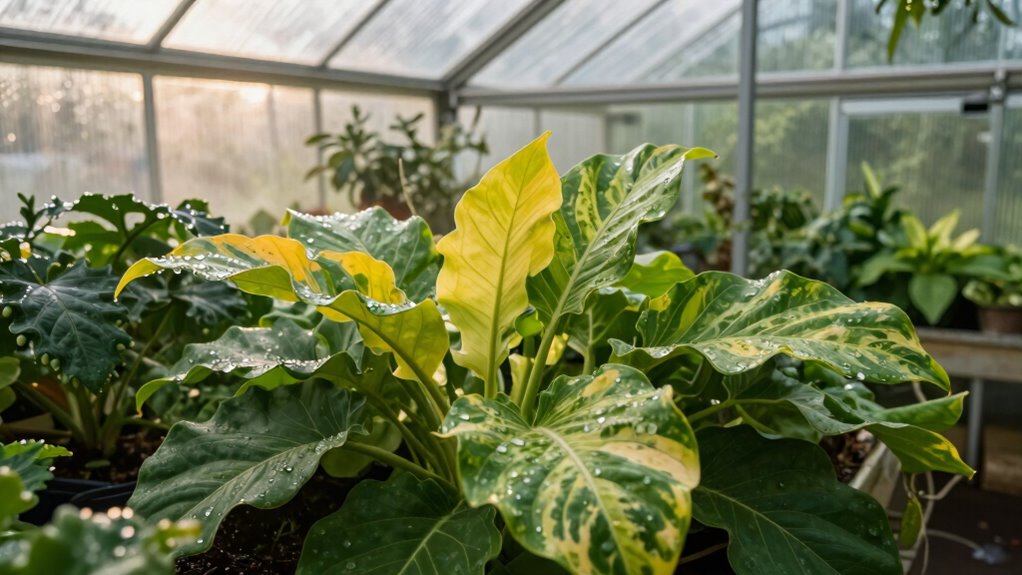
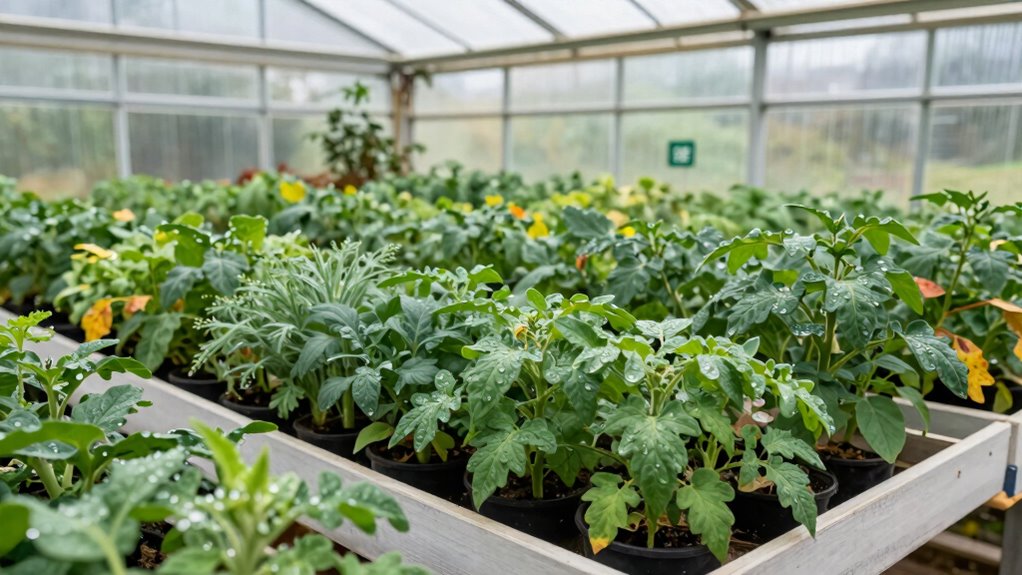
Understanding seasonal changes inside a greenhouse is essential for maintaining ideal growing conditions year-round. When you learn to read these changes, you can adjust humidity levels and light intensity proactively, ensuring your plants stay healthy and productive. As seasons shift, you’ll notice subtle cues—such as fluctuations in temperature, humidity, and light—that signal the need for intervention before your plants show signs of stress.
Recognize seasonal cues to adjust humidity and light, keeping your greenhouse plants healthy year-round.
Humidity levels are crucial in creating a stable environment. During colder months, humidity tends to drop, which can lead to dry air that stresses plants, especially tropical varieties. Conversely, in warmer seasons, humidity might rise, increasing the risk of mold and fungal diseases. By monitoring humidity consistently, you’ll see patterns emerge: a sudden dip or spike that suggests you need to adjust your humidifiers or ventilation. For example, if you observe humidity dropping below optimal levels, adding misting or increasing ventilation can help prevent issues like leaf dehydration or stunted growth. If humidity climbs too high, you might need to open vents more frequently or run dehumidifiers. Recognizing these shifts early allows you to fine-tune the environment, keeping humidity within a range that promotes healthy plant development. Regularly tracking climate patterns inside your greenhouse helps you anticipate these fluctuations more effectively. Being familiar with seasonal climate variations enables you to adapt your strategies proactively, ensuring a stable environment regardless of external weather changes.
Light intensity is another key factor that varies with the seasons. During winter, days are shorter, and sunlight is less intense, so your plants may not receive enough light to photosynthesize effectively. You’ll notice this through leggy growth, pale leaves, or slowed development. To counteract this, you can supplement natural sunlight with grow lights, increasing light intensity to match the plants’ needs. Conversely, in summer, sunlight becomes more intense and prolonged, which can lead to overheating or light stress. Here, you’ll observe signs like leaf scorch or wilting, indicating the need to shade plants or adjust shading materials. By paying attention to the natural light patterns and how your plants respond, you can make real-time adjustments—like repositioning grow lights or installing shade cloths—to mimic optimal conditions throughout the year.
In addition, understanding seasonal light variations helps you plan your greenhouse setup more effectively, ensuring your lighting and shading strategies evolve with the changing seasons. Recognizing seasonal changes in sunlight allows you to optimize your plant care routines and prevent stress caused by inconsistent light levels. In essence, understanding how seasonal changes impact humidity levels and light intensity empowers you to create a stable, thriving environment inside your greenhouse. It’s about paying close attention to the cues your plants give off and responding promptly. When you master reading these signs, you prevent problems before they start, ensuring your plants flourish no matter the season. This proactive approach keeps your greenhouse productive and healthy, making every season a successful one for your garden.
As an affiliate, we earn on qualifying purchases.
Frequently Asked Questions
How Often Should I Check Temperature and Humidity Levels?
You should check temperature and humidity levels at least twice daily to maintain ideal humidity control and prevent temperature fluctuations. Morning and evening checks are ideal, as these are times when environmental changes are most likely to occur. Regular monitoring helps you adjust ventilation, heating, or humidification systems promptly, ensuring your plants thrive without stress from sudden shifts in their environment. Staying vigilant minimizes risks to your greenhouse’s health.
What Signs Indicate Plants Are Stressed From Seasonal Changes?
You’ll notice plant stress indicators like wilting, yellowing leaves, or stunted growth, signaling they’re struggling with seasonal changes. Pay attention to deviations from normal seasonal growth patterns, such as sudden leaf drop or uneven flowering. These signs mean your plants might be experiencing temperature or humidity shifts. Monitoring these indicators helps you adjust conditions promptly, ensuring your plants stay healthy and thrive despite seasonal shifts inside your greenhouse.
Can Seasonal Changes Affect Pest Populations Inside the Greenhouse?
Like a tide shifting with the seasons, pest populations respond to changes inside your greenhouse. Seasonal pest outbreaks cause pests to migrate, seeking ideal conditions, which can lead to unexpected infestations. As temperatures and humidity fluctuate, pests adapt and multiply, making it essential to monitor these changes closely. By understanding how seasonal shifts influence pest migration, you can implement timely control measures to protect your plants effectively.
How Do I Adjust Watering Schedules With Seasonal Shifts?
You should adjust your watering habits based on seasonal changes in your greenhouse. As temperatures rise in summer, increase watering frequency to prevent dehydration, and reduce it during winter to avoid overwatering. Monitor soil moisture levels regularly, and make seasonal adjustments accordingly. This approach guarantees your plants receive the right amount of water year-round, promoting healthy growth and preventing issues caused by inconsistent watering habits.
Are There Specific Tools Recommended for Monitoring Seasonal Changes?
Think of your greenhouse as a living clock, where precise tools help you read seasonal shifts. Use a light meter to monitor light management, ensuring plants get ideal sunlight. A digital thermometer with humidity sensors helps track temperature and moisture changes. Pair these with venting strategies, like automatic vent openers, to maintain ideal conditions. These tools let you respond swiftly, preventing stress and promoting healthy growth throughout seasonal shifts.
Conclusion
By paying close attention to the subtle signs of seasonal shifts inside your greenhouse, you’re fundamentally giving your plants a gentle nudge in the right direction. Think of it as tuning into a quiet conversation happening just beneath the surface—your plants’ way of whispering their needs. When you learn to read these delicate cues, you’re not just preventing problems; you’re nurturing a thriving, harmonious environment where your greenery can truly flourish, season after season.
Columbus Day / Indigenous Peoples' Day Picks
long weekend sales
As an affiliate, we earn on qualifying purchases.