In spring, start cracking vents when your indoor air feels stale, stuffy, or humid, especially on mild, dry days outside. Open vents in the early morning or late evening to avoid high pollen times, and monitor outdoor conditions to prevent allergens from entering. Avoid opening vents too early or widely, which can cause excess moisture or allergies. If you want to keep your home comfortable and fresh, understanding the best timing makes all the difference.
Key Takeaways
- Open vents during mild, dry days to improve air quality without increasing humidity.
- Avoid cracking vents during high pollen days to prevent allergen intrusion.
- Start ventilating when indoor air feels stale or stuffy, indicating a need for fresh airflow.
- Do not open vents too wide early in spring, as fluctuating temperatures can cause moisture buildup.
- Time venting for early mornings or late evenings when outdoor conditions are optimal for fresh, clean air.
When Is the Right Time to Ventilate Your Home in Spring?
Spring is the ideal time to start ventilating your home, especially as outdoor temperatures rise and indoor air quality can decline after months of closed windows. Many believe that opening vents worsens seasonal allergies, but ventilation myths often exaggerate this risk. Properly timed fresh air exchange can actually reduce indoor pollutants and improve air quality. If you notice dust, odors, or stale air inside, it’s a sign to open your windows and vents. Just be mindful of high pollen days; opening vents in the early morning or late evening can minimize allergy triggers. Additionally, understanding the role of ventilation in air quality can help you make better decisions about when to crack vents. Ventilating at the right time helps balance fresh air intake with allergy considerations, ensuring your home feels fresh without aggravating seasonal allergies.
How Do You Know It’s Time to Open the Vents in Spring?
How do you know when it’s time to open your vents in spring? Pay attention to signs like poor air quality, excess moisture, and temperature fluctuations. Here are three indicators:
- Air feels stale or stuffy – If your indoor air quality drops, ventilating helps refresh it.
- Visible moisture or condensation – High humidity can cause mold; opening vents aids moisture control.
- Inconsistent indoor temperatures – When indoor warmth fluctuates, opening vents can balance airflow and improve comfort.
- Monitoring indoor climate conditions ensures you open vents at the optimal times to promote a healthy, comfortable environment.
Opening vents at the right time helps maintain good air quality and prevents moisture buildup. Don’t wait until humidity causes problems—be proactive in managing your home’s ventilation to stay comfortable and healthy.
What Common Mistakes Should You Avoid When Ventilating in Spring?

Even though ventilating your home is crucial for maintaining good air quality, many people make common mistakes that can undermine its effectiveness. One mistake is opening vents too early or too widely, which can introduce excess moisture and lead to mold growth. Conversely, sealing vents too tightly can trap humidity and reduce airflow, impacting moisture control. Another error is neglecting to ventilate during high pollen seasons, which can worsen indoor air quality. Additionally, relying solely on mechanical ventilation without considering outdoor conditions can cause problems. Always monitor the weather and humidity levels before opening vents. Proper timing and control are essential to improving air quality and managing moisture, helping you avoid indoor air problems and ensuring a healthier spring environment. Being aware of air quality factors can further optimize your ventilation strategy.
What Are the Best Ventilation Strategies for Different Climates?
Different climates require tailored ventilation strategies to effectively manage indoor air quality and moisture. Your goal is to choose the right ventilation methods based on your environment. Here are three options to contemplate:
- Humid climates: Use exhaust fans and dehumidifiers to reduce excess moisture, preventing mold and improving indoor air quality.
- Dry, cold climates: Incorporate fresh air intake systems that balance air exchange without losing heat, maintaining comfort and air quality.
- Temperate climates: Use natural ventilation, like opening windows during mild days, to refresh indoor air without overventilating. Additionally, leveraging energy-efficient cloud solutions can help optimize heating and cooling systems, reducing energy consumption and supporting sustainable climate control.
How Can You Keep Your Home Fresh Without Overventilating?
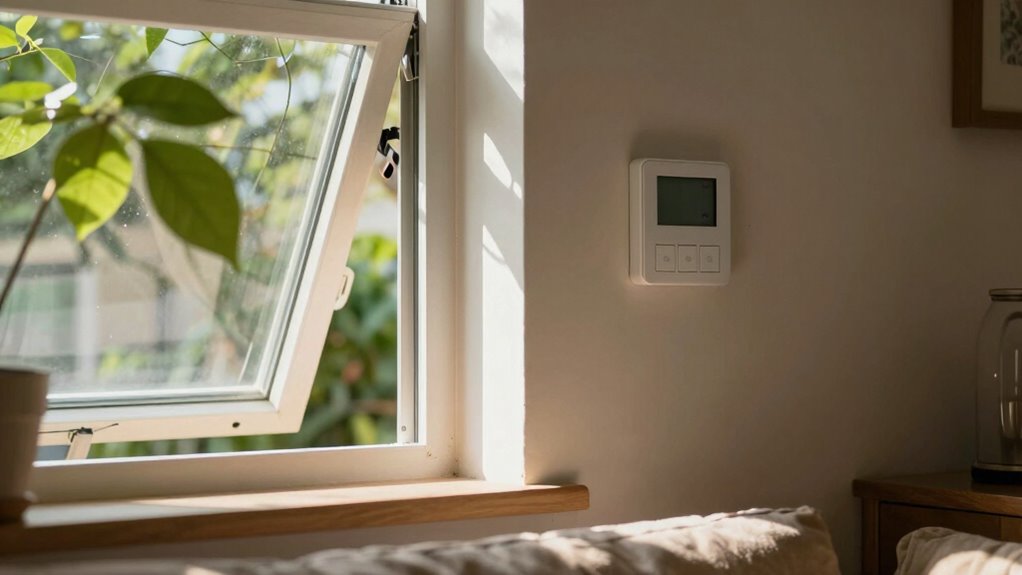
Keeping your home fresh without overventilating is all about balancing airflow and indoor air quality. To achieve this, focus on controlled ventilation that improves indoor air quality without wasting energy or letting in excessive outdoor pollutants. Use exhaust fans in kitchens and bathrooms to remove stale air and moisture efficiently. Open windows during ideal times to increase ventilation efficiency without overdoing it, such as when outdoor air is clean and mild. Consider using air purifiers with HEPA filters to maintain indoor air quality without relying solely on ventilation. Additionally, monitor indoor humidity levels to prevent mold growth and maintain comfort. Proper ventilation timing can optimize air exchange and prevent energy waste. By managing airflow carefully and choosing the right ventilation methods, you keep your home fresh while avoiding the pitfalls of overventilating.
Frequently Asked Questions
How Often Should I Check My Home’s Ventilation System in Spring?
You should check your home’s ventilation system at least once a month during spring. Following a regular maintenance schedule helps guarantee proper ventilation frequency, preventing mold and moisture buildup. Inspect vents for blockages, cleanliness, and proper operation. If you notice humidity issues or musty odors, increase checks or ventilation. Staying proactive keeps your indoor air quality healthy and prevents costly repairs later on.
Can Overventilating Cause Damage to My Home’s Structure?
Yes, overventilating can damage your home’s structure. Excessive airflow may cause humidity levels to fluctuate, leading to moisture buildup in walls or ceilings. This hampers humidity control and increases mold prevention risks. When you crack vents too much, you risk drafts and structural stress, especially if your home isn’t well insulated. Be mindful of ventilation, ensuring you balance fresh air intake with moisture control to protect your home’s integrity.
What Are Signs of Poor Indoor Air Quality in Spring?
Think of your home as a garden needing fresh air to stay healthy. Signs of poor indoor air quality in spring include persistent allergy symptoms from airborne allergens, musty odors, and visible mold growth. You might notice increased sneezing, coughing, or respiratory discomfort. If ventilation isn’t adequate, these issues worsen, trapping airborne allergens and moisture. Regularly cracking vents helps renew the air, preventing mold and improving your home’s overall air quality.
Are There Specific Vents I Should Prioritize Opening First?
Start with the vents in high-traffic areas like your living room and kitchen, as they tend to accumulate more indoor pollutants. Your ventilation prioritization should focus on these spaces first, ensuring fresh air circulates effectively. Use a strategic vent opening approach by opening windows and vents simultaneously to maximize airflow. This vent opening strategy helps reduce indoor pollutants, improve air quality, and create a healthier environment during spring.
How Does Outdoor Pollen Affect Spring Ventilation Choices?
Outdoor pollen impacts your spring ventilation choices because high pollen levels can worsen allergies and reduce indoor air quality. To minimize pollen entry, you should prioritize using pollen filtration on your vents and avoid opening windows during peak pollen times. Keep an eye on outdoor air quality reports, and when pollen counts are high, rely more on filtered ventilation instead of natural airflow. This helps maintain healthier indoor conditions.
Conclusion
Remember, proper spring ventilation can reduce indoor humidity by up to 50%, preventing mold and improving air quality. Knowing when to crack those vents is key—you want fresh air without letting in pollutants or drafts. Avoid common mistakes like overventilating or opening vents during high pollen days. By choosing the right strategies for your climate, you’ll keep your home comfortable and healthy all season long. Stay mindful, and enjoy the crisp, clean spring air!