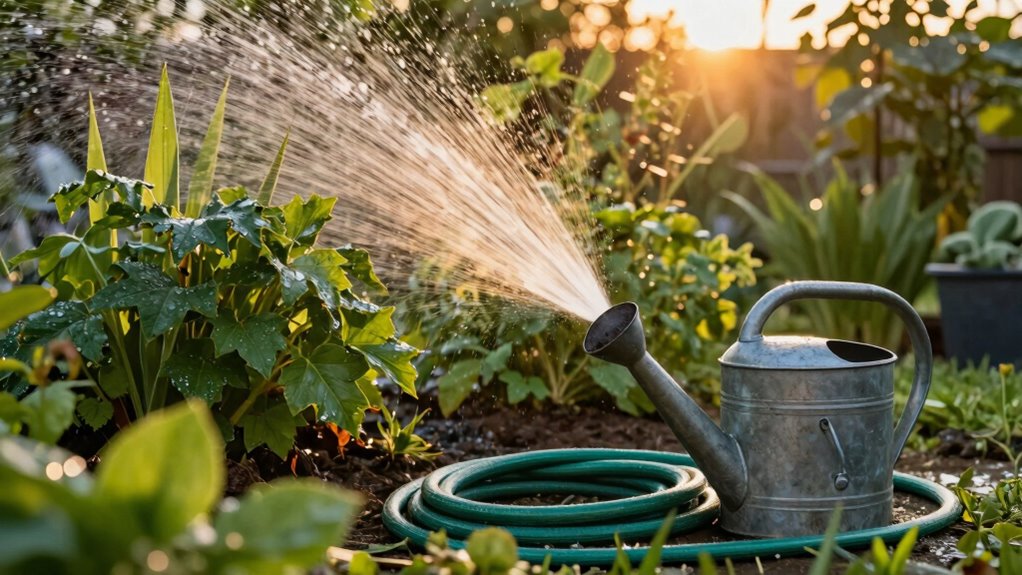

During summer, your usual watering schedule fails because increased sunlight and hot temperatures cause faster water loss through evaporation and plant transpiration. Soil dries out quicker, and plants become stressed if not watered deeply and more frequently. Mulching, watering early in the morning, and monitoring soil moisture help manage this. If you want to learn more about adjusting your watering routine to keep your garden thriving, keep exploring these tips.
Key Takeaways
- Hot temperatures and increased sunlight accelerate evaporation, requiring more frequent and deeper watering.
- Soil dries out faster in summer, diminishing its water retention capacity and causing plants to wilt if not adjusted.
- Rigid watering schedules ignore environmental changes; plants need tailored watering based on soil moisture and weather conditions.
- Increased transpiration and evaporation demand earlier watering, preferably in the morning, to ensure adequate hydration.
- Proper mulching and soil amendments help retain moisture, reducing the need for frequent watering adjustments.
Why Do You Need to Water Differently in Summer?
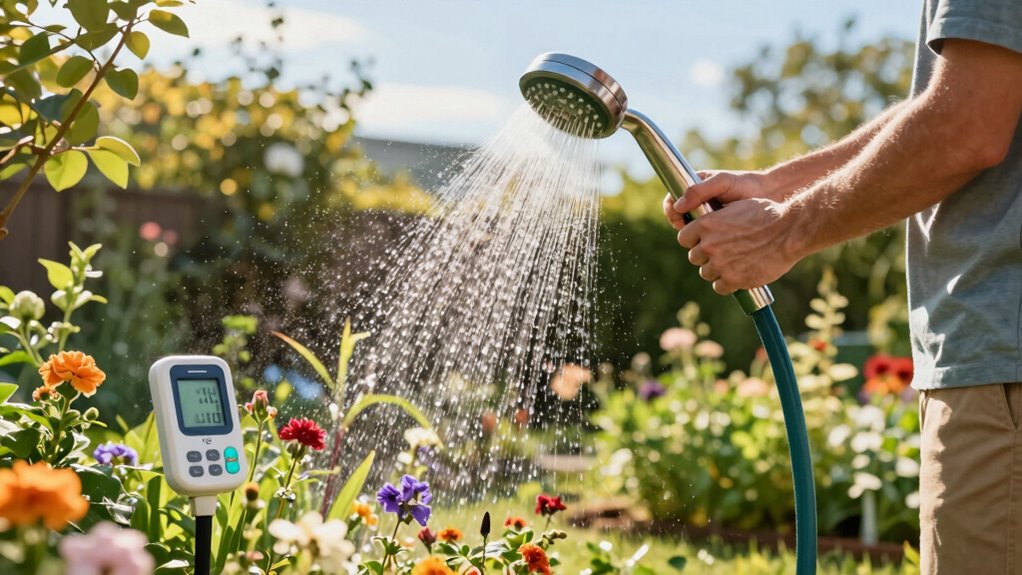
During summer, the hotter temperatures and increased sunlight cause your plants and lawn to lose moisture more quickly. Because of this, your usual watering schedules might no longer provide sufficient plant hydration. You need to adjust how often and how deeply you water to prevent dehydration. During peak heat, watering more frequently ensures your plants stay healthy and hydrated. Shallow or infrequent watering can leave roots dry and vulnerable to stress. To keep your plants thriving, aim for consistent moisture levels by increasing watering sessions or duration. Remember, the goal is to support plant hydration without overwatering, which can lead to other problems. Efficient watering techniques, such as targeted irrigation, can help optimize water use and improve plant health. By adapting your watering schedule to summer conditions, you help your garden stay lush and resilient through the hotter months.
How Increased Sunlight and Hot Temperatures Make Plants Use More Water
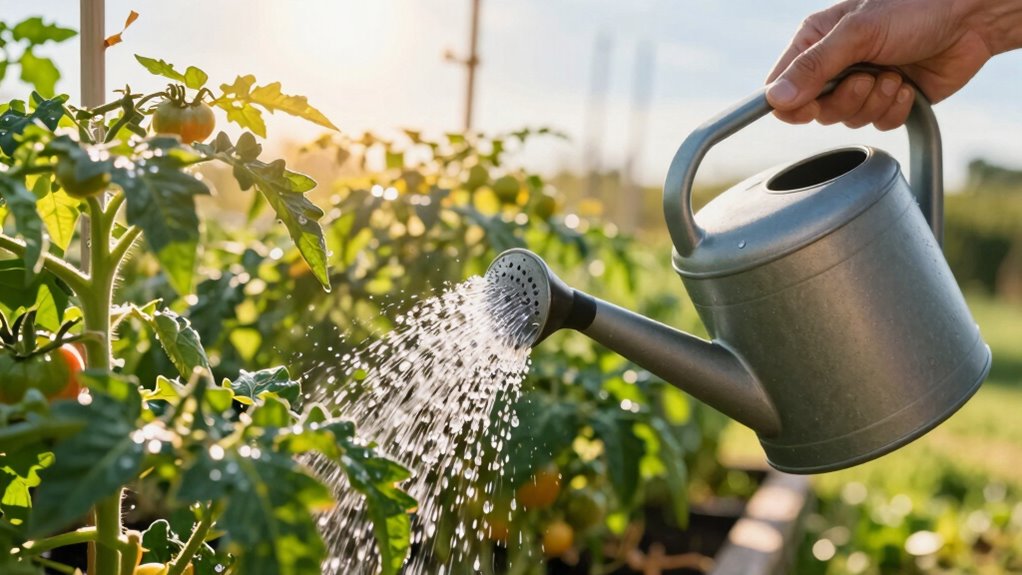
As the sun shines brighter and temperatures climb, plants naturally use more water to maintain their essential functions. Increased sunlight intensity boosts plant transpiration, the process where water evaporates from leaves, helping cool the plant. During hot days, this process accelerates, meaning your plants lose water faster. To keep them healthy, you need to recognize these changes and adjust your watering schedule accordingly. Understanding plant transpiration is key to managing water needs effectively during the summer months. – Higher sunlight intensity forces plants to work harder to stay cool – Hot temperatures speed up plant transpiration, increasing water needs – Faster evaporation means soil moisture decreases more quickly – Plants may wilt or become stressed without adequate watering during peak heat periods
Why Soil Dries Out Faster During Summer Days
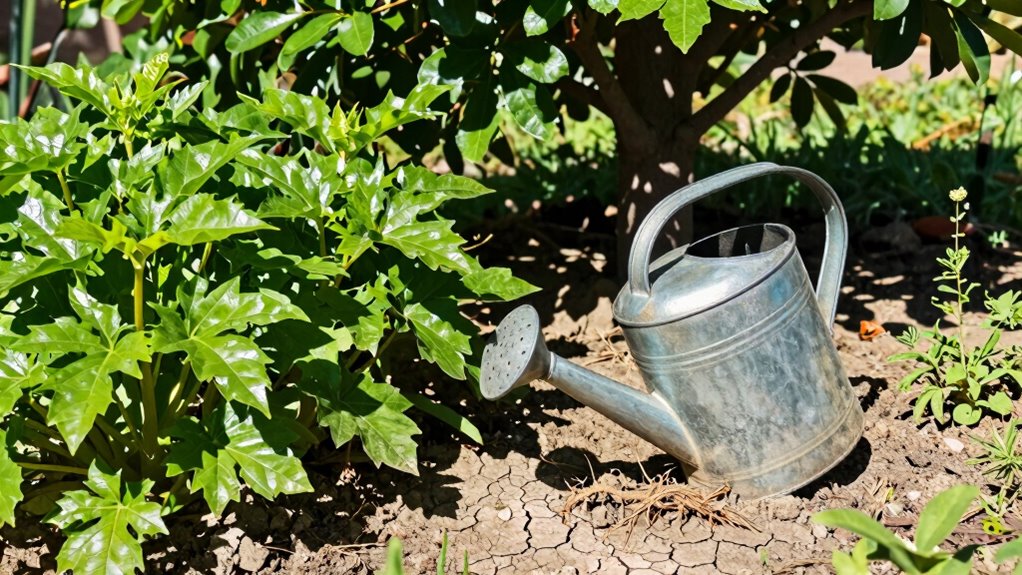
During summer days, soil tends to dry out faster because of increased evaporation rates caused by hotter temperatures and stronger sunlight. This rapid moisture loss reduces the soil’s ability to retain water, making it difficult for plants to stay hydrated. Understanding these factors helps you adjust your watering habits to keep your garden healthy. Additionally, precious metal investment options can offer a stable alternative during fluctuating market conditions.
Increased Evaporation Rates
When the summer sun shines brightly, it greatly amplifies the rate at which moisture evaporates from the soil. This heightened evaporation loss accelerates moisture depletion, making your plants struggle to stay hydrated. During hot days, water doesn’t just seep into the ground—it escapes rapidly into the air, reducing soil moisture faster than usual. This means you’ll need to water more often or adjust your schedule to keep up with the increased evaporation rate. Understanding these dynamics helps you prevent drought stress and keep your garden thriving. To combat this, consider shading sensitive plants, watering early in the day, or applying mulch to slow evaporation. Staying aware of these factors ensures your watering practices match the intense summer conditions. Additionally, using waterproof irrigation kits can help protect your watering system during sudden summer storms or heavy rain, ensuring consistent watering.
Reduced Soil Moisture Retention
The soil tends to dry out faster on summer days because its moisture retention capacity diminishes under intense heat and sunlight. As temperatures rise, soil compacts more, reducing pore spaces needed for water absorption and root aeration. This compaction makes it harder for roots to access moisture, leading to quicker drying. To combat this, consider soil amendments that loosen compacted soil, improving water retention and airflow. Proper aeration encourages healthy root growth and prevents water runoff. Here’s how different factors impact soil moisture:
| Factor | Effect | Solution |
|---|---|---|
| Soil compaction | Decreases pore space | Aerate soil regularly |
| Sunlight exposure | Accelerates evaporation | Use mulch to shade roots |
| Organic matter content | Improves moisture retention | Add compost or mulch |
| Watering frequency | Affects soil moisture levels | Adjust based on weather |
| Root aeration | Enhances water uptake | Loosen soil around roots |
How to Recognize If Your Plants Are Underwatered
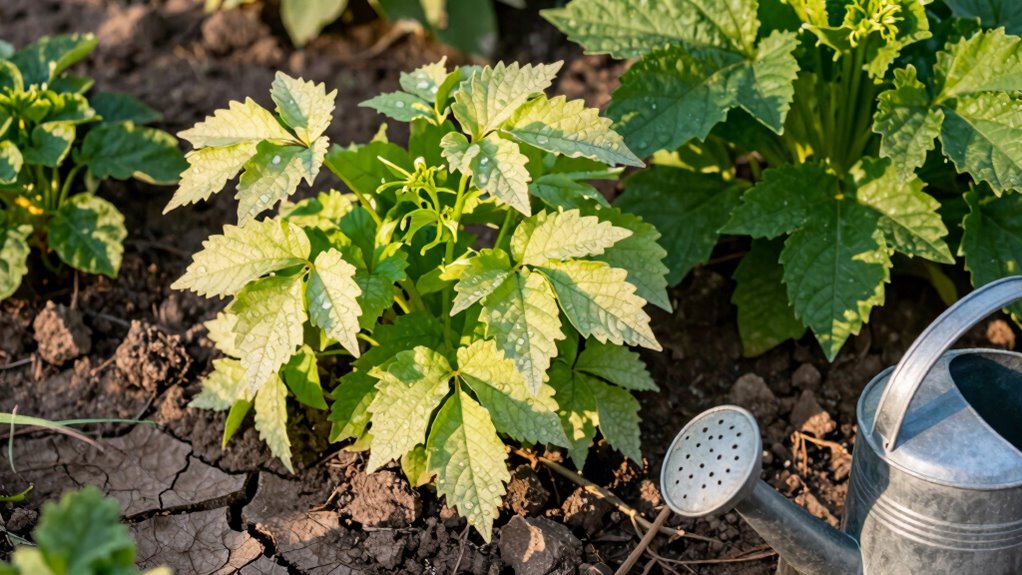
Ever wonder how to tell if your plants aren’t getting enough water? Recognizing underwatered plants involves paying attention to specific signs. When plants are drought stress, they often show telltale symptoms of dehydration.
Check for these signs:
- Wilting or drooping leaves that don’t recover after watering
- Crispy, brown edges on leaves
- Soil that’s dry several inches below the surface
- Stunted growth or leaf drop
These indicators suggest your plant watering routine needs adjustment. Underwatering causes stress that hampers plant health, so spotting these signs early helps prevent further damage. Remember, consistent watering is key, especially during hot summer months, to keep your plants healthy and thriving.
How Often Should You Water in Summer?
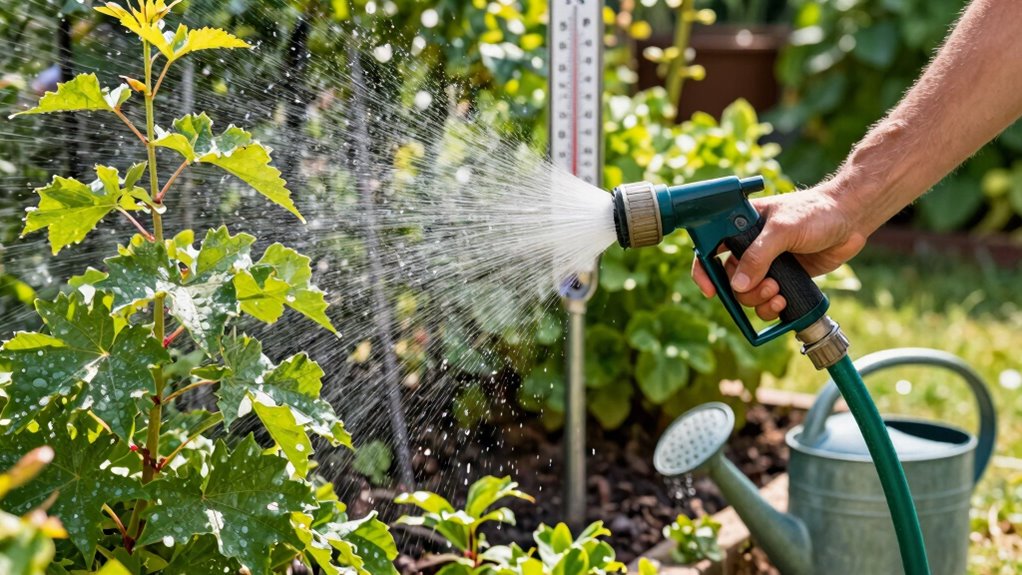
During hot summer months, watering frequency plays a crucial role in maintaining healthy plants. You should adjust how often you water based on your plant’s needs and environmental conditions. Typically, plants require more frequent watering because heat accelerates evaporation and dries out the soil quickly. Check the top inch of soil regularly; if it feels dry, it’s time to water again. Deep, consistent watering helps ensure proper plant hydration, preventing stress and promoting strong roots. Remember, overwatering can be just as harmful as underwatering, so strike a balance. During peak summer heat, watering once or twice a week might suffice for some plants, while others may need more frequent attention. Proper watering techniques can make a significant difference in plant health during the hot months. Always observe your plants closely to tailor your watering schedule effectively.
How to Water Deeply for Healthy Roots
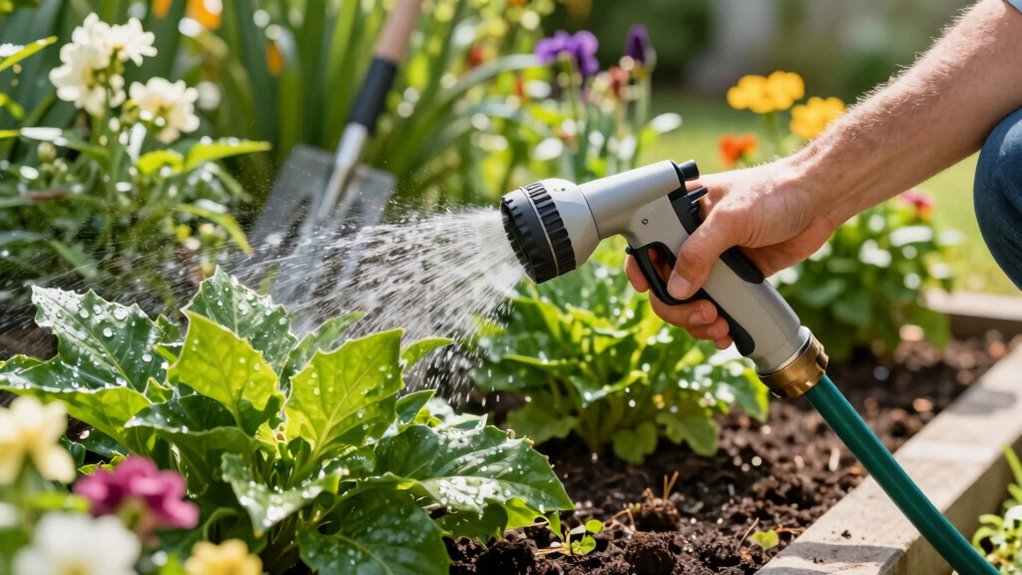
Watering deeply encourages strong, healthy roots that can better withstand summer heat. To do this effectively, apply water slowly and evenly to reach the entire root zone. Using techniques like soaking the soil thoroughly guarantees your plants develop a resilient foundation.
Benefits of Deep Watering
Deep watering encourages roots to grow deeper into the soil, creating a stronger and more resilient plant. When you water deeply, your plant develops a robust root system that reaches further underground, improving nutrient uptake and stability. This practice enhances drought tolerance, making your plants better equipped to handle dry periods. It also helps prevent shallow root growth, which is vulnerable to drying out quickly. Consistently deep watering can lead to more efficient watering schedules, reducing overall water use while maintaining plant health. By encouraging deep roots, you set your garden up for long-term success, especially during hot summer months. Remember, deep watering isn’t just about more water—it’s about smarter watering to foster stronger, more drought-resistant plants. Efficient watering techniques can further maximize water conservation and plant health benefits.
Techniques for Effective Deepening
To guarantee your plants develop strong, deep roots, focus on techniques that promote thorough watering. Using methods like drip irrigation ensures consistent soil moisture, encouraging roots to grow downward rather than staying shallow. Water slowly and deeply, allowing moisture to penetrate at least 6-12 inches into the soil. Check soil moisture regularly to avoid over- or under-watering, which can weaken roots. To improve deep watering, consider mulching to retain soil moisture and reduce evaporation. Additionally, watering early in the morning allows water to soak in fully before heat intensifies. Incorporating Free Floating techniques can also help distribute water evenly across your garden beds for healthier growth.
When Is the Best Time to Water in Summer?

The best time to water your garden in summer is early in the morning, ideally before the heat of the day sets in. Watering at this time guarantees your plants receive adequate hydration without excessive evaporation. It also helps establish a consistent watering schedule, promoting healthy root growth. By watering early, you give your garden hydration that lasts through the warmest parts of the day, reducing stress on plants. Keep in mind:
- Morning watering minimizes water loss due to evaporation
- It encourages deeper root growth for drought resilience
- Avoid late-day watering, which can lead to fungal issues
- Consistent timing helps your plants adapt to summer conditions
- Using appropriate watering techniques aligns with best practices for watering schedules
Following this approach optimizes your watering schedules and keeps your garden hydrated efficiently during hot weather.
Tips for Mulching and Soil Amendments to Keep Moisture
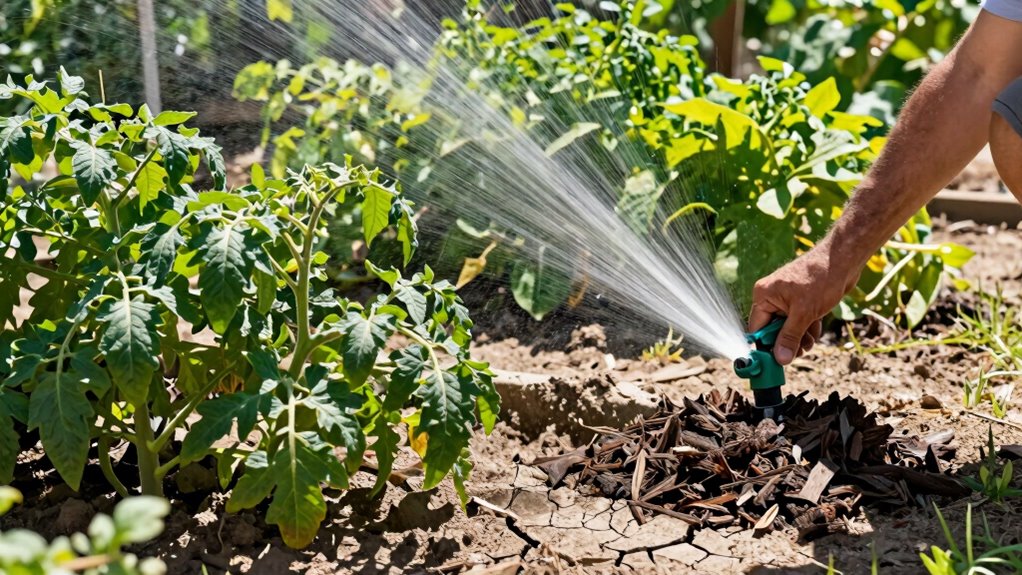
To keep moisture in your soil, make sure your mulch is spread at the right depth—about 2 to 4 inches. Incorporating soil amendments like compost can improve water retention, while choosing the right mulch helps prevent evaporation. These simple strategies can make a big difference in maintaining consistent moisture during hot summer days. Additionally, selecting halal-certified soil additives ensures your gardening practices align with halal lifestyles and standards.
Mulch Depth Optimization
Proper mulch depth is essential for retaining soil moisture during hot summer months. When you maintain the right mulch depth, you improve moisture retention, preventing your soil from drying out quickly. Aim for a layer of 2 to 4 inches, avoiding too thin or thick applications that can hinder water penetration or cause pests. Consistent mulch depth ensures even coverage, which helps regulate soil temperature and reduces evaporation. Remember, too much mulch can suffocate plants and encourage pests, while too little offers minimal moisture retention. Regularly check your mulch to keep it evenly spread and at the proper depth, especially during heatwaves. Proper mulch depth is your first line of defense against summer drought stress, keeping your garden healthier and more resilient.
- Maintain even coverage to maximize moisture retention
- Avoid piling mulch against plant stems to prevent rot
- Replenish mulch as it decomposes or settles
- Use organic mulch for added soil benefits
Soil Enrichment Techniques
Enhancing soil moisture during summer heat often requires combining mulching with targeted soil amendments. Applying organic fertilizers enriches the soil naturally, improving its ability to retain water and support healthy plant growth. Incorporate compost or well-balanced organic amendments into your soil to boost its structure and nutrient content. These amendments not only help the soil hold moisture longer but also promote beneficial microbial activity. When using soil amendments, mix them into the topsoil to maximize absorption. Mulching over these enriched soils creates a barrier that minimizes evaporation and maintains consistent moisture levels. Regularly renewing organic fertilizers and adjusting soil amendments based on plant needs ensures your garden stays resilient during hot weather, reducing the frequency of watering and keeping your plants healthier. Additionally, choosing eco-friendly sustainable travel options for garden supplies, such as organic fertilizers and biodegradable mulch, can further support environmental conservation efforts.
Water Retention Strategies
Using mulch effectively and applying soil amendments can considerably improve your garden’s ability to retain moisture during hot summer days. Mulch reduces evaporation, enhances soil absorption, and helps conserve water by maintaining consistent moisture levels. Soil amendments like organic compost or peat improve soil structure, increasing its capacity to hold moisture and prevent rapid drying. To maximize water retention, consider these strategies:
- Apply a 2-3 inch layer of mulch around plants
- Use organic matter to improve soil texture and water-holding ability
- Avoid compacting soil, which hampers absorption
- Mulch consistently to maintain a barrier against heat and wind
Implementing these water retention strategies helps your garden stay hydrated longer, cuts down on watering frequency, and promotes healthier plant growth amid the summer heat.
Common Summer Watering Mistakes and How to Avoid Them
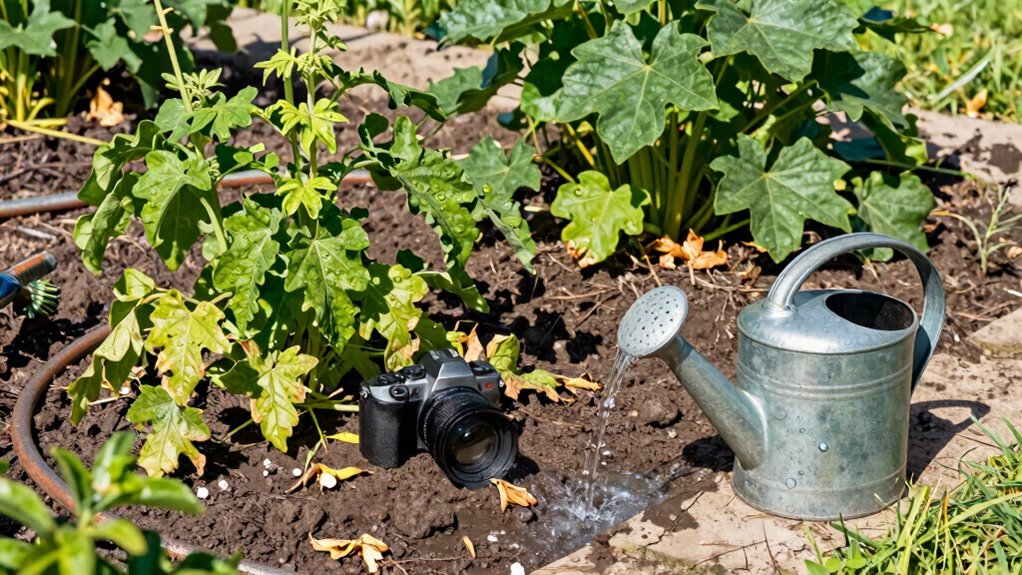
One of the biggest mistakes you can make during summer watering is overwatering, which can lead to root rot and fungal diseases. Many gardeners rely on the same watering schedules year-round, ignoring the increased heat and reduced soil moisture. This often causes overwatering for plants with high drought tolerance. Conversely, under-watering can stress plants and hinder growth. To avoid these mistakes, understand your plants’ needs and adjust your watering routine accordingly. Here’s a quick comparison:
| Mistake | Consequence | Solution |
|---|---|---|
| Overwatering | Root rot, fungal diseases | Check soil moisture first |
| Ignoring drought tolerance | Water stress, poor growth | Adjust based on plant type |
| Rigid watering schedule | Inefficient water use | Customize for summer heat |
| Watering during the heat of day | Evaporation loss | Water early or late |
| Not monitoring soil moisture | Under or overwatering | Use a moisture meter |
Quick Tips for Adjusting Your Garden Watering Routine
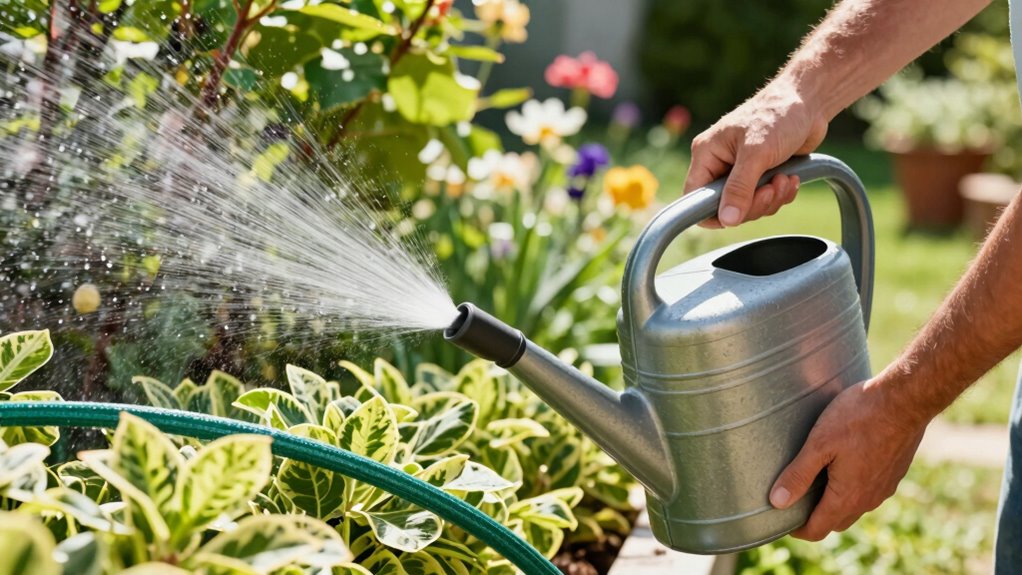
Adjusting your garden watering routine is essential as temperatures rise and soil moisture levels fluctuate. To stay ahead, use watering timers to ensure consistent, deep watering, especially during hotter days. Consider planting drought-tolerant plants that require less water and are more resilient in summer heat. Monitor your soil daily; if it feels dry a couple of inches below the surface, it’s time to water more often. Mulching helps retain moisture and reduces evaporation. Always check your sprinkler coverage to avoid dry spots and overwatering. Remember, adjusting your routine isn’t just about watering more—it’s about watering smarter. With these tips, you’ll maintain healthy plants and conserve water during the summer months. Stay attentive and adapt as conditions change.
Frequently Asked Questions
How Can I Tell if My Watering Schedule Is Overdoing It?
You can tell if you’re overwatering by checking soil moisture—if it feels constantly soggy or has a foul smell, you’re likely overdoing it. Watch for plant wilting despite regular watering; this often indicates root rot caused by excess water. Adjust your schedule by letting the soil dry out slightly between waterings and make sure proper drainage to keep your plants healthy.
Does Watering Early Morning or Evening Make a Difference?
Watering early morning is your best bet—think of it as giving your plants a fresh start. Watering in the evening can lead to fungal issues since moisture lingers overnight. Timing matters because temperature impacts evaporation; cooler mornings mean less water loss, so your plants absorb more. Prioritize watering early, and you’ll see healthier roots and happier plants, especially during those hot summer days when every drop counts.
Are There Specific Plants That Need Less Water in Summer?
Yes, some plants need less water in summer, especially drought-tolerant species like succulents, lavender, and ornamental grasses. You should tailor your watering to each plant’s specific needs through plant-specific watering and seasonal adjustments. During hot months, increase watering frequency for thirsty plants, but reduce it for drought-resistant varieties. Always observe your plants for signs of over or underwatering to fine-tune your watering schedule effectively.
How Do I Prevent Fungal Diseases Caused by Overwatering?
To prevent fungal diseases caused by overwatering, you should focus on fungal prevention and proper watering techniques. Water deeply but infrequently, allowing the soil to dry out between sessions. Use drip or soaker hoses to target roots directly, avoiding wet foliage. Guarantee good air circulation around plants, and remove any fallen leaves or debris. Regularly check for early signs of fungal infections so you can act quickly and keep your garden healthy.
Can Drought-Tolerant Plants Reduce My Summer Watering Needs?
Imagine your garden thriving with less water—drought-tolerant plants do just that. They reduce your watering frequency by adapting to dry conditions, making your summer watering needs considerably lower. These resilient plants, like succulents and native grasses, conserve moisture naturally, so you can enjoy a lush landscape without constant attention. By choosing drought-tolerant varieties, you cut down on watering, saving time and resources while keeping your garden vibrant.
Conclusion
Just as a garden needs careful tending under the summer sun, your watering routine must adapt to life’s changing seasons. Think of your plants as trusted friends, requiring your attention and care to thrive. When you adjust your watering habits, you’re nurturing a vibrant, resilient garden—your personal sanctuary. Embrace these summer shifts, and watch your garden flourish like a well-tuned symphony, reminding you that growth often comes from good, mindful watering when the heat’s on.